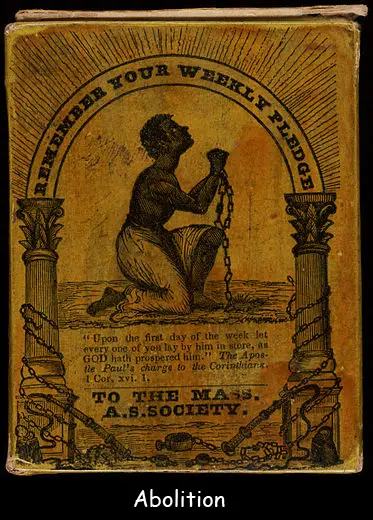
When the Founding Fathers wrote the U.S. Constitution, they thought about including something that would eliminate slavery. In the end, they decided it wasn’t the right time.
Southern plantations depended on slaves for free labor; northern industries relied on slaves too. Private citizens and the slaves themselves would have to make change if they wanted it.
Fun Facts
- It was illegal to teach a slave how to read or write. Slave owners were afraid that if slaves could read and write, they might read antislavery books and get ideas. They could write to each other or write to people in the north who disapproved of slavery. They might start a rebellion.
- Still, some slaves learned to read and write anyway. One of those people was Frederick Douglas. He ran away to Massachusetts and began speaking and writing about his experiences as a slave. He helped people understand how bad slavery really was.
- Frederick Douglas joined with other free black people and abolitionists, people who wanted to get rid of slavery.
- Harriet Tubman was another runaway slave. She and Frederick Douglas preached together about the evils of slavery.
- Harriet Tubman helped start the Underground Railway, a secret network of safe houses and passageways for runaway slaves to get help.
- As new states joined the Union, each new state had to decide whether it would allow slavery or not. The country was new and wild. Slaves could help tame it and the temptation to allow slavery was high.
- The Missouri Compromise was a law that said that slaves could be held only south of the Mason-Dixon Line. But in 1854, the Kansas-Nebraska Act determined that even states that were further north could decide whether or not to keep slaves.
- This decision made people in the North really angry. They didn’t want slavery to spread. One of those people was a lawyer named Abraham Lincoln. He decided to run for president.
- But the South wouldn’t give up easily. It was a long, hard struggle to free the slaves.
Vocabulary
Abolition: to make slavery illegal
Underground Railroad: a series of safe houses and secret passageways for runaway slaves
Questions and Answers
Question: What happened if a slave ran away and was caught?
Answer: Runaway slaves who were caught faced stiff consequences, including whippings and even death.
Learn More
Visit PBS to watch a video about the abolitionists.