
• Tag Archives: Ronald Reagan facts

    The Early 1990s

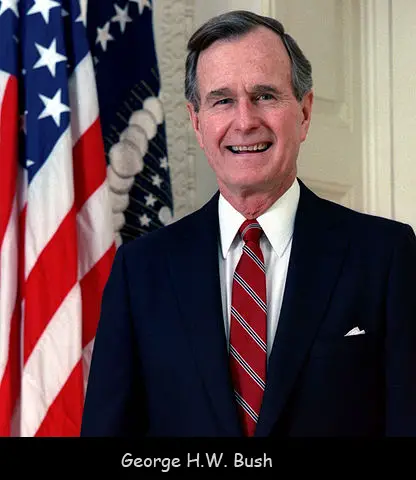
    George H.W. Bush was elected president in 1989 after serving for two terms as Ronald Reagan’s vice president. Bush’s presidency was troubled by economic struggles at home and conflict abroad.
    Fun Facts

    • Iraqi dictator Saddam Hussein sent 120,000 troops to Kuwait, a tiny, neighboring country. Western leaders feared another oil shortage or rising oil prices if Hussein gained control of Kuwait, a major oil supplier.
    • President Bush and his advisors formed a coalition with 28 nations to block trade with Iraq. They hoped that they could use economic sanctions to push Hussein to leave Kuwait. Hussain wasn’t going anywhere and the U.N. approved military efforts to remove Hussain by force. This effort was the Persian Gulf War.
    • In January, 1991, a U.S. led military force launched air strikes against Hussein. This effort became known as Operation Desert Storm. Most of Hussein’s air force was destroyed.
    • A month later, ground troops arrived and within days, Iraq surrendered. Fewer than 600 American soldiers had died and America celebrated this military victory.
    • Unfortunately, Hussein went back to Iraq still in power. He rebuilt his military and began building chemical and biological weapons.
    • During the late 1980s, Communism had crumbled in several Eastern European countries. In 1991, the Soviet Union collapsed, marking the end of Communism here. The region was divided into 15 independent republics, such as Lithuania. The world celebrated with these republics, many of whom had once been independent countries.

    Vocabulary:

    1. Dictator: a leader who rules with absolute power
    2. Air strike: a military assault achieved by fighter planes, missiles, and weapons
    3. Biological weapon: a weapon that causes harm by spreading bacteria or other toxins

    Questions and Answers:

    Question: What was the outcome of the Persian Gulf War?

    Answer:  The short-term outcome was that Kuwait was free and the region’s oil reserves were protected. Long-term, though, the Persian Gulf War probably increased Arab anger at Western involvement. Many American soldiers returned with serious physical and mental health problems caused by exposure to chemical weapons and trauma.

    Learn More

    Visit Scholastic to learn more about the Persian Gulf War.
    The Reagan Revolution

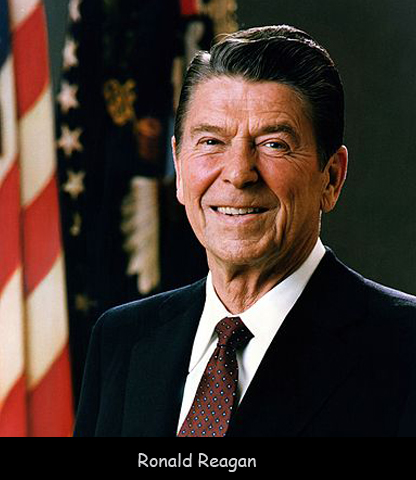
    Government spending ballooned during the 1960s and 1970s, starting with the Lyndon Johnson’s social programs. Many Americans felt that these programs weren’t working and they were tired of paying higher taxes for them. They were ready for a change. In the 1980 presidential election, Republican nominee Ronald Reagan promised to reduce taxes and cut spending. He beat Democratic candidate Jimmy Carter by 489 to 49 electoral votes. Once in office, Reagan was a strong leader, making broad-sweeping changes. He was the most popular president since FDR.

    Fun Facts:

    • Reagan started his presidency with a $280 billion tax cut, the largest tax cut in history. He turned responsibility for many programs over to the states, reducing the size of the federal government. His programs were called “Reaganomics” and he hoped they would help a sluggish economy grow. Reagan’s tax cuts did work to revitalize the economy, but at a cost. The federal government owed more money in 1989 than it ever had before.
    • Oil prices and interest rates dropped in 1982. Employers started hiring and people felt more prosperous than they had in many years.
    • Ronald Reagan had an energetic, positive style that appealed to many people, including Democrats. He was a Hollywood movie star before becoming a politician and could communicate directly with people. He was strongly patriotic and supported old-fashioned, Christian values. After the social experiments of the 1960s and 1970s, people were relieved to see a return to tradition.
    • On March 30, 1981, John W. Hinckley, Jr., shot at President Reagan outside a Washington D.C. hotel. Reagan, who was shot in the chest, was not seriously wounded, but Press Secretary James Brady and two others were seriously wounded.
    • In the 1980s, cocaine became a popular drug among young urban professionals (yuppies). President Reagan declared a “war on drugs,” sending money and military might to areas in Latin America where the drugs were grown and produced. His efforts were largely unsuccessful. First lady, Nancy Reagan, led the “Just Say No” campaign to educate children about the dangers of drugs.

    Vocabulary:

    1. Revitalize: restore to energy and life
    2. Reaganomics: the name for Reagan’s economic policies

    Questions and Answers:

    Question: Were the 1980s more peaceful than the 1970s?

    Answer: During the 1980s, many people became more prosperous. Gas and energy prices went down and companies began hiring again. President Reagan had some successes with abroad too, but there were also several problems, such as the AIDS crisis, the Persian Gulf War, and the Challenger explosion.

    Learn More

    Visit PBS to read an essay about Ronald Reagan.
