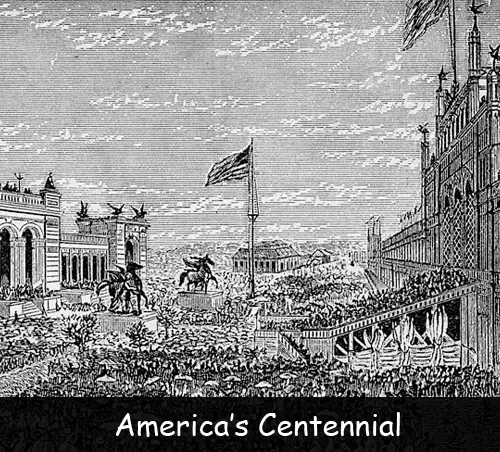
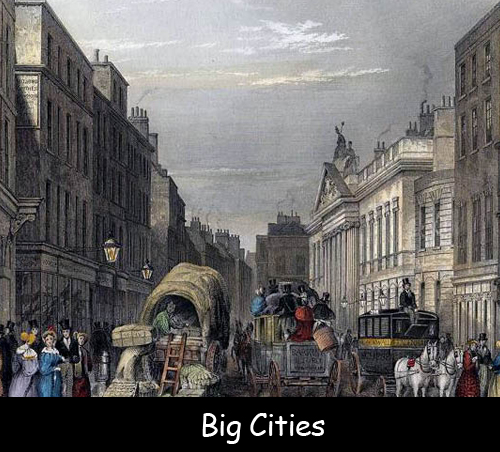
Until the late 1800s, most people in America lived in small farming communities. The Industrial Revolution changed all that as people came to the cities looking for work. European immigrants arrived in America hoping for a better life. New inventions, such as the telephone and electric lights, made life easier and more comfortable.
Fun Facts
- Churches and cathedrals were community gathering places – the largest and most prominent building in a town. In the late 1800s, though, engineers learned how to build skyscrapers – tall buildings that towered over the cities. Churches were dwarfed by these huge office buildings.
- In the mid-1850s, Elisha Otis developed elevators that were safe for people. This development, along with the increased production of steel, made it possible to build skyscrapers that were 10 stories or more.
- Steel was not only used for buildings, but also for bridges. John Roebling began building the Brooklyn Bridge in 1869. His son, Washington Roebling, completed it in 1883. This bridge brought Brooklyn and Manhattan together.
- Horse-drawn trolleys transported people through city streets until the late 1880s, when Frank J. Sprague developed trolleys with electric motors. Within three years, 51 cities were using trolleys, which provided fast, cheap, quiet transportation.
- In 1879, Thomas Edison created the first light bulbs, along with everything needed to produce the electricity to power the bulbs. By the early 1900s, most cities had electric lighting.
- Alexander Graham Bell introduced the telephone in 1876. Initially, people were unenthused about it, but by 1880, 50,000 phones were in use.
Vocabulary
- Immigrant: someone who migrates from his or her native country to a new place
- Prominent: highly visible or important
Questions and Answers
Question: Did the factory workers live in the cities?
Answer: Initially, most of the factory workers lived in crowded apartment buildings, often under appalling conditions. As people became prosperous, they moved out of the cities, creating the first suburbs. Trolleys provided transportation from the suburbs to the cities.
Learn More
Visit PBS to learn all about skyscraper engineering.