• Tag Archives: World War II

    Communism in Asia and Elsewhere

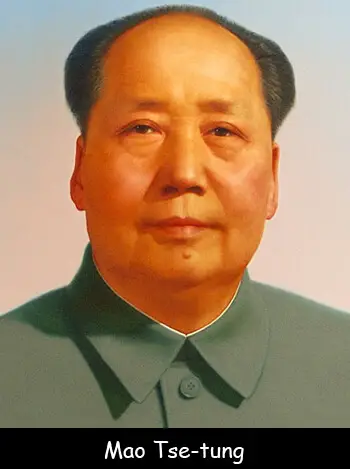
    The Soviet Union wasn’t the only country promoting communism. Since the late 1920s, Communist leader Mao Tse-tung had been trying to gain control of China from the Nationalist government led by Chiang Kai-shek. The two sides formed a truce during World War II to fight against the Japanese, but as soon as the war ended, their fighting began again. In 1949, the Communists gained control of China and their doctrine began to spread through Asia.
    Communism in Asia and Elsewhere

    Fun Facts

    • After Mao Tse-tung gained power, Nationalist leaders and fighters fled to Formosa, which was renamed Taiwan.
    • Japan controlled Korea during World War II. When the war ended, the Russians were assigned the northern part of the country, while the U.S. was given control of the southern part. The plan was to allow a national election and slowly help Korea build its own government. But Russia, now the Soviet Union, refused to allow a national election. The country split into two countries, North and South Korea. North Korea became a Communist country. South Korea was protected by the United Nations and American forces as it became a democracy.
    • The Korean War began on June 25, 1950, when Communist North Korean troops stormed over the 38th parallel border, which marked the boundary between North and South Korea. President Truman immediately ordered General Douglas MacArthur to lead American and UN troops against the North Korean threat. Troops from 16 countries pushed the North Koreans back, regaining not only South Korea, but most of North Korea.
    • On November 26, 1950, thousands of Communist Chinese troops came to fight against the U.S. troops, forcing them back. Truman realized that the war might expand to include not only Chinese troops, but Soviet troops, as well. He understood well the horrors of war, especially the damage a nuclear war might cause. Instead, he decided to work for a truce.
    • Truman did not run for reelection. His successor, Dwight Eisenhower, went to Korea to negotiate a truce. The Korean War ended on July 27, 1953. Fifty-four thousand American soldiers had been killed in preventing the spread of Communism. An inscription on the Korean War Memorial in Washington, D.C. reads, “Our nation honors her sons and daughters who answered the call to defend a country they never knew and a people they never met.”
    • Vietnam, which was a French Colony until 1945, came under the control of Communist leader Ho Chi Minh. At an international conference, the country was divided into North and South Vietnam. The United States sent financial aid and military personnel to South Vietnam in the hopes of preventing Communist North Vietnam from invading it.
    • Fidel Castro successfully led a revolution in Cuba, overthrowing years of dictatorship. Soon after, he created a Communist dictatorship there with strong connections to the Soviet Union. Cuba is only 90 miles off the coast of Florida. American leaders were very concerned that the U.S. might be a target for a Communist takeover.

    Vocabulary

    1. Communism: a political and social philosophy in which the state holds all property and gives it to the people to use. Religion, free speech, open elections, and many other liberties are outlawed.
    2. Truce: an agreement to end fighting; neither party is declared the victor.

    Questions and Answers

    Question: Does Communism still exist today?

    Answer: By the 1980s, Communism had spread over much of Asia, Eastern Europe and parts of Africa and Central America. Today Communism lives on in a few parts of Asia and Europe. However, many of the reasons that Communism became popular in the first place – class systems and inequality – do continue.
    The Cold War

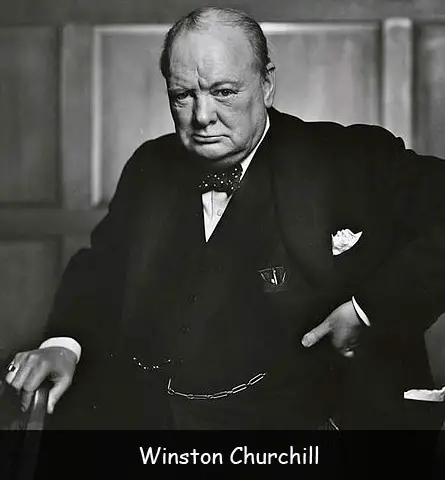
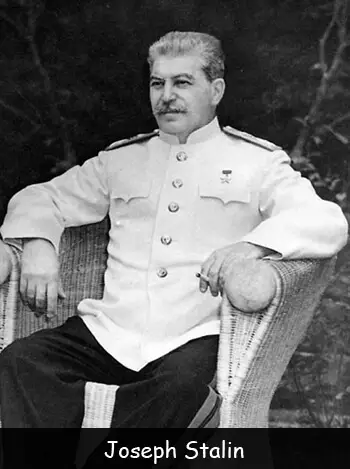
    During World War II, the Soviet Union allied with Britain, France, and the U.S. After the war, though, that relationship soured. Communist leader, Joseph Stalin refused to remove troops from European countries previously occupied by the Germans. Instead, he took over those countries, establishing Communist governments in Bulgaria, Czechoslovakia, Hungary, Poland, and Romania. Winston Churchill warned that Stalin was placing an “Iron Curtain” over Europe. Elsewhere in Asia, Communism was spreading as well.

    The Cold War

    Fun Facts

    • Joseph Stalin ruled the Eastern Block, as these countries were known, as a dictator. He allowed no free elections and political rivals were often intimidated or even murdered.
    • The invention of the atomic bomb and nuclear weapons made war a much more dangerous prospect. Whole cities could be destroyed within minutes. The Cold War was not a military war, but a war of ideas. Communist and Allied leaders distrusted each other and citizens lived with the constant fear that the other side would use nuclear weapons.
    • Americans were prepared for the possibility of a nuclear attack. Public buildings and even private homes included fallout shelters – steel or concrete structures that contained food, water, and medical supplies. Children were trained at school about what to do if a nuclear attack happened.
    • As the Soviet Union began seeking power over Turkey and Greece, President Truman created a policy called “The Truman Doctrine,” which said that America had an obligation to “support free people who are resisting attempted subjugation by armed minorities or by outside pressures.”
    • Americans feared that Communist leaders and spies were infiltrating their country. In 1947, President Truman created the Loyalty Review Board. This board investigated 3 million government employees and fired 212 people who were considered potential security risks.
    • Julius and Ethel Rosenberg were charged of espionage – of giving atomic bomb secrets to the Russians. They were convicted and executed in 1953. Historians still wonder whether they were really guilty.
    • Wisconsin senator, Joseph McCarthy claimed he had the names of 205 communists working for the U.S. government, sparking a period of fear and hysteria known as the McCarthy Era. He accused many people, including writers, actors, movie producers, military leaders, and even President Truman, of being Communists. He used verbal attacks and bullying to intimidate people. Anyone who spoke out against him faced being named as a communist.
    • Finally, in 1953, during a public hearing of high-ranking army leaders, quiet, mild-mannered attorney, Joseph Welch had had enough of McCarthy’s rude behavior. He said, “Have you no sense of decency, sir? At long last, have you left no sense of decency?”
    • Welch’s simple question seemed to break the spell. Everyone in the courtroom began clapping. After that, McCarthy’s reputation declined and in 1954, the Senate condemned his behavior as dishonorable.

    Vocabulary

    1. Subjugation: to overpower or oppress
    2. Infiltrate: to gradually gain access or permeate

    Questions and Answers

    Question: Why did Communism scare American leaders so much?

    Answer: In Communist countries, the government controls all property. People are assigned work, based on their skills; they are given food, clothing, shelter, and other items based on their need. Religion of any kind is not allowed, nor is the media allowed to speak freely. These practices go against the ideals of democracy and freedom – that men can think for themselves, elect leaders to govern them, and choose where and how to work and live.

    Learn More

    Visit the Library of Congress to learn more about the Cold War.

    The Candy Bomber

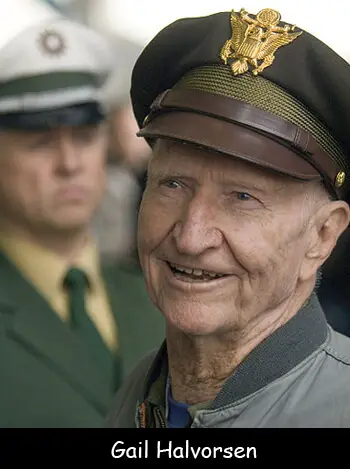
    During and after World War II, many people tried to ease the suffering of others, sometimes at the risk of their own lives. One such person was Gail Halvorsen. Born in Salt Lake City, Utah and raised on small farms in Utah and Idaho, Halvorsen became a pilot during World War II. Following the war, he flew supplies to the city of West Berlin, which was occupied by the Soviet Union. He became a hero to German children when he started dropping candy from his planes to them.

    The Candy Bomber

    Fun Facts

    • After World War II, Germany was divided among the British, French, and Americans (allies) and the Soviet Union. The Soviets weren’t happy about the Allied involvement in Germany. They blocked West Berlin so that no supplies could come in or out. They hoped that the Allies would then leave.
    • Over 2 million German citizens were left without food, fuel, or basic supplies in a country already devastated by war. People worried that many Germans would die or the conflict would start a third world war.
    • President Truman ordered millions of pounds of food and supplies to be flown into Germany – over 1,500 tons of food were needed every day to feed the people of West Berlin. Hungry Germans were grateful to have simple supplies such as flour. They cut down trees for food and searched through garbage cans for food. They experienced great hardship, but they refused to submit to Soviet control.
    • Gail Halvorsen was one of the pilots who flew supplies into West Berlin during this time. He was impressed by how strong the German people and children were. One day, he was talking to a group of children while he waited to fly his plane. They said, “When the weather gets too bad to fly, don’t worry about us. We can go without food, but we can’t go without freedom. Just don’t give up on us.”
    • Halvorsen divided two pieces of gum in his pocket and gave it to the children. Their happiness and gratitude inspired him to do more. He told them to watch for him the next day. He would wiggle his plane wings as he flew overhead and then drop chocolates and gum in handkerchief parachutes.
    • Over the next few weeks, Halvorsen and his co-pilots dropped more parachutes filled with candy to the German children. When their commander discovered their antics, he was angry at first. When he realized the good they were doing, he said, “Keep at it.”
    • Hundreds of letters poured in from children all over Germany. Halvorsen later met an older man who had been a child during that time and had received one of the parachutes. The man said, “I kept that Hershey chocolate bar for a week and hid it. But the chocolate was not the important thing. The important thing was that someone in America knew I was in trouble and cared. And that meant hope.”

    Questions and Answers

    Question: Did other people help during and after the war?

    Answer: Many people quietly tried to offer hope and encouragement. If you liked this story, you might like the book, Boxes for Katje.This picture book tells the true story of a little girl in Indiana who sent boxes of soap, socks, and chocolate to the people of Olste, Holland after the war.

    Learn More

    Visit Wiggly Wings to read more about the Berlin Candy Bomber. Or, here to watch a PBS movie about him.

    The Aftermath of World War II

    As World War II ended, Americans looked forward to resuming their lives. For millions of people in Europe and Asia, though, life would never be the same. Over 55 million people worldwide had been killed (400,000 Americans) and millions were separated from their families or left homeless. Cities throughout Europe and Japan had been destroyed.

    The Aftermath of World War II

    Fun Facts

    • The United States government set up temporary housing sent food, supplies, and funds to Europe to ease the suffering of refugees there. Additionally, individuals, churches, and community groups also sent supplies and money.
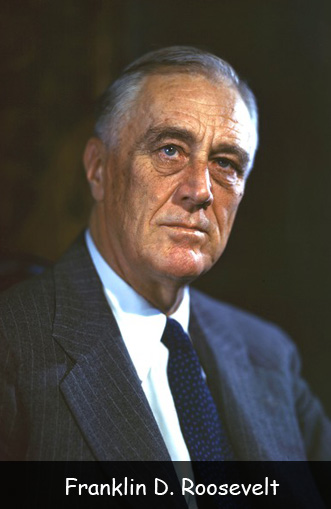
    • The United Nations was founded in April 1945, two weeks after President Roosevelt’s death. Roosevelt believed that the only way to assure lasting peace would be through the establishment of an international organization comprised of countries dedicated to maintaining world peace and security. Eleanor Roosevelt, FDR’s wife, worked as a delegate to the United Nations. She is credited for crafting the UN Declaration of Human Rights.
    • Shortly after the war ended, 22 Na-zi leaders were brought before an international court. During the Nuremberg Trial, concentration camp survivors testified of their brutality. Nineteen leaders were convicted of crimes against humanity. Twelve were committed to death, including top leader, Hermann Goering, who committed suicide on the night before his scheduled execution.
    • As people learned about the atrocities committed by the Germans, they became sympathetic to European Jews. Many Jews immigrated to the United States. Others wanted to create a Jewish homeland in Palestine. Palestine lies along the Mediterranean Sea and was the Biblical home of the Jews. It is also a sacred site for Muslim and Christian faiths.
    • In 1947, the UN proposed that Palestine be divided into two distinct areas with separate governments: an Arab (Muslim) state and an Israeli (Jewish) state. Jews living in the region readily accepted the UN’s proposal and formed the state of Israel on May 14, 1948. Palestinian Arabs weren’t so happy. They rejected the UN decision and deployed troops to destroy Israel. During the first Arab-Israeli War, more than 500,000 Arabs fled Palestine. Arab countries refuse to recognize Israel and conflict continues even today.

    Vocabulary

    1. Comprise: to make up of or consist of
    2. Maintain: to keep or continue
    3. Delegate: someone sent to represent others
    4. Atrocity: a horror

    Questions and Answers

    Question: What happened to the Japanese-Americans who were sent to military camps during World War II?

    Answer: Beginning in 1942, some 110,000 Japanese-Americans were taken from their homes, businesses, and farms and sent to internment camps. Some were sent to Japan. In 1944, a Supreme Court ruling made it illegal to send Japanese-American citizens to a camp without a probable cause. After this ruling, people slowly started leaving the camps and rebuilding their lives. In 1946, the camps were closed. Imagine how hard it must have been! People had lost their homes, their businesses, their belongings, and their friends. Adults had to find new jobs; children adjusted to new schools and friends.

    Learn More

    Visit the Atlantic to see photos of Japanese-Americans during and after World War II.

    The Long Days of World War II

    World War II officially began in September, 1939 when Britain and France declared war on Germany after it invaded Poland. For the next two years, the people of Europe endured hardship and destruction as the Na-zi regime bulldozed its way through one country after another. The United States joined the war in December, 1941, after Japanese bombers destroyed ships and planes, killing more than 2,000 people. The war lasted another three long years. Almost every region of the earth, from the Pacific Islands to Africa to South America was involved.

    The Long Days of World War II

    Fun Facts

    • British prime minister, Winston Churchill, and President Roosevelt’s plan was to first, build up weapons, planes, and military force necessary to enter Europe and defeat Hitler. Then they would turn their attention to defeating the Japanese.
    • President Roosevelt asked the American people – each man, woman, and child – to make sacrifices to win the war. Americans knew that they were fighting for the freedom of people in Europe and throughout the world.
    • Americans rose to the challenge. 16 million men joined the military. Business owners transformed automobile, toy, and even tissue factories to make weapons, bombs, tanks, landing crafts, and airplanes. Over 800,000 women went to work. Many of them worked in factories. Some joined the Red Cross as nurses; others flew planes or worked as truck drivers and radio operators. Everywhere, Americans were determined to do their part.
    • During this time, Americans were asked to save and donate materials that could be used for the war. Kitchen oil, for example, was used to make bombs. People collected newspapers, tin cans, and rubber. Food was scarce. Americans skimped on things like butter, sugar, and meat and grew food in gardens.
    • In other countries, people showed tremendous bravery and goodness. In many countries in Europe, people hid resistance fighters or Jewish families in their homes at great danger to themselves. If they were caught by the Na-zis, they would be killed or sent to a concentration camp.
    • Russian soldiers fought valiantly to defend their country from the Germans, eventually forcing Germany west and reclaiming their lands.
    • In 1942, the Allied forces were ready to install their plan to defeat Hitler. In February, fighter plans began bombing German cities. Troops landed in Italy and Mussolini’s own government overthrew him.
    • German forces had taken over most of North Africa. In 1942, British and American troops led by Marshal Bernard Montgomery and Dwight D. Eisenhower arrived. In May, 1943, the Axis force in North Africa surrendered.

    Vocabulary

    1. Sacrifice: to give up something, usually for something greater
    2. Skimp: to do without or cut back
    3. Reclaim: get back

    Questions and Answers

    Question: Did all Americans feel part of the team effort needed to win the war?

    Answer: Unfortunately, no. Many African-Americans left the South during the war to get jobs in the north. They had more opportunities than ever before. Still, they were often discriminated against. African-Americans had to use different bathrooms than whites, for example, and couldn’t eat in public restaurants. Japanese Americans were thought to be potential spies. Thousands of Japanese families were forced to leave their homes and live in internment camps for the duration of the war. They were often mistreated and persecuted by others because they were Japanese.

    Learn More

    Visit PBS to learn more about what it would be like to be a child in a Japanese internment camp.