All posts by americanadmin

Anne the Brave Rebel

Anne Randolph lived on a farm near Philadelphia. Her father and her two brothers were off fighting in the Revolutionary War under George Washington. Anne and her mother stayed home to take care of the farm.

Anne had a pet calf, given to her by her father. As the British soldiers marched through Philadelphia, they took wheat, corn, horses, and cattle. One day, they came to Anne’s farm and took Anne’s pet calf. Anne begged them to let her keep the calf, but they did not listen.

Anne saddled her pony and rode full speed to Philadelphia to see Lord Cornwallis, the general of the British army. She was only twelve years old, but she was very brave. The soldier guarding the general’s home asked her what she wanted. “I wish to see Lord Cornwallis,” she replied. Seeing her firm, brave face, the guard thought she must have an important message. He allowed her to go in.

Lord Cornwallis was eating dinner when Anne rushed into his rooms. The general asked Anne why she had come. “I want my cow, sir. Your soldiers have taken her away. Please sir, let me have her back.”

Lord Cornwallis asked Anne her name and where she lived. “Do you have a father?”

“Yes, sir, but he is in the army,” Anne replied. “The American army.”

“So he’s a rebel then?” asked the general. “And you’re a rebel yourself?”

Anne replied boldly, “Yes, we are all rebels.”

“And your cow? Is your cow a rebel?” asked the general.

“I think she is,” replied Anne. “She’s the nicest cow you’ll ever meet.”

Lord Cornwallis threw back his head and laughed. And then he became serious. “Don’t you know we’re here to fight the rebels?” he asked Anne.

Anne might have been afraid, but she wasn’t. “Yes, but you’re not here to fight little American girls. Please give me my cow back. I raised her myself. I would never steal your cow.”

The general shook his head, a slight smile on his lip. “Alright, you will find your cow returned to your barn by tomorrow morning. And take these,” he said, unfastening his silver knee-buckles. “If any soldiers bother you again, show them these.”

The general kept his word. Anne found her little cow in the barn the next morning safe and sound.
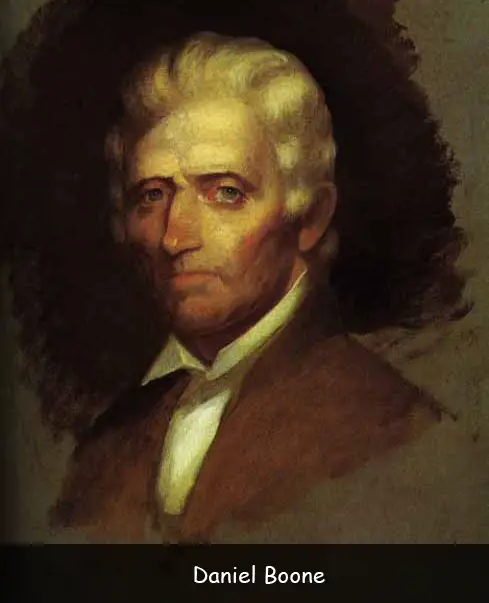
Daniel Boone

Daniel Boone was an American pioneer, frontiersman, and hunter. Born in Pennsylvania in 1735, he and his family moved to North Carolina when he was eighteen years old. He made many exploring trips into the wilderness.

Fun Facts

  • In 1769, he headed west to explore what is now the state of Kentucky. During this time, he was captured repeatedly by Native Americans.
  • He found passageways into the area, opening it up for other settlers. Congress gave him a tract of land for his service.
  • One time, Daniel Boone was kidnapped by Indians and held captive for several months. A large sum of money was offered for his release, but the Indians refused. They liked his courage and his hunting skill so much that an old chief adopted him.
  • The Indians watched him carefully so he wouldn’t escape, but treated him kindly. When he went hunting, they counted his bullets before he left and when he returned to see how much powder he’d used. He learned to use half the amount of powder to hunt turkeys, raccoons, and squirrels, saving some of it in case he needed it for a future escape.
  • He learned that the tribe planned to attack a fort at Boonesborough. He had to find a way to warn the men at the fort.
  • One morning, he went hunting and ran away, traveling 60 miles on foot in only five days to alert the fort.
  • After the Revolutionary War, he settled on a farm in Kentucky. One day four Indians came to his farm, intent on capturing him. They found him in a barn drying tobacco. They held him at gunpoint. He asked for a bit more time to finish his work. Suddenly, he threw the tobacco leaves he was holding in their faces. While they were coughing and sputtering, he ran to his cabin to grab his gun and powder. The Indians left, knowing they’d been outwitted.

Questions and Answers

Question: What happened to Daniel Boone as he got older? Did he have a family?

Answer: Daniel Boone lived a quiet, happy life on his farm. He loved spending time in the woods and hunting. He did have a family, including his wife and 10 children, and he was known for his loving, tender manner with them. As he got older, he was honored as a strong and brave pioneer.

Learn More

Watch a video about Daniel Boone’s life.

Daniel-Boone

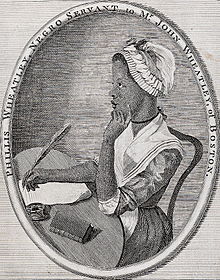
African American Poets and Writer: Phillis Wheatley

It was common during the 1700s for African village chiefs to sell young children to slave traders who would send them on ships to the Americas. Phillis Wheatley, one of those children, later became a famous poet.

Fun Facts

  • Phillis Wheatley was born around 1753 in Gambia, Africa. She was sold from her village when she was only about seven years old and placed on a crowded, filthy boat bound for America.
  • When the boat arrived, the girl was so thin and frail that the captain expected her to die soon. He sold her to a woman in Boston for almost nothing, happy to earn a little bit for his troubles.
  • The girl was named Phillis after the boat she came on. Her last name, Wheatley, was the name of her masters.
  • The Wheatleys quickly realized that Phillis was exceptionally bright. They taught her to read English, Latin, and Greek. She studied astronomy and geography.
  • When she was fourteen, Phillis began writing poetry using a classical style.
  • Wealthy aristocrats in New England loved Phillis and wanted to promote her as proof that African American slaves were intelligent, artistic, and creative when given the chance. But some people didn’t support the idea. The Wheatleys were unsuccessful in getting Phillis’s poetry published in New England.
  • When she was 18 years old, Phillis traveled to England with the Wheatley’s son. There she met a wealthy friend of the family who helped get her book published. Phillis was the first woman in America to publish a book.
  • Her poems were often about religion, death, and her African heritage.
  • Phillis was freed shortly after her book was published, but freedom wasn’t all she had hoped for.
  • She married a man named Peter and the couple had two babies who died soon after birth. Finding jobs was free blacks was hard and they were very poor. Peter was sent to debtor’s prison and Phillis was left to fend for herself as a scullery maid.
  • She became very sick and weak and died alone in a small, dark, filthy room. Her infant son died soon after and was buried with her.


Questions and Answers

Question: Did Phillis write other books?

Answer: Phillis did write other poems but couldn’t find a publisher for them. George Washington and John Hanco-ck both supported her work. Nevertheless, she died a pauper’s death.


Learn More

Watch a video about Phillis Wheatley.

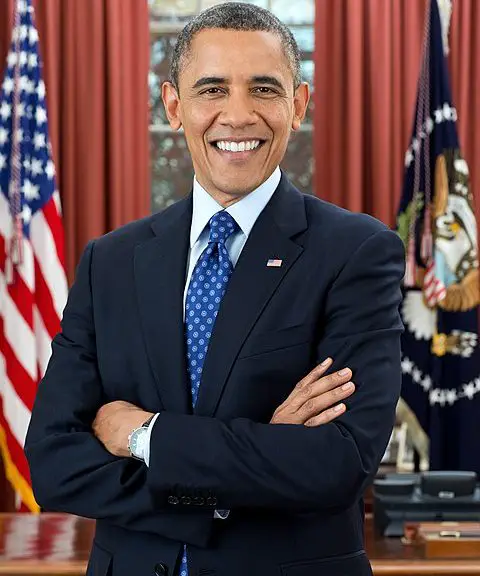
Barack Obama

Barack Obama was the forty-fourth president of the United States and the first African American president.

Fun Facts

  • Barack Obama was born August 4, 1961 in Honolulu, Hawaii.
  • Obama’s mother was a white American; his father, a black man from Kenya.
  • Barack grew up mostly in Hawaii. His parents divorced in 1964 and Barack’s father returned to Kenya. Barack lived in Indonesia for four years with his mother and stepfather, later returning to Hawaii where he lived with his grandparents. He attended a college preparatory school there and moved to Los Angeles after high school.
  • He attended college at Columbia University and later got a law degree from Harvard.
  • After Barack graduated from college, he moved to Chicago. There he became a civil rights attorney and also taught law at the University of Chicago.
  • He married Michelle Robinson in 1992. The couple has two daughters, Malia and Sasha.
  • He was elected U.S. president in 2008, after beating out Hillary Clinton and John McCain.
  • Barack Obama is a Democrat. During his presidency, he focused on health insurance reform, environmental issues, and equal treatment for LGBT people.
  • He supported gun control and supported a ban on assault weapons.
  • Barack enjoys sports and likes the Chicago White Socks. He plays basketball with his friends.
  • Barack is a devout Christian. His father was an atheist; his mother was spiritual, but wasn’t interested in religion so Barack didn’t grow up going to church. He became religious as an adult.


Learn More

Watch a short video about Barack Obama’s presidency.


Oprah Winfrey

Oprah Winfrey is one of the most successful television personalities of all time. But her life began very humbly.

Fun Facts

  • Oprah was born in 1954 in Mississippi. Her mother was a maid and her father was a coal miner and a barber.
  • Oprah’s mother was just a teenager when Oprah was born. She named Oprah Orpah after the Biblical character in the Book of Ruth. But no one could pronounce Orpah so the name was changed to Oprah.
  • Oprah lived with her grandmother, who taught her how to read and write before the girl was three years old. They were terribly poor. Oprah didn’t have shoes until she was six. But she enjoyed talking to the farm animals living there.
  • When she started kindergarten, Oprah wrote a letter to her teacher asking the teacher to move her up to first grade. After reading the letter, Oprah’s teacher agreed. Oprah was moved ahead several more grades later.
  • From an early age, Oprah liked to put on plays and shows. She was curious about other people and she had a lot of opinions.
  • Oprah spent time living with her mother in Milwaukee and later, her father in Nashville, Tennessee. She was abused by several members of her family and had a baby who died when she was fourteen.
  • Oprah was a good student and was also named the most popular person in her class when she graduated from high school.
  • She won a scholarship to the University of Tennessee where she majored in drama and communications. She had jobs reading on the radio and later as a news anchor.
  • In 1978, she got her first job as a talk show host in Baltimore, Maryland. Later she sent some tapes of her show to a station in Chicago. They immediately offered her a job doing a show there. She changed the name of the show to The Oprah Winfrey Show.
  • The Oprah Winfrey Show ran for 25 years. It covered many controversial topics and also focused on giving to others.
  • Oprah has always loved books and started her own book club. She also has her own magazine and has acted in many films.
  • Oprah was raised by her grandmother to believe in God. She is still deeply spiritual.
  • Since 1986, her partner has been Stedman Graham. Her mentor is the poet Maya Angelou.
  • Oprah is worth more than $2.6 billion (2019).

Learn More

Watch a video about Oprah Winfrey.


Venus and Serena Williams

Two sisters dreamed of becoming tennis stars and made that dream come true through hard work and perseverance.

Fun Facts

  • Venus Williams was born on June 17, 1980. Serena was born a year later on September 26, 1981.
  • Their father had always enjoyed watching tennis on television. He wanted to get his kids into the sport and began teaching the two girls how to play when they were only three years old. He wasn’t a tennis player, but coached them by reading books and manuals on tennis. Their father had another interesting strategy: he deliberately moved his family to Compton, California, an area known for gang violence. He wanted the girls to see firsthand what would happen if they didn’t work hard and get an education.
  • By the time they were five, the two girls were competing in tennis matches. They continued to compete throughout their childhoods and later signed endorsement deals. A few months after graduation from high school, Serena signed a $12 million deal with Puma shoes, for example.
  • The two have gone on to become two of the most famous and most highly paid women in the history of tennis. They have won numerous competitions and taken medals in several Olympics.
  • They’ve both experienced setbacks, discrimination, and injuries, but their hard work has allowed them to have very successful careers.

Questions and Answers

Question: Do Venus and Serena have siblings?

Answer: Venus and Serena have three older sisters.

Learn More

Watch a video about Serena and Venus’s family and childhood.

Peg Leg Joe and Follow the Drinking Gourd

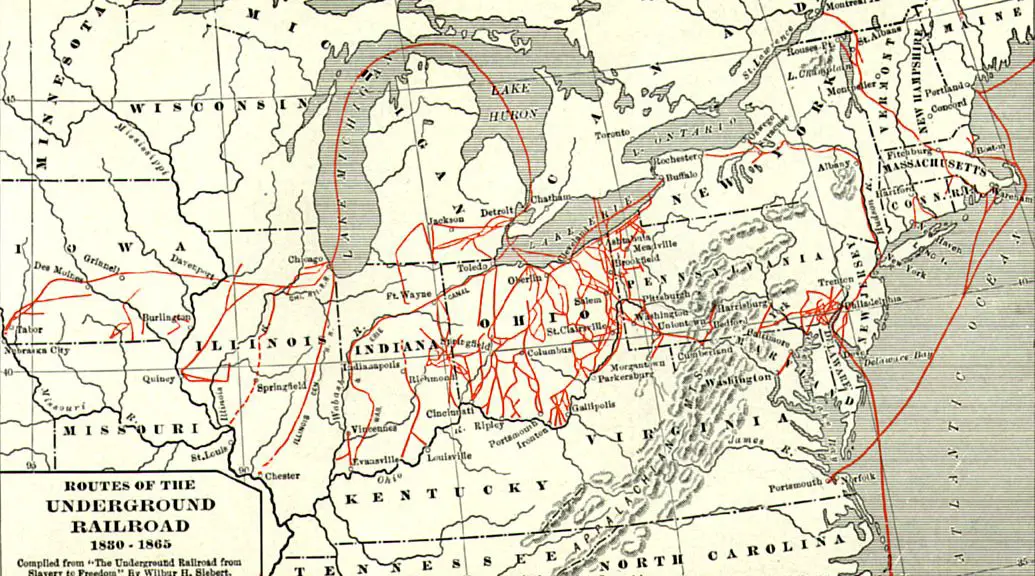
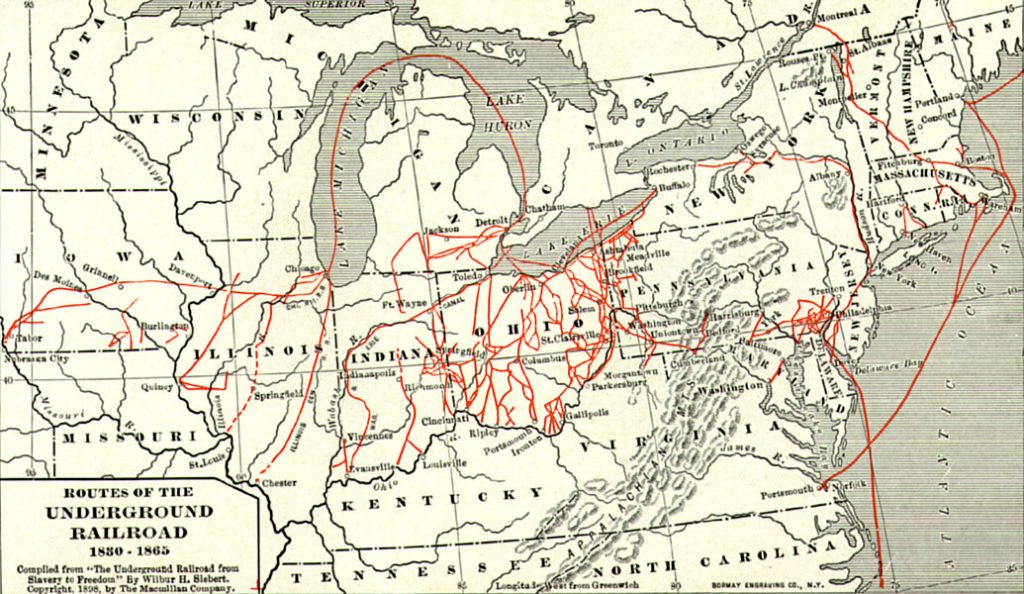
By the time of the Civil War, more than 4 million slaves were living in America and all of them longed for freedom. The Underground Railroad wasn’t a real railroad, but a system of roads and safe houses that black people traveled on their way to Canada or New England. One old folk song told them the way.

Fun Facts

  • The story goes that “Follow the Drinking Gourd” was written by a man named Peg Leg Joe, a sailor, who pretended to be a carpenter and had a wooden leg.
  • He would gain work on plantations and teach the slaves a song he had written, “Follow the Drinking Gourd.”
  • This song laid out through its verses a safe way for slaves to travel from Mobile Alabama to Kentucky, where they could cross the Ohio River to freedom. The song instructs them to leave in the spring and follow the Big Dipper, which points to the North Star.
  • They were to travel at night and watch for signs marked on dead trees — a left foot and a peg foot.
  • From there, they would see a river and then another river to cross to freedom.
  • No one knows for sure if Peg Leg Joe was a real person, a myth, or a combination of real people, but this song inspired slaves to seek freedom and it also became very popular during the Civil Rights Movement.

Questions and Answers

Question: Why did the slaves travel at night?

Answer: Running away was very dangerous, but traveling at night offered the slaves their best chance of freedom. Slavecatchers were generously rewarded for tracking down slaves and bringing them back. They often used hunting dogs to help them.

Learn More

Watch a video about the Drinking Gourd.

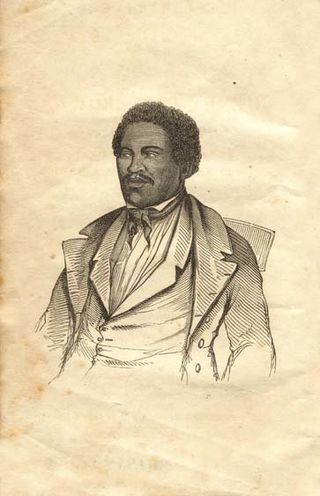
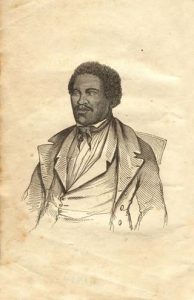
Henry Box Brown

Slaves had no control over their own lives — their work, their homes, their health, even their families —were controlled by slave owners. But the slave owners couldn’t control their feelings or their thoughts. And sometimes those feelings and thoughts led to desperate or creative acts. Like when Henry Brown mailed himself to freedom.

Fun Facts

  • Henry Brown, like most slaves, did not know how old he was or when his birthday was. Slave owners didn’t record slave births and they thought slaves who asked about their birthdays were impertinent and needed to be put in their place.
  • Henry, his mother, and his brothers and sisters worked in their master’s house. Their master was relatively kind to them, but Henry’s mother longed for freedom. She knew that slave children could be torn from their families and sold.
  • When their master was dying, he called Henry to him. Henry hoped the master would set him free. Instead the master gave Henry to his son.
  • Henry was taken from his family and sent to work in his new master’s factory. The boss yelled at him and hit him with a stick when he wasn’t fast enough.
  • Henry was just a boy then, but he grew into a strong man. He met a woman named Nancy who was a slave in another house. The two fell in love and their masters agreed to allow them to be married.
  • They had three children and they were very happy. Still, Henry and Nancy worried about their children.
  • And one day the worst happened. While Henry was at the factory, the master sold Nancy and the children. Henry knew that he would never see his family again.
  • He was heartbroken and without hope. He knew that it was time to seek his freedom.
  • As he was lifting crates in the factory, Henry had an idea. He his friend James and Dr. Smith, a white man who thought slavery was wrong, to help him. They met him at the warehouse the next morning.
  • Henry asked them to pack him into a box and mail him to William Johnson, an abolitionist in Philadelphia. On the top of the box they wrote, “THIS SIDE UP WITH CARE.”
  • James and Dr. Smith drove Henry to the railway station. The clerks threw the box into the baggage car, not being careful at all.
  • Henry was thrown again, upside down! Blood rushed to his head, his fingers tingled, his head hurt. But he couldn’t make a sound or someone might hear him.
  • Someone pushed the box again and finally he was right side up again.
  • Finally, 350 miles and 27 hours later, Henry arrived at Dr. Johnson’s house in Philadelphia. Four men helped him out of the crate and welcomed him to freedom. They celebrated this day as his new birthday, March 30, 1849. Soon, people throughout America and Europe had heard of Henry, who was now called Henry “Box” Brown.

Learn More

Watch a video about Henry Box Brown.

African American Artists During the 20th Century

Horace Pippin was born in 1888. His grandparents had been slaves. His parents were poor. As a little boy, Horace liked to draw but his parents didn’t have money for art materials. When he was 10, Horace won a box of crayons in a contest. When he was 14, he left school to earn money for his family. He worked as a porter in a hotel and on a farm. Five years later, he went to France to fight in World War I. There he badly injured his right hand. When he came home, he had a hard time finding work because of his crippled hand. When he was 40, he decided to become an artist. He steered his right hand with his left to make a painting. The first one took three years! But he kept on trying and finally became successful.

In 2018, African American artist Kara Walker created a woolen tapestry titled “A Warm Summer Evening in 1863.” This tapestry chronicles the riots that occurred in New York City during the summer of 1863. When Abraham Lincoln issued the Emancipation Proclamation, which freed slaves throughout the U.S., many former slaves headed north looking for jobs. White factory workers were angry because the extra competition. They took to the streets. More than 500 people died during this event and an orphanage for black children was burned.

African American Artists During the Nineteenth Century

Several African American artists began developing their talents in the late 1700s and early 1800s. Some of these were slaves, instructed by their masters. Others were free men and women. Very few of them felt safe enough to portray their feelings about slavery and inequality through their art. Most of their paintings were of wealthy white people.

In the 20th century, though, several black artists used their art to communicate powerful ideas about humanity and fairness.

Edmonia Lewis was the first prominent African American sculptor. Born in New York or Ohio in 1853, she was the daughter of a free African American man and a Chippewa woman. Both her parents died before she was five and she was sent to live with her mother’s people. Her brother paid for her to attend Oberlin where she studied art until she was accused of poisoning her roommates and kicked out. She later moved to Boston where she studied sculpture and then to Rome. During a time when most sculptors in Rome hired workmen, Edmonia worked alone.

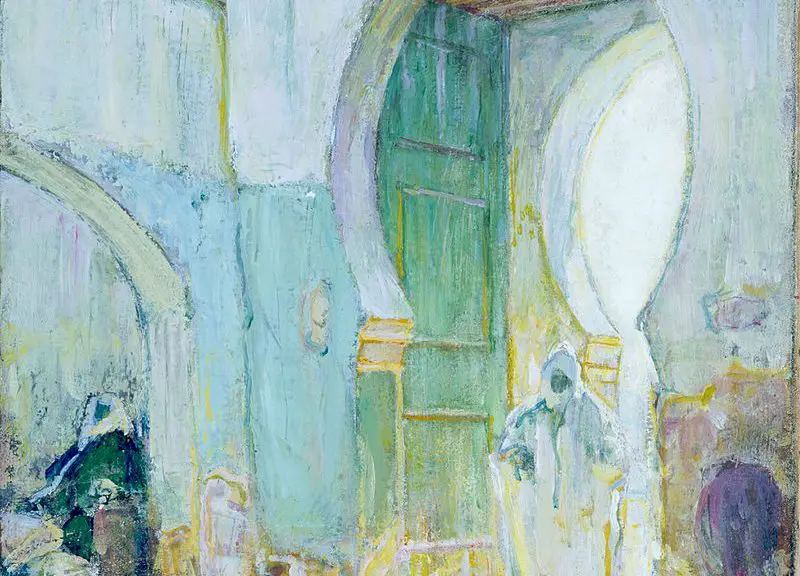
Henry Ossawa Tanner was born in Philadelphia in 1859. Tanner’s father was a minister and his mother was a slave who had escaped via the Underground Railroad. Tanner knew from a young age that he wanted to be an artist. His father apprenticed him to a flour mill, hoping him to discourage Tanner from being an artist, but the mill was very hard on the boy’s health. Later, Tanner went to Paris where he would spend most of the rest of his life. Many of his paintings are of Biblical scenes.

Edward Mitchell Bannister was a late nineteenth century artist who received several awards and was largely self-taught. He was born in Canada and lost both his parents at an early age. He lived with a white couple for several years before working on a ship. Later he became a barber. He studied sculpture and photography in Boston, but it wasn’t until he read an article in the “New York Herald” that said that African Americans could not produce art that he started painting. He was determined to prove the writer of that article wrong. He won a medal at the Philadelphia Centennial Expedition in 1876 for his painting, “Under the Oaks.” When he arrived to receive the award, the judges were angry because he was black. They wanted to give the award to someone else, but the white artists there insisted the award go to Bannister.