All posts by americanadmin

Pioneer Society

Pioneers didn’t have texting, video games, Internet, fast food, or shopping malls. They didn’t participate in sports or after school activities. But that doesn’t mean they didn’t have friends or fun times.

Fun Facts

  • Pioneers generally lived in small, remote communities. They were probably accustomed to a quieter, simpler life than most of us live with fewer interactions outside of family. They probably did feel lonely at times, especially during the winter.
  • However, they developed strong ties within their communities. Neighbors helped neighbors. For example, women brought food and offered care after a baby was born or when someone was ill.
  • Barn raisings were special events. Men and boys would gather to help their neighbors build barns, or even cabins. When the work was done, the community shared a meal, games, and dancing.
  • Women got together for quilting and knitting bees to share their sewing and handiwork. At these events, women talked and caught up on the latest news.
  • Children put on special school programs at Christmas and the end of the year. They sang songs or recited poems for the parents.
  • Harvest was also a time of gathering. The men (and women) often worked together, going from farm to farm to bring in the crops, especially if cold weather was coming and they had to hurry. Barn dances were one way to celebrate a good harvest season.
  • The church played a central role in the community too. People met for Sunday worship and sometimes for Bible study during the week.
  • Families got together for fun at other times too. Summer meant picnics and swimming; the Fourth of July was usually a big celebration, and most communities had a fair. During the winter, children enjoyed ice skating on frozen lakes, sledding, or playing in the snow.

Vocabulary

  1. Remote: isolated, removed
  2. Interaction: contact or involvement

Questions and Answers

Question: Did adults have friends too?

Answer: Adults were busy and didn’t have a lot of time for socializing, but they did have very good friends. Their friendships often revolved around helping each other with their work or sharing resources. One woman wrote about sharing a nice dress with her neighbor. They took turns wearing the dress to church.

Learn More

Watch an Amish barn raising.
 

Pioneer Medicine

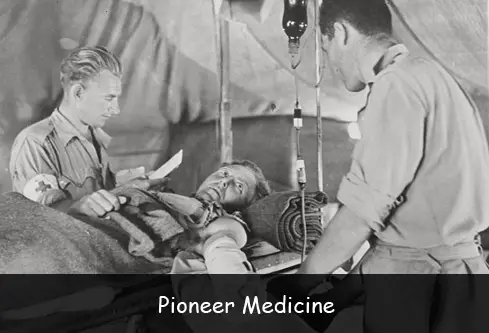
Being a pioneer was dangerous! Snake bites, accidents, frost bite, and food poisoning were all real dangers. Many people died from diseases such as measles, cholera, or smallpox. Doctors were few and far between and some of their cures did more damage than good.

Fun Facts

  • For hundreds of years, people believed disease came from bad “humors,” which could be foul air, evil spirits, or other negative things. The best way to get rid of these humors was thought to be by removing them from the body, usually by bloodletting, or draining some of the person’s blood. This practice was almost never helpful and many people died from loss of blood. Some researchers believe George Washington died after his doctors removed 40 percent of his blood to treat an inflamed throat.
  • Prior to the Revolutionary War, American doctors traveled to Europe for training. At that time, European doctors were moving away from bloodletting to a more moderate approach of letting nature heal. They were also doing more scientific research. The quality of American medical care seemed to be improving.
  • After the Revolutionary War, doctors in America stopped training in Europe. Medical schools opened in America, but most of them had very low standards. Almost anyone could get a medical degree. Treatments included bloodletting, amputating infected limbs, and prescribing questionable medicines.
  • Medicine wasn’t regulated and even very dangerous concoctions containing mercury, opium, alcohol, and even cocaine were sold. Salesmen traveled from town to town peddling their medicines, which treated everything from sore throats to hair loss.
  • American doctors didn’t believe in the European discovery that germs cause disease. If they had, they could have prevented many deaths simply by cleaning their hands and tools.
  • Most pioneers couldn’t afford doctors or their medicines, which was probably a good thing. Instead, they relied on natural solutions like rest, diet, and herbal remedies.

Vocabulary

  1. Cholera: a serious illness most often spread by dirty water
  2. Smallpox: a highly infectious disease that is no longer around thanks to vaccines

Learn More

Watch a video about an old-time pharmacy that looks more like something out of a Harry Potter movie.

Pioneer Fun

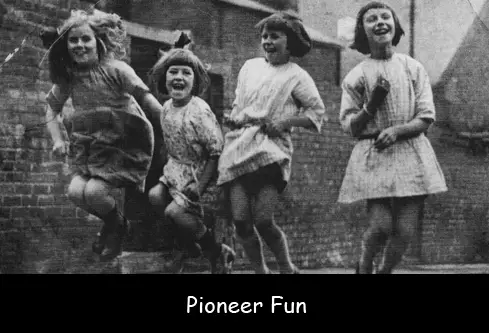
The pioneers worked hard, but they also had fun. They liked to play games just like children today. Try a few of their games with your friends.

Fun Facts

Button, Button. One favorite game was “Button, Button,” which is similar to “Hot Potato.” Children sat in a circle and passed a button from hand to hand, chanting, “Button, button, who has the button?” When they stopped chanting, a child sitting in the middle of the circle had to guess who was holding the button.

Who Has the Thimble? One child closed her eyes while another child hid a thimble somewhere in the room. The first child began searching for the thimble while the other children said, “Hot,” as she got closer to the thimble, or “cold,” if she was far away. Once the child found the thimble, another child was chosen to be the seeker.

Cat’s Cradle. Played with a piece of yarn tied at the ends to make a loop, a child placed the yarn over his outstretched hands. By pinching and sliding his hands through the yarn, he could make a design. This game can be played by one person or two. Here’s a video to learn more.

Paper Dolls. Paper dolls were popular because they were simple, inexpensive, and portable. Mothers sometimes drew dolls and clothing for their children or cut figures from magazines and catalogs.

Checkers. Checkers, a game that’s similar to chess, is still popular today. Pioneer children often made their own checkers game with small pieces of wood and a board.

Marbles. Marbles, especially “cat’s eyes” were prized possessions. Children placed the marbles in a circle on the ground. Each child took a turn flicking a marble with his finger, trying to hit his opponents’ marble out of the circle (sort of like pool). The person with the last marble left in the circle was the winner.

Jacks. Jacks was a simple game involving a rubber ball and small metal stars (jacks). The child dropped the ball and picked up a jack before catching the ball again. With each turn, the child had to pick up one more jack than the last time. If the child missed the ball, she was out.

Hoop Rolling. Children rolled the hoops from wagon wheels and other machinery across the ground, steadying it with a stick. The point was to see how far and fast the hoop could go before it fell.

Potato Sack Races. Children made toys from anything readily available at their homes and farms, including burlap sacks used to ship and store potatoes. Children climbed inside the sacks, pulling them up around their legs. While holding the sacks up around their waists, they hopped madly. The winner was the first person to cross the finish line.

Learn More

Discover other pioneer games to play with your friends.

Pioneer School

Imagine traveling with your family across an unknown country to start a new life in a new place. Few people live there. Your family must work hard to build a house and raise food.

Schooling would probably be a low priority until your family’s basic needs were met. But then what?

Fun Facts

  • Today, laws require every child to attend some kind of school. Families choose from public schools, private schools, or homeschools.
  • During the 1800s, not every state required children to attend school. Many children lived in an area where there wasn’t a school. These children usually learned to read, write, and do basic math at home with their parents. Families had few books, but most had a Bible children could read.
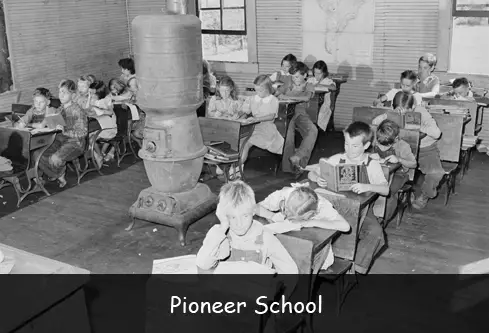
  • As towns became more settled, the people started schools. These were usually one-room buildings with rows of benches and desks. In the schoolroom were a coatroom, a flag, and a coal stove. The children had few books and wrote their lessons on small slates (chalkboards).
  • The school was the center of the community and the building was often used as a church on Sundays. Everyone in the community was committed to helping the children get an education. Parties, festivals, and holidays were fun celebrations. Children sometimes performed songs or read poems they’d memorized.
  • In the schoolroom were children of all ages and abilities. Children living in town were often able to attend school regularly while farm children came to school less frequently because they were needed at home.
  • Because of this, there might be a seven-year-old child who could read better than an eleven-year-old.
  • School teachers had to be able to teach every age group at once. The teacher would assign the youngest group their lesson and then move on to the next group. The older children often helped the younger ones.
  • Being a school teacher was hard work. Teachers weren’t paid well and often lived with the families in the community. Female teachers were not allowed to be married and had to follow strict rules for how they dressed and behaved. Teaching was one of the few professions women could do.
  • The children brought their lunches in pails from home. They would sit outside or at their desks to eat. In good weather, they loved playing games outside after lunch.
  • There were no indoor toilets; everyone used an outhouse located near the school.

Vocabulary

  1. Slate: small chalkboard upon which to write
  2. Profession: job

Frequently Asked Questions

Question: Did the children ever get in trouble?

Answer: Yes. Most teachers were strict. If a child misbehaved, the teacher might hit the child’s hand with a stick.

Learn More

Watch a video about modern one-room schoolhouses.

Learn more about old schools.

Life for Pioneer Children

Pioneer children wanted the same things children want today. They liked spending time with their families, learning new things, and playing with friends. Their lives were very different in other ways though.

Fun Facts

  • Pioneers often had large families, although it wasn’t uncommon for at least one child or parent to die early of disease or accident.
  • Pioneer children helped their parents from the time they were very young. Girls learned to cook, grow gardens, and sew. Boys learned to hunt, raise crops, and build things. Both boys and girls might milk a cow, gather firewood or buffalo chips, or gather eggs.
  • Pioneer families had few belongings. The children might have a pair of clothes for every day and one for Sundays and special occasions. Their toys were usually handmade. Girls might have a special doll. Boys might have a ball or carved animal. Children slept on skins on the floor or in beds filled with feathers, corn cobs, or cattails. They usually shared a bed with at least one sibling, sometimes more!
  • Pioneer children often walked for miles as they traveled west with their families. When their shoes wore out, they walked barefoot.
  • Food was simple and consisted mostly of cornbread or porridge, meat, and fish. During the summer, they ate fresh fruits and vegetables. They also dried onions, beans, apples, and other foods to use during the winter. Candy or cookies were special treats, usually saved for holidays. Some people made maple syrup candy by pouring maple syrup onto snow and letting it harden.
  • Life could be dangerous! Falling from a wagon, being crushed by oxen, drowning, or getting lost were all very real dangers. Older siblings often cared for the younger ones.

Vocabulary

  1. Handmade: made by hand
  2. Porridge: a thin cereal like oatmeal

Questions and Answers

Question: Did pioneer children think their lives were hard?

Answer: Many pioneers recorded their feelings in diaries. We know that they were sometimes sad and felt their lives were hard. Mostly though they focused on working hard and enjoying happy times with their families.

Learn More

Read about the games pioneer children played.

Conflict with Indians

As the pioneers moved west, they built cabins, claimed land for farms, and hunted animals and birds. The Indians felt angry and afraid.

They believed the earth belonged to everyone and couldn’t be claimed by one person. They also believed in living simply and using resources carefully, only taking what they needed. The two groups were so different in their ways of living and thinking. They were bound to have conflict.

Fun Facts

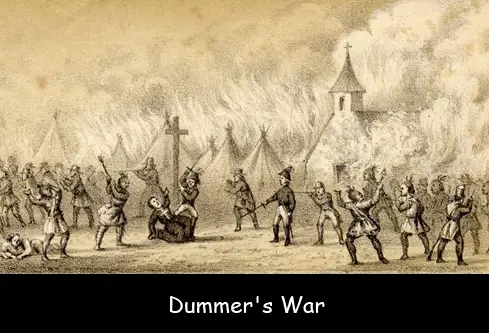
  • The settlers gathered in fighting forces. Sometimes they would attack Indian villages, killing the Indians or burning their houses to the ground. The Indians were stealthier, usually attacking one lone farm or cabin. They also burned buildings to the ground, killing the inhabitants or kidnapping children, adopting them into the tribe.
  • One woman defended her home from an Indian attack by burning a feather mattress in her fireplace. The Indians tried to slide down the chimney, but were sickened by the smoke. The woman killed them with an axe.
  • Indians often scalped their victims as trophies of their bravery. They cut the skin and hair off the person’s head, drying it and hanging it from their belts. They sometimes shot flaming arrows at cabins, starting fires. When the settlers came out of the cabins, the Indians shot them.
  • Settlers began building forts called stockades. The stockades had high walls and buildings. From this vantage point, men could shoot at the Indians.

Questions and Answers

Question: Were the Indians and settlers ever friends?

Answer: Yes, the two groups sometimes did become friends.

Learn More

Find out more about Indian and pioneer relations.

Pioneer Houses

When settlers headed west, they had little time for building fancy houses. They usually traveled west during the spring and when the weather was good.

If they were lucky, they reached their destination with just a few weeks of summer left. They had to plant crops and quickly find shelter.

Fun Facts

  • The first shelters were usually lean-tos, made from bark and branches set against an earthen bank. The branches were covered with mud or animal skins. A fire burned near the lean-to’s front door opening, offering light, heat, and protection from animals.
  • When pioneers moved to the Midwest, they discovered a problem – no trees anywhere. Building a house of wood was not an option; instead, they cut large blocks of sod from the ground—chunks of dirt and grass—and used them as bricks, stacking them together. These houses, called soddies, stayed cool in the summer and warm in the winter, but they had their problems too. They were dark, smelly, and dirty. Rain entered through the roof, along with snakes, mice, gophers, and insects. Soddies were sometimes built into a hillside. The roof, part of the hill, was covered with grass and flowers. If you didn’t know the house was there, you’d think it was just a hill.
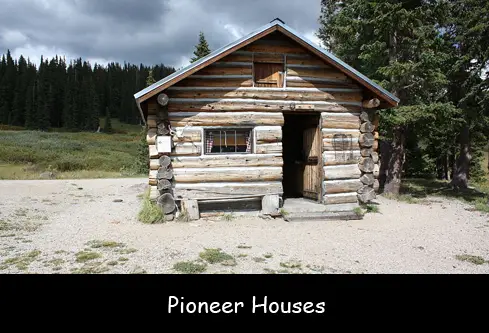
  • In forests, pioneers built wood cabins. Building them was slow, hard work and most cabins were just one room. The trees had to be cut down, cut into equal lengths, and notched to fit together. The children stuffed moss, twigs and mud into the holes between the logs. The roofs were usually made from bunches of grass, thatch, tied into bundles.
  • In the Southwest, pioneers learned to make adobe houses like the native people who lived there. They mixed straw and mud to make bricks, which were baked in the hot sun until they were hard.

Questions and Answers

Question: Did the pioneers have beds or other furniture?

Answer: The early pioneers slept on animal skins and sat on tree stumps. Later beds might be a cloth sack filled with straw, grass, or cattails.

Learn More

Watch a video about sod houses.

Traveling West

Early settlers like Daniel Boone traveled west by foot across the Appalachian Mountains and through the Cumberland Gap. As they entered what is now Kentucky, they found a lush paradise with grapevines, rich soil, forests, and plenty of animals to hunt. Word got out and soon hundreds of pioneers were heading west in search of a better life.

Fun Facts

  • Native Americans had lived in the Kentucky woods for hundreds of years. Their trails ran throughout the region. They were not always happy about the settlers’ arrival and fights between the two groups were common.
  • The earliest travelers made marks or “blazes” on the trees so future travelers wouldn’t get lost. Later, settlers came on horses and then by wagon. Men chopped down trees to make the paths wider. The wagons were made of wood with large fabric coverings. The wheels were wooden with an outer layer of metal. The pioneers carried extra wheels in case one broke. The seams of the wagons were painted with hot tar to make them watertight since they often had to go through rivers and streams.
  • The pioneers discovered that traveling by boat was much safer and faster than traveling on foot. They made flatboats to transport animals, goods, food, and wagons.
  • Pioneers often left friends and family behind, never to be seen again. They gave away most of their things, taking only the bare necessities like clothing, food, shoes, tools, guns, and seeds.
  • Pioneers ate a simple diet including a simple gruel made from flour or cornmeal and water heated to thicken it. They ate berries, nuts, and plants found along the trail, as well as fish, birds, deer, rabbits, and squirrels.
  • Accidents were common. Children sometimes got lost or fell out of wagons and were crushed by the wagon wheels. Many people died from diseases like cholera or smallpox.

Questions and Answers

Question: If being a pioneer was so hard, why did people keep going west?

Answer: New England was getting crowded and early settlers were anxious for a better life. Rumors of rich farm land and prosperity tempted them. Those early Americans were determined, optimistic, and hardworking. It was also probably hard for them to imagine just how difficult their lives might be in the west.

Learn More

Watch a video about the Cumberland Gap.

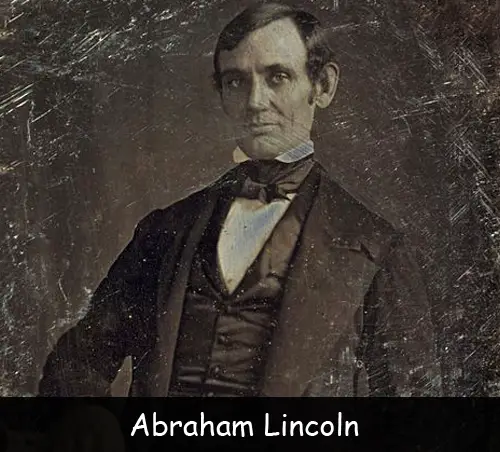
Abraham Lincoln

Abraham Lincoln is considered one of America’s greatest presidents. He led the country through the Civil War and fought to end slavery. He grew up in Kentucky, the son of a farmer.


His mother died when he was a little boy and his father remarried. Abe loved learning and he was a hard worker. He was known for his honesty and character. Here are two stories about Abe Lincoln:

The Book

Abe Lincoln loved to read, but his family had few books other than the Bible, which he had read many times. As a boy, Abe did some work for a farmer living nearby. The farmer saw Abe’s interest in learning and lent him a book. Abe was thrilled. He read the book at night in his bed in the attic after the work was done. But one morning, when Abe awoke, he discovered that it had snowed in the night. Snow had come through cracks in the roof. His bed was covered with snow and so was the book.

Abe was heartbroken. He had ruined the book and he certainly didn’t have money to replace it. Still, he tried to always be honest. He told the farmer what had happened, knowing the man would probably be angry. The man could see how upset young Abe was. He told Abe to do some extra work for him to make up for the ruined book.

The Firewood

 Abe Lincoln once met a poor man chopping firewood. The man was barefoot and had no coat, even though the weather was bitter. He looked thin and weak. Abraham asked him, “Why are you chopping this wood with no shoes or coat?” The man replied, “I have neither. I’m going to buy both with the money I make chopping this wood.”

Abraham told the man to go home and get warm by the fire. He finished chopping the wood himself and delivered it, collecting the money and returning it to the poor man.

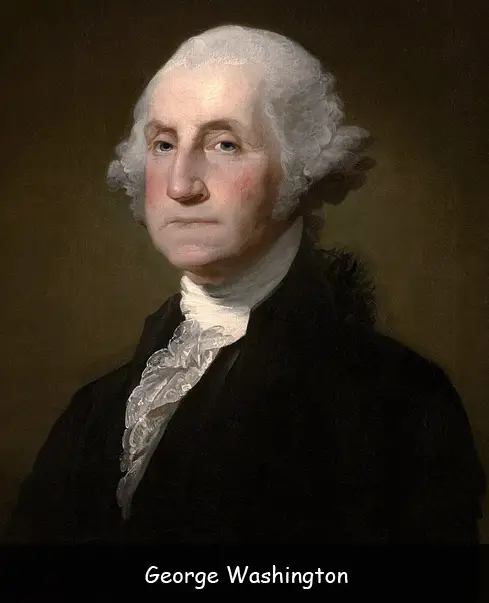
George Washington Lends a Hand

Early one morning, George Washington walked through his camp. He had asked his soldiers to make the camp stronger and more secure. He wanted to see if the work was complete. He came upon some men who were lifting heavy logs to make a fence. The corporal in charge stood at one side giving orders. The men lifted and lifted, but they could not lift the last heavy log high enough.

The corporal continued to urge the men forward, but did nothing to help them. The men struggled and heaved, but they could not lift it. The log was about to fall down. George Washington ran to them, grabbed the log, and helped them roll it into place. The soldiers did not recognize Washington in his heavy coat and hat, but thanked him gratefully. The corporal said nothing.

Washington turned to the man and asked, “Why don’t you help your men?”

“Because I’m a corporal,” said the man haughtily.

“Indeed,” said Washington, unbuttoning his coat to show his uniform. “I’m the commander-in-chief of this army. The next time your men need help, send for me.” With that, he turned and walked away.

The corporal learned a lesson that day and he learned about George Washington’s character. Good leaders are never too proud to lend a hand.