All posts by americanadmin

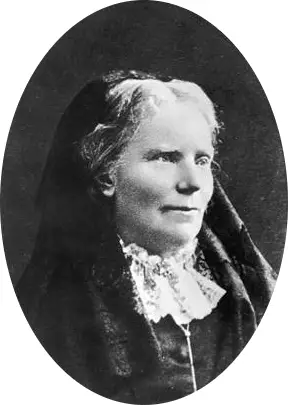
Elizabeth Blackwell

Elizabeth Blackwell was the first woman to attend medical school in the U.S. Throughout her life, she endured persecution for being a woman doctor.
Fun Facts

  • Elizabeth was born in 1821 in Bristol, England. She was the third child of nine children. Four unmarried aunts also lived in their home. Elizabeth’s father was a sugar refiner.
  • Her family moved to New York when she was twelve after a fire destroyed her father’s business.
  • Here, the family became involved in the abolitionist movement. At the dinner table, they often talked about slavery, child labor, and women’s rights. Elizabeth’s parents were unusual for the time in that they did not believe in hitting children; they also believed all children, including girls, needed an education.
  • The family moved to Cincinnati, Ohio. Her father died when she was 17, leaving the family with very little money.
  • Elizabeth and her sisters opened a school to earn an income. Later, Elizabeth took a teaching job in Kentucky. She was deeply troubled by the slavery she saw there and left after just one term.
  • Elizabeth started thinking about medicine after a friend became ill and commented that she wished she’d had a female doctor caring for her. She went to work as a teacher once again, this time in North Carolina, to earn money for medical school.
  • Every medical school she applied to turned her down because she was a woman. Some doctors suggested she disguise herself as a man to get in. Finally she was accepted at the Geneva Medical College in upstate New York.
  • During the summers between college terms, Elizabeth worked at a clinic for the poor in Philadelphia. Some male doctors refused to work with her and would even walk out when she was on duty.
  • Elizabeth studied in France and learned how to care for pregnant women. While in Europe, Elizabeth got an eye infection from a patient and lost sight in one eye, which was later removed.
  • In 1857, she organized the New York Infirmary for Women and Children. She also gave lectures about the importance of education for girls.
  • During the Civil War, she helped train and organize nurses.
  • Elizabeth retired from medicine in 1874. She spent many years traveling in Europe and writing and lecturing about social causes.
  • She died in Sussex in 1910.

Vocabulary

  1. Persecution: to harshly treat someone, often for that person’s beliefs
  2. Endure: to survive


Frequently Asked Questions

Question: Did Elizabeth Blackwell ever marry?

Answer: Elizabeth was very independent, headstrong, and spirited. Men courted her but she had little interest in marrying.


Learn More

Watch a video about Elizabeth Blackwell.


Internal Link
https://www.americanhistoryforkids.com/womens-rights/

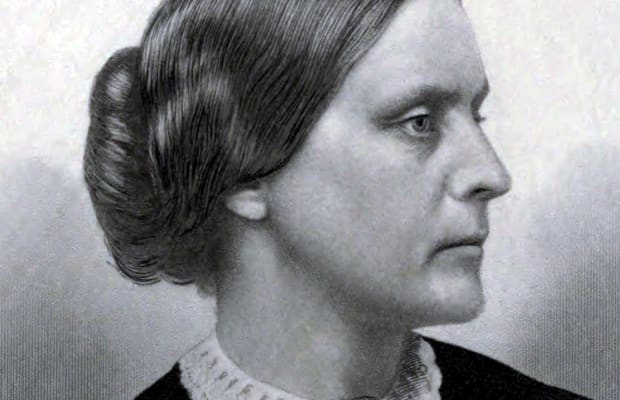
Susan B. Anthony

Susan B. Anthony was passionate about women’s rights, abolition, and the temperance movement. Even when she was old, she was full of energy and determination.

Fun Facts

  • Susan B. Anthony was born in Adams, Massachusetts in 1820. Her father, Daniel Anthony, was a Quaker. Her mother, Lucy Read, was a Methodist.
  • Daniel attended the local Quaker church but he was disliked there because his wife was not a Quaker. The church later disowned him because he held a dance school in his home.
  • Susan was the second oldest of seven children. All her family was involved in social causes. Her father was a strong abolitionist. Two of her brothers moved to Kansas to support anti-slavery.
  • Daniel encouraged all his children to learn skills and prepare to take care of themselves.
  • The family moved to Battenville, New York when Susan was six years old. Daniel managed a cotton mill.
  • Susan passed out anti-slavery fliers when she was 16. She also helped with the Underground Railroad.
  • At age seventeen, Susan went to a Quaker boarding school in Philadelphia. The school was very strict. She had to leave the school after only one term because her father had lost everything in the Panic of 1837, a financial crisis similar to 2008.
  • She became a teacher in a Quaker boarding school to help her family. She discovered there that she earned about a quarter of what the male teachers were paid. She was frustrated and angry by this unfairness.
  • The family later moved to a farm in Rochester, New York. There Susan met many other activists, such as Frederick Douglass. Susan ran the family farm for a few years before devoting herself full-time to working on the issues that were important to her.
  • In 1851, Susan met Elizabeth Cady Stanton, who would become a lifelong friend and work partner. The two would spend many years writing and lecturing together. They worked to end slavery, give women equal rights including the right to vote and equal pay, and outlaw alcohol sales.
  • Elizabeth had seven children. Susan often watched the children so Elizabeth could write. Elizabeth developed the ideas and speeches. Susan rented halls, organized events, and gave the speeches.


Vocabulary

  1. Abolitionist: someone who works to end slavery
  2. Temperance: the movement to end alcohol sales and use


Frequently Asked Questions

Question: Why was drinking alcohol considered so bad?

Answer: Mostly because of laws that discriminated against women. Women could not work or have their own property. Nor could they divorce their husbands. If a man used his paycheck to buy alcohol or abused his wife and children while drunk, women had little choice but to put up with it. Temperance laws were designed to help protect women and children.


Learn More

Watch a video about Susan B. Anthony.

Internal Link

https://www.americanhistoryforkids.com/womens-rights/

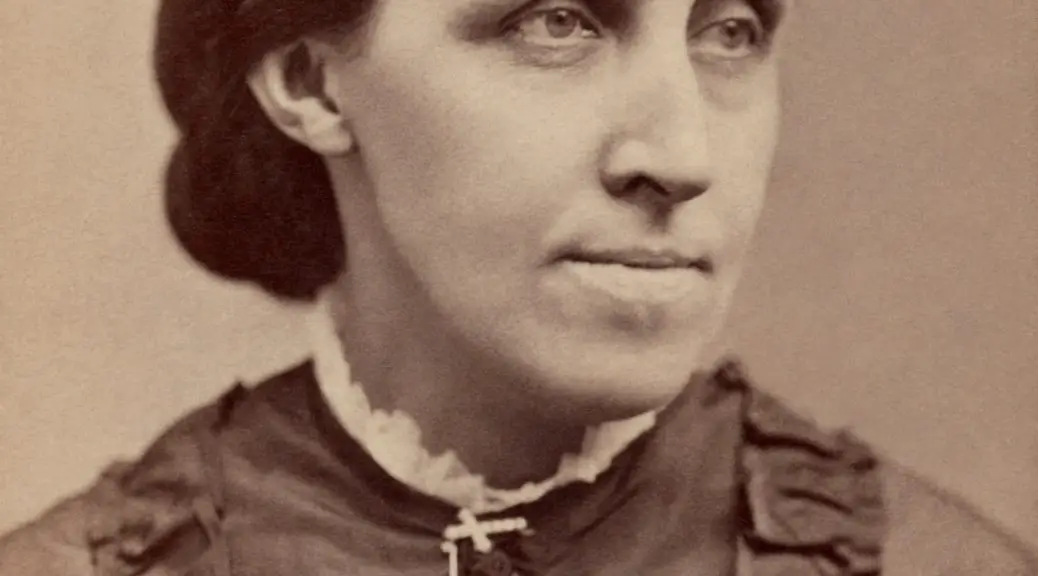
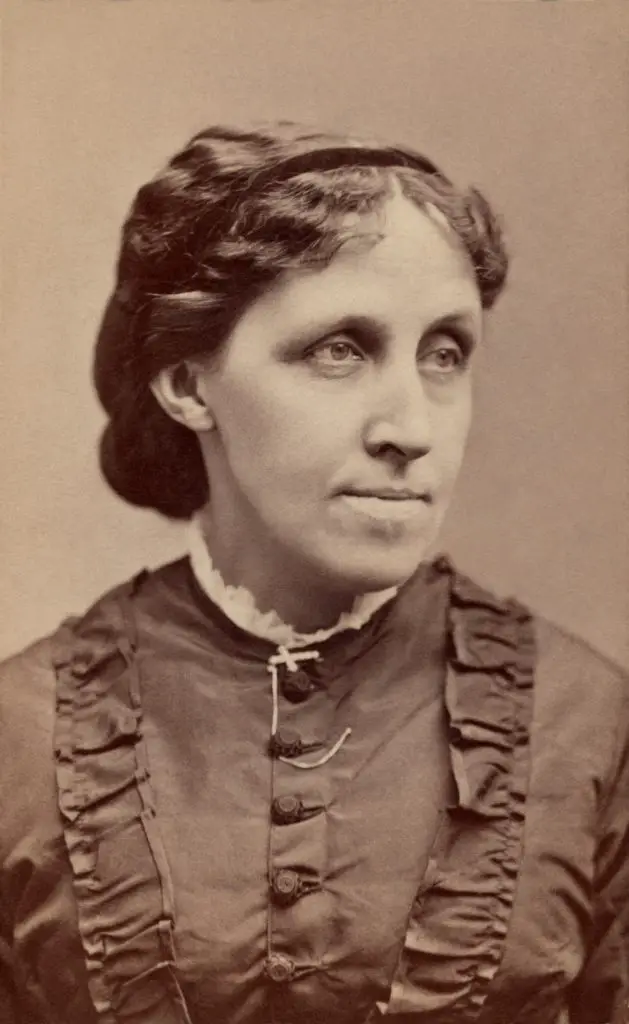
Louisa May Alcott

Louisa May Alcott is one of the most beloved authors of all time. She wrote Little Women and many other books for children.

Fun Facts

  • Louisa May Alcott was born in Germantown, Pennsylvania in 1832.
  • Her father, Bronson Alcott, was a teacher; her mother, Abby May, was a social worker. Louisa’s parents were transcendentalists, part of a religious and social movement that worked to create perfect and harmonious life. They knew many of the leading writers and thinkers of the time, including Nathaniel Hawthorne, Henry Wadsworth Longfellow, Hendry David Thoreau, and Ralph Emerson.
  • The family moved to Boston in 1834 and Bronson opened an experimental school. He had unusual ideas about education and the school did not prosper.
  • The family moved to Concord where they would live in several different homes. Bronson had a hard time providing for the family and money was always tight. They moved 22 times in 30 years.
  • At one point, they lived at Fruitlands, a community home.
  • Louisa’s father was her main teacher, but she also received instruction from Henry David Thoreau and other writers of the time.
  • Because her family was so poor, she went to work at an early age as a seamstress, a governess, and a writer. Her writing was a creative and emotional outlet for her.
  • She was driven to be successful because she hated being poor.
  • Louisa began writing poems and articles for magazines. A staunch abolitionist, she became a nurse during the Civil War. She wrote popular pieces about life in a military hospital.
  • In 1868, Louisa published Little Women, based on her own life. The character of Jo is based on Louisa herself, although Louisa never married.
  • The book was very popular and Louisa was embarrassed by the attention. She sometimes pretended to be a servant when people came to the house to see the famous author.
  • Louisa died of a stroke in 1888. She was only 55 years old. She is buried in Concord next to other famous authors of the time.


Vocabulary

  1. Seamstress: someone who sews or mends clothing
  2. Governess: a private in-home teacher for children


Frequently Asked Questions

Question: What did Louisa do when she wasn’t writing?

Answer: She loved to read and be in the outdoors. She was also an abolitionist and feminist. She believed women deserved the right to an education and adequate work and helped organize a union in Boston.

Learn More

Watch a video about Louisa.

Internal Link

https://www.americanhistoryforkids.com/the-victorian-era/ https://www.americanhistoryforkids.com/early-american-literature-art/

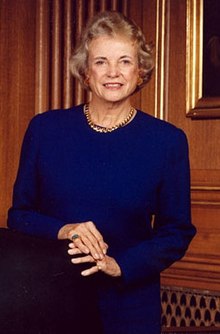
Sandra Day O’Connor

Sandra Day O’Connor was the first woman appointed to the U.S. Supreme Court. Before she was a lawyer and judge though, she was a rough-riding cowgirl, capable of shooting rabbits for a meal.

Fun Facts

  • Sandra Day O’Connor was born in 1930 in El Paso, Texas. She grew up on a huge cattle ranch (198,000 acres) in Duncan, Arizona. The ranch was nine miles from a paved road and the home had neither electricity nor running water.
  • Sandra knew how to ride horses, herd cattle, and use a .22 rifle. She learned to drive a truck as soon as she could see over the dashboard.
  • She spent winters with her grandmother in El Paso where she attended a private girls’ school. No school existed near the ranch in Arizona.
  • She studied economics and law at Stanford University, and gained her law degree in 1952.
  • She married John Jay O’Connor III, a fellow student at Stanford, the same year. They had three boys.
  • Even though Sandra was at the top of her class in college, she had trouble getting a job as a lawyer because she was a woman.
  • She finally got a job as a deputy county attorney in California. She offered to work for no pay or no office, sharing space with a secretary.
  • Later, Sandra served as the assistant attorney general for Arizona, and was given a vacant seat in the Arizona Senate. In 1973, she became Majority Leader in the Arizona Senate, the first woman to have such an office in the U.S.
  • Ronald Reagan appointed her to the Supreme Court in 1981, where she served until she retired in 2006.


Vocabulary

  1. Dashboard: the front portion of a vehicle beneath the windshield
  2. Supreme Court: the highest court in America


Frequently Asked Questions

Question: What did Sandra do after she retired from the Supreme Court?

Answer: Sandra continued to volunteer her time for political organizations. She was a professor and she wrote several books. She cared for her husband who had Alzheimer’s until his death in 2009. She stopped appearing publicly in 2018 because she also has Alzheimer’s.


Learn More

Watch a video about Sandra Day O’Connor.

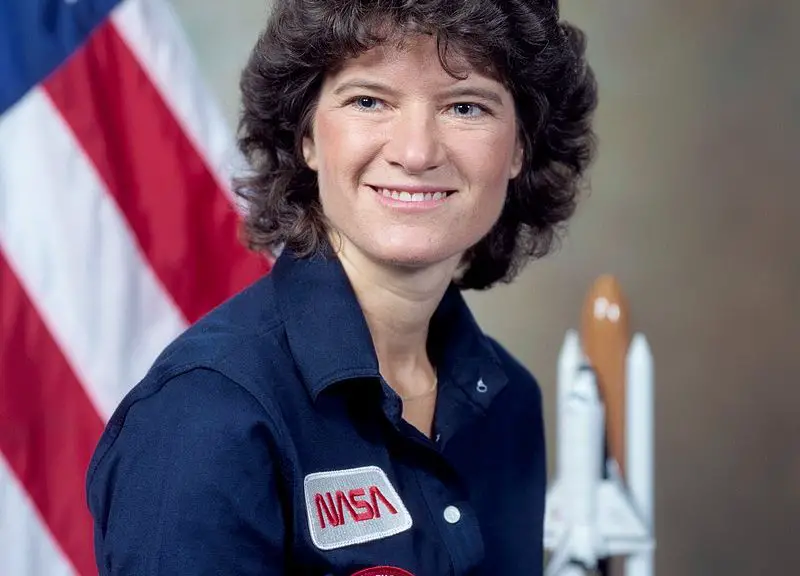
Sally Ride

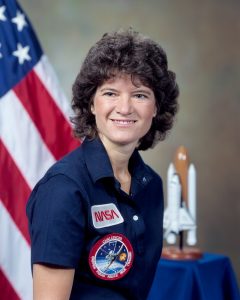
Sally Ride was the first female American astronaut in space. She was also a competitive tennis player.

Fun Facts

  • Sally Ride was born in 1951 in Los Angeles. Her parents were both Presbyterian ministers. Her mother volunteered at a correctional facility and her father taught political science at Santa Monica College.
  • As a child, Sally was interested in science. She also loved playing tennis.
  • After she graduated from high school, Sally went on to gain masters and doctorate degrees in physics from Stanford University.
  • In 1978, Sally saw a newspaper ad from NASA seeking applicants for the space program. She, along with 35 other people, was selected from 8,000 applicants.
  • Sally went on two space flights, logging more than 348 hours in space. Some people wondered if women should be in space. Sally insisted she was qualified.
  • Sally left the NASA space program in 1987. She worked as a professor and she developed Sally Ride Science, a company that offered engaging science classes for kids.
  • Sally co-wrote six children’s books on science with her partner, Tam O’Shaughnessy.
  • She died in 2012 at her home.


Vocabulary

  1. Correctional facility: a prison
  2. Doctorate: the highest college degree obtainable

Questions and Answers

Question: Did Sally have any children?

Answer: Sally did not have any children, although she loved teaching children, especially about science.


Learn More

Read more about Sally Ride at NASA.


Internal Link

https://www.americanhistoryforkids.com/1980s-culture/

Clara Barton

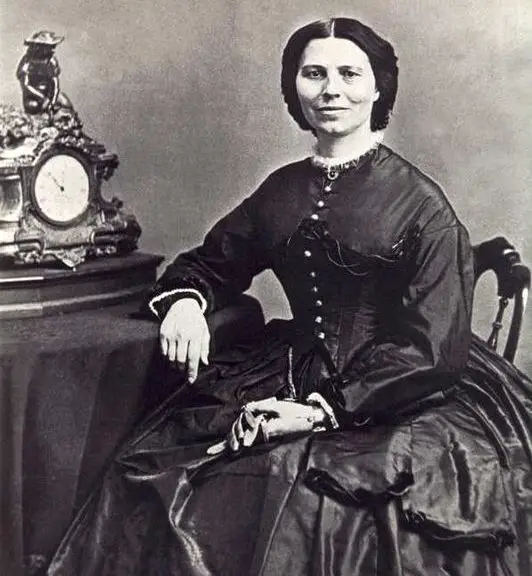
Born on Christmas Day in 1821, Clara Barton was a teacher, nurse, and leader. She was the founder of the Red Cross.

Fun Facts

  • Clara was born in Oxford, Massachusetts. She was the youngest of five children born to Stephen and Sarah Barton.
  • As a teenager, Clara nursed her seriously ill brother, David.
  • Later, she decided to become a teacher. She started teaching when she was 18 and organized a school for the children of the workers in her brother’s mill when she was 24.
  • In 1852, Clara moved to New Jersey to start the first free school there. She resigned from her position when she learned the school had hired a man for twice her salary. She refused to work for less than a man.
  • In 1854, she was the first woman hired as a recording clerk in the patent office in Washington D.C. She earned $1,400 a year, the same salary as a man.
  • The next year, her salary was reduced by Robert McClellan, Secretary of the Interior, because he did not approve of women working in government. The year after, she lost her position, but regained it when Abraham Lincoln was elected president.
  • She quit her job in 1861 to aid soldiers in the Civil War. In 1862, she received permission to transport supplies to Union Soldiers. She was at every major battle in Maryland, South Carolina, and Virginia. She brought medical supplies, clothing, and food, and also cared for the wounded. She was called “The Angel of the Battlefield.”
  • She had no formal medical training, but a brave heart and a cool head. She was named head nurse by General Benjamin Butler.
  • She worked with Frances Gage to help slaves prepare for freedom, giving them advice on money, education, and work opportunities.
  • When the war ended, she testified in Congress about her war experiences. She also helped mark thousands of graves.
  • While traveling in Europe, she learned about the International Red Cross and worked to bring a chapter to the United States. In 1881, she became president of the first American chapter of the Red Cross.
  • In 1904, she organized the National First Aid Association of America, which worked to help citizens learn first aid and emergency preparedness.


Vocabulary

Resign: to formally leave a position

Testify: to report


Questions and Answers

Question: Did Clara ever marry or have children?

Answer: Clara was devoted to her family, but she never married or had children. She was extremely shy. Clara died when she was 90 years old.


Learn More

Watch a video about Clara Barton.


Internal Link

https://www.americanhistoryforkids.com/long-days-world-war-ii/

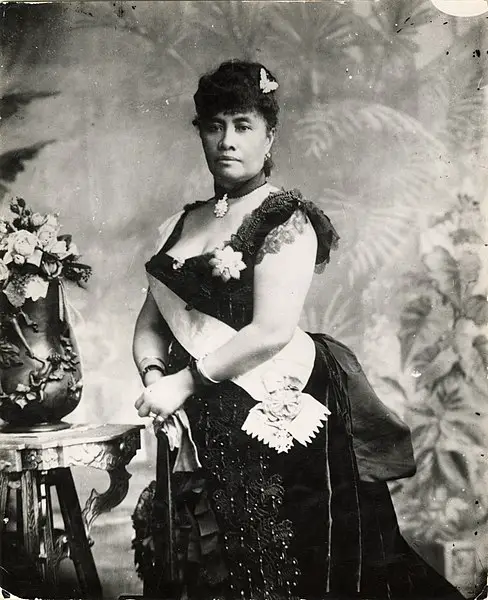
Queen Liliuokalani

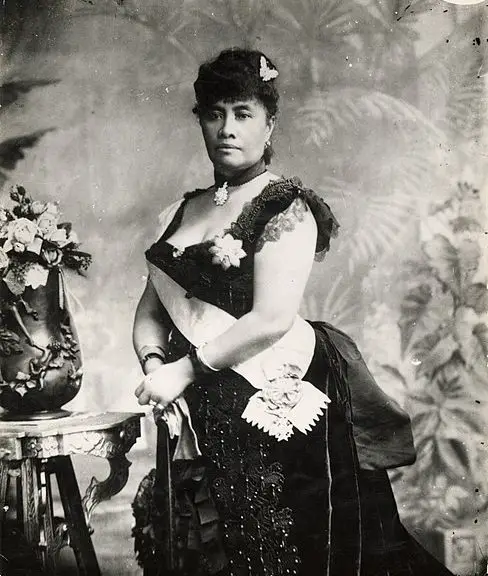
Liliuokalani was the last monarch of Hawaii before it became part of the United States. She resisted the United States’ efforts to annex her country, but eventually lost.

Fun Facts

  • Liliuokalani was born in 1838 in Honolulu. Her parents were highly respected chiefs. As a child, she was called Lydia. Later she was known as Lili.
  • She married John O. Dominis, an American soldier, in 1862. They lived with his widowed mother at Washington Place, now the official home of the governor of Hawaii.
  • She became queen in 1891 after her brother died.
  • As queen, Liliuokalani tried to restore some of the powers of the crown that had been lost while her brother was king. Local American businessmen, especially pineapple plantation owners, were afraid they’d lose some of their rights. They planned a coup with the backing of the U.S. military to remove her from power.
  • Liliuokalani stepped down as queen in 1893. She was later put in prison. She was pardoned a year later, but was forbidden to leave the island of O’ahu.
  • Liliuokalani and her husband had no children, although she adopted two children.
  • She was a gifted songwriter, writing more than 150 songs.
  • Liliuokalani gave land to create the Liliuokalani Garden; she also asked that her trust be given to orphaned children in Hawaii after her death.


Vocabulary

Coup: attempt to overthrow a leader, usually through force

Pardon: when someone is forgiven by the government

Questions and Answers

Question: What was Liliuokalani’s childhood like?

Answer: She was the daughter of very important people. She attended a boarding school from age four to age ten, when the school was closed because of a measles epidemic that killed 10,000 people, including her sister.


Learn More

See images of Liliuokalani and her family.

Amelia Earhart

“The most difficult thing is the decision to act. The rest is merely tenacity. The fears are paper tigers. You can do anything you decide to do. You can act to change and control your life and the procedure. The process is its own reward.”

“No kind action ever stops with itself. One kind action leads to another. Good example is followed. A single act of kindness throws out roots in all directions, and the roots spring up and make new trees. The greatest work that kindness does to others is that it makes them kind themselves.”

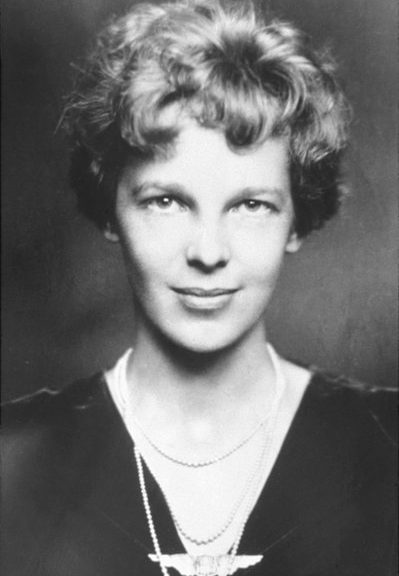
At a time when aircraft were still something of a novelty and flying one was an activity left to men, Amelia Earhart broke all the rules by becoming one of the most famous pilots in the world.

Fun Facts

  • Amelia was a tomboy as a child. She hunted rats with a .22 rifle, climbed trees, and refused to wear dresses. She kept a scrapbook filled with articles about women who became lawyers, doctors, and scientists.
  • Amelia first saw a plane at a county fair. She was 10 years old. She was not impressed by the rusty contraption of wood and wires.
  • Ten years later, at a stunt exhibition, a pilot in a little red plane flew low over her head as she and a friend stood on the field. He thought she would flee or drop to the earth, but she stood her ground. As the plane zoomed over her head, she was hooked. She decided flying was for her.
  • After high school, she attended Ogontz, a girls’ finishing school in Philadelphia, but left to become a nurse’s aide during World War I.
  • She attended college and became a social worker.
  • She took her first flying lesson in 1921; six months later, she had saved enough money to buy a little second-hand plane, painted bright yellow. She named it “the Canary.”
  • Amelia achieved a world record for women, flying the Canary to an altitude of 14,000 feet.
  • In 1928, she was invited to fly across the Atlantic Ocean with pilot Bill Stultz and mechanic Slim Gordon. Three women pilots had died attempting to cross the Atlantic the previous year, but Amelia said yes to the challenge.
  • The team flew from Newfoundland to Wales in 21 hours. She came home to a reception at the White House with President Calvin Coolidge and a parade in New York City to celebrate her achievement.
  • In 1931, she married George Putnum, a publisher and publicist who had interviewed her previously.
  • George helped her devise a secret plan to fly across the Atlantic alone. She barely made it, but landed safely in a field in Ireland. She was the first woman to cross the ocean unaccompanied.
  • Amelia continued to set new records for altitude. She was the first person to fly across the Pacific Ocean alone.
  • Amelia wanted to be the first woman to fly around the world. In 1937, she left with navigator Fred Noonan from Miami for the 29,000 mile trip. She landed in Noonan with only 7,000 miles left to go. As she headed to Howland Island, a tiny island in the Pacific Ocean, she lost contact with radio controllers.
  • The United States launched a massive air and sea search for her, spending 4 million dollars, but without success.
  • No one knows exactly what happened to Amelia.


Vocabulary

Novelty: something unusual or unexpected

Contraption: a machine, usually of questionable quality


Frequently Asked Questions

Question: Did Amelia Earhart understand the risk she was taking?

Answer: Yes. She knew that flying was dangerous, but she loved it and she believed women needed to do hard things just as men did.


Learn More

Watch a video about Amelia Earhart.


The Orphan Train

As immigrants flooded to America from Europe, they discovered that finding jobs and homes was often harder than they’d expected. Thousands of people came to New York City every year and there weren’t enough resources to go around.

These people ended up living in the streets, homeless. Their children often had it even worse.

Fun Facts

  • Poor children in cities were often sent to almshouses, or poor houses. These places were filthy and full of disease. Here children lived with people who were mentally ill or had committed crimes. They were treated very harshly, often given little to eat, and made to work long hours.
  • Many children ran away from the almshouses. Living in the streets, they hunted through trash cans for food or stole it. If they were caught stealing, they were sent to jail.
  • Babies whose mothers were too poor to care for them went to foundling houses. These places were also cold and dark. Most babies didn’t survive.
  • Leaders in New York and other cities realized they needed better solutions. In 1854, hostels opened in New York. Street children who spent their days selling newspapers, chestnuts, and ears of corn or other items could sleep at a hostel and get a meal for just a few pennies each day. The children weren’t getting an education, medical care, or love, but at least they had shelter.
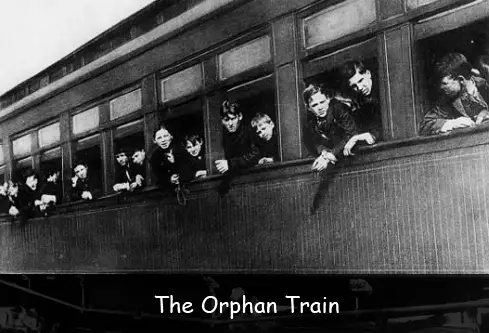
  • Another idea was the orphan train. For over 20 years, orphaned and homeless children in New York City were sent west by train. The trains stopped at towns along the way and the children would gather in the train station or a church for people to visit them.
  • The relief agencies in New York sponsoring the orphans had placed advertisements in magazines showing clean, happy, adorable children in need of good homes.
  • People in the West and Midwest were often eager to adopt these children, sometimes because they felt it was the right thing to do and they wanted to help; more often, they were looking for free help for their farms.
  • The children often struggled to adapt to their new lives. They often had emotional and physical health problems caused by their previous experiences.
  • In some cases, the children were adopted into wonderful, loving families who gave them a fresh start in life. Many children were treated harshly by their adopted families though.

Vocabulary

  1. Orphan: someone whose parents have died
  2. Almshouse: a place for the poor or mentally ill


Questions and Answers

Question: Why didn’t more people try to help the children?

Answer: There are many reasons. People felt prejudice toward immigrants, the mentally ill, and the poor. They often believed that the poor were lazy, dishonest, or bad.

They thought these people needed and deserved poor treatment to make them behave better. In the 1800s, there were no laws or services to protect the poor, and especially, children. Individuals, families, and churches were expected to take care of them but that didn’t always work very well.

How do you think we’re doing today? Do you ever see signs of similar attitudes or prejudices?


Learn More

Read about the experiences of modern refugees and immigrants and find out how you can help.

Pioneer Jobs

If you were a pioneer, what would your job be? Would you go to college? How would you earn money? Would you retire at age 65? Let’s find out.

Fun Facts

  • Most pioneer communities were based on an agricultural economy. That means that the communities revolved around farms. Farmers were usually the first ones to start a community.
  • Other businesses came to support the farmers. These included a general store where people could buy supplies like sugar, flour, nails, fabric, or medicine. Towns usually had at least one inn and one saloon. There might be a town doctor, a priest, and a teacher.
  • Blacksmiths made horseshoes, gates, and metal tools. A farrier took care of horses and replaced their shoes. Men might also be hunters, trappers, silversmiths, or carpenters.
  • Few people went to college, but were apprenticed to learn a trade from a blacksmith, carpenter, or other tradesman. Doctors, teachers, and lawyers usually went to college.
  • Some forward thinking communities supported the arts, including music, literature, and the visual arts. They built libraries and concert halls. Artists painted murals and portraits.
  • Women had few career options. Most worked at home, but some became teachers, domestic helpers, or artists.
  • The four most common occupations included farmworker, carpenter, domestic helper (housekeeper), and a day laborer (miscellaneous work). People working at these jobs earned between .78 and $2.00 per day in 1860, depending on where they lived. Some jobs included room and board (free housing and meals). This means they would have earned less than $500 per year.
  • Eggs cost around .33 a dozen, while pioneers could buy a barrel of flour for $8. Fabric to make clothing cost .19 a yard, and you could rent a four-room house for $10 a month.
  • People did not retire at age 65. They kept working until they died or couldn’t work anymore.

Vocabulary

  1. Retire: Leave the work force
  2. Forward thinking: to thoughtfully consider the future, as well as multiple priorities
  3. Occupation: job


Questions and Answers

Question: What parts of the country were the wealthiest?

Answer: In New England lived many prosperous families whose ancestors had lived there for generations. These people were usually well educated and had more resources than most.

California became a wealthy state in the mid-to-late 1800s with the discovery of gold and rich farm land. Wealthy plantation owners lived in the South, although much of that wealth was destroyed during the Civil War.


Learn More

Watch a video about a blacksmith shop.