All posts by americanadmin

Native American Profiles: Pocahontas

One of the interesting things about history is that the stories tend to change, depending upon who is telling them. Take Pocahontas’s story, for example. We have no written documents from her directly. Instead, we have journals and other documents from the English settlers who knew her. We also have oral story telling that has been handed down for centuries through Native American tribes. The English versions of Pocahontas’s life are quite different from the Native American stories. What’s the truth? No one knows for sure, although both versions probably contain some elements that really happened.
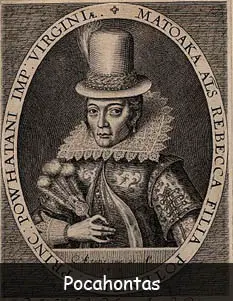
Native American Profiles- Image of Pocahontas

Fun Facts

  • Pocahontas was born around 1596. She was a beloved daughter of Wahunsenaca, or Chief Powhatan, a powerful chief who ruled over 30 tribes with a population of about 25,000 people.
  • Pocahontas’s real name was Amonute or Matoaka. Pocahontas, a nickname, meant “playful one.” According to oral accounts, Pocahontas was also her mother’s name.
  • Native American history says that Pocahontas’s mother died in childbirth. Her father sent her to be raised by aunts, uncles, and grandparents. She often visited her father and they had a special bond.
  • As a child, Pocahontas probably wore little or no clothing, which was customary except during the winter. She learned traditional skills, such as growing and gathering food, weaving baskets, keeping fires lit, and tanning hides.
  • Pocahontas was about 11-years-old when she first met the English. John Smith wrote that he was captured during a skirmish. His captors placed his head on a rock and prepared to hit him with a club. Pocahontas rushed in to save him. Native American lure says that Smith was never in danger; the incident with the rock was a preplanned ritual designed to “adopt” Smith into the tribe.
  • Pocahontas became friends with the English, often visiting them and helping them. The Native American version suggests that her family, who was very protective of her, approved of the visits and supervised them.
  • Pocahontas married Kokoum, a brave warrior and family friend. They had a son together.
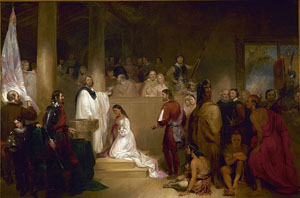
  • Relations with the English began to deteriorate and John Smith left the colonies. Pocahontas was later kidnapped by Captain Samuel Argall. According to Native American accounts, he had Kokoum killed. Pocahontas learned English customs and religion. She eventually married Sir John Rolfe. The English accounts suggest that she loved Rolfe and enjoyed living with the English. She went to London and attended a ball with King James 1. The Native American version states that she was held against her will and cooperated for her own survival and the good of her people.
  • Pocahontas died in 1617. English accounts suggest she had pneumonia or dysentery. Native Americans believe she may have been poisoned.

Vocabulary

  1. Oral storytelling: history that is passed down through people telling the stories to each other; the stories are not written down.
  2. Skirmish: a fight
  3. Ritual: a traditional ceremony, dance, or action designed to convey meaning or belief

Questions and Answers

Question: What happened after Pocahontas’s death?

Answer: Both sides agree on this. Powhatan was devastated by his daughter’s death and fell into a depression. He died within a year. Relationships between the Indians and the Europeans were never the same.

Learn More

Visit PBS to watch a documentary about Pocahontas’s life.
Native Americans Today

During the 1800s, thousands of Native Americans died from combat, disease, or starvation. Many tribes disappeared altogether. Native Americans living on reservations struggled to survive while teaching their children their traditions and culture.

Fun facts of Native Americans- Image of Native Americans Today
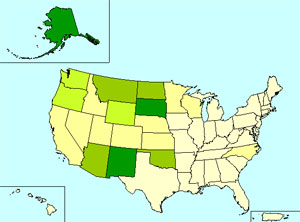
Fun facts of Native Americans- Image of Native Americans Map

Fun Facts

  • Today, Native American populations are growing. Over half of all Native Americans do not live on reservations. 300 federal reservations exist in the U.S., comprising over 52 million acres of land.
  • Native American children attend schools where they learn to read and write in English. Families often teach children their native language, culture, and traditions.
  • Native Americans participate in powwows, where they perform competitive dances to beating drums.
  • Native Americans are still known for their handicrafts – beautiful jewelry, rugs, and baskets.
  • Native Americans living on reservations face many struggles, including poor health and healthcare, crowded, substandard housing, poverty, and lack of employment opportunities.

Vocabulary

  1. Population: group of people
  2. Native: first or original
  3. Substandard: below an acceptable level of quality

Questions and Answers

Question: Why do Native Americans still struggle so much?

Answer: There is no single answer to this question. Unfair government policies are one reason, along with a lack of education and employment opportunities. Rates of depression, violence, and alcoholism are high on reservations.

Learn More

Visit PBS to learn more about Native Americans today.

Head over to PBS Learning to go on a virtual field trip to a Native American village.

Native Americans and Europeans

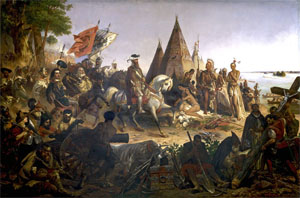
When Christopher Columbus landed in the Caribbean in 1492, native tribes there believed the visitors were powerful spirits who came from the sky. If only they had known the devastation that would follow for their people. Columbus’s discovery brought new opportunity for Europeans. Some settlers came looking for gold and wealth; others came hoping for religious freedom. Some came as prisoners or slaves, while others came merely looking for a better way of life. Few European colonists considered the impact their conquests had on the native people. Many colonists saw Native Americans as savages who had little in common with them and did not need or deserve the same rights or treatment. Those who spoke out in favor of Native American rights were rarely heeded.

Image of Native Americans and Europeans

Fun Facts

  • In 1492, there were between 5 and 15 million Native Americans in Canada and the United States. Over the next 300 years, those numbers dropped by 90 percent.
  • European settlers didn’t understand Native American culture. They viewed Native Americans as a wild, godless people. Europeans wanted to teach them European ways of dressing, eating, living, and learning. Missionaries tried to convert Native Americans to their religions.
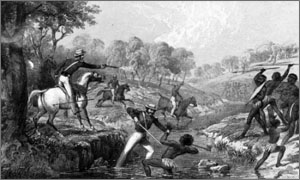
  • European settlers often had disputes with Native Americans over land. The Native Americans, with their swords, knives, and bows and arrows, were no match for European guns.
  • Many Native Americans died in combat. Thousands more died from diseases, such as smallpox, measles, mumps, influenza, chickenpox, and tuberculosis, brought by the Europeans. The Indians had never been exposed to these diseases and had no resistance.
  • In 1830, President Andrew Jackson signed a bill requiring Native Americans to move from their tribal homelands to reservations – or land set apart for them. Native Americans weren’t allowed to argue their cases in court. If they resisted moving, they could be killed.
  • Soon after, soldiers forced Native American tribes in the Southeast to move west to what is now Oklahoma. Many of these Indians had adopted European ways. These Indians had built homes, churches, and schools, and taught their children to read and write. Over 16,000 Cherokees were forced to march to their new home. Two thousand died during the journey; another 2,000 died shortly after they arrived in Oklahoma. The Cherokees named this journey, “The Trail of Tears.”
  • Unfortunately, most of the reservations were placed on poor soil and in harsh climates – places the Europeans didn’t want. The Native Americans struggled to survive here. In 1850, the land set aside for reservations included almost all the land from the Missouri River to the West Coast. Today, reservations make up a tiny portion of land in states like Arizona, New Mexico, Nevada, North and South Dakota, Wyoming, and Idaho.

Vocabulary

  1. Devastation: total loss or ruin
  2. Savage: wild, lawless
  3. Dispute: conflict, disagreement

Learn More

Visit the History Channel to watch a video about the last battle of the Sioux Indians.

Native American Tribes

When Christopher Columbus arrived in America, millions of American Indians lived here. Each tribe had its own culture, traditions, and even language, but tribes living near each other were similar because of their environment. They built similar shelters and ate similar foods. Anthropologists have divided Indian tribes into culture areas – specific geographic regions with similar climates and resources.

Image of Native American Tribes

Fun Facts

  • Northeast Woodlands: Two groups of Indians lived in New England and the area around the Great Lakes. The groups were divided by the languages they spoke: the Algonquian tribes, including the Huron, the Narragansett, and the Powhatan; and the Iroquois group, a powerful and often war-like group, including the Mohawk, Oneida, and Seneca tribes. These tribes built wooden homes, hunted, and farmed. They were among the first tribes impacted by European settlers.
  • Southeast Woodlands: The Creek, Choctaw, Seminole, Chicksaw, and Wichita tribes lived in the area around the Gulf of Mexico, including Florida, Georgia, Alabama, Tennessee, and the Carolinas. Most tribes here spoke one of the Muskogean language dialects. They farmed, hunted, and gathered wild foods. They lived in homes made from wood and mud.
  • Great Plains: The Great Plains region lies west of Mississippi and runs from Canada to Texas, taking in Montana, Wyoming, Idaho, the Dakotas, Nebraska, Colorado, Kansas, Oklahoma, Missouri, and Texas. Tribes here, such as the Sioux, Cheyenne, Comanche, Arapaho, Blackfoot, and Pawnee tribes, relied on buffalo for all their needs. The entire tribe helped during a buffalo hunt. Children yelled and beat spears together to drive the buffalo off cliffs. The men waited below to kill the animals. Women came with scrapers and knives to butcher the animals. Nothing was wasted. The meat was a main food source; hides made clothing and teepees. Bones and sinews were used for tools, weapons, and even thread.
  • Southwest: The Pueblo tribes, including the Hopi, Zuni, and Acoma tribes, adapted well to the dry climate found in Arizona, New Mexico, and southern Colorado. These tribes lived in homes made of stone or adobe. They built canals to water corn, beans and squash crops. They were gifted artisans, creating beautiful pottery and weavings. Apache and Navajo tribes migrated to the area in the 15th century.
  • Far West: Northern Utah is now green with irrigated fields and orchards, but it was previously a barren desert. Southern Utah, Nevada, and parts of California are still dry, bare areas. Here, the Shoshone, Ute, and other tribes survived by hunting rabbits, squirrels, and snakes. They became skilled basket weavers.
  • Northwest Coast: The west coast, including Northern California, Oregon, and Washington, is a region rich in natural resources. The people here, including the Chinook, Tlingit, and Kwakiutl Indians, had no need to grow crops, but lived off the bounty of the land. They fished for salmon and hunted deer and caribou. They gathered berries, mushrooms, and other plants. They made wooden canoes and homes. They wore clothing made from pounded bark.

Learn More

Visit the History Channel to watch a video about the buffalo’s role in Native American culture.

Native American Life

Between 5 and 15 million Native Americans lived in North America when the Europeans arrived. They lived in varied climates and geographic areas. Just as you wouldn’t expect people living in the Southwest today to live exactly like people in New England, Native American tribes varied considerably in their traditions, languages, and culture. Their clothing, homes, and diet were different, depending on the resources available. Yet, many of the tribes shared similar traits. Families were tight-knit with grandparents and uncles and aunts helping with childrearing. Men and women had defined roles and jobs. Children were expected to help and were taught the skills they’d need as adults.

Fun facts for American Life- Image of Native American Life

Fun Facts

  • Native Americans’ homes varied, depending on the resources available. In the Northwest and Northeast, where forests were abundant, tribes built wood homes. Up to 12 Iroquois families lived together in a longhouse, a long wooden building with rooms separated by curtains. Plains Indians lived in teepees made from buffalo skins. In the Southwest, families lived in houses made from clay or stone bricks.
  • Native Americans wore simple, loose fitting clothing made from animal skins most of the time. They wore elaborate beaded clothing during ceremonies. Women wore dresses and skirts. Men wore shirts and leggings. Along the Northwest coast, Native Americans wove clothing from shredded cedar bark. Elsewhere, people used cotton or other plant fibers.
  • Babies spent most of their time strapped in a cradleboard and carried by their mothers. Older children were cared for by their extended family. Girls learned to sew, weave baskets, prepare food, tan hides, and make pottery. Boys learned how to hunt and fight. They made weapons and tools. All children liked to play games and listen to stories.
  • Native American tribes often traveled long distances in search of food. In the North, they harnessed sleds to dogs. In other areas, people walked. Women carried babies and supplies on their backs. The men usually didn’t carry anything because they needed to be ready to hunt or defend their tribe from enemies. Native Americans were skilled at building boats and canoes for traveling on rivers, lakes and the sea. Native Americans soon learned to use horses, brought by Europeans.
  • Many tribes were peaceful, but some tribes were aggressive and constantly at war. Men received honor for their bravery in war.

Vocabulary

  1. Geographic: refers to the land
  2. Aggressive: war-like
  3. Trait: a characteristic
  4. Tight-knit: close

Questions and Answers

Question: Were Native Americans religious?

Answer: Native Americans believed that spirits were all around them and controlled their fortunes. They performed rituals and dances for rain and abundant harvests. They felt strongly connected to the natural world. Shamans performed healing rituals.

Learn More

Watch a video at the History Channel about the first Americans.

Before the Explorers: The First Americans

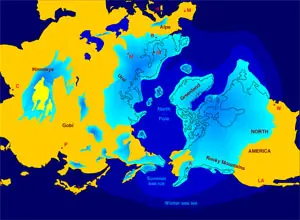
People lived on the North American continent long before Christopher Columbus’s voyage. Archaeologists have found evidence that the first settlers came to North America at least 16,000 years ago. They probably followed grazing animals across a land bridge that connected Alaska to Siberia during the Ice Age. This land bridge disappeared when the ice melted; the area is now covered with water and is called the Bering Strait. In 2013, scientists and archaeologists made a surprising discovery. They learned that at least one-third of Native Americans probably descended from people from the Middle East or Europe, rather than East Asia. We still don’t have all the answers, but the history of Native Americans is more complex than archaeologists originally believed.

The First Americans- Image of Ice Age

Fun Facts

  • The first people were excellent hunters. They probably hunted large animals, such as wooly mammoths and bison using nothing but spears.
  • Native Americans used the natural resources around them for all their needs. They made weapons and tools from bone, stone, and wood. They made clothing from animal skins and plant fibers. They ate wild roots, seeds, and berries, and of course, fish and game.
  • Native Americans adapted to their environments and climates. In the forests of the Northwest, Native Americans built wooden homes and became skilled fishermen. In the Southwest and Southeast, Native Americans learned how to grow crops. They cleared forests for farmland. The Plains Indians relied on buffalo for food and clothing
  • Native Americans lived in tribes, or social groups. Each tribe spoke its own language. There were more than 1,000 languages and dialects. Tribes had their own specific traditions and culture.
  • In general, women had more power in Native American tribes than European women of the same period.

Vocabulary

  1. Archaeologist: a scientist who studies human history and culture
  2. Ice Age: a period of time in which glaciers cover much of the Earth
  3. Complex: having many details
  4. Dialect: a language variation spoken by a certain group of people and based on location and culture Questions and Answers

Questions and Answers

Question: Did Native American tribes have government and leaders?

Answer: Many smaller tribes consisted of only 3 to 5 extended family groups. These tribes had no formal government, although wise women or men might sit on a council and offer suggestions. Larger groups sometimes had a chief. Native Americans believed the land was to be shared and used carefully. Individuals couldn’t claim a piece of land as their own.

Learn More

Visit the Smithsonian’s National Museum of the American Indian for lesson plans about Native Americans.