All posts by americanadmin

Christopher Columbus

“Following the light of the sun, we left the Old World.”

Was Christopher Columbus a hero? That depends on who you ask. He was a brave and skilled sailor and leader. Although he wasn’t the first to discover the Americas, his explorations opened the way for future European visits.

On the other hand, his trips were financed by the King and Queen of Spain, who were motivated by the promise of wealth, power, and land. Columbus and his men took gold, spices, and other riches. Later visitors were brutally unkind to the native people, eventually causing their destruction.

Like many events and people in history, Columbus and his expeditions were neither all good nor all bad.
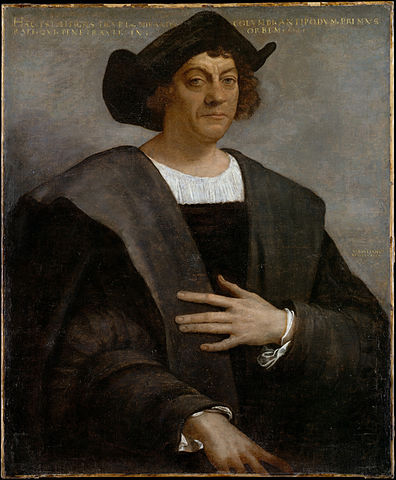
Christopher Columbus
Image of Christopher Columbus

Fun Facts

  • Christopher Columbus was Italian but he lived in Portugal for many years. He was a book publisher, a map maker and a sailor.
  • Columbus tried to convince King John of Portugal to finance his trip. The King’s experts believed the trip was impossibly long. The King said no to Columbus’s request.
  • Columbus then traveled to Spain and approached King Ferninand and Queen Isabella. At the time, Portugal had the most powerful fleet in the ocean. The Spanish King wanted to change that. However, his experts also believed the trip Columbus proposed was a bad idea. Columbus spent six years in Spain trying to win support.
  • Finally, he decided to speak with the King of France. He was traveling on a donkey out of Spain when the Spanish king’s men found him. King Ferninand had changed his mind and had decided to finance the trip.
  •  Columbus was given an honorary title and promised that he could keep 10 percent of any riches he found in his travels.
  • Columbus set out on August 3, 1492 with three lightweight boats called caravels. He had a crew of about 90 men. The boats were loaded with enough water and food – nonperishable items like flour, olive oil, salted cod, bacon, and biscuits – for a year.
  • The boats, the Nina, the Pinta, and the Maria, had white sails painted with large red crosses.
  • Columbus’s crew felt very afraid as they went out into the vast, unexplored ocean. Although Columbus knew the world was round, many of the crew still believed the earth was flat. They worried that their ship might fall off the edge. They also worried about giant sea monsters rising from the deep.
  • After three weeks at sea, the crew demanded that Columbus turn around. Columbus tried to rally them. He promised a silk coat to the first man to sight land.
  • Finally, on October 12, 1492, Columbus’s crew saw land. Columbus believed they were near India, instead of their real destination, the Caribbean Islands. The native people, the Tainos, stood on the shore to meet them.
  • Columbus said the native people were beautiful, kind, and generous. They gave Columbus’s crew food and whatever else they wanted. They showed Columbus where to find gold. Columbus said, “They love their neighbors as themselves and have the softest, gentlest voices in the world.”
  • Columbus returned to Spain a hero. The King and Queen quickly sent him on another expedition with more men and even some women. He was to establish a colony and convert the natives to Christianity.
  • Things did not go well. The crops the settlers planted didn’t grow in the tropical climate. Some of the settlers were greedy. They stole from the Tainos and even kidnapped or killed them. Columbus was eventually stripped of his title as governor and asked to leave.
  • More settlers and conquistadors followed Columbus. They found gold and took the Tainos as slaves. Many of the native Indians became ill with European diseases like smallpox. Within 50 years, the gentle Tainos people were extinct.
  •  Columbus died in Spain in 1506. He still believed that the land he had found was part of Asia.

Learn More

Visit NPR to read more about Christopher Columbus’s journeys.
Life in the Colonies

New England 

The New England colonies, including Connecticut, Massachusetts, New Hampshire, Rhode Island, and Vermont, were among the earliest colonies settled but life there wasn’t easy. Even today, New Englanders are known for their tough, no-nonsense attitudes. If you were an early colonist in New England, you’d need such an attitude to survive. New England’s poor soil and cold climate made farming hard. Many farmers kept dairy cows because crops didn’t grow well. Farmers moved into towns to learn trades. They became carpenters, dressmakers, cobblers and tradesmen.

New Englanders also made their livelihood on the sea. Towns, such as Boston, grew and became prosperous because of shipbuilding, fishing, whaling, and trading.

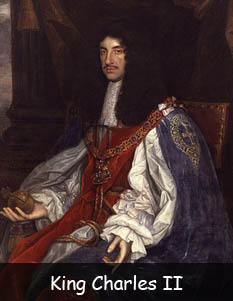
Life in the Colonies- Image of  King Charles II
Life in the Colonies- Image of King Charles II

The Middle Colonies

Further south, colonists in New York, New Jersey, Delaware, and Pennsylvania enjoyed greater prosperity. These colonies were known as the “bread colonies” because the mild climate and rich soil was good for farming. The food grown in these colonies helped feed all the colonies.

New York was originally settled by the Dutch. In 1664, King Charles II gave a large portion of land to his brother James. Included in this land was New Netherland, now known as New York. James sent three warships to New Amsterdam’s harbor and demanded that the city surrender.

Charles II gave William Penn a colony as payment for a debt. Penn named this colony Pennsylvania. William Penn belonged to the Society of Friends, or Quakers, a religious group that was persecuted in England. He called for religious freedom for all in his colony. He paid Indians for their land and tried to treat them fairly. His city, Philadelphia, was known as one of the most modern and beautiful cities in the colonies.

The South

Most people in the South lived on small farms, but the large plantations wielded enormous power. Plantations were like small villages. Each had its own blacksmith shop, church, and pottery kiln. Wealthy plantation owners had political and military power. Tobacco was a major crop, as was the indigo plant, which was used to make blue dye.

These large plantations needed cheap labor to be successful. Originally, plantation owners brought over poor Europeans. The plantation owners paid for the workers’ travel expenses. Once in America, the indentured servants agreed to work for a certain period of time – typically seven years. After their debt was paid, they were given land, money, and freedom. 

Indian Relations During the Colonial Period

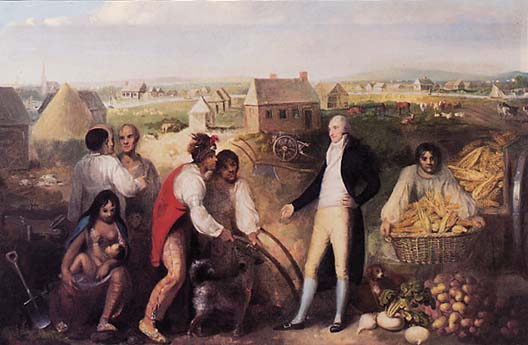
We know that the Wampanoag Indians taught the early colonists how to grow food and survive in North America, but not all Indians welcomed the colonists. Many of them viewed the colonists with suspicion, rightfully so. European and Indian cultures were very different and clashes were probably inevitable.

Europeans believed in the idea of owning and selling land. The Indians believed that the land couldn’t be owned, bought, or sold. They believed the Earth was for everyone to share and use respectfully, never taking more than one needed. As Europeans arrived, they laid claim to the land. Indians were no longer allowed to hunt on their old hunting grounds. Their way of life was slowly being destroyed.

Indian Relations During the Colonial Period
Images of Indian Relations During the Colonial Period

Fun Facts

  • Spanish missionaries came with explorers and built missions in New Mexico, Arizona, Colorado, California, and other states. They wanted to convert the Indians to Christianity. Sometimes Indians were forced to convert to the new religion. They were also forced to work on farms that grew food for the missions.
  • In general, French explorers had good relationships with the Indians. They didn’t make them slaves or try to take their land. Instead, the French often traded tools, guns, and blankets for the Indians’ furs. French missionaries were usually kind to the Indians. The Natchez Indians were not friends with the French. In fact, the French eventually wiped out the entire tribe.
  • Conflict in New England led to the Pequot War in 1635, when the Pequot Indians fought settlers in the Connecticut River Valley. The Indians were eventually killed. Forty years later, a Wampanoag chief named Metacomet or King Phillip led several tribes in battle against the English. More than 600 colonists and 3,000 Indians were killed.
  • In 1622, the Powhatan Indians killed 300 settlers near Jamestown, Virginia. In 1624, King James I made Virginia a royal colony and appointed a governor. This meant that England now officially owned and ruled Virginia and Indians had few rights.

Vocabulary

  1. Suspicion: a feeling or hunch. The Indians were suspicious that the colonists would bring them harm.
  2. Clash: a conflict or fight
  3. Inevitable: bound to happen; unavoidable

Questions and Answers

Question: Why were the Indians unable to defeat the colonists?

Answer: The Indians lacked central government, which made it hard for them to work as an organized group, while the English had a very organized military. The main reason for the Indians’ defeat in battle, though, was their lack of firearms. They fought with spears, knives, and bow and arrows. The English were well-equipped with guns.

European diseases like measles, smallpox and cholera, swept through Indian tribes, killing up to 90 percent of the people. Indians passed down their knowledge, culture and traditions through oral traditions (telling stories). When elders died, no one was left to tell the stories.

Learn More

Visit Colonial Williamsburg to learn more about Native American culture.

Jamestown, Virginia: Tobacco King

You probably know about the Mayflower Pilgrims, but they weren’t the first English colonists. Several years before the Pilgrims arrived, settlers arrived in Virginia.

The Pilgrims came to America for religious reasons, but others came looking for opportunity. England was a crowded, dirty place and America seemed to hold the promise of adventure and wealth. Both the wealthy and the poor came looking for a new life.

Jamestown Virginia Tobacco King
Images of Jamestown Virginia Tobacco King

Fun Facts

  • In 1587, 150 English men, women, and children began a colony on Roanoke Island, off the coast of Virginia. The governor, John White, returned to England for supplies. When he came back three years later, he found the island deserted. The settlers had scratched the word, Croatoan, onto a post, but White found no other clues about what had happened to the settlers. People believed they were killed or sold as slaves by the Powhatan Indians. Recently, researchers have found European artifacts, such as coins, weapons, and jewelry, mixed with Indian artifacts. Researchers believe the settlers might have joined the Indians.
  • In 1607, 105 men and boys arrived in three ships. They landed on the coast of Virginia and named their settlement Jamestown, in honor of King James. These settlers were wealthy gentlemen seeking their fortune. Unfortunately, Jamestown was built on a marshy area, prone to mosquitoes, which brought disease. Drought conditions caused crop failure. Indian attacks were always a danger too. Seventy-three men died in one year.
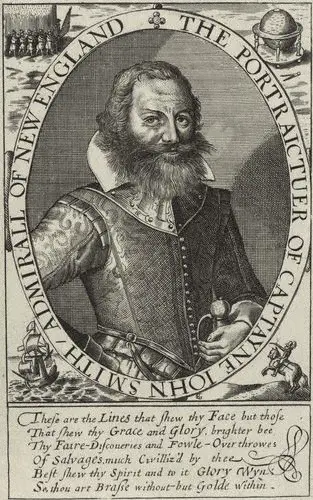
  • Captain John Smith helped the colony succeed. Most of the men were unaccustomed to hard work. Smith told them that if they wanted to eat they must work. He asked the Powhatan tribe to teach them how to catch fish and grow corn. Slowly the settlement began to prosper.
  • King James thought smoking and tobacco was a terrible habit, but it grew well in Virginia, and many people in Europe loved it. Virginian landowners became wealthy growing tobacco.
  • The landowners brought indentured servants from Europe to work on the farms. These servants could earn their freedom after a few years of hard work – if they survived.
  • Once the servants earned their freedom, they moved further inland and farmed their own land. These poor farmers resented the wealthy tobacco growers. In 1675 and 1676, Nathanial Bacon led a group of farmers in an uprising against the landowners. The rebels burned Jamestown to the ground.
  • The landowners knew that poor, indentured servants could become a danger once they were free. Slaves seemed like an ideal answer. 

Vocabulary

  1. Artifacts: Items left behind by earlier civilizations
  2. Malaria: a disease transmitted by mosquitoes
  3. Tobacco: a plant which is used to make cigarettes

Questions and Answers

Question: Did John Smith marry Pocahontas?

Answer: Smith and Pocahontas were friends but Pocahontas married another Englishman, John Rolfe.

Learn More

Visit History is Fun for a virtual field trip of Jamestown.


Religious Tolerance

The Puritans who developed the Massachusetts Bay Colony followed their religion strictly. Although they came to America seeking freedom to worship their religion, they didn’t always give that freedom to others. Several people were banished from the Puritan community because they expressed their own ideas about religion.

Fun Facts of Religious Tolerance- Image of Roger Williams

Fun Facts

  •  Anne Hutchinson was an outspoken woman who disagreed with some of the preacher’s sermons. Over 80 people visited her home weekly to discuss religion. The community leaders thought she was dangerous. They arrested her and charged her with heresy. She was banished from the Massachusetts Bay Colony in 1636.
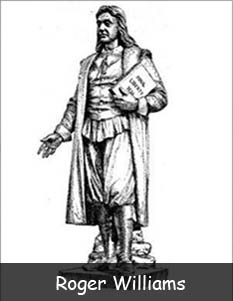
  • Roger Williams was a minister. He recognized the danger of any one religion having too much power. He thought America should be a country where people could worship however they chose. He also thought the practice of taking land from the native tribes was wrong. Others disagreed with him and he was also banished in 1636.
  • Williams purchased land from the Narragansett Indians. This land became what we now know as Rhode Island. Rhode Island was a refuge of religious freedom. People came here from other parts of New England.
  • Early American leaders learned lessons from the Puritans. Thomas Jefferson read Roger Williams’ ideas about separation of church and state. These ideas helped form the First Amendment, which guarantees religious freedom.

Vocabulary

  1. Banish: to force someone to leave and not come back
  2. Outspoken: to speak one’s mind directly and often without caring about the consequences
  3. Heresy: a belief that goes against accepted religious views

Frequently Asked Questions

Question: Have people in America been persecuted for religious beliefs since then?

Answer: Although we now have laws protecting religious freedom, people don’t always obey these laws. In the 1800s, hundreds of Mormons were driven from their homes or even killed because of their religion. After September 11, 2001, Muslims were targeted because of their beliefs. Jews, Jehovah Witnesses, and others have been bullied or persecuted. Think about how you feel about religious freedom. How can you be respectful of others’ views even if you don’t agree with them?

Learn More

Visit Scholastic to learn more about our basic rights.

The Salem Witch Trials

Have you ever gossiped with friends about someone? One person tells a story about someone and that story seems to grow, whether or not it’s true. Sometimes people are treated unkindly because others believe a story about them.

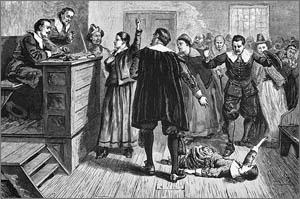
In 1692, in Salem, Massachusetts, young girls suddenly developed odd symptoms. They had seizures, hid under chairs, talked in gibberish, and ran fevers. They accused several women in their town of being witches. Soon, others were accused and the courtrooms filled with people believed to be witches. Almost 150 people were accused of being witches and 20 were killed.

Image of The Salem Witch Trials

Fun Facts

  • The Puritans in the Massachusetts Bay Colony followed their religion strictly. Children were not allowed to play games or tell stories. People believed that misfortune was punishment from God for being bad. They also believed the devil was out to get them.
  • These ideas seem strange to us, but remember, the Puritans’ settlement was on the edge of a wild, forested wilderness. There were no street lights so night was very long and very dark. People often died from terrible diseases like smallpox. They were sometimes attacked by Indians. They were often hungry and cold. In other words, they lived in a scary time. Can you understand how they might be superstitious?
  • Betty Parris, daughter of a minister, her cousin, Abigail Williams, and other girls, enjoyed listening to scary stories told by Tituba, Reverend Parris’s Caribbean slave. These stories were prohibited, but the girls listened anyway.
  • In January, the girls began behaving strangely. They had fits, rolling on the floor and screaming. The town doctor said their illness was caused by witches and the devil. In church one evening, one of the girls fell to the ground screaming. Another girl barked like a dog. One flapped her arms like a bird. The people in the village were scared. They asked the girls to tell them who had done this to them. The girls felt pressured, but finally gave the names of three women, including Tituba. Tituba confessed to being a witch and claimed others were working with her.
  • Mass hysteria seized the town. Throughout the summer and fall, the girls accused more people of being witches. Most of the people were outsiders – those who seemed different. But nobody was safe. A four-year-old girl spent months in prison. Even the governor’s wife was accused.
  • Finally, people started doubting the girls’ accusations. The governor stepped in and ordered the trials to stop. Unfortunately, 20 people had already been killed. Four died in prison. The remaining prisoners were released from prison, but their reputations had been destroyed.

Vocabulary

  1. Gibberish: nonsense words
  2. Forested: covered with forests
  3. Superstitious: one prone to believing in superstitions, which are ideas or stories that are illogical, irrational and ungrounded

Questions and Answers

Question: Why would the girls make up such awful stories?

Answer: Researchers aren’t sure exactly why the Salem Witch Trials occurred. They wonder if the girls were merely bored or felt pressure to make up stories. One theory says that a fungus developed in the wheat that was harvested that year. This fungus, ergot, can cause seizures, odd behavior, or delusions (seeing and hearing things that aren’t there). Eating contaminated bread might have caused the girls’ symptoms, but we don’t know for sure.

Researchers think that peoples’ fears, strict religious beliefs, and difficult lives made them superstitious and quick to believe the girls’ accusations. At the time, many people in the village were fighting. Farmers fought with town people over money. New settlers didn’t share the original colonists’ religious views. These bad feelings probably also made people quick to believe gossip about their neighbors.

Learn More

Visit Discovery Education to learn more about the Salem Witch Trials.

The First Thanksgiving

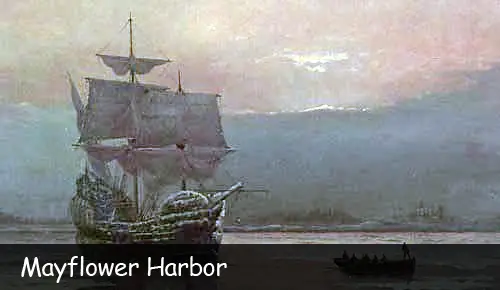
When the Pilgrims arrived at Plymouth in November of 1620, they faced several months of work and hunger. During that winter, they lived on the Mayflower, which was anchored a mile or two out in  Plymouth Harbor. The men rowed inland in small boats every day to build houses, returning in the evening to sleep. Many of the Pilgrims became sick during this cold, long winter. In fact, half the group died.

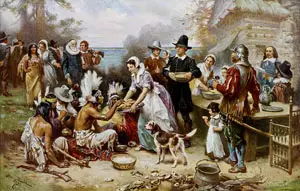
Squanto, a Wampanoag Indian, befriended the Pilgrims. He, along with other Wampanoag, taught the Pilgrims how to grow corn and other foods. Without the Wampanoags’ help, the Pilgrims probably wouldn’t have survived. By the following autumn, the Pilgrims had built seven houses, three storehouses for food, and a meeting house. They were very grateful for their successes. They held a feast with the Wampanoags to thank them and to thank God.

Fun facts of Pilgrims- Image of The First Thanksgiving

Fun Facts

  • The Pilgrims often had days for giving thanks. These days were usually spent fasting and praying, not feasting.
  • The first Thanksgiving feast was held in early autumn of 1621, after the first harvest.
  • We’re not sure if wild turkey was on the first Thanksgiving menu. Duck was probably more likely.
  • Pilgrim women roasted the ducks over a fire. The feast also probably included stewed pumpkin and samp, a porridge made from ground corn.
  • Massasoit, king of the Wampanoag people, was cautiously friendly toward the Pilgrims. He gave them help and ensured their safety. He and his men were honored guests at the feast. The Wampanoags brought deer, or venison, to the meal.
  • The first Thanksgiving was not one meal. Feasting lasted for about a week.
  • The children played games, such as Blind Man’s Bluff. Both Wampanoag and Pilgrim children played with dolls and balls.
  • Adult men enjoyed shooting games. 

Vocabulary

  1. Anchor: to secure a ship at sea or resting in a harbor
  2. Fast: to go without food or water, usually as a sign of religious devotion
  3. Venison: deer meat

Frequently Asked Questions

Question: Has America always celebrated Thanksgiving?

Answer: George Washington and a few other leaders called for a day of Thanksgiving, but it did not become a national holiday until 1863. During the Civil War, President Abraham Lincoln called for a national observance of Thanksgiving. He said, “I do therefore invite my fellow citizens in every part of the United States, and also those who are at sea and those who are sojourning in foreign lands, to set apart and observe the last Thursday of November next, as a day of Thanksgiving and Praise to our beneficent Father who dwelleth in the Heavens.”

Learn More

Visit Scholastic to learn more about the First Thanksgiving.

Read Abraham Lincoln’s Thanksgiving Proclamation.

Profile: William Bradford

“Out of small beginnings have greater things been produced by His (God’s) hand that made all things of nothing, and gives being to all things that are are; and as one small candle may light a thousand, so the light here kindled has shone unto many.”

Many of the early European visitors to North America came seeking their fortunes. Trappers earned money selling furs; conquistadors came looking for gold. The early Pilgrims had only one goal: they wanted to worship God as they saw fit. They wanted to pray and read the Bible together without persecution. They believed that both the Catholic Church and the Church of England had become corrupted by greedy leaders. They wanted to start a new religion.

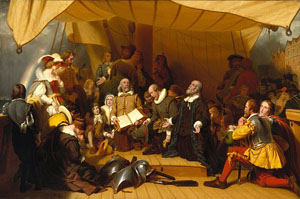
William Bradford joined this group, known as the Separatists, at the age of 18, against his family’s wishes. He and the other church members were persecuted in England. They found some peace in Holland but dreamed of starting their own settlement, with their own culture and religion. At the age of 30, Bradford sold everything he had and sailed for North America on the Mayflower. He became the governor of Plymouth, the new colony in America, and served in this position for more than 30 years. 

Fun facts of William Bradford- Image of Embarkation Pilgrims

Fun Facts

  • William Bradford was born in Yorkshire in 1590. His father died when he was a baby. His mother and grandparents died when he was a small child. William was an orphan at the age of seven.
  • He and his sister, Alice, were raised by their uncle, Robert Bradford.
  • Bradford was a sickly child and enjoyed reading the Bible to pass the time. He learned about the Separatist church during his teenage years and soon converted.
  • He married Dorothy May in Holland and they had one child.
  • Knowing how hard the journey would be, William and Dorothy left their child with friends when they sailed on the Mayflower. Dorothy fell off the ship and drowned as it sat in the port at Cape Cod.
  • William must have been very sad, but he quickly got to work in Plymouth, encouraging the other colonists to build homes.
  • Bradford was made governor of the Plymouth Colony after John Carver’s death. He tried hard to be fair and make good decisions for the colony. He helped establish peaceful relationships with the Indians.
  • Bradford kept detailed journals of the Plymouth Colony. These journals are the main source of information we have about the people. The journals have been published as a book, History of Plymouth Plantation.
  • William Bradford married widow, Alice Carpenter Southworth in 1623. They had three children.
  • Bradford became ill during the winter of 1657. He died that May at age 68. He had devoted his life to building the Plymouth Colony.

Vocabulary

  1. Persecution:  to be emotionally or physically harmed because of one’s beliefs
  2. Orphan:  one whose parents have died

Questions and Answers

Question: What jobs did Bradford do in his role as governor?

Answer: He was a very busy man. He oversaw the courts, kept the finances, communicated with investors, and negotiated relationships with the Indians.

Learn More

Visit Scholastic to learn more about William Bradford.

In Search of Religious Freedom: Puritans and Pilgrims

Imagine leaving your home and setting out for a new, largely unknown world. Imagine taking only a few clothes and tools – no toys, no books, and certainly no video games. Now imagine traveling in the belly of a small boat with 100 other people. There is no privacy and only a small pot to use as a toilet! You are seasick most of the voyage, but when you feel well enough to eat, you eat plain food, such as hard biscuits, dried fish, or unsweetened oatmeal. Welcome to life aboard the Mayflower!

In 1620, 102 Pilgrims sailed to the New World on the Mayflower. They were seeking a place to worship God as they wanted. Most of them paid dearly for their beliefs, not surviving the first winter. 

Fun facts of Puritans and Pilgrims- Image of Mayflower

Fun Facts

  • The Mayflower was a merchant ship, designed to transport goods. It wasn’t really meant for passengers and was hardly comfortable. It was 90 feet long, large by the day’s standards, but very crowded.
  • The Pilgrims didn’t agree with the teachings of the Catholic Church or the Church of England. They wanted to follow the Bible’s teachings more closely. They were called Separatists and were persecuted by political and religious leaders in England.
  • The Pilgrims originally planned to sail to Virginia but their ship was blown off course. They landed in Plymouth, Massachusetts. They decided to make their own laws, called the Mayflower Compact.
  •  The Pilgrims landed in America on November 11, 1620. The trip had taken 66 days.
  • One passenger, William Butten, died on the voyage. One child, Oceanus Hopkins, was born.
  • The Pilgrims landed in Massachusetts in the winter. They were already weak and sick from the trip. Finding food and building homes was very difficult. Of the 102 passengers, only 51 survived the first winter.
  • Friendly Wampanoag Indians taught the Pilgrims how to grow corn, squash, beans, and pumpkins. Without their help, the Pilgrims probably wouldn’t have succeeded in building their colony.
  • John Carver was the first governor of the colony. He died in 1621.

Vocabulary

  1. Privacy: to be alone or undisturbed by other people
  2. Merchant:  someone in the business of trading or selling goods
  3. Persecute:  to cause emotional or physical harm to others because of their beliefs

Questions and Answers

Question: What did the Pilgrims do to entertain themselves on the Mayflower?

Answer: The Pilgrims sometimes walked above deck during calm weather, but they generally remained in the cramped quarters below. They were often sick from being tossed in the ocean’s waves and were sometimes thrown against the walls in stormy weather. They probably talked quietly or played games. John Howland, a servant to John Carver, was thrown into the sea during a storm. He grabbed a rope trailing in the water and crew pulled him aboard. Lucky thing, since more than 2 million Americans are descended from him, including George Bush, George W. Bush, Ralph Waldo Emerson, Henry Wadsworth Longfellow, and Mormon leader, Joseph Smith.

Learn More

Visit Scholastic for an interactive tour of the Mayflower and life in New England.

Native American Profiles: Hiawatha

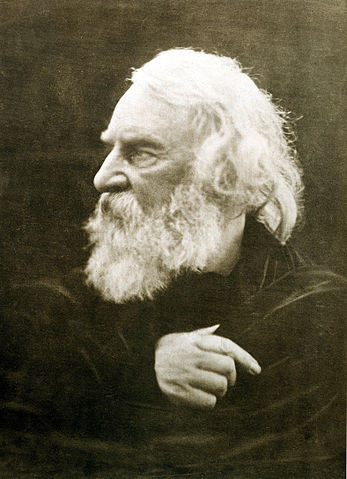
In 1855, the poet Henry Wadsworth Longfellow published the epic poem, The Song of Hiawatha, which is a fictional account of the childhood and life of one Native American, Hiawatha. The poem takes place on the shores of Lake Superior and details Hiawatha’s love for his grandmother, his people, and the natural world. Henry Wadsworth Longfellow was probably the most popular American poet of his time and The Song of Hiawatha remains a beloved American poem. The real Hiawatha was a great diplomat and chief among the Iroquois Indians. Born around 1525, Hiawatha belonged to the Onondaga tribe, a tribe that belonged to the powerful Iroquois nation. Even though the tribes in the Iroquois nation spoke the same language and shared similar culture, they were constantly at war with one another. Hiawatha wanted peace and worked to unite the tribes.

Hiawatha
Native American Profiles – Images of Hiawatha

Fun Facts

  • Hiawatha lived near Lake Champlain and the Saint Lawrence River.
  • Legend says that he had five daughters who were killed by enemies.
  • Hiawatha went deep into the forest to grieve. There he met the prophet, Deganawida.
  • Deganawida healed Hiawatha of his sorrows. Hiawatha became a spokesman for the prophet.
  • He traveled to the many tribes, encouraging them to unite and to stop fighting.
  • Hiawatha and Deganawida met a council from the five Iroquois tribes. Hiawatha spoke to them about the Great Law of Peace.
  • He persuaded them to adopt five principles of peace. The council decided that the five tribes would become part of a great Iroquois Confederacy. They agreed to stop fighting, settle arguments peacefully, and protect each other against enemies.
  • They developed a constitution that helped them keep peace for many years. Early American settlers, Benjamin Franklin, admired the constitution and used some of its ideas in American government.

Vocabulary

  1. Epic poem: a long poem that tells about historical or mythical events
  2. Grieve: to have deep feelings of sadness and loss
  3. Council: a meeting of a group of leaders

Questions and Answers

Question: Who was Longfellow’s inspiration for his poem, Hiawatha?

Answer: Hiawatha is based on Chippewa (Ojibway) legends as recorded by Henry Rowe Schoolcraft and John Tanner. Longfellow was also inspired by an Ojibway chief who stayed at his home.

Learn More

Visit PBS to watch a video about Henry Longfellow’s epic poem, Hiawatha.