All posts by americanadmin

The Declaration of Independence

We hold these Truths to be self-evident, that all Men are created equal, that they are endowed by their Creator with certain unalienable Rights, that among these are Life, Liberty, and the Pursuit of Happiness.”

The colonists’ original goal in fighting the British was to gain more freedom, while still remaining loyal to the Crown. By the spring of 1776, most of them believed they needed to be independent of Great Britain. In June of 1776, the Continental Congress selected a committee of five men to write an official declaration of independence. Thomas Jefferson was chosen to draft this historic document, which was approved by the Continental Congress on July 4, 1776.
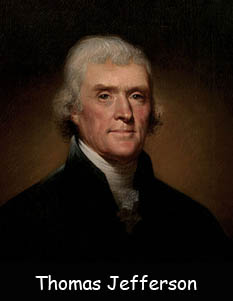
Facts about Declaration of Independence- Image of Thomas Jefferson

Fun Facts

  • The committee of men who drafted the Declaration of Independence knew that they were committing treason and could be executed for their crimes.

  • Thomas Jefferson was very well-educated. He was a gifted writer, as well as a scientist, inventor, lawyer, architect, and musician. He knew about Greek and Roman history and had studied the writings of men, such as John Locke.

  • John Locke believed that government is a contract between leaders and people. If the government wasn’t working, the people had the right to choose a new government. Jefferson believed in these ideals.

  • Jefferson was troubled by slavery, but didn’t know how to find a solution for it. He even kept slaves himself. In the Declaration of Independence, he wrote a list of complaints against the King, including his belief that the King made slavery possible. The Continental Congress removed that line.

  • John Hanco-ck, President of the Continental Congress, signed his name first. His is also the largest signature, supposedly because he wanted King George to be able to read Hanco-ck’s name without his glasses.

  • The Declaration of Independence was written on parchment with iron gall ink. The Founding Fathers were somewhat careless with it, rolling it up and carrying it with them from place to place. Today, it is displayed in a bullet-proof case filled with argon gas to preserve it.

  • The Declaration of Independence has inspired people worldwide to view themselves and the role of government in a new way. This document gives people hope and dignity.

Vocabulary

1. Draft: to write

2. Execute: to intentionally kill someone as a punishment

3. Dignity: self-respect

Questions and Answers

Question: Did the Declaration of Independence give equal rights to everyone?

Answer: Although the Declaration of Independence declares that all “men are created equal,” they were not all given equal rights. Black men, poor men, and all women were denied the right to vote. Only educated men with some wealth could choose leaders. The Founding Fathers believed that poor men could too easily be bribed or persuaded by wealthy men. Do you think this was fair? Why or why not?

Learn More

Visit the History Place to see a photo of the original draft and hear an audio version of the Declaration of Independence.
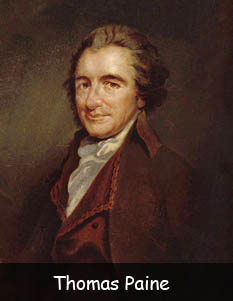
Thomas Paine

You’ve probably heard of Thomas Jefferson, Samuel Adams, John Hanco-ck, and George Washington – all men who played a vital role in the Revolutionary War, but what about Thomas Paine? Most of the Founding Fathers were highly educated, wealthy men who held prominent positions. Thomas Paine was a man of the people. His fiery pamphlet, Common Sense, inspired people everywhere to fight for the cause of liberty.

Image of Thomas Paine

Fun Facts

  • Thomas Paine was born in England in 1737. He failed in school and later became a tax collector. He was fired twice from this job. He came to America in 1774 and studied journalism.

  • Paine joined the Continental Army, but wasn’t a very successful soldier. Then he wrote a short political pamphlet, Common Sense, which urged Americans to seek freedom from Great Britain.

  • Paine’s writing was simple and easy to understand. Americans hadn’t been thinking about independence from Great Britain, but Paine’s writing inspired them. More than 150,000 copies were sold in just a few months.

  • George Washington used Paine’s words to rally troops. He said, “These are the times that try men’s souls. Tyranny, like Hell, is not easily conquered; yet we have this consolation with us, that the harder the conflict, the more glorious the triumph.”

  • Thomas Paine played a vital role in the American Revolution, but his later writing angered people and made them forget the good work he had done during the Revolutionary War.

  • Paine wrote papers against organized religion, which made him very unpopular. He was thrown in prison and almost executed in France for his political views during the French Revolution.

  • Paine died in 1809. Only six people attended his funeral.

Vocabulary

1. Prominent: important, visible

2. Pamphlet: a short booklet or paper containing only a few pages

3. Unpopular: disliked by most people

Questions and Answers

Question: Did anyone else encourage the colonists to seek independence from Great Britain?

Answer: Samuel Adams had been urging Congress to seek independence for several months, but he wasn’t as skilled at reaching the common people.

Learn More

Visit Scholastic to learn more about Thomas Paine.

The First Day of the Revolutionary War: Lexington and Concord

Although the colonists were angry with the British for increased taxes and interference, most still felt some loyalty to the Crown. Originally, many Americans wanted to remain part of the British Empire, with more freedom. That view changed quickly when they realized King George wasn’t interested in compromise.

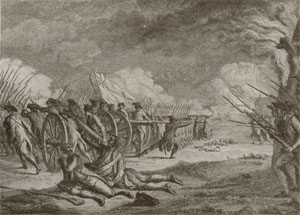
The First Day of the Revolutionary War- Image of Lexington and Concord

Fun Facts

  • The British began to worry about the colonists’ strength and stockpile of weapons.

  • In April, 1775, General Gage sent 700 redcoats from Boston to Concord, Massachusetts to seize weapons and arrest Patriot leaders, such as Samuel Adams and John Hanco-ck.

  • Paul Revere, William Dawes, and Samuel Prescott rode on horseback from Boston to Concord to warn the Patriots that the “British were coming.”

  • At dawn on April 19, 1775, church bells rang as an alarm that British troops had arrived. Minutemen arrived, prepared for battle. The British fired on the Minutemen, killing eight Americans at Lexington.

  • The British marched on to Concord, where Minutemen fought them fiercely and drove them back.

  • The British retreated, with the Minutemen shooting at them all the way back to Boston. 273 British and 95 Americans died. The Revolutionary War had begun.

  • The Second Continental Congress sent a document called the Olive Branch Petition to Parliament. This document detailed the things Americans were unhappy about and asked for a solution. King George responded by sending 20,000 troops to America. He said that the rebels must be put to death.

Vocabulary

1. Compromise: an agreement in which all sides get something they want

2. Stockpile: a large collection of gathered materials, usually reserved for emergency use

3. Minutemen: Americans who had been trained and prepared to be ready in a minute to fight

Questions and Answers

Question: Did Paul Revere really make a midnight ride?

Answer: On the night of April 18, 1775, Paul Revere did ride from Boston to warn the Patriots in Lexington and Concord. He and William Dawes were captured by British officers before they arrived. A young doctor, Samuel Prescott, actually rode all the way to Concord to deliver the message. The incident was mostly forgotten until American poet, Henry Wadsworth Longfellow, wrote the poem, “Paul Revere’s Ride” 80 years later.

Learn More

Visit NPR to hear Paul Revere’s Ride read by historian, Jayne Triber.

Boston: A Massacre and a Tea Party

After the French and Indian War, relationships between the colonists and the British government quickly soured. In Boston, men hanged an effigy of stamp official Andrew Oliver to a tree. When the Lieutenant Governor Thomas Hutchinson ordered its removal, an angry mob destroyed the tax office and even the lieutenant governor’s house. Soon, events escalated to a revolution.

Image of Boston
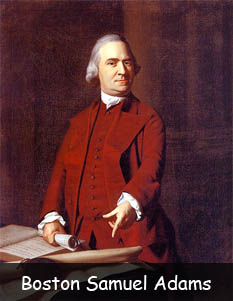
Fun Facts for Boston – Image of Samul Adams


Fun Facts

  • On March 5, 1770, colonists in Boston threw snowballs and rocks at British soldiers.

  • The soldiers fired. Some accounts claim they fired on purpose; others say that the first shot was a mistake. Regardless, five Bostonians were killed. Governor Thomas Hutchinson ordered the soldiers arrested.

  • After the Boston Massacre, a group known as the Sons of Liberty formed more than 80 chapters in towns in Massachusetts.

  • Samuel Adams, often called the “Firebrand of the American Revolution” called for Committees of Correspondence, which met and wrote to each other about news and ideas. This committee helped unify the colonists in their desire for freedom.

  • In 1773, the British passed the Tea Act, which stated that the colonists could only buy tea from the East Indian Company. Parliament’s plan was to help the tea company while selling cheap tea to Americans. The colonists believed the British were once again interfering where they had no business.

  • On December 16, at least 5,000 Bostonians met at Old South Church to protest the Tea Act. Dressed as Indians, they went to the tea ships lying in the Boston Harbor and threw 45 tons (more than 80,000 pounds) of tea in the sea.

  • In retaliation, the British passed the Coercive Acts. Colonists called it the Intolerable Acts. Soldiers blocked trade in and out of Boston. They closed the port until the colonists paid for the tea and banned all town meetings. They took control of the government, making General Thomas Gage the governor.

Vocabulary

1. Effigy: a straw doll or dummy

2. Escalate: rise or increase

3. Interfere: become involved

Questions and Answers

Question: What happened after the Boston Tea Party?

Answer: The British put the hammer down on the colonists, hoping to subdue them. Their plan backfired. Previously, wealthy colonies, such as Virginia, had been loyal to the crown. The Boston Tea Party united the colonies. In September, 1774, a group of 55 delegates met in Philadelphia for the First Continental Congress. They made united plans to respond to Great Britain’s tyranny.

Learn More

Visit PBS to learn more about the Boston Tea Party.

Conflict with the British

It wasn’t one incident or conflict that caused American colonists to rebel against the British government, but a long list of complaints. The French and Indian War left Great Britain with heavy debts. King George III and the British Parliament asked the colonists to help pay for this war. They imposed heavy taxes on molasses and limited the colonists’ ability to trade with other countries.

The British recognized the need to keep good relationships with Indian tribes. They created the Proclamation Line of 1763, which created a boundary along the Appalachian Mountains beyond which the colonists could not settle. Troops were sent to enforce this boundary. This made the colonists angry. The colonists teased the soldiers, calling them “Lobsters” or “Lobsterbacks” in reference to their red jackets.

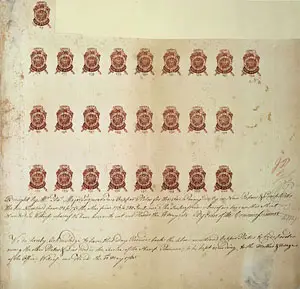
Image of Conflict with the British Stamp Act 1765

Fun Facts

  • Colonial merchants were unhappy about the new rules because they couldn’t trade with other countries, but instead could only trade with Great Britain, which charged higher export taxes on the merchants’ products.

  • The 1765 Stamp Act required Americans to pay an extra tax on common items, such as newspapers, calendars, and playing cards.

  • The Americans believed these taxes weren’t fair because they had no Americans in Parliament representing them – or speaking and voting on their behalf. The British responded that many people in Britain weren’t represented in Parliament, yet still had to pay taxes. Taxes were still much lower in America than they were in America, they said.

  • A small group of people began complaining. Young lawyer, Patrick Henry gave fiery speeches. He said that King George III should worry about losing his head in a revolution. A group known as the Patriots formed the Sons of Liberty and the Daughters of Liberty. These groups urged merchants not to trade with the British or buy their goods.

  • In addition to increased taxes, the colonists were required to let soldiers live in their homes. The 1773 Tea Act said that colonists could only buy tea, a major food staple, from Britain’s East India Company.

  • Boston and the surrounding towns in Massachusetts was the hub of revolutionary activity. In Boston, colonists refused to buy British goods. Women spun their own thread and wove their own cloth, eliminating the need to buy fabric from Britain. They learned to cook without special ingredients or spices imported from Britain.

Vocabulary

1. Molasses: a thick, dark, sweet syrup made from sugar cane and used to sweeten foods

2. Export: to sell and send products to another country.

3. Import: the opposite of export; to buy and bring goods in from another country

Questions and Answers

Question: Were women involved in the conflicts?

Answer: Women played a vital, if subtle, role in the events leading up to the revolution. Women taught their children their political views. Some acted as spies or disguised themselves as men so they could be soldiers. Some, such as Abigail Adams, spoke out for freedom and women’s rights. Some dressed as men and fought as soldiers.

Learn More

Visit Mr. Nussbaum’s site to learn more about the Stamp Act.

Indian Wars

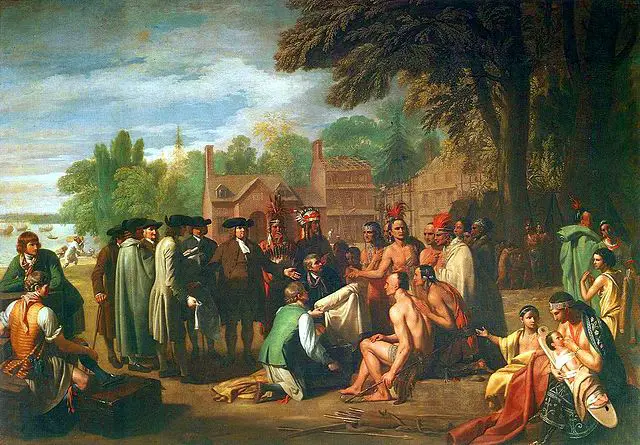
Massasoit and his men taught the Puritans how to grow crops in the New World and generally enjoyed good relationships with these new settlers. But in most areas, the colonists and Indians maintained an uneasy coexistence. The colonists brought disease to the Indians and took their land. Colonists often saw the Indians as godless and uncivilized. They sought to convert the natives and change their culture.

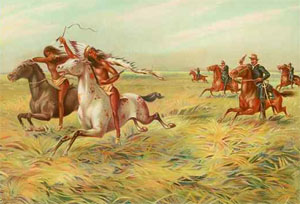
Fun facts Puritans- Image of  Indian Wars
Fun facts Puritans- Image of Indian Wars

Fun Facts

  • In 1675 and 1676, the Wampanoag leader, Metacom, (called King Philip by the colonists) formed an alliance with other tribes to fight the Puritans.

  • The Indians burned 12 villages near Providence and Boston.

  • In 1676, the Mohawks joined with the Puritans. The Puritans killed Metacom and carried his head on a stick. His wife and son were sold as slaves.

  • The war was over: two thousand colonists and four thousand Indians had been killed.

  • In the 1750s, the French and English were fighting for control of North America. The Algonquin Indians, allies with the French, often attacked British settlements to help the French.

  • In 1754, the British engaged in a battle with the French and Indian tribes, who fought from the cover of trees. Over half the British soldiers were killed. George Washington realized that the troops must change their tactic of fighting in formation in open fields.

  • In 1756, England formally declared war on France. William Pitt, leader of Parliament, focused Britain’s military focus on defeating the French in North America. The Iroquois tribes, the colonists, and the British military worked together, attacking Fort Niagara and Lake Champlain. In 1763, gave up all claims to North America.

Vocabulary

1. Sought: attempt, try

2. Godless: uncivilized, without religion

3. Coexistence: living or existing together

Questions and Answers

Question: Did the wars between the Indians and the colonists end after the Revolutionary War?

Answer: No. Conflicts over land ownership continued until the mid-1800s.

Learn More

Visit the U.S. Department of State to learn more about the French and Indian War.

The Rise of Slavery

Plantation owners in Virginia and other Southern states originally used indentured servants to work in the fields. After Bacon’s Uprising, plantation owners realized that freed indentured servants posed a risk. They began importing slaves from Africa to work on their plantations.

The idea of slavery wasn’t new. Egyptians, Greeks, and Romans all kept slaves. In fact, slavery has been practiced all over the world for thousands of years. Slavery was a common part of life in Africa, where slaves were treated relatively well. They could marry, gain an education, and interact in everyday society.

Ironically, slavery in America allowed the young country to prosper economically and achieve freedom from Great Britain. Many of the Founding Fathers kept slaves. Of course, the benefits of freedom weren’t extended to the slaves themselves, who often suffered terribly.

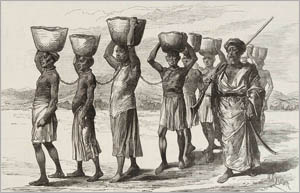
Fun facts of slavery- Image of The Rise of Slavery

Fun Facts

  • In the 1600s, Europeans brought slaves to the New World. Many of these slaves were kidnapped by African slave traders. The terrified men, women, and children walked hundreds of miles across Africa to the Gold Coast in north-western Africa.

  • They were then chained and loaded so tightly onto boats that they could barely move. As many as 25 percent – approximately 2 million Africans – died during the voyage. Many became sick and died from disease. Others jumped overboard.

  • The ships sailed from Africa’s coast to the West Indies in the Caribbean Sea. Here, the slaves were inspected to make sure they were healthy. They were trained and sold in auctions. They were then loaded on boats bound for America.

  • Europeans traded salted fish, guns, rum, and iron bars used as money for the slaves.

  • Most of the slaves brought to America lived in the South, many of them on plantations. Field hands worked long hours under grueling conditions on the plantations. Household slaves had it better. They cooked, cleaned, sewed, and kept the gardens. Some slaves learned trades, such as carpentry or tanning. Some slave owners were kind, but many were very cruel.

  • Slaves in New England were usually treated better, although they weren’t free.

  • As the numbers of slaves in America grew, slave owners worried about uprisings. They made laws stating that slaves were to be treated as property. Slaves weren’t allowed to marry, although many did. Their children and spouses could be ripped away from them. It was against the law for a large group of slaves to gather in one place.

  • Slaves tried to keep their own culture alive. They created gospel music by mixing traditional African rhythms with Christian themes. They told stories and made art.

Vocabulary

1. Prosper: to thrive, flourish, do well

2. Benefit: an advantage or gain

3. Grueling: exhausting

Questions and Answers

Question: Why didn’t the Founding Fathers and early colonists understand that slavery was wrong?

Answer: That’s a good question with a complicated answer. First, some colonists did believe slavery was wrong but felt powerless to stop it. Unfortunately, slavery and other forms of oppression were common in many cultures. For hundreds of years in Great Britain, people lived under a feudal system, in which a few people owned most of the country’s land and wealth while the rest of the people lived in poverty. Children and women had few rights and were often poorly treated. Human life, in general, wasn’t highly valued. Slave traders and plantation owners were blinded by their own greed.

Learn More

Visit Scholastic to learn more about what it was like to be a slave.

Beyond the Facts and Figures: The Rise of Civilization

Early Native Americans were generally nomads; they moved from place to place in search of food. This is true of ancient peoples elsewhere too, such as the early people living in the Middle East and northern Africa. The hunting and gathering lifestyle was difficult and people didn’t live very long. Populations remained small.

Have you ever wondered how these ancient people developed into great civilizations? What allowed them to move forward and progress? The answer might surprise you: food.

  • In Mesoamerica, thousands of years ago, native people began cultivating, or growing, a small grass-like plant. This plant was the ancestor of modern corn. An ear of corn was only about the size of your thumb. The corn was small and lacked nutrition.
  • Scientists and archaeologists aren’t sure how these people did it, but over many years, they adapted corn to become a nutritious staple food. They adapted the corn so it could be grown in colder climates. They learned how to fertilize the soil and divert water from streams and rivers to water the corn.
  • Native people learned how to dry corn. They could grind it into flour during the winter. This knowledge allowed them to stay in one place. They no longer had to move to warmer climates during the winter in search of food. Great civilizations began to thrive.
  • Over 8,000 years ago in the mountains of Peru, the Inca people began to grow potatoes. These roots were similar to corn. They became a staple crop that allowed the Incas to survive and thrive. When explorers first brought potatoes back to Europe, people believed they were poisonous. Later, potatoes became an important crop there too.
  • All over the world, ancient people developed food crops based on the resources around them. In Mesopotamia and Egypt, people began keeping sheep and other livestock. Europeans learned to grow rye and wheat.
The Rise of Civilization
The Rise of Civilization- Image of The Rise of Civilization

Vocabulary

  1. Nomad: someone who moves from place to place without a permanent home
  2. Population: a specific group of people
  3. Cultivate: intentionally grow and raise plants
  4. Ancestor: an early type of plant or animal from which others have come from; or family members from whom one has descended or come from

Questions and Answers

Question: Did early settlers use the native tribes’ knowledge of food?

Answer: Yes, early colonists, such as the Pilgrims, would likely have starved to death without the Indians’ help. Native Americans taught the colonists how to grow foods, such as corn.

Learn More

Visit the University of Utah to see photos of early ears of corn.


Early Expeditions to American

You probably have heard about Christopher Columbus’s voyages, but he certainly wasn’t the only explorer on the high seas. Many people went before him; most of them were seeking a faster and safer trade route to Asia and the Middle East. Their successes (and failures) gave Columbus important information that helped him in his journeys.

Many people came after Columbus. These people brought wealth and glory to European countries, such as Portugal and Spain. Unfortunately, they almost always harmed the native people already living in the Americas.

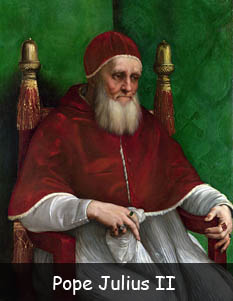
Early Expeditions- Image of Pope_Julius_II


Fun Facts

  • Prince Henry of Portugal started a navigation school in the mid-1400s. Here, sailors learned everything they needed to know about plotting a voyage and sailing a ship. Henry sent ships down the coast of Africa, where captains traded for ivory, gold, and slaves.
  •  In 1488, Bartholomew Dias from Portugal, sailed around the Cape of Good Hope at the southern tip of Africa. In 1498, Vasco de Gama traveled all the way around the Cape, landing in India. His voyage opened Portuguese trade with China, India, and the East Indies.
  • The Portuguese invented the mariner’s astrolabe. Based on an Islamic tool, the astrolabe measured stars’ altitude. With this information, sailors could determine how far they were from the equator.
  • Columbus’s discovery of the Americas fueled a quest for gold. In 1519, Spanish conquistador, Hernando Cortes, led soldiers against the Aztecs in Mexico. The soldiers found immense wealth, which they happily took. They destroyed the Aztecs’ capital city and eventually wiped out the entire Aztec civilization.
  • In 1532, Francisco Pizarro attacked the Inca Empire. Pizarro took the Incas’ gold and enslaved the people.
  •  Pope Julius II approved the Treaty of Tordesillas in 1494. This treaty created an imaginary line running through the Atlantic Ocean. Spain could claim all the land west of the line; Portugal could claim all the land east of the line. Spain certainly got the better end of the deal. Portugal laid claim to Brazil while Spain claimed the rest of South America.
  • In 1497, John Cabot explored the east coast for English settlements.
  • Italian Giovanni da Verrazano explored New York Bay for France; Jacques Cartier explored the Gulf of St. Lawrence and the St. Lawrence River, claiming Canada for France, as well.
  •  Samuel de Champlain founded the first French trading post in Quebec in 1609.
  • Henry Hudson claimed the area around the Hudson River for the Dutch.
  • Rene-Robert Cavelier de La Salle built trading posts near the Great Lakes and the Mississippi, claiming the land for France.
  • Francisco Vasquez de Coronado searched for “cities of gold” throughout the Southwest. He never found any cities. 

Vocabulary

  1. Navigation: to plan, direct or steer the course of a ship or other craft
  2. Altitude: the height of an object from the ground or from sea level
  3. Treaty: a signed agreement designed to prevent conflict, typically between two countries or political groups

Questions and Answers

Question: How did the English end up with North America?

Answer: England eventually laid claim to most of the eastern coast of what is now the U.S. but this process didn’t happen all at once. During the 1500s, Spain was very powerful. Queen Elizabeth I sought to reduce Spain’s control. She sent sea captains, such as Francis Drake and John Hawkins, to seize Spanish ships, stealing their cargo. King Phillip II of Spain was angry. He sent a fleet of 130 ships to the coast of England in 1588. The English proved difficult to defeat because of their skilled sailing. A storm further aided the English and Spain’s Armada was destroyed. This defeat marked the beginning of Spain’s decline and England’s rise to power.

Learn More

Visit National Geographic to watch a video about the Americas before Columbus. 

The First European Explorers to America

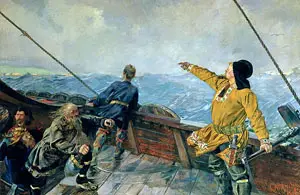
Was Christopher Columbus the first European to reach the American continents? His expedition was certainly well-documented, but it wasn’t the first. Around 1000 A.D., almost five hundred years before Columbus landed in the West Indies, Leif Erikson, a Viking explorer, landed on Canada’s eastern shore.

Image of First European Explorers

Fun Facts

  • Erikson was the son of the legendary Viking explorer, Erik the Red. Erik the Red left Norway and settled Greenland.
  • Erikson traveled back to Norway where he met King Olaf. He converted to Christianity. King Olaf asked him to take his new religion back to Greenland.
  • On the return voyage, Erikson sailed off course and landed in Newfoundland. He named the land, Vinland, because of its abundant wild grapes and fertile soil.
  • Erikson and his men stayed for a few years but left and never returned because of conflicts with the Native Americans who lived there.
  • Apparently, Erikson came upon several Indians sleeping under their overturned canoes shortly after he arrived in North America. He and his men killed all the Indians. You can imagine why the Indians weren’t friendly.

Vocabulary

  1. Expedition: a planned journey or exploration
  2. Well-documented: thoroughly recorded
  3. Convert: to join a specific religion or way of life
  4. Fertile: rich; capable of giving life

Questions and Answers

Question: How do we know about Leif Erikson’s adventures?

Answer: We know about his trip from two Viking sagas, or epic stories, which have been recorded and handed down over the centuries. These accounts differ somewhat so archeologists aren’t sure exactly what happened. Scientists have discovered a site in Newfoundland which they believe to be the Viking settlement.

Learn More

Visit UNESCO to see photos of the Viking settlement remains.