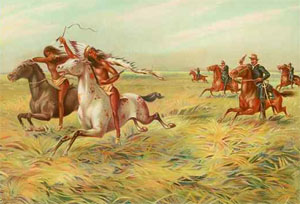
It wasn’t one incident or conflict that caused American colonists to rebel against the British government, but a long list of complaints. The French and Indian War left Great Britain with heavy debts. King George III and the British Parliament asked the colonists to help pay for this war. They imposed heavy taxes on molasses and limited the colonists’ ability to trade with other countries.
The British recognized the need to keep good relationships with Indian tribes. They created the Proclamation Line of 1763, which created a boundary along the Appalachian Mountains beyond which the colonists could not settle. Troops were sent to enforce this boundary. This made the colonists angry. The colonists teased the soldiers, calling them “Lobsters” or “Lobsterbacks” in reference to their red jackets.
Fun Facts
-
Colonial merchants were unhappy about the new rules because they couldn’t trade with other countries, but instead could only trade with Great Britain, which charged higher export taxes on the merchants’ products.
-
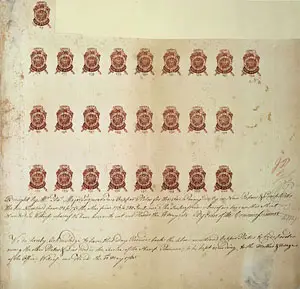
The 1765 Stamp Act required Americans to pay an extra tax on common items, such as newspapers, calendars, and playing cards.
-
The Americans believed these taxes weren’t fair because they had no Americans in Parliament representing them – or speaking and voting on their behalf. The British responded that many people in Britain weren’t represented in Parliament, yet still had to pay taxes. Taxes were still much lower in America than they were in America, they said.
-
A small group of people began complaining. Young lawyer, Patrick Henry gave fiery speeches. He said that King George III should worry about losing his head in a revolution. A group known as the Patriots formed the Sons of Liberty and the Daughters of Liberty. These groups urged merchants not to trade with the British or buy their goods.
-
In addition to increased taxes, the colonists were required to let soldiers live in their homes. The 1773 Tea Act said that colonists could only buy tea, a major food staple, from Britain’s East India Company.
-
Boston and the surrounding towns in Massachusetts was the hub of revolutionary activity. In Boston, colonists refused to buy British goods. Women spun their own thread and wove their own cloth, eliminating the need to buy fabric from Britain. They learned to cook without special ingredients or spices imported from Britain.
Vocabulary
1. Molasses: a thick, dark, sweet syrup made from sugar cane and used to sweeten foods
2. Export: to sell and send products to another country.
3. Import: the opposite of export; to buy and bring goods in from another country
Questions and Answers
Question: Were women involved in the conflicts?
Answer: Women played a vital, if subtle, role in the events leading up to the revolution. Women taught their children their political views. Some acted as spies or disguised themselves as men so they could be soldiers. Some, such as Abigail Adams, spoke out for freedom and women’s rights. Some dressed as men and fought as soldiers.
Learn More
Visit Mr. Nussbaum’s site to learn more about the Stamp Act.