
• Tag Archives: Governor Thomas Hutchinson

    Britain’s Allies

    Not everyone was happy when America won its independence from Great Britain. Many people, particularly wealthy slave-owners in the southern states, remained sympathetic to Great Britain. These people were known as Loyalists or Tories. Many black slaves and Native Americans fought for the British, as well.
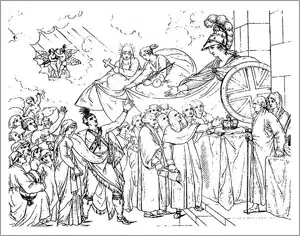
    Image for Britain’s Allies
    Fun Facts for Britain – Image for Britain’s Allies

    Fun Facts

    • About one-fifth of the colonists were Loyalists. These included government leaders, such as Governor Thomas Hutchinson and many pastors and priests of the Church of England.

    • Another one-third of the colonists remained neutral during the war, refusing to take sides.

    • The Loyalists were hated by the colonists and sometimes experienced mob violence. Over 80,000 Loyalists fled, mostly to Canada.

    • Benedict Arnold was a brilliant American war hero. Unfortunately, his pride got the better of him. He felt that Congress had failed to appreciate him and made a deal with General Burgoyne to sell the fort, West Point, to the British. The plot was discovered and Arnold was branded a traitor to America. He became a British general, but the British never really trusted him.

    • Native Americans believed that if the Americans won, they would lose more of their rights and their land, which was true. Many tribes, such as the Cherokee tribe, fought against the Patriots. After the war, all tribes – even those who had fought with the colonists – were displaced from their land and forced further west.

    • The Declaration of Independence made no mention of freedom for slaves. During the war, the governor of Virginia declared freedom for any slave who would fight for the British. More than 800 slaves took up arms against the colonists and more than 50,000 slaves fled from their owners.

    Vocabulary

    1. Neutral: to remain without a position or opinion

    2. Traitor: one who betrays his country or friends

    3. Displace: to uproot

    Questions and Answers

    Question: Were the Loyalists outspoken about their opinions?

    Answer: Some were, especially in the beginning, but many people on both sides quietly supported their causes. Some acted as spies. Those with money offered financial support.

    Learn More

    Visit PBS to play a game, “The Road to Revolution.”
    Boston: A Massacre and a Tea Party

    After the French and Indian War, relationships between the colonists and the British government quickly soured. In Boston, men hanged an effigy of stamp official Andrew Oliver to a tree. When the Lieutenant Governor Thomas Hutchinson ordered its removal, an angry mob destroyed the tax office and even the lieutenant governor’s house. Soon, events escalated to a revolution.

    Image of Boston
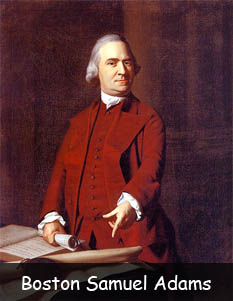
    Fun Facts for Boston – Image of Samul Adams


    Fun Facts

    • On March 5, 1770, colonists in Boston threw snowballs and rocks at British soldiers.

    • The soldiers fired. Some accounts claim they fired on purpose; others say that the first shot was a mistake. Regardless, five Bostonians were killed. Governor Thomas Hutchinson ordered the soldiers arrested.

    • After the Boston Massacre, a group known as the Sons of Liberty formed more than 80 chapters in towns in Massachusetts.

    • Samuel Adams, often called the “Firebrand of the American Revolution” called for Committees of Correspondence, which met and wrote to each other about news and ideas. This committee helped unify the colonists in their desire for freedom.

    • In 1773, the British passed the Tea Act, which stated that the colonists could only buy tea from the East Indian Company. Parliament’s plan was to help the tea company while selling cheap tea to Americans. The colonists believed the British were once again interfering where they had no business.

    • On December 16, at least 5,000 Bostonians met at Old South Church to protest the Tea Act. Dressed as Indians, they went to the tea ships lying in the Boston Harbor and threw 45 tons (more than 80,000 pounds) of tea in the sea.

    • In retaliation, the British passed the Coercive Acts. Colonists called it the Intolerable Acts. Soldiers blocked trade in and out of Boston. They closed the port until the colonists paid for the tea and banned all town meetings. They took control of the government, making General Thomas Gage the governor.

    Vocabulary

    1. Effigy: a straw doll or dummy

    2. Escalate: rise or increase

    3. Interfere: become involved

    Questions and Answers

    Question: What happened after the Boston Tea Party?

    Answer: The British put the hammer down on the colonists, hoping to subdue them. Their plan backfired. Previously, wealthy colonies, such as Virginia, had been loyal to the crown. The Boston Tea Party united the colonies. In September, 1774, a group of 55 delegates met in Philadelphia for the First Continental Congress. They made united plans to respond to Great Britain’s tyranny.

    Learn More

    Visit PBS to learn more about the Boston Tea Party.
