• Tag Archives: About Christopher Columbus

    Early Expeditions to American

    You probably have heard about Christopher Columbus’s voyages, but he certainly wasn’t the only explorer on the high seas. Many people went before him; most of them were seeking a faster and safer trade route to Asia and the Middle East. Their successes (and failures) gave Columbus important information that helped him in his journeys.

    Many people came after Columbus. These people brought wealth and glory to European countries, such as Portugal and Spain. Unfortunately, they almost always harmed the native people already living in the Americas.
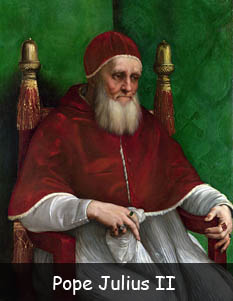
    Early Expeditions- Image of Pope_Julius_II
    Early Expeditions- Image of Pope_Julius_II


    Fun Facts

    • Prince Henry of Portugal started a navigation school in the mid-1400s. Here, sailors learned everything they needed to know about plotting a voyage and sailing a ship. Henry sent ships down the coast of Africa, where captains traded for ivory, gold, and slaves.
    •  In 1488, Bartholomew Dias from Portugal, sailed around the Cape of Good Hope at the southern tip of Africa. In 1498, Vasco de Gama traveled all the way around the Cape, landing in India. His voyage opened Portuguese trade with China, India, and the East Indies.
    • The Portuguese invented the mariner’s astrolabe. Based on an Islamic tool, the astrolabe measured stars’ altitude. With this information, sailors could determine how far they were from the equator.
    • Columbus’s discovery of the Americas fueled a quest for gold. In 1519, Spanish conquistador, Hernando Cortes, led soldiers against the Aztecs in Mexico. The soldiers found immense wealth, which they happily took. They destroyed the Aztecs’ capital city and eventually wiped out the entire Aztec civilization.
    • In 1532, Francisco Pizarro attacked the Inca Empire. Pizarro took the Incas’ gold and enslaved the people.
    •  Pope Julius II approved the Treaty of Tordesillas in 1494. This treaty created an imaginary line running through the Atlantic Ocean. Spain could claim all the land west of the line; Portugal could claim all the land east of the line. Spain certainly got the better end of the deal. Portugal laid claim to Brazil while Spain claimed the rest of South America.
    • In 1497, John Cabot explored the east coast for English settlements.
    • Italian Giovanni da Verrazano explored New York Bay for France; Jacques Cartier explored the Gulf of St. Lawrence and the St. Lawrence River, claiming Canada for France, as well.
    •  Samuel de Champlain founded the first French trading post in Quebec in 1609.
    • Henry Hudson claimed the area around the Hudson River for the Dutch.
    • Rene-Robert Cavelier de La Salle built trading posts near the Great Lakes and the Mississippi, claiming the land for France.
    • Francisco Vasquez de Coronado searched for “cities of gold” throughout the Southwest. He never found any cities. 

    Vocabulary

    1. Navigation: to plan, direct or steer the course of a ship or other craft
    2. Altitude: the height of an object from the ground or from sea level
    3. Treaty: a signed agreement designed to prevent conflict, typically between two countries or political groups

    Questions and Answers

    Question: How did the English end up with North America?

    Answer: England eventually laid claim to most of the eastern coast of what is now the U.S. but this process didn’t happen all at once. During the 1500s, Spain was very powerful. Queen Elizabeth I sought to reduce Spain’s control. She sent sea captains, such as Francis Drake and John Hawkins, to seize Spanish ships, stealing their cargo. King Phillip II of Spain was angry. He sent a fleet of 130 ships to the coast of England in 1588. The English proved difficult to defeat because of their skilled sailing. A storm further aided the English and Spain’s Armada was destroyed. This defeat marked the beginning of Spain’s decline and England’s rise to power.

    Learn More

    Visit National Geographic to watch a video about the Americas before Columbus. 
    The First European Explorers to America

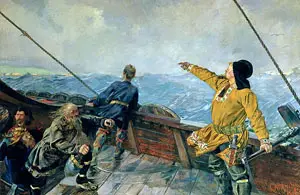
    Was Christopher Columbus the first European to reach the American continents? His expedition was certainly well-documented, but it wasn’t the first. Around 1000 A.D., almost five hundred years before Columbus landed in the West Indies, Leif Erikson, a Viking explorer, landed on Canada’s eastern shore.

    Image of First European Explorers
    Image of First European Explorers

    Fun Facts

    • Erikson was the son of the legendary Viking explorer, Erik the Red. Erik the Red left Norway and settled Greenland.
    • Erikson traveled back to Norway where he met King Olaf. He converted to Christianity. King Olaf asked him to take his new religion back to Greenland.
    • On the return voyage, Erikson sailed off course and landed in Newfoundland. He named the land, Vinland, because of its abundant wild grapes and fertile soil.
    • Erikson and his men stayed for a few years but left and never returned because of conflicts with the Native Americans who lived there.
    • Apparently, Erikson came upon several Indians sleeping under their overturned canoes shortly after he arrived in North America. He and his men killed all the Indians. You can imagine why the Indians weren’t friendly.

    Vocabulary

    1. Expedition: a planned journey or exploration
    2. Well-documented: thoroughly recorded
    3. Convert: to join a specific religion or way of life
    4. Fertile: rich; capable of giving life

    Questions and Answers

    Question: How do we know about Leif Erikson’s adventures?

    Answer: We know about his trip from two Viking sagas, or epic stories, which have been recorded and handed down over the centuries. These accounts differ somewhat so archeologists aren’t sure exactly what happened. Scientists have discovered a site in Newfoundland which they believe to be the Viking settlement.

    Learn More

    Visit UNESCO to see photos of the Viking settlement remains.

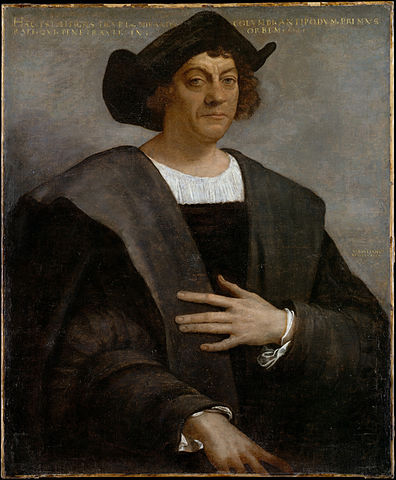
    Christopher Columbus

    “Following the light of the sun, we left the Old World.”

    Was Christopher Columbus a hero? That depends on who you ask. He was a brave and skilled sailor and leader. Although he wasn’t the first to discover the Americas, his explorations opened the way for future European visits.

    On the other hand, his trips were financed by the King and Queen of Spain, who were motivated by the promise of wealth, power, and land. Columbus and his men took gold, spices, and other riches. Later visitors were brutally unkind to the native people, eventually causing their destruction.

    Like many events and people in history, Columbus and his expeditions were neither all good nor all bad.

    Christopher Columbus
    Image of Christopher Columbus

    Fun Facts

    • Christopher Columbus was Italian but he lived in Portugal for many years. He was a book publisher, a map maker and a sailor.
    • Columbus tried to convince King John of Portugal to finance his trip. The King’s experts believed the trip was impossibly long. The King said no to Columbus’s request.
    • Columbus then traveled to Spain and approached King Ferninand and Queen Isabella. At the time, Portugal had the most powerful fleet in the ocean. The Spanish King wanted to change that. However, his experts also believed the trip Columbus proposed was a bad idea. Columbus spent six years in Spain trying to win support.
    • Finally, he decided to speak with the King of France. He was traveling on a donkey out of Spain when the Spanish king’s men found him. King Ferninand had changed his mind and had decided to finance the trip.
    •  Columbus was given an honorary title and promised that he could keep 10 percent of any riches he found in his travels.
    • Columbus set out on August 3, 1492 with three lightweight boats called caravels. He had a crew of about 90 men. The boats were loaded with enough water and food – nonperishable items like flour, olive oil, salted cod, bacon, and biscuits – for a year.
    • The boats, the Nina, the Pinta, and the Maria, had white sails painted with large red crosses.
    • Columbus’s crew felt very afraid as they went out into the vast, unexplored ocean. Although Columbus knew the world was round, many of the crew still believed the earth was flat. They worried that their ship might fall off the edge. They also worried about giant sea monsters rising from the deep.
    • After three weeks at sea, the crew demanded that Columbus turn around. Columbus tried to rally them. He promised a silk coat to the first man to sight land.
    • Finally, on October 12, 1492, Columbus’s crew saw land. Columbus believed they were near India, instead of their real destination, the Caribbean Islands. The native people, the Tainos, stood on the shore to meet them.
    • Columbus said the native people were beautiful, kind, and generous. They gave Columbus’s crew food and whatever else they wanted. They showed Columbus where to find gold. Columbus said, “They love their neighbors as themselves and have the softest, gentlest voices in the world.”
    • Columbus returned to Spain a hero. The King and Queen quickly sent him on another expedition with more men and even some women. He was to establish a colony and convert the natives to Christianity.
    • Things did not go well. The crops the settlers planted didn’t grow in the tropical climate. Some of the settlers were greedy. They stole from the Tainos and even kidnapped or killed them. Columbus was eventually stripped of his title as governor and asked to leave.
    • More settlers and conquistadors followed Columbus. They found gold and took the Tainos as slaves. Many of the native Indians became ill with European diseases like smallpox. Within 50 years, the gentle Tainos people were extinct.
    •  Columbus died in Spain in 1506. He still believed that the land he had found was part of Asia.

    Learn More

    Visit NPR to read more about Christopher Columbus’s journeys.