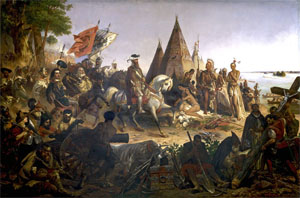
• Tag Archives: Christopher Columbus

    Christopher Columbus

    “Following the light of the sun, we left the Old World.”

    Was Christopher Columbus a hero? That depends on who you ask. He was a brave and skilled sailor and leader. Although he wasn’t the first to discover the Americas, his explorations opened the way for future European visits.

    On the other hand, his trips were financed by the King and Queen of Spain, who were motivated by the promise of wealth, power, and land. Columbus and his men took gold, spices, and other riches. Later visitors were brutally unkind to the native people, eventually causing their destruction.

    Like many events and people in history, Columbus and his expeditions were neither all good nor all bad.
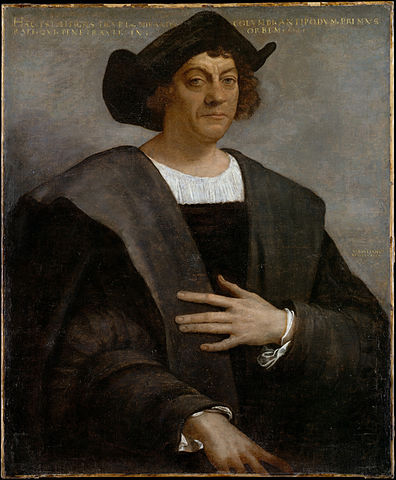
    Christopher Columbus
    Image of Christopher Columbus

    Fun Facts

    • Christopher Columbus was Italian but he lived in Portugal for many years. He was a book publisher, a map maker and a sailor.
    • Columbus tried to convince King John of Portugal to finance his trip. The King’s experts believed the trip was impossibly long. The King said no to Columbus’s request.
    • Columbus then traveled to Spain and approached King Ferninand and Queen Isabella. At the time, Portugal had the most powerful fleet in the ocean. The Spanish King wanted to change that. However, his experts also believed the trip Columbus proposed was a bad idea. Columbus spent six years in Spain trying to win support.
    • Finally, he decided to speak with the King of France. He was traveling on a donkey out of Spain when the Spanish king’s men found him. King Ferninand had changed his mind and had decided to finance the trip.
    •  Columbus was given an honorary title and promised that he could keep 10 percent of any riches he found in his travels.
    • Columbus set out on August 3, 1492 with three lightweight boats called caravels. He had a crew of about 90 men. The boats were loaded with enough water and food – nonperishable items like flour, olive oil, salted cod, bacon, and biscuits – for a year.
    • The boats, the Nina, the Pinta, and the Maria, had white sails painted with large red crosses.
    • Columbus’s crew felt very afraid as they went out into the vast, unexplored ocean. Although Columbus knew the world was round, many of the crew still believed the earth was flat. They worried that their ship might fall off the edge. They also worried about giant sea monsters rising from the deep.
    • After three weeks at sea, the crew demanded that Columbus turn around. Columbus tried to rally them. He promised a silk coat to the first man to sight land.
    • Finally, on October 12, 1492, Columbus’s crew saw land. Columbus believed they were near India, instead of their real destination, the Caribbean Islands. The native people, the Tainos, stood on the shore to meet them.
    • Columbus said the native people were beautiful, kind, and generous. They gave Columbus’s crew food and whatever else they wanted. They showed Columbus where to find gold. Columbus said, “They love their neighbors as themselves and have the softest, gentlest voices in the world.”
    • Columbus returned to Spain a hero. The King and Queen quickly sent him on another expedition with more men and even some women. He was to establish a colony and convert the natives to Christianity.
    • Things did not go well. The crops the settlers planted didn’t grow in the tropical climate. Some of the settlers were greedy. They stole from the Tainos and even kidnapped or killed them. Columbus was eventually stripped of his title as governor and asked to leave.
    • More settlers and conquistadors followed Columbus. They found gold and took the Tainos as slaves. Many of the native Indians became ill with European diseases like smallpox. Within 50 years, the gentle Tainos people were extinct.
    •  Columbus died in Spain in 1506. He still believed that the land he had found was part of Asia.

    Learn More

    Visit NPR to read more about Christopher Columbus’s journeys.
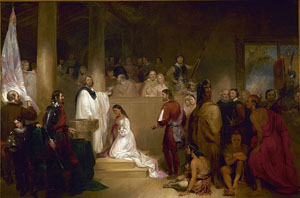
    Native American Tribes

    When Christopher Columbus arrived in America, millions of American Indians lived here. Each tribe had its own culture, traditions, and even language, but tribes living near each other were similar because of their environment. They built similar shelters and ate similar foods. Anthropologists have divided Indian tribes into culture areas – specific geographic regions with similar climates and resources.

    Image of Native American Tribes
    Image of Native American Tribes

    Fun Facts

    • Northeast Woodlands: Two groups of Indians lived in New England and the area around the Great Lakes. The groups were divided by the languages they spoke: the Algonquian tribes, including the Huron, the Narragansett, and the Powhatan; and the Iroquois group, a powerful and often war-like group, including the Mohawk, Oneida, and Seneca tribes. These tribes built wooden homes, hunted, and farmed. They were among the first tribes impacted by European settlers.
    • Southeast Woodlands: The Creek, Choctaw, Seminole, Chicksaw, and Wichita tribes lived in the area around the Gulf of Mexico, including Florida, Georgia, Alabama, Tennessee, and the Carolinas. Most tribes here spoke one of the Muskogean language dialects. They farmed, hunted, and gathered wild foods. They lived in homes made from wood and mud.
    • Great Plains: The Great Plains region lies west of Mississippi and runs from Canada to Texas, taking in Montana, Wyoming, Idaho, the Dakotas, Nebraska, Colorado, Kansas, Oklahoma, Missouri, and Texas. Tribes here, such as the Sioux, Cheyenne, Comanche, Arapaho, Blackfoot, and Pawnee tribes, relied on buffalo for all their needs. The entire tribe helped during a buffalo hunt. Children yelled and beat spears together to drive the buffalo off cliffs. The men waited below to kill the animals. Women came with scrapers and knives to butcher the animals. Nothing was wasted. The meat was a main food source; hides made clothing and teepees. Bones and sinews were used for tools, weapons, and even thread.
    • Southwest: The Pueblo tribes, including the Hopi, Zuni, and Acoma tribes, adapted well to the dry climate found in Arizona, New Mexico, and southern Colorado. These tribes lived in homes made of stone or adobe. They built canals to water corn, beans and squash crops. They were gifted artisans, creating beautiful pottery and weavings. Apache and Navajo tribes migrated to the area in the 15th century.
    • Far West: Northern Utah is now green with irrigated fields and orchards, but it was previously a barren desert. Southern Utah, Nevada, and parts of California are still dry, bare areas. Here, the Shoshone, Ute, and other tribes survived by hunting rabbits, squirrels, and snakes. They became skilled basket weavers.
    • Northwest Coast: The west coast, including Northern California, Oregon, and Washington, is a region rich in natural resources. The people here, including the Chinook, Tlingit, and Kwakiutl Indians, had no need to grow crops, but lived off the bounty of the land. They fished for salmon and hunted deer and caribou. They gathered berries, mushrooms, and other plants. They made wooden canoes and homes. They wore clothing made from pounded bark.

    Learn More

    Visit the History Channel to watch a video about the buffalo’s role in Native American culture.

    Native American Life

    Between 5 and 15 million Native Americans lived in North America when the Europeans arrived. They lived in varied climates and geographic areas. Just as you wouldn’t expect people living in the Southwest today to live exactly like people in New England, Native American tribes varied considerably in their traditions, languages, and culture. Their clothing, homes, and diet were different, depending on the resources available. Yet, many of the tribes shared similar traits. Families were tight-knit with grandparents and uncles and aunts helping with childrearing. Men and women had defined roles and jobs. Children were expected to help and were taught the skills they’d need as adults.

    Fun facts for American Life- Image of Native American Life
    Fun facts for American Life- Image of Native American Life

    Fun Facts

    • Native Americans’ homes varied, depending on the resources available. In the Northwest and Northeast, where forests were abundant, tribes built wood homes. Up to 12 Iroquois families lived together in a longhouse, a long wooden building with rooms separated by curtains. Plains Indians lived in teepees made from buffalo skins. In the Southwest, families lived in houses made from clay or stone bricks.
    • Native Americans wore simple, loose fitting clothing made from animal skins most of the time. They wore elaborate beaded clothing during ceremonies. Women wore dresses and skirts. Men wore shirts and leggings. Along the Northwest coast, Native Americans wove clothing from shredded cedar bark. Elsewhere, people used cotton or other plant fibers.
    • Babies spent most of their time strapped in a cradleboard and carried by their mothers. Older children were cared for by their extended family. Girls learned to sew, weave baskets, prepare food, tan hides, and make pottery. Boys learned how to hunt and fight. They made weapons and tools. All children liked to play games and listen to stories.
    • Native American tribes often traveled long distances in search of food. In the North, they harnessed sleds to dogs. In other areas, people walked. Women carried babies and supplies on their backs. The men usually didn’t carry anything because they needed to be ready to hunt or defend their tribe from enemies. Native Americans were skilled at building boats and canoes for traveling on rivers, lakes and the sea. Native Americans soon learned to use horses, brought by Europeans.
    • Many tribes were peaceful, but some tribes were aggressive and constantly at war. Men received honor for their bravery in war.

    Vocabulary

    1. Geographic: refers to the land
    2. Aggressive: war-like
    3. Trait: a characteristic
    4. Tight-knit: close

    Questions and Answers

    Question: Were Native Americans religious?

    Answer: Native Americans believed that spirits were all around them and controlled their fortunes. They performed rituals and dances for rain and abundant harvests. They felt strongly connected to the natural world. Shamans performed healing rituals.

    Learn More

    Watch a video at the History Channel about the first Americans.