You probably have heard about Christopher Columbus’s voyages, but he certainly wasn’t the only explorer on the high seas. Many people went before him; most of them were seeking a faster and safer trade route to Asia and the Middle East. Their successes (and failures) gave Columbus important information that helped him in his journeys.
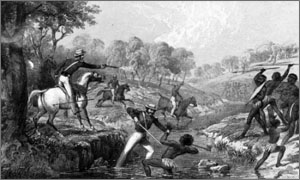
Many people came after Columbus. These people brought wealth and glory to European countries, such as Portugal and Spain. Unfortunately, they almost always harmed the native people already living in the Americas.
Fun Facts
- Prince Henry of Portugal started a navigation school in the mid-1400s. Here, sailors learned everything they needed to know about plotting a voyage and sailing a ship. Henry sent ships down the coast of Africa, where captains traded for ivory, gold, and slaves.
- In 1488, Bartholomew Dias from Portugal, sailed around the Cape of Good Hope at the southern tip of Africa. In 1498, Vasco de Gama traveled all the way around the Cape, landing in India. His voyage opened Portuguese trade with China, India, and the East Indies.
- The Portuguese invented the mariner’s astrolabe. Based on an Islamic tool, the astrolabe measured stars’ altitude. With this information, sailors could determine how far they were from the equator.
- Columbus’s discovery of the Americas fueled a quest for gold. In 1519, Spanish conquistador, Hernando Cortes, led soldiers against the Aztecs in Mexico. The soldiers found immense wealth, which they happily took. They destroyed the Aztecs’ capital city and eventually wiped out the entire Aztec civilization.
- In 1532, Francisco Pizarro attacked the Inca Empire. Pizarro took the Incas’ gold and enslaved the people.
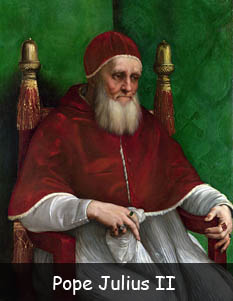
- Pope Julius II approved the Treaty of Tordesillas in 1494. This treaty created an imaginary line running through the Atlantic Ocean. Spain could claim all the land west of the line; Portugal could claim all the land east of the line. Spain certainly got the better end of the deal. Portugal laid claim to Brazil while Spain claimed the rest of South America.
- In 1497, John Cabot explored the east coast for English settlements.
- Italian Giovanni da Verrazano explored New York Bay for France; Jacques Cartier explored the Gulf of St. Lawrence and the St. Lawrence River, claiming Canada for France, as well.
- Samuel de Champlain founded the first French trading post in Quebec in 1609.
- Henry Hudson claimed the area around the Hudson River for the Dutch.
- Rene-Robert Cavelier de La Salle built trading posts near the Great Lakes and the Mississippi, claiming the land for France.
- Francisco Vasquez de Coronado searched for “cities of gold” throughout the Southwest. He never found any cities.
Vocabulary
- Navigation: to plan, direct or steer the course of a ship or other craft
- Altitude: the height of an object from the ground or from sea level
- Treaty: a signed agreement designed to prevent conflict, typically between two countries or political groups
Questions and Answers
Question: How did the English end up with North America?
Answer: England eventually laid claim to most of the eastern coast of what is now the U.S. but this process didn’t happen all at once. During the 1500s, Spain was very powerful. Queen Elizabeth I sought to reduce Spain’s control. She sent sea captains, such as Francis Drake and John Hawkins, to seize Spanish ships, stealing their cargo. King Phillip II of Spain was angry. He sent a fleet of 130 ships to the coast of England in 1588. The English proved difficult to defeat because of their skilled sailing. A storm further aided the English and Spain’s Armada was destroyed. This defeat marked the beginning of Spain’s decline and England’s rise to power.
Learn More
Visit National Geographic to watch a video about the Americas before Columbus.