• Tag Archives: Native American

    Native American Profiles: Hiawatha

    In 1855, the poet Henry Wadsworth Longfellow published the epic poem, The Song of Hiawatha, which is a fictional account of the childhood and life of one Native American, Hiawatha. The poem takes place on the shores of Lake Superior and details Hiawatha’s love for his grandmother, his people, and the natural world. Henry Wadsworth Longfellow was probably the most popular American poet of his time and The Song of Hiawatha remains a beloved American poem. The real Hiawatha was a great diplomat and chief among the Iroquois Indians. Born around 1525, Hiawatha belonged to the Onondaga tribe, a tribe that belonged to the powerful Iroquois nation. Even though the tribes in the Iroquois nation spoke the same language and shared similar culture, they were constantly at war with one another. Hiawatha wanted peace and worked to unite the tribes.
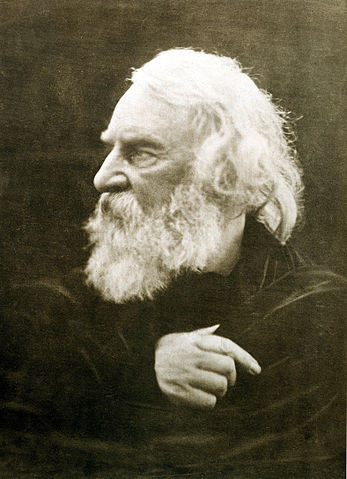
    Hiawatha
    Native American Profiles – Images of Hiawatha

    Fun Facts

    • Hiawatha lived near Lake Champlain and the Saint Lawrence River.
    • Legend says that he had five daughters who were killed by enemies.
    • Hiawatha went deep into the forest to grieve. There he met the prophet, Deganawida.
    • Deganawida healed Hiawatha of his sorrows. Hiawatha became a spokesman for the prophet.
    • He traveled to the many tribes, encouraging them to unite and to stop fighting.
    • Hiawatha and Deganawida met a council from the five Iroquois tribes. Hiawatha spoke to them about the Great Law of Peace.
    • He persuaded them to adopt five principles of peace. The council decided that the five tribes would become part of a great Iroquois Confederacy. They agreed to stop fighting, settle arguments peacefully, and protect each other against enemies.
    • They developed a constitution that helped them keep peace for many years. Early American settlers, Benjamin Franklin, admired the constitution and used some of its ideas in American government.

    Vocabulary

    1. Epic poem: a long poem that tells about historical or mythical events
    2. Grieve: to have deep feelings of sadness and loss
    3. Council: a meeting of a group of leaders

    Questions and Answers

    Question: Who was Longfellow’s inspiration for his poem, Hiawatha?

    Answer: Hiawatha is based on Chippewa (Ojibway) legends as recorded by Henry Rowe Schoolcraft and John Tanner. Longfellow was also inspired by an Ojibway chief who stayed at his home.

    Learn More

    Visit PBS to watch a video about Henry Longfellow’s epic poem, Hiawatha.
    Native American Profiles: Pocahontas

    One of the interesting things about history is that the stories tend to change, depending upon who is telling them. Take Pocahontas’s story, for example. We have no written documents from her directly. Instead, we have journals and other documents from the English settlers who knew her. We also have oral story telling that has been handed down for centuries through Native American tribes. The English versions of Pocahontas’s life are quite different from the Native American stories. What’s the truth? No one knows for sure, although both versions probably contain some elements that really happened.

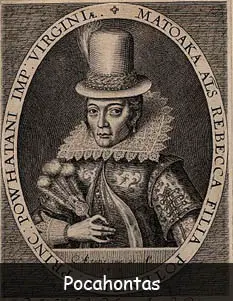
    Native American Profiles- Image of Pocahontas
    Native American Profiles- Image of Pocahontas

    Fun Facts

    • Pocahontas was born around 1596. She was a beloved daughter of Wahunsenaca, or Chief Powhatan, a powerful chief who ruled over 30 tribes with a population of about 25,000 people.
    • Pocahontas’s real name was Amonute or Matoaka. Pocahontas, a nickname, meant “playful one.” According to oral accounts, Pocahontas was also her mother’s name.
    • Native American history says that Pocahontas’s mother died in childbirth. Her father sent her to be raised by aunts, uncles, and grandparents. She often visited her father and they had a special bond.
    • As a child, Pocahontas probably wore little or no clothing, which was customary except during the winter. She learned traditional skills, such as growing and gathering food, weaving baskets, keeping fires lit, and tanning hides.
    • Pocahontas was about 11-years-old when she first met the English. John Smith wrote that he was captured during a skirmish. His captors placed his head on a rock and prepared to hit him with a club. Pocahontas rushed in to save him. Native American lure says that Smith was never in danger; the incident with the rock was a preplanned ritual designed to “adopt” Smith into the tribe.
    • Pocahontas became friends with the English, often visiting them and helping them. The Native American version suggests that her family, who was very protective of her, approved of the visits and supervised them.
    • Pocahontas married Kokoum, a brave warrior and family friend. They had a son together.
    • Relations with the English began to deteriorate and John Smith left the colonies. Pocahontas was later kidnapped by Captain Samuel Argall. According to Native American accounts, he had Kokoum killed. Pocahontas learned English customs and religion. She eventually married Sir John Rolfe. The English accounts suggest that she loved Rolfe and enjoyed living with the English. She went to London and attended a ball with King James 1. The Native American version states that she was held against her will and cooperated for her own survival and the good of her people.
    • Pocahontas died in 1617. English accounts suggest she had pneumonia or dysentery. Native Americans believe she may have been poisoned.

    Vocabulary

    1. Oral storytelling: history that is passed down through people telling the stories to each other; the stories are not written down.
    2. Skirmish: a fight
    3. Ritual: a traditional ceremony, dance, or action designed to convey meaning or belief

    Questions and Answers

    Question: What happened after Pocahontas’s death?

    Answer: Both sides agree on this. Powhatan was devastated by his daughter’s death and fell into a depression. He died within a year. Relationships between the Indians and the Europeans were never the same.

    Learn More

    Visit PBS to watch a documentary about Pocahontas’s life.

    Native Americans Today

    During the 1800s, thousands of Native Americans died from combat, disease, or starvation. Many tribes disappeared altogether. Native Americans living on reservations struggled to survive while teaching their children their traditions and culture.

    Fun facts of Native Americans- Image of Native Americans Today
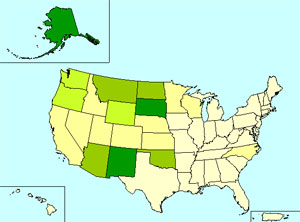
    Fun facts of Native Americans- Image of Native Americans Map

    Fun Facts

    • Today, Native American populations are growing. Over half of all Native Americans do not live on reservations. 300 federal reservations exist in the U.S., comprising over 52 million acres of land.
    • Native American children attend schools where they learn to read and write in English. Families often teach children their native language, culture, and traditions.
    • Native Americans participate in powwows, where they perform competitive dances to beating drums.
    • Native Americans are still known for their handicrafts – beautiful jewelry, rugs, and baskets.
    • Native Americans living on reservations face many struggles, including poor health and healthcare, crowded, substandard housing, poverty, and lack of employment opportunities.

    Vocabulary

    1. Population: group of people
    2. Native: first or original
    3. Substandard: below an acceptable level of quality

    Questions and Answers

    Question: Why do Native Americans still struggle so much?

    Answer: There is no single answer to this question. Unfair government policies are one reason, along with a lack of education and employment opportunities. Rates of depression, violence, and alcoholism are high on reservations.

    Learn More

    Visit PBS to learn more about Native Americans today.

    Head over to PBS Learning to go on a virtual field trip to a Native American village.