All posts by americanadmin

The Freedom Riders

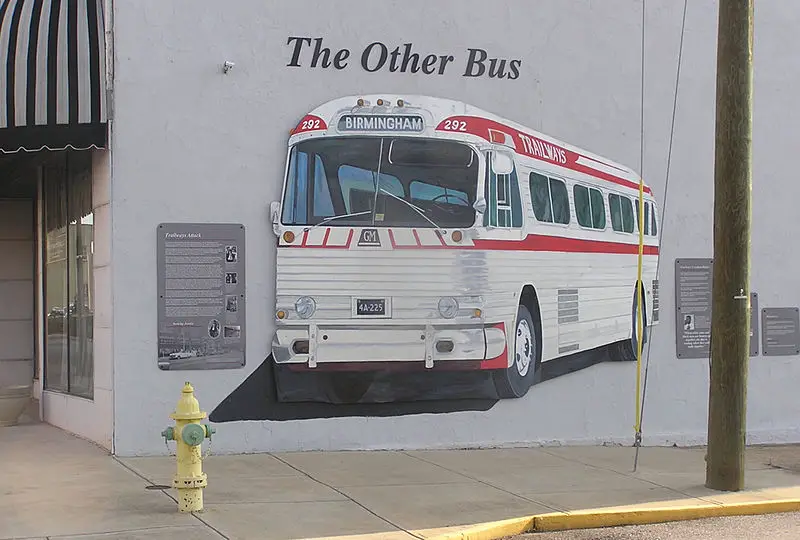
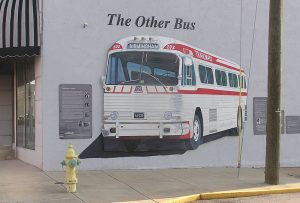
After Rosa Parks refused to give up her seat on the bus, laws were passed that said that whites and blacks could ride together on any bus traveling through more than one state. But throughout the South, this practice was still not allowed. So white volunteers began riding with black people to test this law and challenge those who refused to abide by it. These volunteers were called Freedom Riders.
Fun Facts

  • On Mother’s Day of 1961, angry mobs surrounded a Greyhound bus in rural Alabama. On the bus, white and black passengers rode together. The mob began pelting the bus with bricks and rocks and using sticks and axes to break windows. After someone through a firebomb through a window in the bus, the mobs blocked the doors so the people couldn’t get off. The fuel tank caught on fire and the bus would soon explode, forcing the mob back and allowing the passengers to flee. The mob beat them as they got off the bus.
  • A few hours later, white and black passengers were beaten until they were bloody as they got off buses in other parts of Alabama.
  • As news of the attacks spread through the country, more than 400 people volunteered as Freedom Riders. They risked arrest, beatings, and even death, but they thought their cause was important enough to risk their lives. Most of the riders were college students. Many of them  came from religious backgrounds or were civil rights workers. Half were black and a quarter of the group were women.
  • Many of the Freedom Riders were arrested and sent to jail. In Florida, a group of 300 people spent more than three weeks in jail under terrible conditions.
  • Today, most of the Freedom Riders are in their 70s or 80s. Many of them went on to become teachers, preachers, college professors, lawyers, and politicians. Many of them are still active in civil and social justice. They believe in speaking up for what they think is right.

Learn More

Watch a short video about the Freedom Riders.
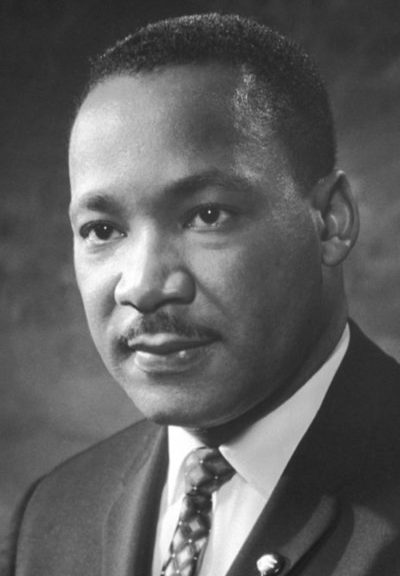
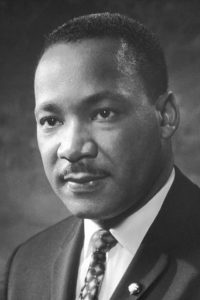
Martin Luther King Jr.

After Rosa Parks refused to give up her seat on the bus, things started to change. There was an energy and a movement among African Americans, especially young adults. They gathered together to protest the Jim Crow laws that kept blacks and whites segregated. First, four black students in Greensboro, North Carolina sat at an all-white lunch counter at Woolworth’s café. Then others started going to white movie theaters, libraries, churches, and pools, or riding on white buses. Martin Luther King was one of the most important leaders of this movement. He urged African Americans to protest peacefully, believing that only love, persistence, and nonviolence could create lasting change.

Fun Facts

  • Martin Luther King Jr. marched through the South talking to anyone who would listen. He was always calm, but passionate. He believed that the Founding Fathers meant for everyone in America to be treated with respect and equality, regardless of the color of their skin.
  • In 1963, he went to Birmingham, Alabama, a very dangerous place for people of color at that time.
  • He joined hundreds of people, including over 600 children and teens, to march through Kelly Ingram Park. The policemen sicced their dogs on the people and then turned fire hoses on them. The water was so strong, it knocked the children down and ripped their clothes off. People watching this event on the news were horrified and sickened by what they saw.
  • Then Dr. King went to Washington D.C. to give a speech on the Mall at the Lincoln Memorial. Thousands of people came to hear him and other leaders talk. He said, “I have a dream that my four little children will one day live in a nation where they will not be judged by the color of their skin, but by the content of their character.” Dr. King’s famous speech is still remembered and quoted today.
  • Soon after, President John F. Kennedy promised to send a civil rights bill to Congress guaranteeing equal rights to all Americans. He was never able to keep that promise because a few months later, he was shot and killed in Texas.
  • President Lyndon Johnson signed the Civil Rights Act in 1964, eliminating Jim Crow laws once and for all. The next year, he signed a bill allowing African Americans to vote.
  • Getting fair laws in place was one thing, but changing people’s hearts was something else altogether. African Americans continued to face discrimination but they kept on working.
  • During his life, Martin Luther King Jr. was arrested at least 20 times and assaulted four times. His family received many death threats. He won numerous awards, including the Nobel Prize.
  • He was assassinated in 1968 as he stood on a balcony in Memphis, Tennessee.

Questions and Answers

Question: Did Martin Luther King Jr. have a job and a family?

Answer: Yes, King was a pastor like his father and grandfather. He was married to Coretta Scott and they had four children.

Learn More

Watch a video about Martin Luther King Jr.’s life.

Ruby Bridges

Ruby Bridges was born during a time when black children and white children couldn’t go to school together. The law said schools for these children should be separate, but equal. But that’s not what happened.

Schools for white children were almost always equipped with better supplies, better books, and better teachers. It wasn’t fair. Ruby Bridges helped change things by going to an all-white school. But it wasn’t easy.

Fun Facts

  • Ruby Bridges was born in 1954 in Tylertown, Mississippi. Her parents were farmers and she was the oldest of five children.
  • When she was two, Ruby’s family moved to New Orleans in search of better opportunities.
  • The same year Ruby was born, the U.S. Supreme Court ruled that schools must desegregate. That meant black children must be allowed to go to any school.
  • But most states in the South resisted. Change was hard to accept. The U.S. government ordered the state of Louisiana to desegregate.
  • Ruby could go to an all-white school near her house. Her dad was afraid to let her go. He worried about her safety. Her mother thought she should go because she wanted Ruby to get a good education.
  • So on November 14, 1960, Ruby’s mother walked her to school along with four U.S. marshalls. Angry people lined the street. They yelled mean things at Ruby and her mother, but the two were strong. Ruby’s mother told her to pray for help.
  • People were so mad they pulled their children out of that school. Only one teacher, Barbara Henry from Boston, would agree to teach Ruby. And so, Miss Henry and Ruby spent every day in the classroom with no other children. They ate lunch together and played on the playground together.
  • Ruby’s family faced great hardship because of their choice to send Ruby to school. Her father was fired from his job. Shopkeepers in grocery stores refused to sell groceries to her mother. Ruby’s grandparents were kicked off the farm where they’d worked and lived for over 25 years. All because one little girl wanted to go to school.
  • But Ruby and her family persisted and Ruby finally graduated from an all-white school. She became a travel agent and had four children.


Vocabulary

  1. Segregation: to keep separate
  2. Marshall: federal police


Questions and Answers

Question: Did Ruby see her teacher again?

Answer: Yes, the two were reunited when Ruby was grown up and did public speeches together. Ruby also wrote two books and won several awards.


Learn More

Watch a video featuring Ruby Bridges.

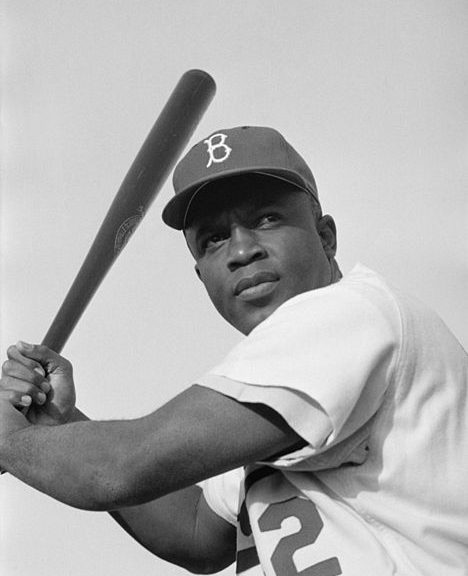
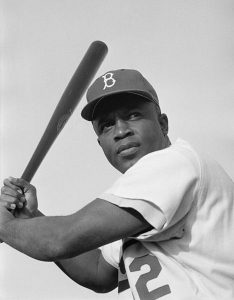
Jackie Robinson

From gang member to world-famous baseball player, Jackie Robinson helped break down barriers for African American athletes, proving that they can not only compete, but excel, in a variety of sports.

  • Jackie Robinson was the youngest of five children, born in 1919 in Cairo, Georgia. His father left the family a year later. His mother took the children and moved to Pasadena, California where she lived with other members of her family.
  • Jackie’s mom worked a lot of different jobs to support the family. They got by, but never had any extra. Growing up in Pasadena, where most white people had money, was hard. Jackie joined a gang for a little while, but dropped out with a friend’s encouragement.
  • Jackie attended John Muir High School. His older brothers told him to get involved in sports instead of gangs. Jackie played football, basketball, baseball, and tennis. He joined the track team too.
  • He went to Pasadena Junior College and kept on playing sports — football, basketball, baseball, and track. He won several awards and broke several records. While in college, he was asked to join the school’s Order of the Mast and Dagger, a special award for outstanding scholarly effort and service to the school.
  • In 1939, he transferred to UCLA and became the first athlete to win school letters in football, basketball, baseball, and track. During college, he was the least proficient in baseball.
  • After college, he worked as an athletic director and then a running back, until World War II drew him into military service.
  • He was assigned to the 761stBlack Panthers Tank Batallion in Fort Hood, Texas. On the weekends, he visited his friend, the Reverend Karl Downs, who had been his minister in Pasadena and now lived nearby.
  • During his military service, he got in trouble for refusing to move to the back of a bus. He was court-marshalled and charged with drunken conduct (even though he didn’t drink).
  • After the War, Jackie tried out for a spot in a major league baseball team. At that time, black baseball players weren’t allowed to play on white MLB teams, but Branch Rickey, part owner of the Brooklyn Dodgers, liked Jackie enough to hire him anyway.
  • Many of the white baseball players didn’t like this. They’d push him and spit on him. The white crowds yelled insults. But he kept on playing.
  • Jackie Robinson went on to become one of the best baseball players ever in Major League Baseball. He paved the way for other athletes of color.

Vocabulary

  1. Proficient: capable, skilled
  2. Court-marshal: to be brought before a military court

Questions and Answers

Question: Did Jackie Robinson have a family and children?

Answer: Jackie met his wife, Rachel, in college. They had three children. Jackie died in 1972, but his wife is still alive (as of 2019). She is a nurse, a public speaker, and the founder of the Jackie Robinson Foundation. She has earned twelve honorary doctorate degrees and numerous other awards for her work on equality, mental health, and education.

Learn More

Watch a video about Jackie Robinson.

African American Inventors

They say necessity is the mother of invention; if that’s true, it’s no wonder African Americans have created so many useful products designed to make work easier or to save money.

Fun Facts

  • African Americans who were slaves often came up with ideas to make their work more efficient. They invented better farm tools and fishing nets. They became expert basket weavers and ironsmiths.
  • African Americans invented or improved folding chairs, ironing boards, light fixtures, supercomputers, train cars, saddles, golf tees, gas masks, blood banks, shin guards, engines, and even potato chips, according to Heart and Soul by Kadir Nelson.
  • Elijah McCoy invented a way to lubricate the gears of a train engine. Other inventors made lesser versions, but his was known as the “Real McCoy,” and it was the best.
  • George Washington Carver was a brilliant botanist and inventor. He learned new ways to make plants grow and also invented ways to use those plants, such as making soap, ink, and synthetic rubber.
  • Frederick M. Jones created a portable x-ray machine and refrigeration for trucks, ships, and planes that deliver food.
  • Charles Drew learned how to separate plasma from blood cells.
  • Garrett Morgan made the first automatic traffic lights.
  • Otis Boykin invented a device that could control computers and missiles.

Questions and Answers

Question: What other contributions have African Americans made?

Answer: African Americans are perhaps most well-known for their contributions to music, including gospel, soul, blues, rap, and hip-hop. Many gifted athletes are African American, as well as artists, poets, scientists, scholars, businesspeople, and writers.

Learn More

Visit Scholastic to watch a slideshow about African American inventors.

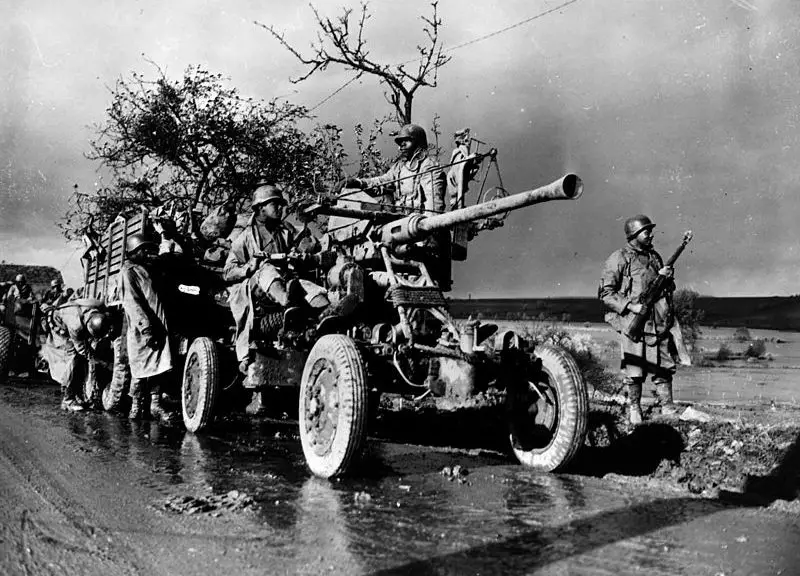
African Americans in World War II

After the first world war, many African Americans migrated to the north, but some stayed in the south. They got jobs or farmed their own land. Their white neighbors didn’t always like them, especially if their crops were more successful. But World War II came, bringing change again.

Fun Facts

  • During the late 1920s, the Great Depression began. People everywhere lost their jobs and even their homes. During this time, Adolf Hitler was building his war machine in Germany. His goal was world control and he didn’t like anyone who he thought was different, including people who were black, disabled, Jewish, or gay.
  • During this time, an African American boxer, Joe Louis Barrow, fought a German named Max. Joe Louis lost the first match, and Hitler was excited for another match to prove to the world that the Germans were superior to others. But when Joe Louis got in the ring, he beat Max in the first round.
  • Unfortunately, one little boxing match wasn’t enough to stop Hitler. He soon controlled much of Europe and ordered the murder of millions of Jews (and others).
  • The U.S. tried to stay out of the war, until Japanese bomber planes hit Pearl Harbor, an American naval base in Hawaii.
  • When the U.S. entered the war, thousands of American men and women volunteered or were drafted. African American men wanted to fight too. At first, they were given menial jobs like cleaning, rather than being allowed to fight. But first lady, Eleanor Roosevelt, convinced her husband President Roosevelt to let them be soldiers.
  • Several of these all-black battalions were among the strongest, most successful groups in the war. But none of them received medals or commendations from the president for their service until several decades later.
  • African Americans helped fight for freedom during World War II, but when they came home, they realized that they still weren’t given equal treatment in the U.S.

Learn More

Visit the Smithsonian to learn about African American contributions to World War II.

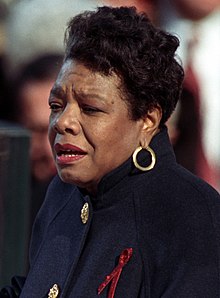
Maya Angelou

One of America’s most beloved writers and poets, Maya Angelou made many other contributions too. Fun Facts

  • Maya Angelou was born in St. Louis, Missouri in 1928. When she was three (and her brother, four), her parents’ marriage ended. Her father sent the two children alone on a train to their grandmother’s house in Arkansas.
  • Four years later, she went back to live with her mother. There she was sexually abused by her mother’s boyfriend. Maya told her brother what had happened and he told the family. The boyfriend was tried in court but set free. He was murdered a few days later, probably by Maya’s uncles.
  • For four years, Maya didn’t speak. She was sent back to her grandmother’s home and there she met Mrs. Flowers, a teacher and family friend who introduced Maya to literature and poetry and encouraged her to speak again.
  • When she was fourteen, Maya went to live with her mother in California. At age 16, she became the first woman trolley driver. When she was 17, she had a baby boy.
  • Maya Angelou was a dancer, a singer, fry cook, trolley driver, and even a mechanic. She coordinated leadership conferences and became a journalist in Egypt and Ghana. She wrote, directed, and acted in plays and movies. She was also a college professor.
  • Her book, I Know Why the Caged Bird Sings is about her childhood. When it was published, people loved it and were also shocked by the violence and racism she describes in it.
  • Maya Angelou wrote many other books and worked with civil rights leaders. Her stories helped others understand and appreciate black culture.

Learn More

Watch a video about Maya Angelou.

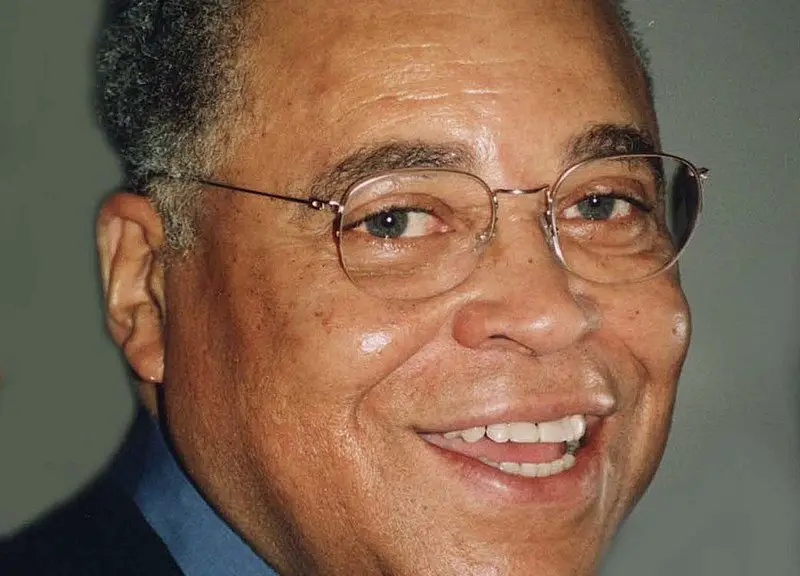
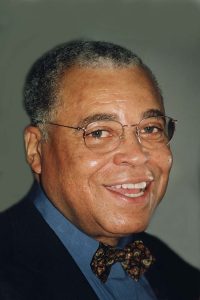
James Earl Jones

James Earl Jones is a famous African American actor known for his deep, booming voice. You might know him as Darth Vader or Mufasa, but his story began long before his film career.

Fun Facts

  • James Earl Jones was born in 1931 in Arkabutia, Mississippi.
  • Life was tough for African Americans living in the South after the Civil War. Many of them migrated to northern cities during World War I and the Great Depression. James’ family was among those immigrants.
  • When James was four years old, he boarded a train headed for the north with his grandmother. All he owned was packed in a crate. His grandmother brought fried chicken and boiled eggs on the train. They couldn’t eat in the train’s dining room because they were black.
  • James’ father had left the family and his mother was off working. His grandfather had purchased some land in Michigan and was already there waiting for them. James didn’t know when he would see his mother again. He worried that he would be left behind.
  • When the family got to Michigan, James started stuttering, probably because he was so worried and scared. The other children at Sunday school laughed at him and pretty soon, he stopped talking to anyone but the cows and pigs.
  • For eight years, he didn’t speak a word. He wrote down his answers to questions people asked him.
  • In high school, an English teacher encouraged James to write poetry and he found he was good at it. Eventually he began reading his poems and talking again.
  • He considered becoming a doctor but decided to be an actor instead. He attended the University of Michigan. Later he moved to New York to study theater and worked as a janitor to support himself.
  • James Earl Jones has been an actor for more than 70 years. He has done movies, television, and plays, as well as voiceovers.
  • He was married to Cecilia Hart until her death in 2016. They had one child.

Learn More

Watch a video about James’ role in Lion King.

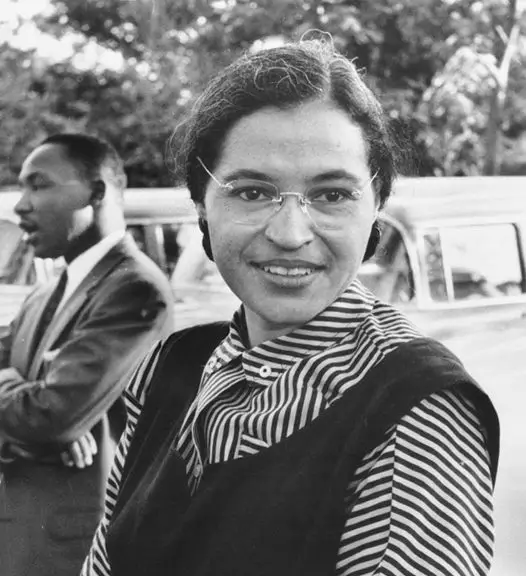
Rosa Parks

Rosa Parks stood up for herself at a time when no one else would. Her courage started a movement that led to greater equality for African Americans.

Fun Facts

  • Rosa Parks was born February 4, 1913 in Tuskegee, Alabama. Her parents separated when she was two years old. She and her mother went to live with her grandparents, the Edwards, on a farm in Pine Level, Alabama.
  • Rosa’s grandparents had both been slaves. They believed strongly in equality. Rosa’s grandfather once stood on his front step holding a shotgun while the Klu Klux Klan marched down the street.
  • Rosa’s mother taught her to read when she was very little. Rosa attended segregated schools. White children went to one school and black children went to another — even if they lived close to each other. The schools for African American children lacked basic supplies like desks and books.
  • Rosa attended high school but dropped out to take care of her mother and grandmother, who were ill. She began working in a shirt factory.
  • She married Raymond Parks in 1932. Raymond was a member of the NAACP (National Association for the Advancement of Colored People). He encouraged Rosa to graduate from school, which she did.
  • Rosa went to work as a seamstress in a department store. She rode the bus to and from work every day.
  • In those days, the buses were segregated too. White people rode on the front of the bus; black people rode on the back of the bus. A sign was placed on a seat in the middle of the bus showing which section was which.
  • One afternoon, Rosa was on the bus when it filled with white people. Several of them were standing up in the aisle. The bus driver came back and moved the sign back one row. All the black people who had been sitting in those seats had to stand up. Three people moved, but Rosa said no. The bus driver asked her why she wouldn’t move. She said that she didn’t think she should have to.
  • The bus driver called the police who arrested Rosa and took her to the police station. She was released later that night.
  • On the morning of Rosa Parks’ trial, over 500 people came to the courthouse to show their support for her. At the same time, black leaders in the community organized a boycott of the Montgomery bus system. Black people in the city vowed that they would not ride the buses until segregation ended. Instead they rode bikes, took cabs, or walked to work — sometimes for as many as 20 miles.
  • The bus boycott lasted almost an entire year. The buses were empty and bus drivers didn’t get paid.
  • Some white people were angry about the boycott. They burned black churches and bombed the homes of E.D. Nixon and Martin Luther King, Jr., two leaders of the movement.
  • Black leaders took the matter to court, arguing that segregation was against the constitution. In November, 1956, the United States Supreme Court ruled in favor of them. Segregation was outlawed.

Vocabulary

  1. Segregation: the practice of separating or excluding people because of their race
  2. Equality: equal treatment and rights

Questions and Answers

Question: What happened to Rosa after the boycott?

Answer: Both she and her husband were fired from their jobs. They moved with Rosa’s mother to Detroit, Michigan. Rosa wrote two books about her experiences and received many awards for her work, including the Presidential Medal of Freedom. Rosa died in 2005.

Learn More

Learn more about Rosa Parks’ remarkable life.

African Americans and World War I: The Great Migration

After the Civil War, African American slaves were set free, but life didn’t get much better for them. In the South and in other parts of the country, they were the targets of racism. They were sometimes kidnapped and even killed. But World War I changed things for them.

Fun Facts

  • During World War I, American factories provided weapons and ammunition to the European fighters. European immigrants often worked in these factories. But the U.S. stopped letting immigrants come in. The factories couldn’t get enough workers.
  • Finally, the factory owners said that women and African Americans could work for them. Newspaper articles talked about how black people could start new lives with better jobs in the North.
  • African Americans left their homes in the South and traveled north. But then, the people in the South realized that would be a bad thing. Who would work in the fields or clean houses?
  • Southern police officers stopped people trying to get on trains. The train clerks refused to sell them tickets.
  • But the people kept traveling north. Some traveled by train or mule. Some even walked.
  • When the trains crossed the Mason-Dixon line, the black people on the train cheered and sang. They knew they could sit wherever they wanted to on the train going forward. The Jim Crow laws that made them sit at the front of the train weren’t valid in the North.
  • These people moved into neighborhoods in places like Chicago, Detroit, and Harlem, New York. They brought their stories, blues music, and southern cooking with them.
  • African Americans were full of hope for their future. They discovered that life wasn’t easy, though. They were only allowed to live in one part of town and they still had a hard time finding jobs. When they did get jobs, the factory owners wanted to pay them less than other workers were paid. White workers were mad because they needed the jobs and wanted to get paid fairly too.
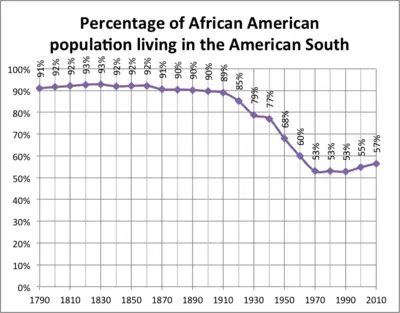
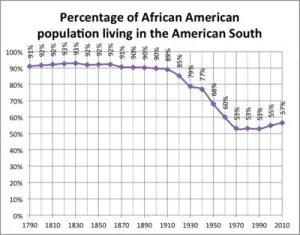
  • Still, the time during World War I helped many black Americans by getting them independent jobs out of the South. What started as a small trickle of people became a massive event. More than 6 million African Americans left the South.

Learn More

Read more about the legacy of the Great Migration.