All posts by americanadmin

Moving West: African Americans After the Civil War

After the war, African-Americans were excited to start their new lives. Actually doing it was harder than they expected. First, many white people carried racist attitudes and refused to change. They wouldn’t give African-Americans jobs and sometimes actively hurt or even killed them. And, African-Americans lacked education and skills. They needed a fresh start.
Fun Facts

  • Some African-Americans headed west. An army unit built roads and forts, lay telegraph lines, and protected mail carriers and stage coaches from robbers.
  • Many black people moved west with the Homestead Act of 1862. They could get a piece of land and farm it.
  • Farming in Oklahoma and Nebraska was hard. Hot weather, lack of water, and summer hailstorms made farming an unpredictable business. There were no trees to get lumber for houses. Most people lived in houses made of mud, grass, and cow pies. They had to dig wells to get water.
  • White people weren’t happy to have the black people there. They made laws that kept the black people from attending public school, buying land, or voting. They made them pay fines to enter the state and sometimes threatened to shoot them if they didn’t leave.
  • Some black people started their own towns, complete with teachers, doctors, and sheriffs.
  • It wasn’t an easy life, but they were glad to be free.

Questions and Answers

Question: Why did the white people hate the black people so much?

Answer: That is a good question. For generations, they’d been taught that white people were better than black people. They believed that black people weren’t as intelligent or as capable. If they had seen black people as people deserving of respect and value, they wouldn’t have been able to enslave them like they did. Their attitudes allowed them to justify their behavior to themselves.

Learn More

Read an article about black homesteaders.
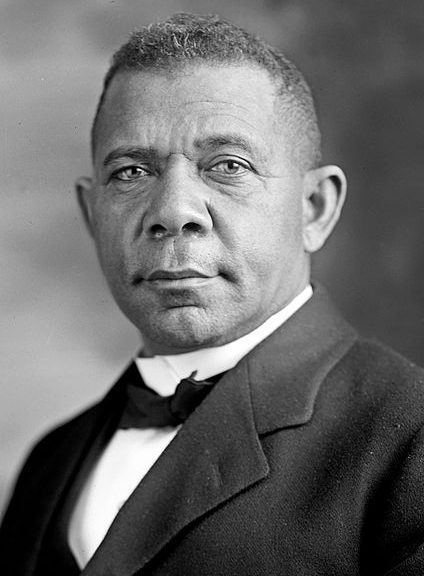
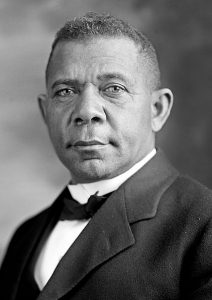
Booker T. Washington

The years after the Civil War were hard ones for freed slaves. Just because a law said they were free did not mean people instantly embraced or accepted them. They couldn’t get jobs or an education and worse, their very safety was often in danger. Booker T. Washington had been a slave and he understood the challenges. He believed education and opportunity were important for African-Americans to become prosperous and independent.

Fun Facts

  • Booker T. Washington was born in 1856 in Virginia. His mother Jane was a slave. He remembered how hard slavery was for his family. He said he could never remember a moment when the family was able to all sit down together for a meal. Instead, he’d get a bit of milk here and a piece of bread there.
  • Booker was nine years old when a government man came to the plantation and read a long letter to the slaves telling them they were free. It was the Emancipation Proclamation of 1865. He wrote that his mother kissed all her children, tears of joy streaming down her face. She said it was the day she’d been praying for, for so long, but thought she might never see.
  • Jane took her family to West Virginia where her husband, who had escaped slavery, lived. There, Booker taught himself to read.
  • Booker worked in coal mines for several years to save money to go to college.
  • After the Civil War, he helped found the Tuskegee Institute, a college for black people. Every student had to contribute work to the college. Some helped build buildings. Others helped work the college farm, caring for crops or animals.
  • He worked hard to build support from the black community, as well as white people. He believed that the best way for African-Americans to gain acceptance was to show “industry, thrift, intelligence, and property.” He gave speeches all over the country with all kinds of people.
  • He partnered with philanthropist Julius Rosenwald to build 5,000 schools for black children in rural parts of the South.
  • He participated in politics and consulted with Presidents Theodore Roosevelt and William Howard Taft.
  • Booker T. Washington believed in working within the social system of the day. He cooperated and built partnerships with white people. He knew change would take time. But other black leaders wanted change more quickly. They thought Washington was too slow.
  • He became good friends with many important businessmen who gave men to his college and schools. He also gave lectures to raise money, speaking with people like Mark Twain.
  • Washington was married three times and had three children.

Vocabulary

  1. Philanthropist: someone, usually with money, who gives his or her wealth to good causes
  2. Industry: good work ethic
  3. Thrift: using resources and money wisely

Learn More

Watch a video about Booker T. Washington.

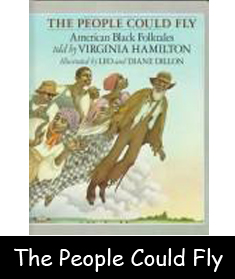
The People Could Fly

Along time ago in Africa, the people could fly. They walked up into the air like they were climbin stairs. They could fly over the fields like blackbirds, their wings shiny and black. When they were captured and made slaves, they lost their wings. The slave ships were so crowded that there was no room for them.

For many days, they went across the water in the boats — the stinkin, miserable boats. They bobbed about on the boats, so sick they wanted to die. And they forgot all about flying, but they didn’t lose their power. They kept their magic secret. Not all the slaves had the magic. But you couldn’t tell who did and who didn’t.

Old man Toby had the magic and hadn’t forgotten. He was in the field one day with Sarah, his daughter. She was carrying her baby on her back. She worked and worked in the hot sun, her baby sleeping. Her baby woke up hungry and cried and cried.

But there was nothing to be done for him. The Overseer, a hard, cruel man, said, “Keep that thing quiet and get back to work.” The baby cried and cried, and Sarah was faint and hungry herself. She fell to the ground.

“Get up, you cow,” the overseer snarled, and he used his whip against both her back and the baby. Her back and her legs were bleeding. Her baby wailed. She couldn’t get up.

“Father,” she cried, “Now, before it’s too late.”

And Toby answered, “Go my daughter.” He raised his hands over his head and called forth the deep magic. “Kum…yali, ku-m buba tambe,” he said. And Sarah lifted one foot and then another off the ground, clumsily at first, and then faster and higher. Light as a feather she rose above the overseer, over the fence, and beyond the river.

The Overseer rode after her, yelling and chasing her. But she was gone. No one said a word. No one could understand or believe what had happened.

The next day, a young man working in the field fainted from the heat. And Toby whispered the words over him. The young man had the words deep inside him but had forgotten them. When Toby said the words, he remembered. He lifted off the ground and flew away too.

And then more slaves, all at their end, cried out for Toby. He said the magic words to them too. “Kum kunka yali, ku-m tambe.” They rose like a flock of shiny blackbirds, and the whole time the Overseer yelled. But then he got his gun. He meant to kill Toby and put an end to the magic.

But Toby just laughed and said, “Don’t you know who we are? We are ones who fly!” And he said the ancient words again. All around him in the field, slaves who were bent over stood up. They remembered! They joined hands and rose in the air, flying high in the air. Were they black crows or just black shadows?

It doesn’t matter because they were free.

See “The People Who Could Fly,” by Virginia Hamilton in the anthology, From Sea to Shining Sea.

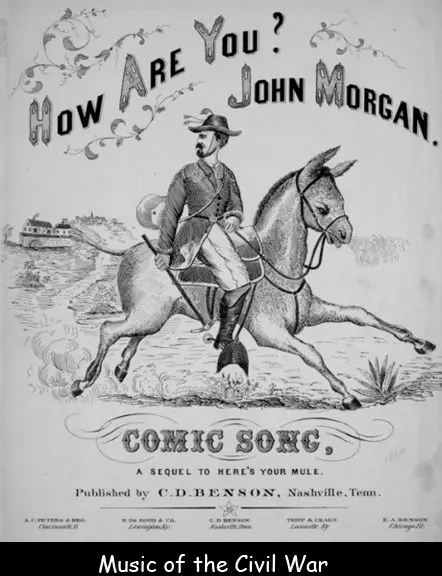
The Civil War: Music

Enslaved people had almost no control over their own lives. They worked from sunup to sundown, often with little food or proper clothing. They were frequently beaten or mistreated, and their own families could be taken from them.

Complaining about their situation could land them a whipping. Yet, they found ways to find comfort and express themselves. One of those ways was through music.


Fun Facts

  • The slaves developed a unique form of music that included bits from Africa.
  • This music often retold gospel or Biblical themes. Black slaves especially related to the Israelites who were in bondage in Egypt. Their songs talked about Moses leading the people to freedom.
  • Some of the music contained hidden messages. “Follow the Drinkin’ Gourd”, for example, is about following the North Star to freedom. Other songs talked about leaving on a train. The slaves could sing these songs while working in the field as a way to send messages to other slaves without the overseers’ knowledge.
  • A lot of the songs had a sad sound, but some of them were happy and joyful. Many of them talked about God delivering the people. Many of the songs spoke to the slaves’ simple hopes and dreams. The song “I Got Shoes” is about the wish of having shoes, something most slaves didn’t have. The song also shares the message that all God’s children have worth to Him — a powerful perspective for people who were treated with so little respect by those around them.


Questions and Answers

Question: Are these songs still sung today?

Answer: Yes, songs like “Swing Low, Sweet Chariot,” are still sung today, especially in traditional African American congregations. These songs also influenced gospel music, jazz, and even rap and hip-hop.


Learn More

Watch a jazzed-up version of “Go Down Moses,” sung by the famous jazz singer, Louis Armstrong.

The Civil War: High John the Conqueror

Originally retold by Steve Sanfield in From Sea to Shining Sea, compiled by Amy L. Cohn.

The slaves had little control over their own lives. They had no choice over where they lived, what they ate, what they wore, or even whether they got to stay with their own families.

But they did have something the landowners couldn’t take away: spirit, imagination, and the gift of story. They used tall tales to find comfort, hope, and humor. Here’s one story:

They say High John was a big man who had come across the ocean from Africa. He hated being a slave and was wily clever at getting out of work. If he went to the field with a shovel, the shovel broke. If he went to the toolshed for a tool, the shed burned down.

One time he took mules to the field and tromped down four rows of cotton. All of this was accidental, maybe. But High John was crafty. Just when the master was ready to whip him or sell him off, High john would work in earnest.

And when he set his mind to it, he could work harder and faster than anybody else in the county. And seeing his good work, the master would calm down and let John live to see another day.

High John was good at fishing too. One day, the master went fishing with him, hoping to learn a few things. The master had a shiny, new walking stick that he was mighty proud of. He strutted along the path with that stick, but John never said a word until they reached the fishing hole.

Then John said, “Why that’s the finest walking stick with three ends I’ve ever seen.” Master thought about it, and said, “John, this stick doesn’t have three ends. It’s only got two ends, just like any walking stick. I’ll bet you a chicken that it’s only got two ends.”

John replied, “No sir, Massa, it’s got three ends.” He took the walking stick and pointed to the end with the silver hand. “See, this here is one end.” Then he pointed to the silver tip. “That’s two ends, right?” Massa nodded his head.

Then John took that walking stick and chucked it into the pond where it sank to the bottom. “That’s the third end of your walking stick,” said John laughing. Massa knew he’d been tricked by John and would have to give him a chicken.

Well, John’s best trick came at Christmas. Every year, it was his job to catch a wild turkey and prepare it for Thanksgiving dinner. This year, his master said, “Get the turkey ready and just know that whatever you do to it, we’re gonna do to you.”

John was worried. He knew Massa would keep his word. If John cut the turkey’s head off, he’d lose his own head. If he plucked the turkey’s feathers, Massa would probably skin him alive. John thought and thought and finally came up with a plan.

On Christmas morning, he headed to the plantation house where Massa’s family was sitting on the porch, waiting for a good laugh. Behind John walked a turkey on a red string. John came up to the porch and greeted Massa. Then he turned to the turkey, kneeled behind it, and kissed it square on the butt.

Well, what do you think of that? Massa’s eyes bulged, his face turned red, and he didn’t say a word. John chuckled to himself. He turned his back on Old Master and leaned over. He said, “Take your time, folks, take your time. I’ve got all day.”


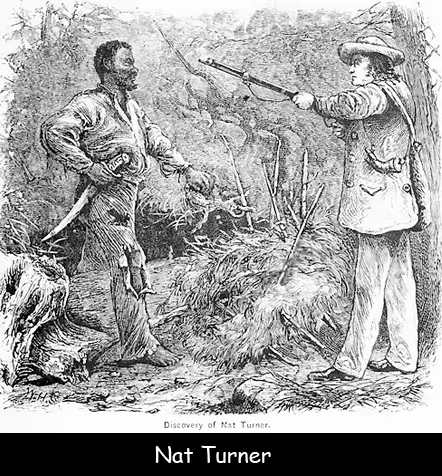
Nat Turner

Nat Turner led one of the first and largest rebellions against slavery.


Fun Facts

  • Nat was born in 1800 in Virginia. His mother was a slave and it is believed that his father had escaped to freedom. When his owner died, he became property of the owner’s son.
  • Most of the population in the area at that time were enslaved people.
  • Nat was deeply religious. He said he had visions and talked with God. He said God would use him as an instrument to rescue his people.
  • In the summer of 1831, Nat began planning a rebellion. He slowly and secretly gained support from other slaves living in the area.
  • In August, 1831, the rebellion began. Nat and his men went from plantation to plantation, quietly killing every white man, woman, and child found there and freeing the slaves. The slaves joined him and they would continue to the next house. In all, Nat’s group killed about 60 people and freed 70 slaves.
  • Troops soon restored order and captured many of the rebels. Nat hid in the woods, but was soon found, brought to trial and hung, along with 17 others.
  • After the rebellion, white people were hysterical. Mobs killed at least 120 black people, many of whom did not participate in the rebellion.
  • New laws restricted blacks’ freedom even more. They were not allowed to vote, assemble, or learn to read and write. A white minister had to attend any church service.


Questions and Answers

Question: Did Nat Turner’s rebellion do any good?

Answer: Many people believe that it helped change attitudes about slavery by showing that violence leads to more violence.


Learn More

Watch a video about Nat Turner.

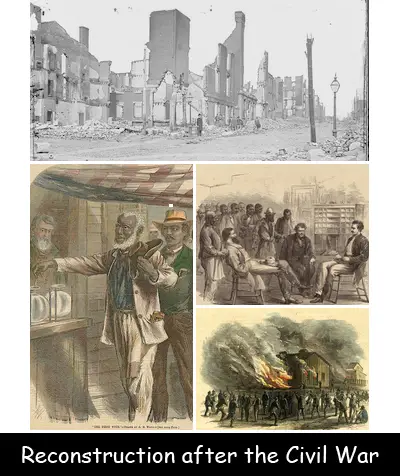
Reconstruction after the Civil War

The slaves had waited for their day of deliverance, but when it finally came, the rejoicing didn’t last long. They were ill prepared for life after slavery.


Fun Facts

  • Much of the South was destroyed during the Civil War. Cities, such as Atlanta, were burned down. Both white and black people had nothing left.
  • Some people thought the slaves should be sent back to Africa. But who would pay for the trip: And what would they do when they got there? America was their home.
  • It was illegal to teach slaves to read or write. When they were set free, they had no money, no possessions, and few skills.
  • Some of them moved North to find work; others headed West to homestead. Most of them stayed where they were. They became sharecroppers, often for their previous masters. A sharecropper farms the land for someone else, paying for some of the expenses and getting some of the profit. The problem was that most landowners weren’t honest. They often found ways to swindle the blacks of their money.
  • The Freedmen’s Bureau built schools to teach the newly freed slaves how to read and write. And then they were given the right to vote. Some of them even ran for office. But mostly, these years were long, hard ones.
  • The war had been so bitter and hard. People felt a lot of anger and hatred, and much of it was directed at the blacks.
  • One group, the Ku Klux Klan, actively threatened black people. They dressed in white sheets and hats and marched about, shooting out windows, burning homes down, or even killing black people. They were angry that black people had been given the same rights they enjoyed.
  • Finally, the federal government gave up on the idea of Reconstruction. Jim Crow laws divided everything. There were libraries, schools, theaters, restaurants — even drinking fountains — just for white people. Blacks had to get their own.
  • The North might have won the Civil War, but the South won Reconstruction.


Learn More

Watch a video about Jim Crow laws.

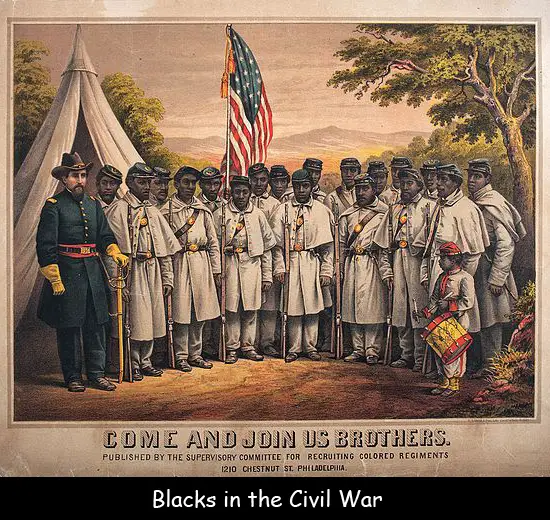
Blacks in the Civil War

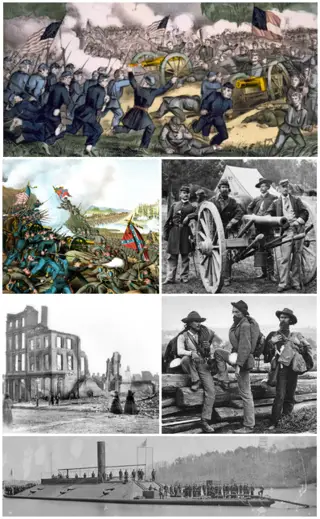
Tension between the North and the South grew over the issue of slavery until the South decided to break away from the country, or the Union as it was called. It wasn’t long before the two sides were at war. Enslaved people finally saw the chance to be free.


Learn More

  • Most of the Union troops left the South after it seceded, but a few stayed at Fort Sumter in South Carolina.
  • In 1861, Rebel troops surrounded the fort, cutting off its supply line. Then the troops fired on the fort for an entire day. No one died that day but the Union troops surrendered and the country was officially at war.
  • As Northern troops came to the South, overseers on the plantations told the slaves that the Yankee soldiers were coming to kill them.
  • In truth, the Union soldiers were happy to have the help. Many slaves left the plantations and joined the army. At that time, they weren’t allowed to fight — just dig ditches, build camps, and bury the dead.
  • But as the war progressed, Abe Lincoln decided to let the blacks fight. After all, it was their freedom on the line. Frederick Douglas met with the president and helped persuade him.
  • Black soldiers worked hard, but they were paid less than white soldiers. They were often sent on the most dangerous missions.
  • Soon after, Abraham Lincoln issued the Emancipation Proclamation, setting all slaves free. Plantation owners in the Southern states didn’t accept that proclamation but many slaves left anyway, especially after Lincoln promised freedom to all who would fight.
  • The war ended two years later. Four million slaves were set free. Imagine how happy they were! Some of the slaves left the plantations immediately; others stayed, trying to figure out what to do next.


Vocabulary

  1. Union troops: Union soldiers fought for the North. They were also called Yankees.
  2. Rebels: southern soldiers
  3. Secede: to legally split or withdraw


Learn More

Watch a video about blacks in the Civil War.

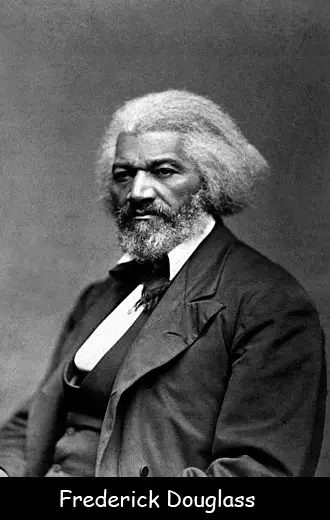
Frederick Douglass

Fun Facts

  • Frederick Douglass was born on a plantation in Maryland. The year of his birth is unknown. He was separated from his mother when he was just a baby and his grandmother and grandfather raised him.
  • When he was six years old, Frederick was sent to work in another house and later given to a man named Thomas Auld. Thomas’s wife, Lucretia, took an interest in young Frederick and wanted a better life for him. She sent him to Baltimore to live with Thomas’s brother, Hugh.
  • Hugh’s wife Sophia was very kind to him. She gave him good food and a real bed with sheets and blankets. She also taught him the alphabet.
  • But Hugh thought that teaching slaves to read was a bad idea. Under his influence, Sophia stopped teaching Frederick and hid reading material in the house. But Frederick was determined. He secretly taught himself to read.
  • When he was twelve, he read a book called “The Columbian Orator,” as well as newspaper articles about human rights and slavery. These materials inspired him to want freedom.
  • Later, he was sent to work on a plantation. He began teaching other slaves to read and soon had regular meetings with 40 or more people.
  • The slave owners were furious. Thomas took Frederick back from Hugh and sent him to Edward Covey, a man known for his cruelty to slaves. He whipped Frederick almost daily. Frederick says his body, spirit, and mind were broken by this man.
  • When he was 16, Frederick fought back. After that, Edward didn’t beat him again.
  • Frederick tried to escape from slavery twice before he finally succeeded with the help of Anna Murray, who would later become his wife. He arrived in New York City and wrote about his excitement and joy. He said he lived more in that first day of freedom than he had in his whole life as a slave.
  • Frederick Douglass believed in equality for all people. He thought it was important to talk with others, even those he disagreed with, to try to reach compromise.
  • He became a preacher and was deeply religious. He believed God loved all people and expected them to care for each other. He wrote newspaper articles and books, and gave fiery speeches about the evils of slavery. Many Southerners at the time thought black people were mentally incapable of being independent citizens. Frederick Douglas was articulate, intelligent, and educated. He had also been a slave. He forced people to change their perceptions.
  • After the Civil War, Frederick continued to speak out on social issues.


Learn More

Watch a video about Frederick Douglass.

Harriet Beecher Stowe

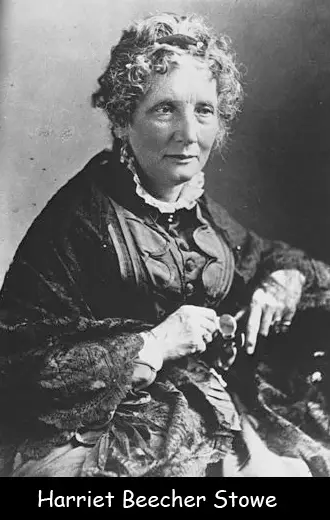
In every age, people have used their talents and abilities to make a difference. Some people are natural leaders; others have substantial money. Harriet Beecher Stowe was intelligent and literary. She used her writing ability to influence others.


Fun Facts

  • Harriet Beecher Stowe was born in Litchfield, Connecticut in 1811. She was the seventh of eleven children.
  • Her father was a preacher; her mother was also very religious. She died when Harriet was five.
  • Books, education, and thoughtful conversation were important to Harriet’s family. She attended the Hartford Female Seminary, run by her sister Catharine. At this all-girl’s school, she studied languages, mathematics, and literature. She got a very good education, which was unusual for girls during her time.
  • Her family was also very involved in social issues. They were abolitionists who were strongly against slavery.
  • Harriet was part of literary society that met frequently to discuss books and ideas. Here she met her husband, Calvin Stowe, a widower and professor. They married and had seven children.
  • The Stowes often gave shelter to runaway slaves headed for Canada. After the Fugitive Act of 1850 passed, helping slaves became very dangerous. Anyone caught could be severely punished.
  • During that same year, Harriet began writing a story about what life was like for slaves. Her son, Charles, had recently died and she said she understood what it was to lose a loved one. She thought about all the people who lost their family members when they were taken away at slave auctions.
  • Her book, Uncle Tom’s Cabin, became instantly popular in the North. She hoped it would help people understand how terrible slavery was. Southerners hated her and wrote stories of their own.
  • Later, Harriet went to Washington D.C. to meet President Lincoln. He greeted her and said, “So you’re the little woman who started the Civil War.” Her writing had had a great impact on people.


Questions and Answers

Question: What happened to Harriet after the war?

Answer: She continued writing and was the editor of a women’s magazine for a while. She supported women’s rights too.


Learn More

Watch a video about Harriet Beecher Stowe.