All posts by americanadmin

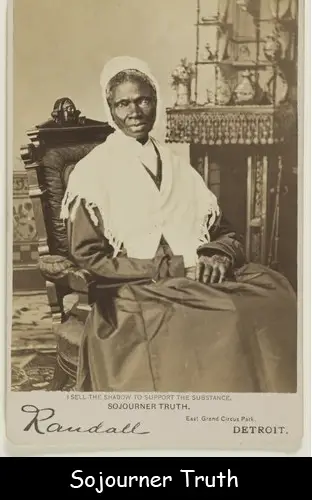
Sojourner Truth

Sojourner Truth was born Isabella Baumfree. She later changed her name because she believed God had told her to travel, speaking the truth about slavery.


Fun Facts

  • Sojourner was born in 1797, one of 10 or 12 children in the Baumfree family. Her parents were slaves and belonged to a wealthy army colonel. As their child, Sojourner was a slave too.
  • When she was 9-years-old, she was sold to a man named John Neely. She had to leave her parents and home. Neely was very cruel, beating her daily.
  • She was sold several more times. She fell in love with an enslaved man, Robert, from a nearby farm. When her owner found out, he was very angry. His slaves could only have relationships with other slaves that he owned. He beat Robert severely and Robert died a few days later.
  • Sojourner later married a man named Thomas, who was also enslaved. She had five children.
  • In 1827, the state of New York abolished slavery. Sojourner was able to escape from her owner with her baby daughter, Sophia. She had to leave her other children behind. The law said that they had to be slaves until they were 20.
  • A couple took her in and paid her for her work. When she discovered that her son had been illegally sold and sent to Alabama, she took the slaveholder to court and won. She got her son back.
  • She lived in New York City and became friends with several abolitionists. Later, she felt called to travel and speak out about slavery and women’s rights. She would spend the rest of her life on this mission. She wrote many speeches, songs, and poems.


Learn More

Watch a short slideshow about Sojourner Truth.
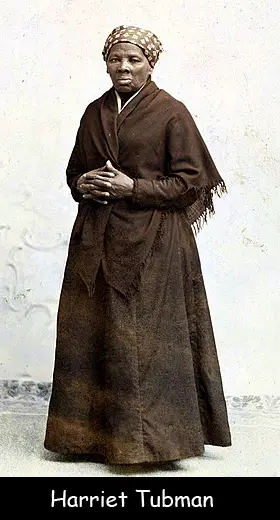
Harriet Tubman

Harriet Tubman created the Underground Railroad, a network of safe homes and passages for runaway slaves. She knew firsthand what it felt like to be a slave and was willing to risk her freedom and even her life to help others.


Fun Facts

  • Harriet Tubman was born in Maryland around 1820. Her parents named her Araminta Ross and called her Minty. She changed her name when she ran away from her slave owner.
  • When Harriet was five or six, she was sent away from her mother to work in another house. Imagine how homesick she must have been! Her job was to take care of the baby. If the baby cried, Harriet was whipped. She carried scars on her back for the rest of her life.
  • Another owner sent her out to check muskrat traps along the river, even when she was very ill with the measles.
  • As a teen, she did hard work like driving oxen and plowing fields.
  • Maryland sat on the border between the North and the South. Some people kept slaves, but other blacks were free.
  • Harriet married John Tubman, a free black man, in 1844. Later, she fled to Pennsylvania to be free. Her husband did not come with her.
  • Harriet went back and forth to Maryland 13 times. She helped family members and others gain freedom, eventually aiding over 70 people. They traveled secretly at night.
  • The Fugitive Slave Act of 1850 called for severe punishment for anyone caught helping slaves reach freedom. Harriet knew she could get in big trouble, but she kept helping other slaves anyway.
  • Her nickname was “Moses,” after Moses from the Bible who led the Israelites to freedom.
  • When she was a teenager, an angry slave owner threw an iron weight at another slave. The weight hit Harriet, causing a traumatic brain injury. For the rest of her life, she sometimes experienced headaches, dizziness, seizures, and sleeping spells.
  • Harriet was very religious. She said she had visions from God, which helped her have courage.
  • Harriet worked during the Civil War as a nurse, cook, and spy. She also led a military raid, freeing 700 slaves! After the war, she and her second husband adopted a girl, Gertie, their only child.


Questions and Answers

Question: What happened to Harriet after the Civil War?

Answer: Harriet went right on working to end injustice. She helped Susan B. Anthony in her fight for women’s rights. She established a home for elderly African Americans (a home she would later live in), and she returned to the family farm she had purchased earlier in New York.

When she died, Harriet was buried with semi-military honors. Today she is viewed as a great hero and patriot. Her portrait is planned to appear on 20 dollar bills.


Learn More

Watch a short video about Harriet Tubman.

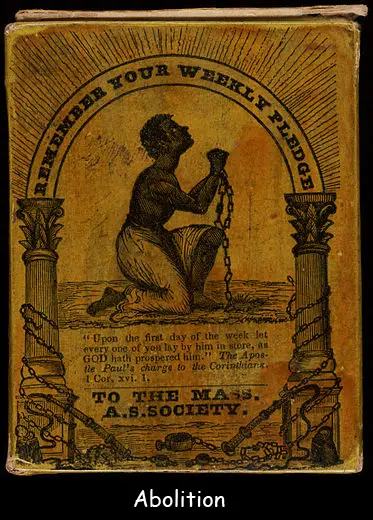
Abolition

When the Founding Fathers wrote the U.S. Constitution, they thought about including something that would eliminate slavery. In the end, they decided it wasn’t the right time.

Southern plantations depended on slaves for free labor; northern industries relied on slaves too. Private citizens and the slaves themselves would have to make change if they wanted it.


Fun Facts

  • It was illegal to teach a slave how to read or write. Slave owners were afraid that if slaves could read and write, they might read antislavery books and get ideas. They could write to each other or write to people in the north who disapproved of slavery. They might start a rebellion.
  • Still, some slaves learned to read and write anyway. One of those people was Frederick Douglas. He ran away to Massachusetts and began speaking and writing about his experiences as a slave. He helped people understand how bad slavery really was.
  • Frederick Douglas joined with other free black people and abolitionists, people who wanted to get rid of slavery.
  • Harriet Tubman was another runaway slave. She and Frederick Douglas preached together about the evils of slavery.
  • Harriet Tubman helped start the Underground Railway, a secret network of safe houses and passageways for runaway slaves to get help.
  • As new states joined the Union, each new state had to decide whether it would allow slavery or not. The country was new and wild. Slaves could help tame it and the temptation to allow slavery was high.
  • The Missouri Compromise was a law that said that slaves could be held only south of the Mason-Dixon Line. But in 1854, the Kansas-Nebraska Act determined that even states that were further north could decide whether or not to keep slaves.
  • This decision made people in the North really angry. They didn’t want slavery to spread. One of those people was a lawyer named Abraham Lincoln. He decided to run for president.
  • But the South wouldn’t give up easily. It was a long, hard struggle to free the slaves.


Vocabulary

Abolition: to make slavery illegal

Underground Railroad: a series of safe houses and secret passageways for runaway slaves


Questions and Answers

Question: What happened if a slave ran away and was caught?

Answer: Runaway slaves who were caught faced stiff consequences, including whippings and even death.


Learn More

Visit PBS to watch a video about the abolitionists.

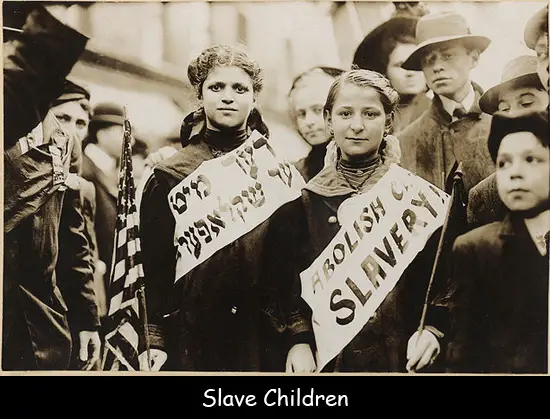
Slave Children

Have you ever wondered what it would be like to be a slave child? Or how the slaves came to be in America?


  • Slavery is not a new idea, but has been around for thousands of years. The ancient Greeks, Romans, and Egyptians all kept slaves. Today, slaves are still kept in many parts of the world.
  • As Europeans colonized the New World, they wanted cheap labor to work farms and construct roads and buildings. They began bringing African slaves to the Americas in the early 1600s.
  • Slaves didn’t come willingly, of course. They were usually kidnapped, sometimes by their own people. Children were often taken from their villages as their parents worked in the fields. The children were gagged and tied up. They walked a long way to the ocean where they were put on boats headed across the Atlantic Ocean.
  • The boats were terrible, stinking places. The enslaved people were tied up or chained and crowded together so tightly they couldn’t move. They had no choice but to lie in their own waste. Many became sick and died on the journey. Those that survived were sold at auctions when they reached America.
  • Most slaves, especially strong men, worked in the fields caring for crops. Some worked in houses cooking, cleaning, and sewing. A few lucky ones became personal servants or nannies.
  • A kidnapped child would arrive on a plantation scared, traumatized, and with no family. Other slaves often took the child in.
  • Slave children often started working in the fields by age seven. The slave driver blew a whistle each morning, alerting the slaves to come to the fields where they worked for 12 hours or more in all kinds of weather.
  • Slaves often had ragged clothing, worn (or no) shoes, and poor food. While some plantation owners were kind, many were not. Whippings were common.
  • For many years, it was against the law to teach a slave to read or write.
  • Families were often split up. A slave could be sold and sent away from his family.


Learn More

Watch a video about slave life.

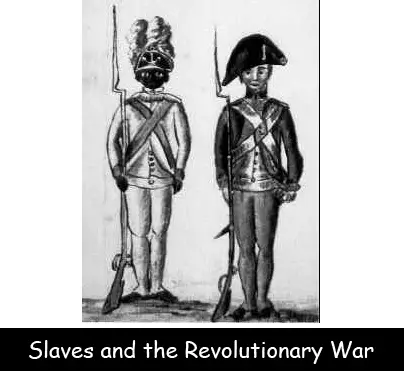
Slaves and the Revolutionary War

Black people first began coming to America in the 1600s, as slaves for plantation owners who had come from Spain and England. These Africans helped build the country in those early days, yet they’re rarely mentioned.


Fun Facts

  • During the 1700s, American colonists were getting tired of Britain’s rule over them. They were tired of heavy taxes and soldiers staying in their houses. They wanted their independence.
  • By the time the Revolutionary War began, more than 450,000 black people lived in America, both slaves and free.
  • The British promised freedom to any slave who helped them fight. The slaves wanted their freedom just as much as the colonists wanted to be free from British rule. Thousands of them joined the British troops.
  • George Washington didn’t allow black people in his army. He was afraid they might use their weapons against their former owners. But later, after Washington had lost many soldiers, he changed his mind. Many black men signed up to fight with the colonists then.
  • The war finally ended. The British no longer could control or tax the colonists and their property. But slaves were still considered property in most situations. Slaves in New England states like Massachusetts were set free because these states abolished slavery. Black men who had fought for Washington during the war were also set free.
  • The rest were stuck. Some went to Canada and some went to Britain. Most became slaves again.
  • When the Constitution was written, the slaves hoped they would finally be freed. They were once again disappointed.


Questions and Answers

Question: Why didn’t leaders free the slaves after the Revolutionary War?

Answer: It’s a complicated answer, but greed is at its heart. Slave labor was needed to sustain plantations and build homes, roads, and businesses. Wealthy men would have to change their way of living if slaves were set free.


Learn More

Read more about slaves during the Revolutionary War.

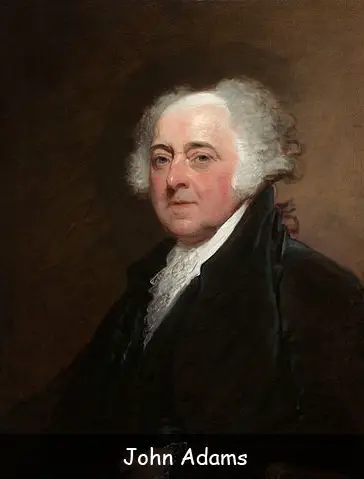
John Adams

John Adams was one of the founders of the American Revolution. He drafted the constitution for Massachusetts, which was later used in drafting the U.S. Constitution. He was a writer and lawyer, and believed passionately in the importance of having an honest and fair justice system.

Fun Facts

  • John Adams was born in Braintree, Massachusetts in 1735. His mother belonged to a prominent medical family and his father was a deacon, a farmer, and a councilman. His father supervised school and road construction.
  • Adams’ family were members of the Puritan faith. Adams thought that he had a responsibility to contribute to society. He said his greatest blessing was having a mother who believed in developing his character. Honesty and integrity were very important to him.
  • He began attending school when he was six. He studied Latin, rhetoric, logic, and math. He didn’t always like school and sometimes played hooky.
  • He graduated from Harvard and became a lawyer. He believed that all people deserved a fair trial and should be presumed innocent until proven guilty. He defended British soldiers after the Boston Massacre, a move that made him unpopular with his friends. He often found himself in this situation, but believed it was more important to do what he felt was right than to please others.
  • He married Abigail Smith, a woman who was his match in intellect and temperament. She was a very good companion and they had a happy marriage. She was outspoken, intelligent, and passionate. She often counseled him.
  • Adams was very involved in the events of the Revolutionary War. He served on the Continental Congress and recommended George Washington as military leader.
  • John Adams was vice president to George Washington twice. He hated this role. He felt underutilized and bored.
  • He was happy when he was elected as the second president of the United States. His presidency, however, did not go well. First, George Washington was beloved and idolized. Anything John Adams did that was different would be unpopular.
  • John Adams faced conflict with France during his presidency. He managed to avoid war, but the conflict stirred up disagreement in the United States.
  • He passed the Alien and Sedition Act, which said that people who were making rebellious comments against the country could be deported or punished. This act was seen by many as a restriction on free speech. John Adams lost favor and could not win reelection against Thomas Jefferson.
  • John Adams and Thomas Jefferson were very good friends, until they became enemies when they ran against each other for president. They later resumed their friendship, writing many letters to each other. They died a few hours apart, on July 4, 1826.

Learn More

Watch a video about John Adams.

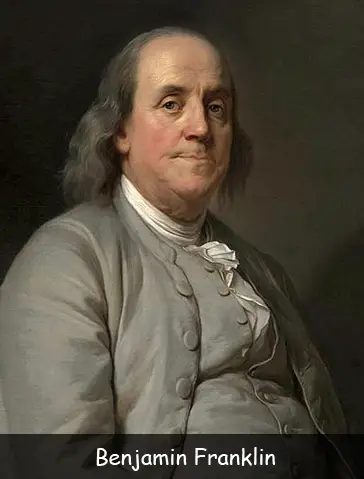
Benjamin Franklin

Born in 1706, the youngest son of a candle maker, Benjamin Franklin was an inventor, a statesman, a writer, a printer, and a beloved husband and father. Over 20,000 people attended his funeral.

Fun Facts

  • As a child, Benjamin Franklin lived in a little house on Milk Street in Boston. He had sixteen brothers and sisters! His parents taught him to work hard, learn a trade, and be honest and good.
  • Benjamin was the youngest son. He was bright, funny, and energetic. One time, he got some pennies as a gift. He ran to the toy shop and bought a whistle. He ran through the house blowing it loudly until his sisters made fun of him for spending money on a worthless toy. After that, Benjamin was very careful with his money.
  • Benjamin liked to swim in the sea and watch the boats. Once he tied his kite around his waist and went swimming. The kite pulled him along through the water.
  • He was always inventing things and creating games for his friends.
  • Benjamin went to school when he was eight. He was very good at reading and writing, but he didn’t like math. He left school to become a candle maker when he was ten, but he hated it.
  • Instead, he became an apprentice in his brother’s printing shop. James was very strict. Benjamin worked hard and learned quickly. He spent most of the money he earned on books and read them whenever he had a free moment.
  • Benjamin wanted to be a writer. He started writing letters to a local newspaper, pretending to be a widow woman. The newspaper readers enjoyed the letters, but when James found out, he gave Benjamin a beating.
  • At seventeen, Benjamin ran away to New York, but could find no work. He went to Philadelphia and found a job with a printer. In Philadelphia, he was no longer the younger brother. People liked and respected him, including the governor of Philadelphia.
  • Eventually he got his own printing shop. He married Deborah Read, and they had a comfortable, if humble, house. He began printing pamphlets, a newspaper, and a calendar called Poor Richard’s Almanac, which was full of useful advice, wise sayings, and funny puns.
  • Benjamin started a library and a school, which later became the University of Pennsylvania. He organized a hospital for the poor and a fire department. He became postmaster of Philadelphia, and then of all the American colonies.
  • Benjamin was constantly thinking about how to make things simpler and more efficient. He invented an iron stove, the Franklin Stove, which was famous in America and Europe. He spent six years studying electricity and invented the first lightning rods.
  • He was sent to England to talk to the king about taxes. For ten long years, he tried to encourage both sides to find peace. Finally, he returned home, unsuccessful. His wife had died in America and he was old and tired. Fighting had started in America. He, along with several others, worked with Thomas Jefferson to draft the Declaration of Independence.
  • Then he was sent to France to persuade the French government to help the colonists. The French people loved Benjamin Franklin, and finally agreed to send soldiers, money, and weapons. After nine years, Benjamin Franklin sailed home.

Learn More

Watch a video about Benjamin Franklin.

John Hanco-ck

John Hanco-ck is best known for his signature on the Declaration of Independence. Find out what else he did.

Fun Facts

  • John Hanco-ck was born in Braintree, Massachusetts in 1737. His father was a colonel in the British military. His family lived comfortably and had one slave.
  • John’s father died in 1744 and he was sent to live with his uncle, Thomas Hanco-ck, one of the wealthiest men in the colonies. Thomas and his wife Lydia had no children of their own and were happy to welcome John into their home. John learned his uncle’s trade, later becoming a partner. He graduated from Harvard University in 1754, when he was seventeen years old.
  • He spent several years in England working for his uncle’s company. When John’s uncle died in 1764, John inherited his fortune, including his business, is mansion on Beacon Hill, and several thousand acres of land. Now John was one of the wealthiest and most influential men in the colonies.
  • The British government was deeply in debt and looking for ways to make money. One of their ideas was to tax the colonies, which angered many people. At first, John, who was loyal to the crown, took a moderate view. But he soon resented the taxes and became involved in politics.
  • He became good friends with John Adams even though the two were very different. John Adams was older and more serious. He lived a fairly simple life and practiced Puritan ways. John Hanco-ck enjoyed an extravagant lifestyle. He wore fancy clothes and went to parties. Still, the two could help each other. John Adams had wisdom and vision; John Hanco-ck had money and influence.
  • John Hanco-ck served as the president of the Second Continental Congress. He influenced the other men to sign the Declaration of Independence. He signed first and he intentionally signed his name in a large, decorative script. He knew that he would be hanged if the British were victorious, but he didn’t care. His bold signature was a message of defiance to the English.
  • Hanco-ck was the governor of Massachusetts two times.

Questions and Answers

Question: Did John Hanco-ck fight in the Revolutionary War?

Answer: He didn’t fight, but he was directly involved in many of the events. He used his wealth and influence as a leader. He was disappointed when John Adams proposed George Washington as the leader of the army, although his vanity and lack of experience probably would have made him ill-equipped for the job.

Learn More

Watch a video about John Hanco-ck.

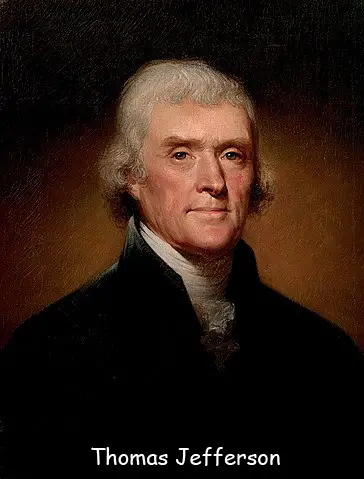
Thomas Jefferson

Thomas Jefferson’s gravestone contains words he wrote himself. On it, he listed only three accomplishments: writing the Declaration of Independence, writing the Statute of Virginia for Religious Freedom, and founding the University of Virginia.

These are just the beginning of his accomplishments, but they were the ones he thought most worth remembering. Find out what else he did.

Fun Facts

  • Thomas Jefferson spent almost 50 years in public office. He believed deeply that America could be a light to the world. He was passionate about political and religious freedom, and educational opportunity.
  • He was born in 1743 on a plantation in Virginia. His father was a prosperous farmer and surveyor; his mother belonged to one of the most important families in Virginia.
  • Jefferson’s father died when he was fourteen and he inherited the estate, more than 5,000 acres.
  • But Jefferson wanted to live on the mountain above his father’s plantation. When he was just 25, he purchased the property and began clearing trees to build his beloved home, Monticello. He started with a simple one-room building and slowly expanded.
  • He married Martha Wayles Skelton and they had six children, only two of whom survived to adulthood. Jefferson was devastated when she died ten years after their marriage. He referred to her as “the cherished companion of my life.”
  • Thomas Jefferson was uncomfortable with slavery, and yet, he owned slaves, typically around 200 at any time. He also had a romantic relationship with one of his slaves, Sally Hemings, which lasted for 25 years until his death. They had at least six children.
  • Thomas Jefferson enjoyed being in the woods and was a fine outdoorsman. As a child, he learned Latin, Greek, and French. He played the violin. He loved books and learning and had a library with over 2,000 books.
  • He was the principle creator of the Declaration of Independence. He was somewhat reserved in public, but he was a wonderful writer.
  • He later became the third president of the United States. During his presidency, he negotiated the Louisiana Purchase and planned the Lewis and Clark Expedition.

Learn More

Watch videos about Thomas Jefferson.

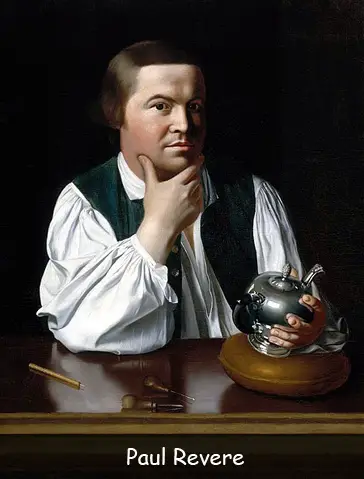
Paul Revere

Paul Revere is known for his midnight ride, but what about the rest of his life? He was no stranger to hard work and challenge, and he had a strong love of family and country.

Fun Facts

  • Paul Revere’s father grew up in Midi, France, a beautiful farming area. His family were Huguenots, a specific religion, which the king of France did not like.
  • The king made a law that if the Huguenots in France would change their religion, they could stay. Otherwise, they had to leave or face persecution, imprisonment, loss of property, or even death.
  • Paul Revere’s grandparents were too old to leave, but they wanted their son to have a better life. When he was thirteen, they put him on a boat, knowing they would never see him again.
  • Paul’s father sailed to Guernsey, off the coast of England, and then to America. An uncle paid for his passage on the ship and sent money for the boy to be apprenticed to a silversmith in Boston.
  • The boy was homesick. He couldn’t speak English and the other boys in Boston teased him. He worked hard, learning to speak English and to mold silver. He changed his French name, Apollos Rivoire, to Paul Revere, which was easier for the English to pronounce.
  • But he never forgot his French name, which means He taught his son, Paul Revere, “Take the oak as your pattern of life, for it is a strong and useful tree. There are many trees more showy than the oak, but none is so staunch, so honorable, and so good.” (America’s Paul Revere by Esther Forbes, 1974).
  • Paul Revere went to school until he was thirteen, learning how to read, write, and do sums. After that, he began to learn the silversmith trade with his father. He worked hard and became one of the best silversmiths in Boston, if not all of New England.
  • When Paul was eighteen, his father died, leaving the shop to him. He had to work hard to provide for the family and take care of his mother, who lived with him all her life.
  • When Paul was twenty one, he went to fight in the French and Indian War, leaving his mother to manage the home and care for her five younger children. He was a good soldier, but he was glad to come back to Boston a year later.
  • He married Sarah Orne and they lived in his father’s house. Paul was becoming a famous silversmith.
  • The British tax laws soon made it difficult for people to trade in Boston. Everyone, including Paul, was poor. Paul learned to make copper plates and he also learned dentistry since silver was expensive and few people could afford it anymore.
  • Paul Revere belonged to a political group that met at a tavern, The Green Dragon, to discuss what to do about the British. He was there during the Boston Massacre and the Boston Tea Party.
  • And on the night of April 18, 1775, Dr. Joseph Warren asked Paul Revere to ride to Lexington to warn John Hanco-ck and Samuel Adams of a conspiracy to capture them, and then to ride to Concord to warn the colonists that the British were coming to take a stockpile of weapons and arms. Paul Revere rode through the night, with his lesser known partner, William Dawes, alerting towns along the way. Revere was captured by the British, but eventually released.
  • When the war was over, Paul Revere went back to being a silversmith. He made beautiful church bells, one of which is in King’s Chapel in Boston. You can also still see his house if you visit Boston.

Learn More

Watch a video about Paul Revere’s ride.