All posts by americanadmin

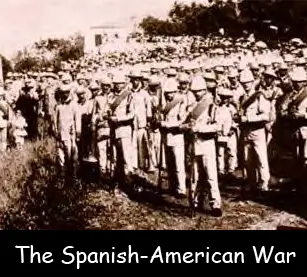
The Spanish-American War

Compared to Europe and Asia, America is a young country, yet it gained prosperity and power very quickly. During the 1800s, the United States, for the most part, kept out of foreign affairs. But when the U.S. came to the aid of Cuba in the Spanish-American war, it suddenly became a strong military presence in the world.
The Spanish-American War

Fun Facts

  • Spain colonized Central and South America during the 1500s, including Cuba. In 1985, the Cubans demanded independence from Cuba, resulting in a bloody rebellion.
  • The Spanish General ValerianoWeyler was sent from Spain to crush the Cubans. He was a ruthless leader, torturing Cubans without mercy. American newspapers published stories about his deeds; the American people demanded that the U.S. help the Cuban people.
  • European powers had sought to colonize Asia, Africa, and Central and South America since the 1700s. During the late 1800s, a few American leaders thought America should join the quest to take other lands. They thought the United States’ victory in the Spanish-American War might help America conquer other places.
  • On February 15, 1898, the American battleship, The Maine, exploded in the Havana, Cuba harbor, killing 266 officers and crew. To this day, no one knows why the ship blew up or who caused it, but many Americans blamed the Spanish.
  • President William McKinley asked Congress to declare war on Spain. Six days later, an American fleet of new, steel ships easily defeated an older Spanish fleet in Manila Bay in the Philippines.
  • American soldiers arrived in Cuba in June, 1898. On July 1, Colonel Theodore Roosevelt led his troops, known as the Rough Riders, into battle. These Rough Riders were made up mostly of African-American soldiers and Roosevelt’s old college friends. These Rough Riders easily overcame the Spanish and the war ended in less than a week. Spain, which had held a position of power for centuries, had fallen.
  • The Spanish-American War only lasted four months. During that time, 375 Americans were killed in battle, but over 5,000 died from tropical diseases, mainly yellow fever, which is transmitted by mosquitoes.

Vocabulary

  1. Prosperity: abundance
  2. Foreign affairs: events in other countries
  3. Fleet: a group

Questions and Answers

Question: Did the U.S. gain anything in the Spanish-American War?

Answer: The U.S. navy and army gained confidence in the strength of their ships, weapons, and skill. The world took notice of their military power for the first time. The U.S. gained the Philippines, Guam and Wake Island as colonies; Puerto Rico became a U.S. Commonwealth. Hawaii was annexed as a part of the U.S.

Question: Was colonization good or bad?

Answer: That depends on who you ask. European countries gained tremendous power and wealth by colonizing countries around the world, but at a high cost to the native people living in those countries, who often lost their land, their property, their freedom, and sometimes their lives in the process.

Learn More

Watch a Crash Course video on the Spanish-American War.
Automobiles and Airplanes

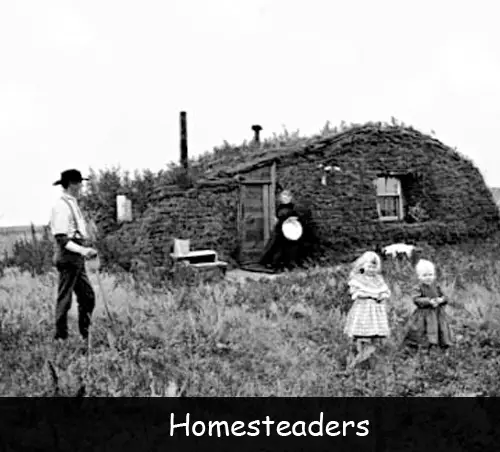
Before the Industrial Revolution, most people were born, lived, and died within a fairly small geographical area (with the exception of pioneers and homesteaders). The Industrial Revolution drew people away from rural communities to work in cities.

Then, two major inventions made it even easier for people to travel: airplanes and automobiles. These fast, shiny machines forever changed the way people live and work.

Automobiles and Airplanes

Fun Facts

  • People first began building steam cars in the 1770s, but these cars didn’t run very well and were expensive to build. In the late 1800s, cars that ran on gasoline became available. At first, only the wealthy owned cars. But by 1915, cars became more affordable.
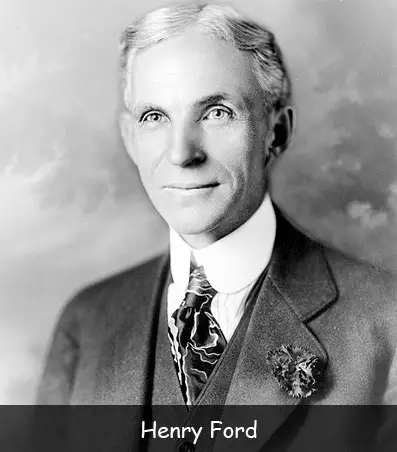
  • Henry Ford developed the Model T, a practical, sturdy, affordable car that became very popular. Ford used specialized equipment and an assembly line to produce more cars quickly and cheaply. This system is still used today.
  • Model Ts only came in black because black paint dried faster than other paint colors. The car cost $800 when it was first introduced. As Ford streamlined the manufacturing process and cut costs, he passed those savings to buyers and lowered the price of the Model T to about $260. More than 15 million Model T cars were built. The cars had a maximum speed of 45 miles per hour.
  • The history of air flight goes back to 400 B.C. when people in China developed kites. Leonardo da Vinci studied flight extensively and drew more than 100 illustrations of potential flight machines. Gliders, hot air balloons, and aerodromes came next.
  • Wilbur and Orville Wright were serious about designing an airplane that could actually fly. They spent more than five years studying gliders and testing wing designs in a wind tunnel they’d built. Finally, on December 17, 1903, their airplane flew for 59 seconds, covering 850 feet. The brothers had achieved the first motor-propelled airplane flight. Two years later, their plane flew 24 miles until it ran out of gas.
  • At first, people were skeptical that airplanes would ever be practical, but the U.S. government realized that airplanes could be useful in warfare. In 1908, the U.S. military gave the Wright brothers a contract to develop planes.

Vocabulary

  1. Affordable: inexpensive
  2. Popular: well-liked
  3. Skeptical: doubtful
  4. Warfare: war

Questions and Answers

Question: How did people use cars?

Answer: Doctors were among the first to buy cars because cars transported them to patients more reliable and more quickly than horses. In rural areas, people used cars to visit friends, take their produce to market, and even plow fields. In cities, people used cars to go to work, go shopping, visit friends, and run errands. They could now go out just for fun – to movies or shows.

Learn More

Visit Explain That Stuff to learn more about the history of cars.

The Titanic

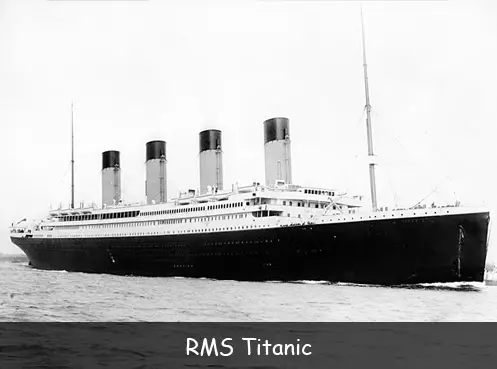
New inventions, such as the telephone, electric lights, trolleys, and the first movie cameras, created a sense of optimism and trust in the power of engineering and scientific discovery. Architects built towering skyscrapers and opulent public buildings; engineers built automobiles, airplanes, and cruise liners. This sense of limitless possibilities was tempered, though, in 1912, when the Titanic sunk to the bottom of the Atlantic Ocean.

The Titanic

Fun Facts

  • Prior to the introduction of commercial airline flight, the only way to cross the Atlantic Ocean was by boat. Many of these boats were cramped and uncomfortable.
  • The wealthy and middle class demanded more luxurious ship lines. The Titanic was built between 1909 and 1912. It was the largest ship ever made with 29 boilers, a swimming pool, two libraries, and several dining halls. The Titanic cost $7.5 million to build and the most expensive First Class ticket cost $4,350 – or $69,600 in today’s money.
  • The Titanic had three levels – First Class, Second Class, and Third Class. The second class level was similar to most first class ship lines of the time. Third class – or steerage – rooms were small; each room contained four to six bunks. The 700 third class passengers shared two bathtubs. Locked gates separated third class passengers from the other passengers.
  • The Titanic set sail from Southampton, England on April 10, 1912, stopping for passengers in France and Ireland before beginning its maiden voyage across the Atlantic Ocean.
  • At about 11:30 p.m. on April 14, a lookout cited an iceberg in the frigid waters. The boat was quickly turned and at first, the crew believed the ship was safe. They later discovered that the iceberg had grazed the Titanic’s side, creating a 300-foot gash. Water poured into the ship.
  • The ship’s crew began loading passengers into lifeboats and launching the boats into the ocean. Unfortunately, the ship didn’t carry enough lifeboats to accommodate all the passengers and crew. Women and children were loaded first.
  • Of the 2,240 passengers and crew, only 706 survived. Most of these were first and second class passengers. The Carpathia, another steam liner, arrived near 4:00 a.m. to rescue the survivors, who were taken to New York. The Titanic split in two before sinking at 2:20 a.m.

Vocabulary

  1. Optimism: a hopeful outlook
  2. Opulent: luxurious
  3. Maiden voyage: the first trip or voyage


Questions and Answers

Question: How did the people on board respond to the crisis?

Answer: The Titanic was engineered to be “unsinkable,” so at first, some of the passengers probably felt disbelief. Later, panic and chaos ensued as people struggled to get to the life boats. When it became clear that not everyone would get off the Titanic, some men rushed to get on lifeboats. Others kissed their families goodbye and prepared to go down with the ship. The elderly founder of Macy’s department store, Isidor Straus, was offered a seat on a lifeboat because of his age, which he declined. His wife, Ida, refused to leave without him. The couple went back to their room where they died together. Several wealthy, famous passengers were aboard. Benjamin Guggenheim put on his evening clothes, saying, “We are dressed in our best and prepared to go down as gentlemen.” Heiress Molly Brown helped calm and encourage women and children as they got into the lifeboats, refusing to get into a boat until everyone near her was loaded.

Learn More

Visit National Geographic Kids to learn more about the Titanic.

Changes in Government

Most of the Founding Fathers believed in a government that gave states and communities the power to make decisions on local issues. They worried that a powerful Federal government had the potential to become corrupt. The Constitution was written with the goal of limiting Federal power and protecting individual liberty.

During the early 20th century, though, many people were unhappy with conditions in the country. They believed it was time for government officials to make laws that would protect average citizens.

Changes in Government

Fun Facts

  • Samuel Jones was elected as mayor of Toledo, Ohio in 1897. Before he was elected, private companies had control of the city’s utilities, including the electricity, water lines, telephones, and trolley cars. These private companies could charge whatever they wished and didn’t always provide good service. Samuel Jones brought the city utilities under government control. He put limits on how much they could charge for their services. He took his role as mayor seriously and wanted to improve the city. He believed in the Golden Rule, “Do unto others as you would have them do unto you.”
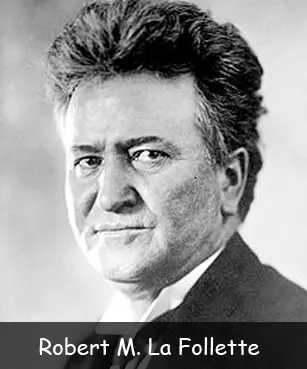
  • Wisconsin governor, Robert M. La Follette, introduced the system of primary elections. Previously, political parties chose the candidates that would run for office. The primary elections allowed the people to choose the candidates.
  • During this time, reformers pushed for secret ballots. Before this, each political party had a different colored ballot and the votes were publicly dropped in a large box. Anyone watching would know how someone had voted. The new ballots were all the same color and people voted in private.
  • Communities began hiring professional city managers to take care of city business and handle certain problems. Communities also began to create commissions or task forces to make decisions.
  • President Theodore Roosevelt made sweeping changes while he was in office. He demanded that Congress create standards and laws for the quality of meat, food, and medicine. He broke up trusts that allowed a few wealthy companies to unfairly force out other businesses. Roosevelt loved the natural world and set up National Parks, setting aside 150 million acres of forest.

Vocabulary

  1. Corrupt: dishonest, lacking integrity
  2. Ballot: a card used by voters to record their choice of leader
  3. Trust: a few companies that band together to force others out of business

Questions and Answers

Question: Were all the social reforms good ideas?

Answer: Many social reforms were necessary to ensure people’s safety and well-being. One of the challenges with government, though, is that it’s hard to predict all the consequences of new laws. For example, President Wilson, who followed President Roosevelt, passed a law that made it easier for farmers to get loans. This program was designed to help farmers, but many farmers were soon deeply in debt and couldn’t pay their loans. Banks took back their farms.

Learn More

Visit Scholastic to learn about child labor laws.

Women’s Right to Vote in Wyoming

The U.S. Constitution didn’t prohibit women’s right to vote, but it didn’t guarantee it either. Until 1920, when the Nineteenth Amendment was ratified, states were allowed to decide the issue. Interestingly, it wasn’t the “progressive” states of New England and the East Coast that first gave women the vote, but the states in the Wild West.

Women’s Right to Vote in Wyoming

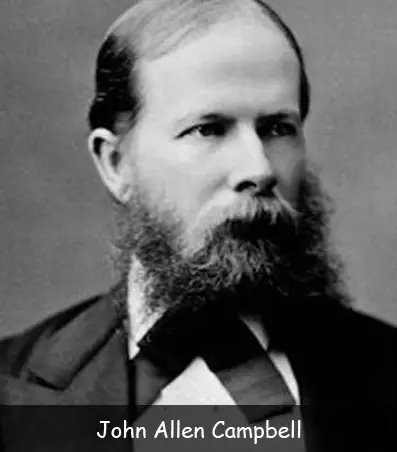
  • In 1869, William Bright, a saloon-keeper and politician, introduced a bill in the Wyoming House that would give women the right to vote. The bill passed and Republican Governor, John Campbell, signed it into law.
  • That fall, 69-year-old Louisa Swain became the first woman to vote in the country. She voted in Laramie, Wyoming without a single protest. The Laramie Sentinel wrote, “There was too much good sense in our community for any jeers or sneers to be seen on such an occasion.”
  • The new law even allowed women to hold office. Just one year later, Esther Morris became the first woman Justice of the Peace. Additionally, Wyoming made laws demanding equal pay for women teachers.
  • When the Wyoming Territory applied for statehood 20 years later, it included women’s right to vote as part of its Constitution. The U.S. Congress threatened to deny statehood because of this. Wyoming leaders sent a telegram to Congress that said, “We will remain out of the Union 100 years rather than come in without the women.” Congress relented and granted Wyoming statehood. In 1925, Nellie Tayloe Ross became the first woman governor – of Wyoming.
  • Other western states quickly followed. Utah gave women the right to vote in 1870. Washington, Idaho, and Montana passed similar laws in the 1880s.

Vocabulary

  1. Prohibit: disallowed; against the law
  2. Ratify: to pass a law

Questions and Answers

Question:

Learn More

Visit Time Kids to learn more about women’s suffrage.

The Progressive Era

The Industrial Revolution of the 1800s changed life in America forever. Urban areas grew quickly and, for the first time, a small percentage of Americans (one percent) controlled 70 percent of America’s wealth.

People began seeking change. Many Americans began fighting to solve the problems of widespread poverty, unfair working conditions, crime, and a lack of rights for women, children, and African-Americans. This time became known as “The Progressive Era” because people worked to change society, moving it forward and progressing.

The Progressive Era

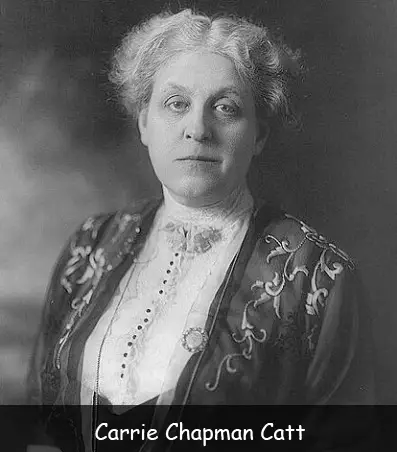
  • African-American men gained the right to vote in 1870, after the Civil War, but women were still not able to participate in elections. In the early 1900s, women, such as Carrie Chapman Catt, began protesting and demanding the right to vote. These “suffragettes” organized protest parades, which were ridiculed at first. As the movement gained momentum, individual states made it legal for women to vote. In 1920, the Nineteenth Amendment to the Constitution allowed women to vote in all local, state, and national elections.
  • Women soon became outspoken champions of children’s rights, as well. In the 1890s, almost two million children worked in mines, mills, and factories. They worked long hours in dangerous conditions. Union organizer, “Mother Jones,” protested by leading children on a march from Pennsylvania to President Theodore Roosevelt’s New York home. Laws were passed in New Jersey and New York, which limited child labor. Nevertheless, many children continued to work on farms, mills, and in factories.
  • Women also wanted to ban the sale and consumption of alcohol. They were known as “prohibitionists.” They believed that alcohol consumption often led to laziness and violent behavior. In 1919, the Eighteenth Amendment made it against the law to produce or sell alcohol.
  • W.E.B. DuBois believed that African-Americans deserved better work opportunities. His movement gained support after mob violence against African-Americans in Springfield, Illinois. John Dewey, Jane Addams, and other prominent progressive leaders helped DuBois organize the National Association for the Advancement of Colored People (NAACP).
  • Before the mid-1800s, most children were educated at home, by tutors, or in small private or village schools. Poor children often received little education. States began passing laws requiring children to attend school.

Vocabulary

  1. Suffragette: a woman fighting for the right to vote
  2. Prohibitionist: someone who believed that alcohol sales should be illegal
  3. Prominent: well-known, important

Questions and Answers

Question: Were the Progressives successful in changing society?

Answer: Many of the laws that were passed during the Progressive Era have made life better and safer for Americans. On the other hand, some would argue that this period began a trend toward more laws and more government intrusion in private life.

Learn More

Visit Scholastic to learn more about the 1920s.

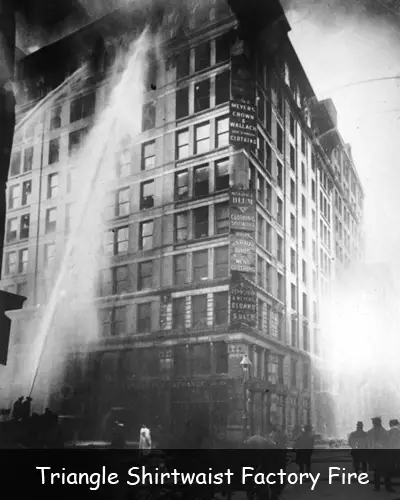
The Triangle Shirtwaist Factory Fire

The late 1800s to early 1900s were a time of hope and optimism as the middle class enjoyed greater prosperity and comfort than ever before. Yet, immigrant factory workers in New York City worked in dismal conditions just blocks from the mansions of wealthy factory owners, never taking part in the fruits of success.

Strikes were common as workers tried to gain better working conditions and higher pay, but employers were slow to respond. Safe conditions came at a high price – the lives of 146 factory workers who died in the Triangle Shirtwaist Factory fire.

The Triangle Shirtwaist Factory Fire

Fun Facts

  • Russian immigrants, Isaac Harris and Max Blanck, arrived in America with little money, but quickly prospered. Within 20 years, they owned one of the most well-known clothing factories in New York City, the Triangle Shirtwaist Factory.
  • Here, factory workers made clothing, working 13 hour days for a paltry 13 cents per hour. Most of the workers were teenage girls, immigrants from Italy and Russia.
  • In 1910, the workers at the Triangle Shirtwaist Factory joined forces with hundreds of small factories, striking for better work conditions and higher pay. This was the largest strike of women workers the country had seen.
  • The owners, Harris and Blanck, struck back, hiring policemen to beat the women. Anne Morgan, daughter of banker, J.P. Morgan, was appalled by their treatment and organized protests with other wealthy New York women. The owners eventually agreed to shorter hours and better pay, but they did not improve working conditions.
  • On March 25, 1911, a fire started on the eigth floor of the factory. The owners escaped, but the workers on the ninth floor were unaware of the fire and kept working until smoke began billowing into their workspace.
  • A few workers were able to reach an elevator. Some of the workers climbed onto a fire escape, which crumpled under their weight, falling 100 feet to the ground below. The only other door was locked. As the fire engulfed the workroom, factory workers jumped out the windows to their deaths.
  • Of the 240 workers on the ninth floor, 146 perished. Over half of them were teenagers.

Vocabulary

  1. Appalled: disgusted, shocked
  2. Engulf: to completely enfold, surround, or consume
  3. Shirtwaist: a button-down women’s shirt that became fashionable in the early 20th century

Questions and Answers

Question: What happened to the factories after the fire?

Answer: After the fire, the public demanded safer factory conditions. The state of New York was among the first to pass legislation requiring that factory owners follow safety guidelines.

Learn More

Visit PBS to learn more about the Triangle Factory Fire.

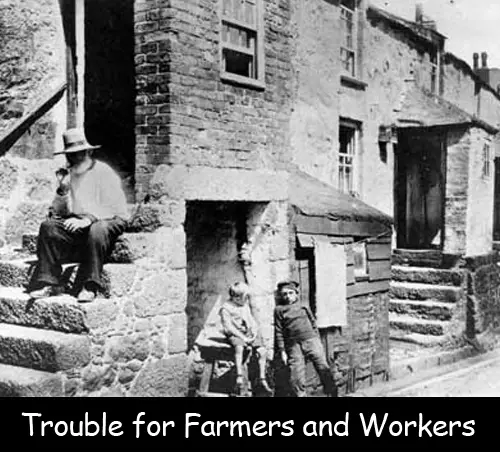
Trouble for Farmers and Workers

The course of history seems to be that as we find solutions to one problem, we often create new ones. In the late 1800s, factories provided goods to people more quickly and cheaply than ever before. At the same time, advances in farm equipment and techniques meant that farmers could grow an abundance of food. In time, though, both of these innovations created serious challenges for workers.

Trouble for Farmers and Workers

Fun Facts

  • Factory work was long, monotonous work. Men, women, and even children worked long hours in dirty and unsafe conditions. Pay was low and workers felt little satisfaction because they toiled day after day on the same tasks, never seeing a finished product.
  • Workers tried to group together – or form unions – to persuade factory owners to give them better working conditions and higher pay. These efforts were usually unsuccessful. The workers would often go on strike, or refuse to work.
  • Several strikes ended in violence. During the Haymarket Riot of 1886, police were called in to break up a strike. Someone set off a bomb, killing seven police officers. The police shot at the crowd, injuring dozens. During the Homestead Strike in 1892, seven guards and nine strikers were killed.
  • New farm equipment, such as the combine, better seeds, and improved farming methods created a glut of farm produce – too much for even America’s growing cities to use. The price of produce dropped and farmers could no longer make a living farming. Many farmers went bankrupt and their farms were foreclosed on by the banks.
  • Farmers banded together, forming cooperatives that allowed them to buy equipment and seed at a lower price. Many farmers ran for and won political offices in their local communities, believing that gaining political power would help their situation.

Vocabulary

  1. Strike: when a group of workers refuses to come to work; during a strike, workers often walk around outside the workplace, carrying signs and yelling (picketing)
  2. Bankrupt: when a company or individual is unable to pay its debts
  3. Foreclose: when a bank or lender takes back property, such as a farm or home, because the tenant is unable to pay the loan

Questions and Answers

Question: Why did the cost of food go down when farmers were growing an abundance?

Answer: This is called the principle of supply and demand. When a lot of people want something and there isn’t very much of it, the price goes up. When people really want something they will pay more for it. Conversely, when there is so much of something (such as food) that people have more than they need or want, the price goes down.

Learn More

Visit My American Farm to learn about farming today.

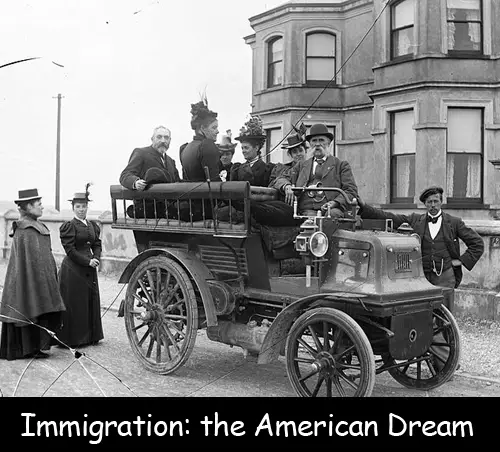
Immigration: the American Dream

Between 1880 and 1920, almost 25 million people came to America from other countries. Most of these immigrants came from Europe. They came to escape terrible poverty in their own country, having often heard rumors that the streets of America were paved with gold. They believed that America was a land of opportunity. Unfortunately, immigrants poured into cities in such large numbers that there weren’t enough resources to go around. Life was not easy for them.

Immigration:the American Dream

Fun Facts

  • America’s history has always been about immigration. The Puritans, among the first immigrants, came from Great Britain in search of religious freedom. During the first 200 years of our country’s history, millions of immigrants came from Great Britain and Germany. Between 1846 and 1851, almost 1 million hungry people emigrated from Ireland during the Irish Potato Famine.
  • In the late 1800s, immigrants arrived from Poland, Russia, and Italy. Jews came fleeing religious persecution in Europe. In the West, Chinese immigrants flooded into California during the Gold Rush. More came to help build the transcontinental railroad. Chinese workers were willing to work for little pay, which made white workers angry. Whites worried that Chinese immigrants were taking their jobs. Mobs and riots ensued; in 1882, Congress made Chinese immigration illegal. This law was repealed in 1943.
  • Most immigrants came to large cities, such as New York, Chicago, and Philadelphia. They had few skills and didn’t speak English. They gathered together with others from their mother countries, creating Italian, Polish, and Jewish neighborhoods.
  • In cities, immigrants lived in crowded tenement buildings. In these crowded conditions, diseases like tuberculosis were common.
  • Middle-class Americans were unaware of the plight of the immigrants. Danish immigrant and photographer, Jacob Riis, published a book, “How the Other Half Lives,” which shone a light on the problem.

Vocabulary

  1. Tenement: an apartment or house that has been divided for many families; typically crowded and run-down
  2. Tuberculosis: an infectious lung disease
  3. Plight: a difficult or dangerous situation

Questions and Answers

Question: Did anyone help the immigrants?

Answer: Government agencies were slow to respond to the immigrants’ needs. Individuals, churches, and private organizations jumped in to help. Jane Addams opened Hull House in Chicago in 1889. Here, volunteers taught women practical skills, such as sewing, cooking, shopping, and caring for the sick. Other agencies offered lessons in English or job skill training. The Salvation Army offered food and lodging.

Learn More

People still immigrate to America today. Visit Scholastic to learn more.

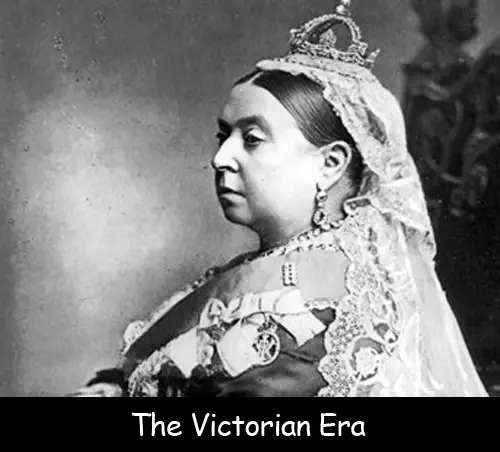
The Victorian Era

The Victorian Era, named for Great Britain’s Queen Victoria, was a time of tremendous change in both America and Europe. Inventions like electric light, the vacuum cleaner, and even the first electric iron, made life easier for many Americans. They had more time for recreation, art, and literature. For the first time, America artists and writers gained prominence. John Adams, second president of the United States, wrote to his wife, Abigail, “I must study politics and war, that our sons may have liberty to study mathematics and philosophy. Our sons ought to study mathematics and philosophy, geography, natural history and naval architecture, navigation, commerce and agriculture in order to give their children a right to study painting, poetry, music, architecture, statuary, tapestry and porcelain.” During the Victorian Era, his prediction seemed to come true.

The Victorian Era

Fun Facts

  • Life in rural communities remained much as it had been for over a century, but life in the city changed rapidly. Trolleys provided transportation through wide, clean streets. Electric lights lit stores, homes, and businesses. Urban families lived in larger, comfortable homes. Many of them employed maids and nannies. Some homes even had indoor plumbing and underground sewers carried away waste.
  • The Arts flourished during the late 1800s. Mark Twain and Edith Wharton became well-known and beloved American writers. Louisa May Alcott became hugely successful for her children’s stories, “Little Women,” “Little Men,” and “Eight Cousins.” Henry Wadsworth Longfellow, who wrote the epic poem, “Hiawatha” lived during this time. James Whistler, who painted “Whistler’s Mother,” developed a style of American art that was simpler than that of most European art at the time.
  • For the first time, people had the time and money to think about entertainment. They went to the theater, watched sports, such as baseball, football, and horse racing. Circuses and traveling shows entertained large audiences. People subscribed to and read daily newspapers and magazines, fueling the beginning of the modern publishing world.
  • The Victorians were strongly religious, believing in strong families and obedience to God. The Victorian Era was a time of high moral principles and optimism about the future.

Vocabulary

  1. Prominence: a place of importance
  2. Sewer: a pipe or tunnel that carries away human waste
  3. Epic: a dramatic story that usually contains some elements of truth

Questions and Answers

Question: Did everyone in America enjoy this prosperity?

Answer: No. People in rural farming communities continued to live simple, hard-working lives, although they might not have considered themselves disadvantaged. They tended to view city folks as being frivolous or silly.

Learn More

Visit BBC to read stories about children in Britain during the Victorian Age.