All posts by americanadmin

Big Cities

Until the late 1800s, most people in America lived in small farming communities. The Industrial Revolution changed all that as people came to the cities looking for work. European immigrants arrived in America hoping for a better life. New inventions, such as the telephone and electric lights, made life easier and more comfortable.
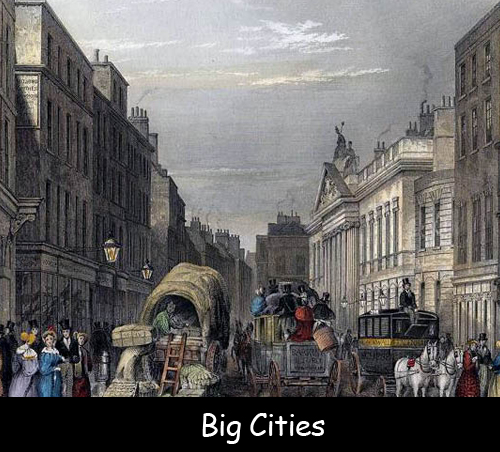
Big Cities

Fun Facts

  • Churches and cathedrals were community gathering places – the largest and most prominent building in a town. In the late 1800s, though, engineers learned how to build skyscrapers – tall buildings that towered over the cities. Churches were dwarfed by these huge office buildings.
  • In the mid-1850s, Elisha Otis developed elevators that were safe for people. This development, along with the increased production of steel, made it possible to build skyscrapers that were 10 stories or more.
  • Steel was not only used for buildings, but also for bridges. John Roebling began building the Brooklyn Bridge in 1869. His son, Washington Roebling, completed it in 1883. This bridge brought Brooklyn and Manhattan together.
  • Horse-drawn trolleys transported people through city streets until the late 1880s, when Frank J. Sprague developed trolleys with electric motors. Within three years, 51 cities were using trolleys, which provided fast, cheap, quiet transportation.
  • In 1879, Thomas Edison created the first light bulbs, along with everything needed to produce the electricity to power the bulbs. By the early 1900s, most cities had electric lighting.
  • Alexander Graham Bell introduced the telephone in 1876. Initially, people were unenthused about it, but by 1880, 50,000 phones were in use.

Vocabulary

  1. Immigrant: someone who migrates from his or her native country to a new place
  2. Prominent: highly visible or important

Questions and Answers

Question: Did the factory workers live in the cities?

Answer: Initially, most of the factory workers lived in crowded apartment buildings, often under appalling conditions. As people became prosperous, they moved out of the cities, creating the first suburbs. Trolleys provided transportation from the suburbs to the cities.

Learn More

Visit PBS to learn all about skyscraper engineering.
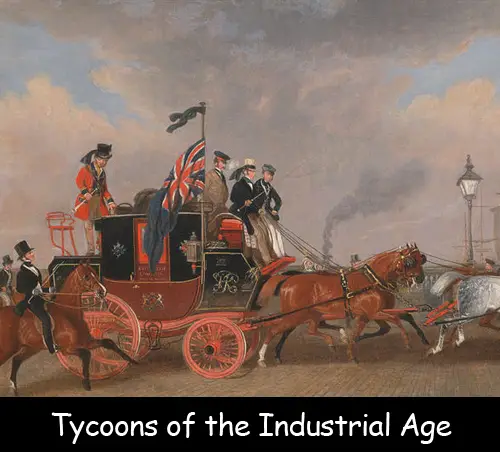
Tycoons of the Industrial Age

The poor generally remained poor during the Industrial Revolution, but a few ambitious men made huge fortunes. These men saw the changing times and seized opportunities. They made their businesses as efficient and streamlined as possible. And they used ruthless business practices to drive competitors out of business. Some people saw them as greedy robbers; others thought they were smart businessmen.

Tycoons of the Industrial Age

  • Cornelius Vanderbilt had already made a fortune with his fleet of steamships, but he saw that railroads were the future. At the age of 71, he sunk his fortune into buying railroads to create a 14,000-mile line of track called the New York Central. When he died 12 years later, his estate was worth $100 million. His gamble had paid off for both his family and the public. His railroad track made a trip from New York to Chicago both faster and cheaper.
  • Andrew Carnegie, a poor Scottish immigrant, started as a steel mill worker. Smart and hardworking, he quickly saved enough money to buy several ironworks and went on to build the nation’s largest steel plant. He bribed railways to drive out the competition and eventually sold his company for $492 million to banker J. Pierpont Morgan.
  • Colonel E.L. Drake invented a process for turning oil, found throughout western Pennsylvania, into petroleum for heaters and lamps. After he dug his first well, the oil industry boomed. John D. Rockefeller saw an opportunity here. He started Standard Oil of Ohio and convinced the railroads that if they would give him a discount, he would eventually buy out all the other oil companies. When this happened, he would give all his business to the railroads that helped him. Soon, he had bought up all the other oil companies, as well as steamships, barrel companies, railroads, and docks – everything he needed for his business. He owned 25 percent of the nation’s oil-refining companies. After he retired, he gave most of his $530 million away.

Vocabulary

  1. Ruthless: without mercy
  2. Ambitious: determined to succeed

Questions and Answers

Question: Were these businessmen good or bad?

Answer: Probably a bit of both, depending on who you ask. They didn’t care about destroying another man’s business, nor did they do much to improve factory conditions for their workers. On the other hand, they gave away a great deal of their fortunes to libraries, concert halls, museums, and hospitals. They believed that they had a responsibility to use their wealth wisely and generously to bless society. Rockefeller’s mother taught him as a child to give money to his church each week. Carnegie also made a habit of giving to those less fortunate, even when he was poor himself. They gave jobs to millions of Americans and created new products. Their inventions and innovations are still used today. They helped Americans believe in the American dream – that hard work could lead to prosperity.

Learn More

Visit PBS to watch a documentary about the Rockefellers.

Factories Change America

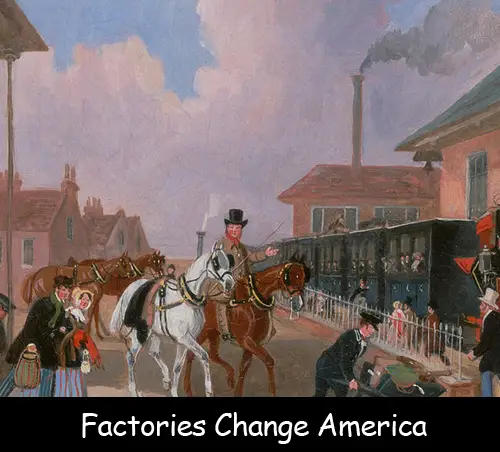
The late 1800s were a time of great change for the United States. Before the Civil War, most people lived in small villages and worked on farms. Life revolved around the home, where most of a family’s necessities were produced. Families raised livestock and grew much of their food. They made candles for light and even made their own clothing. After the war, businessmen created new inventions that made life easier and more efficient. Factories and mills could quickly produce clothing, shoes, and other items. Many people, hoping for an easier life, left their farms and villages to find work in factories in cities. Most of them learned that an easier life isn’t necessarily a happier one.

Factories Change America

Fun Facts

  • In the twenty years following the Civil War, the U.S. population almost doubled, going from 40 million to 76 million. Immigrants from Europe came to America in search of prosperity. Many of them became factory workers.
  • Steel is much stronger and more stable than iron, but making it was slow and expensive until Sir Henry Bessemer developed a process for converting iron into steel. His invention fueled America’s steelmaking, which quickly became the nation’s largest industry. Iron ore was taken from the Lake Superior area to mills in Chicago and Pittsburgh. Coal from Pennsylvania and West Virginia fueled these factories.
  • Assembly lines were a large part of the success of factories. Each person worked on one part of a finished product. For example, in a shoe factory, one person made the heels while another made the soles. This system was monotonous for the workers, but ensured a fast, efficient process. Meat and foods, clothing, furniture, and other goods were processed on assembly lines.
  • Families made all of the food they ate at home from scratch until the 1880s when Dr. John Kellogg introduced the first ready-made breakfast cereal, Corn Flakes. Charles W. Post began making Toasties, a similar cereal. The two men competed against each other and made advertisements to sell their products. Both the companies started by these two entrepreneurs still make cereal today.
  • Before Internet shopping, people ordered products from catalogs. Aaron Montgomery Ward started one of the first mail-order companies and published a catalog so people living in rural areas could order products from factories. Sears, Roebuck and Company opened soon after.

Vocabulary

  1. Monotonous: repetitive, dull
  2. Efficient: well-organized, competent
  3. Entrepreneur: someone who starts business ventures

Questions and Answers

Question: What negative consequences happened because of the coming of factories?

Answer: When people moved to cities, they spent less time with their families, often working long hours in harsh, unsafe conditions. These people also lived in small, cramped apartments where disease was common. Children were left alone or sometimes worked in factories too.

Learn More

Visit Scholastic to learn more about children working in factories.

Homesteaders

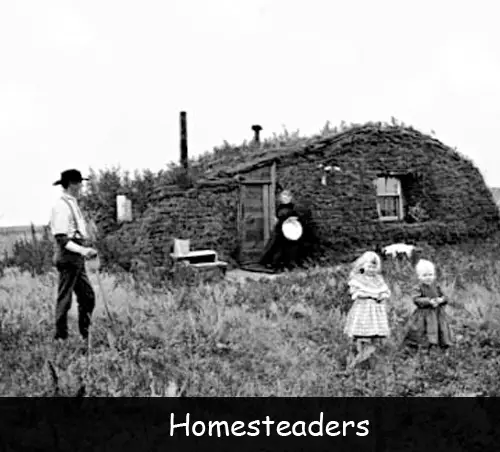
Western guidebooks described the plains area as a place with little water or firewood. But when the Homestead Act of 1862 was declared, even these dire descriptions couldn’t discourage settlers looking for a better way of life.

homesteaders

Fun Facts

  • Anyone was allowed to claim a tract of 160 acres. The rules stated that homesteaders must build a house and live on the land for at least five years. After five years, the land would be theirs.
  • Railroad companies also sold the land around the railways cheaply because they wanted settlers to build towns along the railways. These towns would provide customers for the railroads.
  • Speculators bought land and then resold it. They advertised the land in European newspapers, drawing immigrants from England, Germany, and Holland.
  • Homesteading life was very difficult. Summers were often long and hot; winters were bitterly cold. Droughts and insects ruined crops. In 1884, huge swarms of grasshoppers ate all the crops.
  • Many of the homesteaders lived in houses made from sod, thick layers of decomposing prairie grasses cut out of the soil. These houses were dark and damp, but they were cheap and relatively quick to build. Homesteaders had to break up the sod before they could plant crops anyway.
  • Improvements in farm technology allowed homesteaders to prosper in spite of harsh conditions. John Deere invented a plow that could cut through sod. Windmills drew water from deep in the ground. Farmers grew a new type of wheat that could survive bitter winter weather.
  • In 1889, in the Oklahoma District, at the firing of a gun, thousands of people were allowed to rush into open land, claiming their stake. At day’s end, 50,000 people had staked about two million acres of land.
  • By 1890, there was no more land to be claimed. The Western frontier was closed. Frederick Jackson Turner, an American historian, said that the homesteading movement had created independent, self-reliant people that understood and defended democracy.

Vocabulary

  1. Frontier: an area of land that is unsettled
  2. Dire: dismal, troubling, dangerous
  3. Speculator: someone who buys land or other products with the goal of selling them for a profit

Questions and Answers

Question: Did the homesteading movement benefit everyone?

Answer: The Homesteading Act drew millions of people to America. Hardworking farmers eventually turned the desolate plains area into a fertile “bread basket,” an area known for its grain crops. These crops fed (and continue to feed today) Americans. But the Homesteading Act ended the days of cattle grazing over large expanses of open ground. As farmers fenced in their lands, ranchers were forced to keep their cattle in smaller areas and the days of the cattle drives ended. Native Americans were driven by the thousands off their homelands and forced onto small reservations.

Learn More

Visit Scholastic to learn more about immigration and homesteading.

Chief Joseph

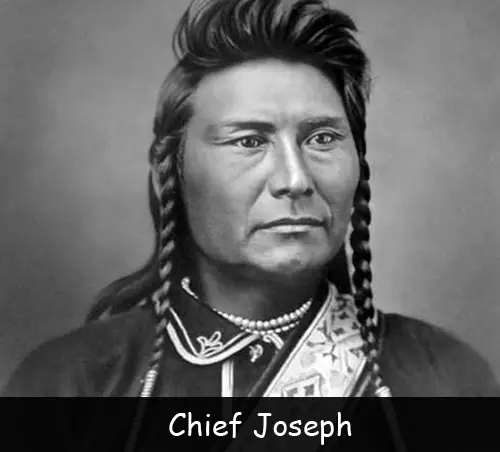
Chief Joseph’s heartbreaking epic made him a legend in American history. The U.S. government had promised him and his people millions of acres of land in Oregon. After gold was found there, government officials broke their promise, taking back 6 million acres and leaving the Nez Pierce tribe with only a tenth of their original lands. Joseph led his people on an exodus of over 1,700 hundred miles as they attempted to flee to Canada.

chief-joseph

Fun Facts

  • Joseph was born in 1840 in the Wallowa Valley in Oregon. His parents named himHin-mah-too-yah-lat-kekt, which means Thunder Rolling Down the Mountain. His father had converted to Christianity and taken the Christian name, Joseph the Elder; Joseph also went by this name.
  • Joseph’s father worked hard to build peaceful relationships with the American people. He signed a treaty with the U.S. government that promised land to the Nez Pierce Indians in Oregon.
  • Joseph’s father died and Joseph was made the chief. At the same time, the U.S. government broke its treaty, taking back much of the land it had promised Joseph’s tribe and moving the Nez Pierce people to land in Idaho.
  • Joseph knew that fighting back would be futile. He sadly prepared to lead his people to Idaho. A group of enraged warriors killed several white settlers. U.S. troops prepared for swift, harsh retaliation.
  • Joseph gathered his people and fled, first to Idaho and then into Montana. He hoped to find help from the Crow Indians there and eventually reach Canada. Along the way, his warriors fought several skirmishes against U.S. troops.
  • Finally, on October 5, 1877, Chief Joseph surrendered to the army. Many members of his tribe had been killed in battles or had died from starvation and cold. Only 40 miles from the Canadian border, Joseph’s people couldn’t go on any longer.
  • Chief Joseph’s surrender speech was sad and powerful. He said, “I am tired of fighting. Our chiefs are killed…The old men are all dead. It is cold, and we have no blankets. The little children are freezing to death. My people, some of them, have run away to the hills, and have no blankets, no food. No one knows where they are — perhaps freezing to death. I want to have time to look for my children, and see how many of them I can find. Maybe I shall find them among the dead. Hear me, my chiefs! I am tired. My heart is sick and sad. From where the sun now stands I will fight no more forever.”
  • After Chief Joseph’s surrender, his tribe was moved to Kansas and then a reservation in Oklahoma. Many of them died from diseases there.
  • In 1885, Joseph’s tribe was allowed to return to the Pacific Northwest (Washington) although Joseph never returned to his homeland.

Vocabulary

  1. Legend: a famous story, usually based on a true story
  2. Exodus: a mass departure of people
  3. Treaty: an agreement between two nations or people

Questions and Answers

Question: What did Chief Joseph do after he was taken to Oklahoma?

Answer: Joseph never gave up the hope that his people would be given back their land. In 1879, he plead his case before President Rutherford B. Hayes. He continued to speak out for Native American rights until his death in 1904. His doctor said he died of a broken heart.

Learn More

Visit PBS to learn more about Chief Joseph’s life.

Trouble for Indians

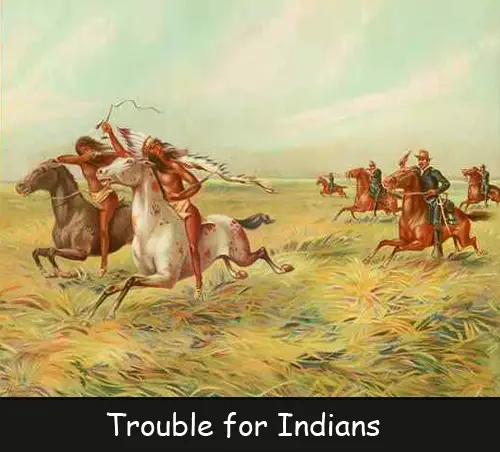
Almost from the time the first Europeans landed in the Americas, the native people’s lives were disrupted. In the early years of colonization, thousands of Indians died from disease. Colonists crowded the Indians off their hunting grounds, which led to conflict and war.

 These conflicts escalated during the 1800s as settlers moved west. The government was unable to come up with a fair solution; wars between the Indians and white men became more common and more violent.

trouble-for-indians

 Fun Facts

  • About 250,000 American Indians lived in the West in the mid-1800s. Tribes, such as the Arapaho, Cheyenne, and Sioux, depended on herds of buffalo for their survival. They smoked or dried the buffalo meat, used the hides for clothing, moccasins, and tepees, and made the bone and sinews into jewelry, tools, and weapons. The wagon trains and army forts brought more white men to the West. The railroads were especially destructive. At least 50 million bison once roamed the plains. By 1875, they were nearly extinct.
  • The U.S. government signed treaties with the Indians, promising them reserves of land. These treaties weren’t fair because the government often broke their word, taking lands they had originally promised. The Indians weren’t in an equal position of power and couldn’t negotiate; and most of the reserved land was land that the white men didn’t want – land with poor soil, few natural resources or water, or in areas with severe weather.
  • In 1862, Chief Little Crow led Sioux Indians in Minnesota to attack Fort Ridgley, killing 29 people. During the Dakota Wars, the Sioux Indians attacked the small settlement of New Ulm. The people of the town fled and gathered together in makeshift buildings. The crowded conditions allowed diseases to thrive. Many more people died from illness than from the Sioux attacks.
  • In 1874, thousands of gold seekers came to sacred Sioux lands in the Black Hills region looking for gold. Sioux Indians responded by fighting. U.S. Calvary General George A. Custer led 264 troops into battle against the Sioux, which had many more men. Every white man, including Custer, was killed. This battle is known as the Battle of the Little Bighorn.
  • Some of the Sioux believed that the whites would disappear and buffalo herds would come back. They believed they had seen this in a group ritual, The Ghost Dance. Calvary officers worried that the Indians might create an uprising. They gathered and held 350 Sioux Indians at Wounded Knee Creek in South Dakota. Someone shot a gun and soldiers, fearing a battle, shot and killed nearly 200 men, women, and children.

Learn More

Visit Scholastic to learn more about the Battle of Wounded Knee.

Getting to the West: Trains, Railways, and the Pony Express

The mid-to-late 1800s marked a time of great growth as settlers, looking for better opportunities, forged west. Forward thinking businessmen and politicians worked to develop a network of railways that would stretch across the United States. Towns sprung up along the railways. Farmers and ranchers could send wheat, potatoes, cattle, and other foodstuffs east to large cities. Manufacturers in the East sent their goods, such as fabric, shoes, tools, equipment, and sugar to be sold in general stores in the West.

pony-express

Fun Facts

  • On May 10, 1869, in Promontory, Utah, Leland Stanford, president of Central Pacific Railroad, hammered a golden spike into place to join the Central Pacific and Union Pacific Railroads and create a continuous railway across the entire United States.
  • 20,000 workers labored to build the railroad. About half of these workers were Chinese immigrants who had come to California during the Gold Rush. European immigrants, Mormon men, and Civil War veterans also worked on the rail lines. The hours were long, and conditions were dangerous. The powerful railroad owners cared little for the workers complaints.
  • Before the transcontinental railroad, travelers went by ship around South America or by stagecoach across the country. Both means of transportation were expensive and time consuming. Travelers could go across the entire country by train in a week for $150, still a hefty sum in those days, but much less than the previous routes.
  • George Pullman recognized the impact rail travel would have on the country. He invented Pullman cars, comfortable train cars with electric lights, beds, leather seats, and steam heat.
  • Railroad owners viewed the herds of wild buffalo roaming the prairie as a nuisance and threat to the railways. The owners started the cruel sport of shooting buffalo from the trains. Hunters would kill the buffalo, stripping their hides to be tanned for shoes, furniture, and clothing, and leaving the meat to rot. This process was devastating to the Plains Indians, who had always relied on buffalo for food.
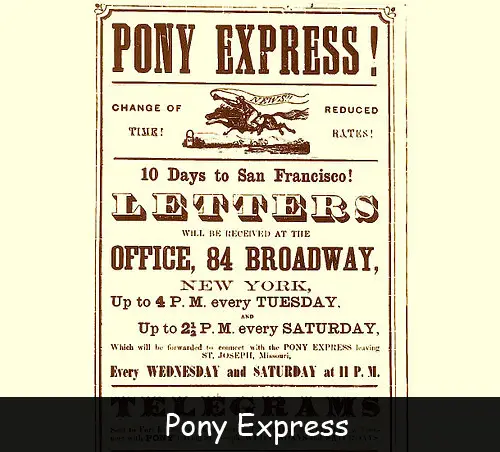
  • From 1860 to 1862, men on horseback rode as Pony Express riders, delivering mail back and forth between the East and West. Stations with fresh horses were set up every 10 miles and riders typically rode 200 miles in each shift.

Vocabulary

  1. Nuisance: something that is annoying or troublesome
  2. Impact: to strongly affect


Frequently Asked Questions

How long did it take to cross the country by stagecoach or wagon?

Answer: A cross-country trip could take up to six months prior to the arrival of the transcontinental railroad. 

 Learn More

Visit the Transcontinental Railroad to learn more.

Cowboys, Outlaws, and Heroes

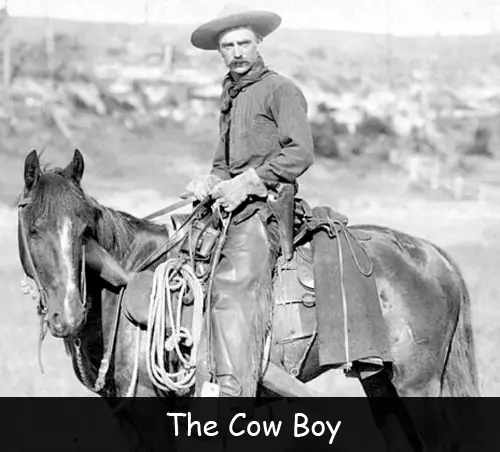
The wide, open west meant acres and acres of land for ranching. Once the railway came, ranchers could make huge profits by shipping their cattle to large cities, such as Chicago. During cattle drives, cowboys drove cattle from Texas to cattle towns, which sprung up near the railways.

These cattle towns were wild, lawless places. Almost every town had a hotel, a dance hall, and a saloon or two. Outlaws robbed trains and banks. Magazine and play writers wrote about the “wild west,” making it seem even more exciting than it really was.

the-cow-boy

Fun Facts

  • Ranching was hard, but profitable work. A steer bought in Texas for $3 could be sold for $40 in Chicago. Cowboys endured dry, hot conditions, Indian raids, storms, and stampedes to get their cattle to the railways where the cattle were loaded in stock cars and shipped to large cities.
  • Outlaws like Jesse James and Billy the Kid are often portrayed as being adventurous heroes. In real life, they were vicious criminals, often shooting their foes in the back.
  • The Wild Bunch robbed trains, banks, stores, and post offices from 1892 to 1895. This group included Butch Cassidy and the Sundance Kid. All of its members were eventually killed by gunfire by bounty hunters or law enforcement officers.
  • Lawman, Wild Bill Hickok became gained legendary fame. He was such a good shot that he rarely had to draw his gun. No one wanted to mess with him. He was shot in the back and killed while playing poker.
  • Calamity Jane, a friend of Bill Hickok, was a rough frontierswoman. She worked as a professional scout and joined a Wild West show, standing on a moving horse while shooting her gun. She is buried next to Bill Hickok.
  • Buffalo Bill began working for the Pony Express when he was 14-years-old. Later, he became a soldier, a bison hunter, and a professional scout. He started Buffalo Bill’s Wild West Show, which made him a legend and toured throughout the United States and Europe.

Vocabulary

  1. Outlaw: a criminal; someone who doesn’t follow the law
  2. Frontiersman:

Learn More

Discover another American legend, Annie Oakley.

America’s Centennial

General Lee’s surrender at Appomattox marked the official end of the Civil War, but it didn’t mean an end to the nation’s troubles. Bitter disagreements about how the South should rejoin the nation followed.

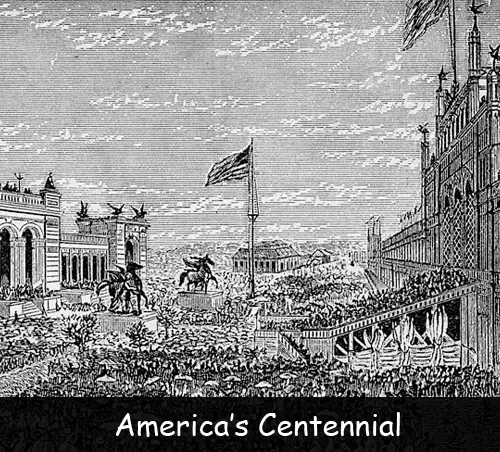
As America’s Centennial (100 years as a nation) approached, people were glad for a reason to celebrate. President Ulysses S. Grant opened the Exposition in May 10, 1876 in Philadelphia, Pennsylvania. The exposition was the first world’s fair and ran through November of 1876. Ten million visitors came to the exposition, which offered renewed hope for the country’s future at a time when many people felt discouraged.

americas-centennial

Fun Facts

  • The Centennial Exposition took over 10 years to plan.
  • A giant Corliss steam engine was a highlight of the show. It quietly powered all the machinery in Machinery Hall.
  • Alexander Graham Bell exhibited a machine that would allow people to talk to one another from a distance through a wire – the first telephone.
  • Over 300 Native Americans participated in an exhibit that educated visitors on the Native American way of life. Many of them camped at the exposition.
  • Exhibits showcasing America’s natural resources included rocks and gems, as well as preserved animals, such as a 15-foot walrus, a polar bear, sharks, and stingrays. These displays were provided by the Smithsonian Institution.
  • Exhibits from around the world arrived for display. When the exposition was over, people wondered what to do with all the exhibits. Many of the exhibits were permanently stored at the Smithsonian Institution. They were brought out and shared again during America’s Bicentennial (200 year anniversary) in 1976.

Vocabulary

  1. Exhibit: a display, usually educational
  2. Natural resource: something useful found in nature

Learn More

View some images from the Centennial Exposition.

The Reconstruction Years

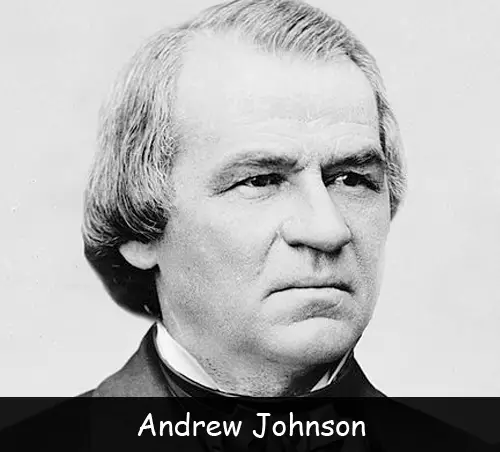
At the end of the Civil War, America was bitterly divided. In his second inaugural address, President Lincoln asked Americans to “bind up the nation’s wounds.” He hoped Americans would forgive each other and work for peace. After Lincoln’s assassination, Vice President Andrew Johnson became President. He also wanted to help the South rejoin the Union; heIp wanted to help freed slaves.

The Republican Congress disagreed. They wanted harsh terms for the South. They insisted on dividing the South into five military areas and placing Northern army officers over those areas. When Johnson disagreed, Congress tried to impeach him. Southerners were deeply angered and humiliated to have Northerners in charge of them.

andrew-johnson

Fun Facts

  • The Fourteenth Amendment guaranteed citizenship to freed slaves, known as freedmen. The Fifteenth Amendment guaranteed their right to vote. The Freedman’s Bureau was a government agency formed to help freed slaves adjust to their new life. The Freedman’s Bureau opened more than 4,000 schools.
  • In spite of this help, life for freed slaves was very hard. Most of them could not read or write. They had no property. Many people discriminated against them. Some freedmen became tenant farmers, renting land to grow crops. Others became sharecroppers. They borrowed money for land, seed, and tools and then had to repay the lender at harvest time. Unfortunately, they rarely earned enough to pay their debt and have enough money left over to pay for the next season’s seed and land.
  • Many Southerners believed in the idea of “white supremacy,” that they were morally and intellectually superior to freed slaves. Some joined secret groups like the Klu Klux Klan or KKK. This group wore hooded robes and terrorized freed slaves and anyone who tried to help them. They burned houses and barns and even killed people.
  • Southerners hated scalawags, their name for white Southerners who voted Republican or tried to help freedmen. They also despised carpetbaggers, white people who came to the South to help with the Reconstruction. These people carried bags made from leather and carpet, hence the name. Southerners believed carpetbaggers came to the South with no real desire to help, but for their own financial gain.

Vocabulary

  1. Impeach: to attempt to remove a political officer from duty by vote
  2. Citizenship: to become a citizen of a country and be entitled to specific rights and protections
  3. Sharecropper: a farmer who doesn’t own his own land, tools, or seeds, but must borrow money from a lender

Learn More

Visit Encyclopedia Brittanica to learn more.