All posts by americanadmin

Lincoln’s Assassination

As the Civil War ended, Lincoln pleaded with Americans to be gentle with each other and to work toward peace. This was not to be so. Five days after General Lee surrendered at Appomattox, President Lincoln attended a play at Ford’s Theater in Washington D.C. At 10:15, John Wilkes Booth, an actor and a loyal Confederate supporter, entered the theater and shot Lincoln. Lincoln’s death not only saddened Americans, but angered and frightened them. Southern sympathizers were distrusted and Congress demanded harsh terms as the South reentered the Union. The years after the Civil War were almost as difficult as the war itself.
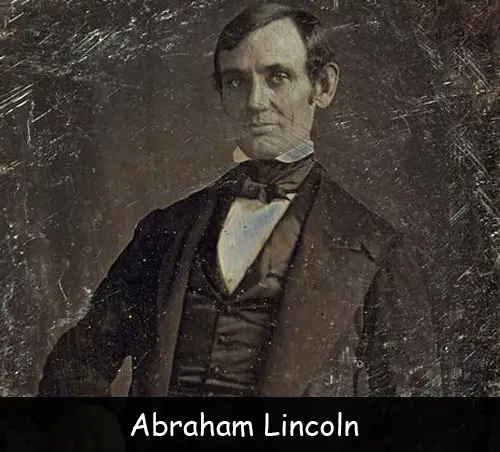
abraham-lincoln

Fun Facts

  • President Lincoln was the first U.S. President to be assassinated.
  • As Lincoln and his wife watched a play, Booth snuck into the theater and entered the presidential theater box. Lincoln was sitting unguarded in a rocking chair.
  • Booth stood less than 1 foot from Lincoln. He shot Lincoln in the head with a revolver.
  • Booth jumped onto the stage, shouting, “Sic semper tyrannis,” which means “Thus ever to tyrants.” He broke his leg in the process, but escaped from the theater.
  • At first, the audience thought Booth’s outburst was part of the play until they heard Mary Lincoln’s cries.
  • A doctor in the theater rushed to help Lincoln who was paralyzed. Lincoln was carried to a nearby house where he died the next morning. His wife and two sons were with him.
  • Americans were grief stricken at the death of their beloved President. Many people were deeply afraid too.
  • Lincoln’s funeral in Washington D.C. drew large crowds. His body was taken by train 1,500 miles to his home state, Illinois. People gathered near the train tracks to pay their respects as the train passed.
  • A huge manhunt was formed to find Booth and his accomplices. “Wanted” posters appeared everywhere and a reward was set at $100,000 for Booth’s capture.
  • On April 26, Union soldiers tracked Booth to a farm house in Virginia. They set the house on fire, but Booth refused to come out. One of the soldiers shot him and he died there. Four of his partners, including the first woman to be executed in the U.S. were hung for their involvement.
  • John Wilkes Booth was very patriotic, but believed deeply in the Southern practice of slavery. He thought Lincoln and the abolitionists were ruining the country. He believed that God supported his cause.
  • Booth and several accomplices had plotted earlier to kidnap Lincoln. When that plot failed, Booth came up with a plan to assassinate not only Lincoln, but his vice president and the Secretary of State. He hoped that the country would fall into chaos and the South could reclaim victory. His plan not only failed, but backfired.

Vocabulary

  1. Sympathizer: one who is sympathetic to a certain cause
  2. Paralyze: to render unable to move

Learn More

Visit Enchanted Learning to find out more about the assassination of Abraham Lincoln.
The Gettysburg Address

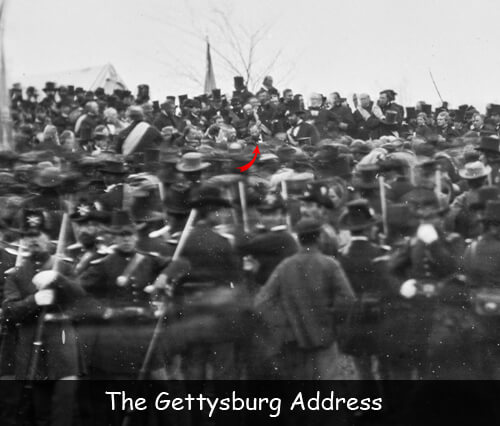
In November of 1863, President Lincoln came to Gettysburg, Pennsylvania to dedicate the Gettysburg War Cemetery, the site of one of the bloodiest battles of the Civil War. As he came to Gettysburg on the train, he wrote a simple speech. This speech was only about four minutes long. Many people in the audience didn’t even know he had given it until they read about it in the newspaper the next day.

The-Gettysburg-Address

But Abraham Lincoln’s speech is remembered as one of the most eloquent speeches ever delivered by an American President. Abraham Lincoln was a deeply religious, patriotic man. He believed that the Civil War was a punishment from God to both the North and South for their sins. He also believed that democracy was a fragile, precious thing, easily destroyed but worth protecting.

The Gettysburg Address

Four score and seven years ago our fathers brought forth on this continent, a new nation, conceived in Liberty, and dedicated to the proposition that all men are created equal.

Now we are engaged in a great civil war, testing whether that nation, or any nation so conceived and so dedicated, can long endure. We are met on a great battle-field of that war. We have come to dedicate a portion of that field, as a final resting place for those who here gave their lives that that nation might live. It is altogether fitting and proper that we should do this.

But, in a larger sense, we can not dedicate — we can not consecrate — we can not hallow — this ground. The brave men, living and dead, who struggled here, have consecrated it, far above our poor power to add or detract. The world will little note, nor long remember what we say here, but it can never forget what they did here. It is for us the living, rather, to be dedicated here to the unfinished work which they who fought here have thus far so nobly advanced. It is rather for us to be here dedicated to the great task remaining before us — that from these honored dead we take increased devotion to that cause for which they gave the last full measure of devotion — that we here highly resolve that these dead shall not have died in vain — that this nation, under God, shall have a new birth of freedom — and that government of the people, by the people, for the people, shall not perish from the earth.

Vocabulary

  1. Four score and seven years ago: A score is 20 years; Four score and seven years ago means 87 years ago, which refers to the Revolutionary War and America’s independence.
  2. Consecrate: to set aside as holy
  3. Hallow: holy, of God

Questions and Answers

Question: Do all American presidents write their own speeches?

Answer: U.S. Presidents generally have speech writers to write their speeches although they may give ideas and directions about what should be in a speech.

Learn More

Did you know that Abraham Lincoln is often credited for our modern Thanksgiving celebration? Visit the American Presidency Project to learn more.


How the Civil War Was Fought

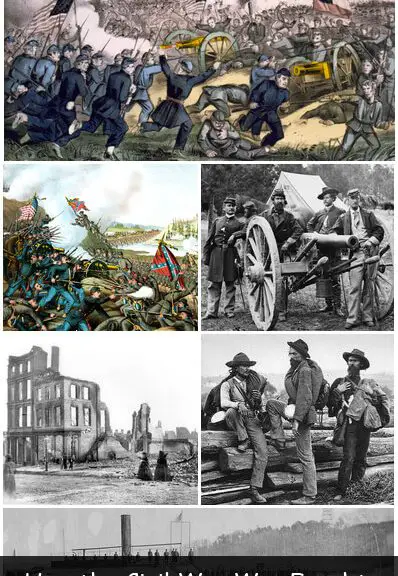
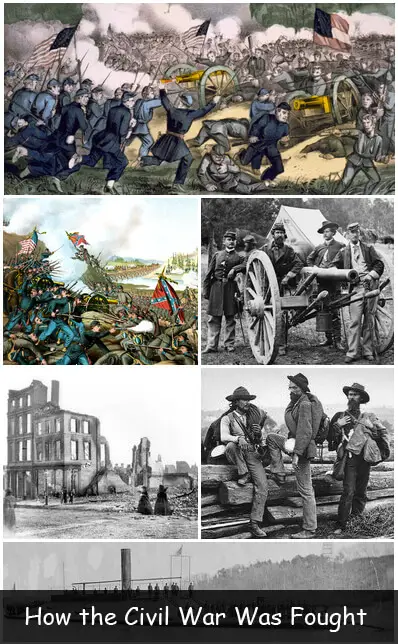
The Civil War killed more men than all other U.S. wars combined – over 600,000 soldiers. New technologies such as the telegram and railway made communication and the delivery of supplies and weapons more efficient. The weapons themselves were more powerful, more accurate, and more lethal.

How-the-Civil-War-Was-Fought

Fun Facts

  • Although the Civil War was a “modern war,” soldiers still believed in gentleman’s warfare. Probably in part because they were fighting against their own countrymen, opposing troops often showed kindness to each other – delivering the letters of a dying soldier to his family or trading tobacco and coffee.
  • In previous wars, soldiers marched in straight lines with muskets and bayonets, firing at the enemy when ordered. New weapons changed the slow, plodding pace of war. These weapons were faster to load and more accurate. General Lee’s troops built trenches to protect themselves. Trenches were used extensively in World War I and II.
  • During the Revolutionary War, communication had to be delivered in person and was often delayed by days or weeks. The invention of the telegraph in 1840 meant that war communication was almost instant. Military leaders could instantly send messages about strategies or supplies.
  • At least one-third to one-half of those who died in the Civil War died from disease and infection caused by poor medical care. Doctors hadn’t yet learned that disease was spread by germs. Injured soldiers were treated in field hospitals where doctors used dirty tools and needles.
  • The camera was a new invention during the Civil War. For the first time, photographers and journalists followed troops. Newspapers published graphic battle stories and photographs.

Vocabulary

  1. Telegraph: a machine that transmits messages along wires through signals.
  2. Infection: a disease caused by a virus or bacteria

Questions and Answers

Question: What were slaves doing during the war?

Answer: Abraham Lincoln issued the Emancipation Proclamation in January, 1863, which officially freed all slaves. Because the Southern states had seceded and no longer considered themselves under the authority of the U.S., Lincoln had no real power to free the slaves.

However, after Lincoln’s proclamation, many free blacks, as well as runaway slaves enlisted in the Union army. Unfortunately, they were often discriminated against. They served in all-black units lead by white officers and were often paid less than white soldiers.

Learn More

Learn more about the Emancipation Proclamation and the role of black soldiers in the Civil War.

The Civil War: Facts and Figures

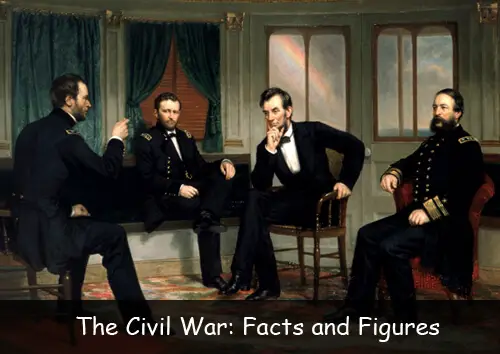
The Civil War lasted four years. At its end, over 600,000 soldiers were dead. Much of the South lay in ruins. Yet, the Union had been saved and the practice of slavery abolished.

The-Civil-War-Facts-and-Figures

Fun Facts

  • On July 20, 1861, Union troops moved toward the Confederate capital of Richmond, Virginia, just 20 miles from Washington D.C. They met Confederate troops at Bull Run, a small river. The Union troops were unprepared and were chased back to Washington.
  • Later that year, Northern troops again tried to take Richmond but were soundly defeated by General Lee’s defenses.
  • The South seemed to be winning the war as Lincoln struggled with weak military leaders. In 1862, Ulysses S. Grant captured Forts Henry and Donelson, giving the North her first victories. Lincoln later appointed Grant as Lieutenant General of the Union army – a move that proved wise.
  • July 1, 1863 was a terrible day for both sides. General Lee hoped that by invading Pennsylvania, he would convince the North to end the war. 51,000 men died at Gettysburg, Pennsylvania in a battle that lasted three days. When it was over, Lee led what was left of his troops back to Virginia. Behind him, a wagon train carrying the wounded stretched for 14 miles. General Lee was so discouraged that he tried to resign. Jefferson Davis, President of the Confederacy refused to accept Lee’s resignation.
  • The Battle of Gettysburg weakened the Confederate army. General Lee’s only hope was to keep fighting until the Union army became weary of war.
  • General Grant realized that he would need to completely destroy Lee’s army to end the war. He and General Sherman coined a strategy, “Total War,” which meant not only a fight against Confederate troops, but a war against Southern civilians. General Sherman’s troops marched to Atlanta in September, 1864. They destroyed everything in their path and burned the city.
  • On April 9, 1865, General Lee met with Ulysses S. Grant to offer his surrender. A few weeks later, General Joseph E. Johnston issued his surrender to General Sherman. The war was over!

Vocabulary

  1. Resign: to voluntarily leave or quit a position
  2. Weary: deeply tired

Questions and Answers

Question:

Learn More

Visit Scholastic to learn more about the Civil War.

Civil War Leaders

The Civil War was often called the “Brother’s War” because it pitted states, towns, villages, and even families against each other. For example, Abraham Lincoln’s wife, Mary Todd Lincoln, had three brothers who fought for the Confederacy and were killed.

Civil-War-Leaders

Many of the soldiers and officers for both sides had attended West Point or other military schools. They felt torn between their loyalty to the Union and their loyalty to their families or communities.

Fun Facts

  • Abraham Lincoln, a poor farm boy from Kentucky, grew up to become a lawyer, and later the President of the United States during the Civil War. Although he hated slavery, he believed the Constitution didn’t give him power to do away with slavery.
  • Jefferson Davis had served as a senator, congressman and U.S. secretary of war. He didn’t want the South to secede from the Union, but accepted the position of President of the Confederacy when asked.
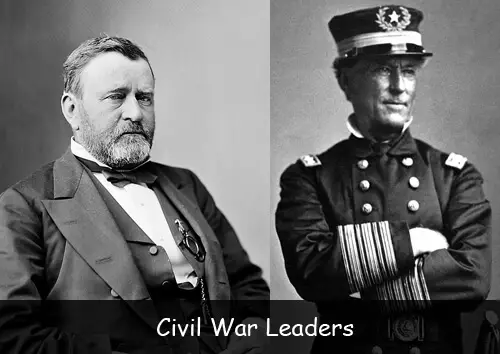
  • Ulysses S. Grant became Lincoln’s right-hand man and commander of the Union armies. He was slow and methodical in his strategy. Critics called him “Butcher Grant,” believing he deliberately forced troops into deadly situations in his effort to bring an end to the Civil War.
  • Robert E. Lee was an officer in the U.S. army who hated slavery and opposed secession. President Lincoln asked him to lead the Union troops but he declined and became the commander of the Confederate army instead. He said that he could not be disloyal to his birthplace, home, and children. Lee was a sly and clever military strategist.
  • William Sherman was born in Ohio and oversaw a Louisiana military school. Yet, when the Civil War began, he enlisted in the Union army. He suffered from depression during the early days of the war, but later became one of Grant’s best leaders.
  • Stonewall Jackson grew up in Virginia and became a courageous, honorable leader for the Confederacy. During the first battle, an officer commented on Jackson, standing firm and strong like a “stone wall,” which is where he got his nickname.

Vocabulary

  1. Secede: to withdraw or leave
  2. Oppose: to be against
  3. Methodical: thoughtful, analytical

Questions and Answers

Question: What happened to Civil War leaders after the war?

Answer: Abraham Lincoln was assassinated just five days after the Civil War ended; Ulysses S. Grant went on to became U.S. President.

General Robert E. Lee was pardoned by Lincoln for his role in the Civil War, but his life wasn’t easy. His estate in Arlington, Virginia became the site of a cemetery for Union soldiers. He took a low-paying, obscure job as president of Washington College. He felt deeply wounded by the part he had played in the divisive and bloody war. In 1865, he signed an oath, asking to become an American citizen again. He did this partly for himself and partly as an example to other Confederate soldiers. He wanted to restore peace to his country. Unfortunately, the oath was misplaced and he died without regaining his citizenship. The oath was discovered 100 years later in the National Archives. In 1975, President Ford declared General Lee a citizen once again.

Stonewall Jackson died in 1863 from pneumonia, after being accidentally shot by his own troops. William Sherman became the general of the U.S. Army. He later retired and led a quiet life.

Visit Civil War Trust to watch a video about the Civil War leaders.

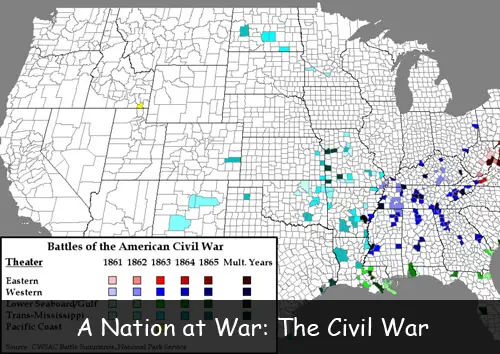
A Nation at War: The Civil War

Trouble between the North and the South over the issue of slavery had been brewing for over 50 years, but finally exploded in 1860 when Abraham Lincoln was elected President. Seven Southern states left the Union, forming a new country.

A-Nation-at-War-The-Civil-War

Fort Sumter, a fort controlled by the Union, sat on an island in the Charleston, South Carolina harbor. When soldiers here asked the federal government to send more men and supplies, Confederate militia decided that the fort was a threat. Confederate militia opened fire on the fort. The next day, the Federal soldiers surrendered and left the fort. The Confederates took the fort. No men were killed in the skirmish, but the Civil War had begun!

Fun Facts

  • In 1860, the Republican party chose Abraham Lincoln as their presidential candidate. Abraham Lincoln was against allowing slavery to expand into new territories, but also wanted to keep the Union intact. His campaign focused on building a railroad across the country, as well as a homestead law that would encourage settlers to buy and farm land. The Democratic party was in conflict. Northern Democrats wanted Stephen Douglas, who thought states should be allowed to choose whether to allow slavery, as their candidate. Southern Democrats wanted pro-slavery candidate John C. Breckinridge. Abraham Lincoln narrowly won the election.
  • Southern states had warned that they would leave the Union (secede) if an anti-slavery President was elected. Most Northerners thought they were bluffing. But in December, 1860, shortly after Lincoln was elected President, lawmakers in South Carolina unanimously voted to secede. Alabama, Florida, Georgia, Louisiana, Mississippi, and Texas soon left too. These states formed the Confederate States of America. They elected Jefferson Davis as president and even wrote a new constitution and created a new flag.
  • Not all Southern states seceded. Delaware voted unanimously to stay in the Union. Kentucky, Maryland, Missouri were fiercely divided. In Virginia, six western counties broke off from the state to form West Virginia, a Union state, while Virginia became a Confederate border state.

Vocabulary

  1. Militia: a military group; troops
  2. Skirmish: small fight
  3. Secede: leave

Learn More

Visit Scholastic to learn more about the Civil War.


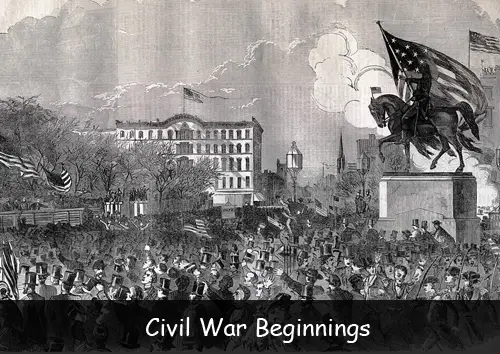
Civil War Beginnings

The mid-1800s were a time of intense conflict in the United States. Northerners believed passionately that a free country could not practice slavery. Southerners believed they had a right to decide for themselves what would happen in their states.

Civil-War-Beginnings

Many Southerners wanted to secede from the United States. Northerners (and some Southerners) believed this would weaken both the North and the South.

  • In 1818, Missouri asked to join the Union as a slave state. At this point, every state north of Delaware had made slavery illegal, while southern states still allowed slavery. Northerners did not want another slave state. The Missouri Compromise of 1820 allowed Missouri to become a slave state if Maine entered the Union as a free state, which maintained a balance between free and slave states. Lawmakers hoped this compromise would prevent a crisis; it only delayed it.
  • In 1850, California was set to become a state. Northerners and Southerners argued over whether the state would be a free state or a slave state. Speaker of the House, Henry Clay argued that if California entered the Union as a free state, then the people living in other territories, such as New Mexico and Utah should be allowed to vote on the issue for their own states. Daniel Webster gave a rousing speech for the compromise and it was approved. Like the Missouri Compromise, the Compromise of 1850 only delayed conflict.
  • The Fugitive Slave Act of 1795 required escaped slaves to be returned to their masters. Most people in the North ignored this law; The Compromise of 1850 strengthened it. Slave owners could go after escaped slaves; anyone caught helping the slaves faced punishment.
  • In October, 1869, abolitionist John Brown led a raid on an arsenal in West Virginia. He hoped to arm slaves with weapons and start a slave rebellion. Brown and his men were stopped by Colonel Robert E. Lee. They were later hung for their crimes.
  • Senator Stephen A. Douglas suggested that the citizens in the Kansas and Nebraska territories should vote to decide whether their states would allow slavery. People who believed in slavery moved to these territories temporarily so they could vote “yes” for slavery. Free-soilers, people who believed the new territories should not allow slavery, were very angry. In 1856, fights broke out in Kansas. Over 200 people were killed.
  • In 1857, a slave named Dred Scott sued the Supreme Court for his freedom. Scott’s owners had moved from the South to the North, bringing him with them. Dred Scott argued that since he was now living in a Northern state where slavery was illegal, he should be free. The Supreme Court declared that slaves were personal property to be taken with their owners anywhere. Southerners could now legally take slaves into free states.

Vocabulary

  1. Secede: leave the nation and form a new country
  2. Rousing: spirited

Learn More

Visit Scholastic to see a map of Union and Confederate states.

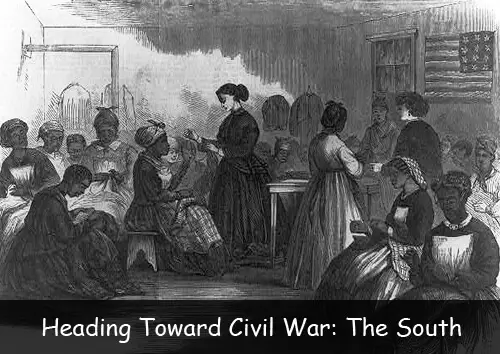
Heading Toward Civil War: The South

In the years before the Civil War, the Northern states blossomed into thriving industrial areas. Factories produced goods, such as furniture, clothing, and tools, which were shipped to the West, as well as to other countries. The Northern states were becoming wealthy. People came to the cities looking for jobs, which slowly increased their prosperity. More people could attend school and be educated.

Heading-Toward-Civil-War-The-South

In contrast, the Southern way of life hadn’t changed much. Thanks to rich soil and  warm climate, farming remained the main industry. Most people lived in rural areas and New Orleans was the only large city. Although relatively few Southerners owned slaves, those that did had social and political control of the South. Poor farmers looked up to plantation owners. Increasingly, the North and the South were divided – economically, culturally, and over the issue of slavery.

Fun Facts

  • Plantations were large farms that usually grew one crop, such as sugar or cotton. Plantations were almost like miniature towns. A plantation might have the family plantation house, slave quarters, ice house, smoke house, blacksmith’s shop, a dairy, and a cotton gin. The plantation owner’s children were educated at home by a tutor.
  • Slave owners believed that keeping slaves was okay because great ancient civilizations like Greece and Rome had practiced slavery. Some slave owners treated their slaves well; many slave owners treated their slaves cruelly. Husbands and wives could be sold and separated from each other. Children were considered the property of the slave owner and could be sold away from their parents.
  • Plantation owners relied on slave labor to run the plantations. House slaves cooked, cleaned, and cared for the children. Field slaves worked very hard for many hours each day.
  • Slaves weren’t allowed to learn to read or write, but they told African folk stories and sang old favorite songs. Slave owners introduced Christianity to the slaves, who related to the story of Moses leading his people to freedom. Slaves developed their own form of religious worship, which mingled Christian views with their old African beliefs.
  • After the invention of the cotton gin, plantation owners began planting more and more cotton. They needed more slaves to work the fields, harvest the cotton, and process it.

Vocabulary

  1. Prosperity: having plenty
  2. Miniature: very small
  3. Tutor: a private teacher

Questions and Answers

Question: What was life like for white Southerners who didn’t own slaves?

Answer: We tend to think of wealthy plantation owners when we think of the Old South, but only 30 percent of the population owned slaves. Most white men were farmers who lived with their families in humble homes and farmed a few acres of land.

Learn More

Visit Scholastic to learn more about what life was like for slaves.


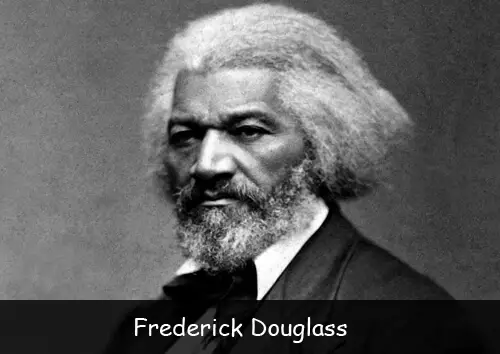
Frederick Douglass

“It is easier to build strong children than to repair broken men.”

Frederick-Douglass

Frederick Douglass became a famous abolitionist. He fought hard to end slavery. He knew what it felt like to be a slave. Frederick Douglass’s mother was a slave. His father was a white man, possibly the owner of the plantation where his mother worked. Douglass believed that learning to read changed his life.

Fun Facts

  • Frederick Douglas was born in Maryland around 1818. He was named Frederick Augustus Washington Bailey.
  • He lived with his grandparents and only saw his mother a few times before her death.
  • When he was 8-years-old, Frederick went to live with a carpenter in Baltimore. Although it was against the law, the carpenter’s wife taught Frederick to read. He learned about abolition there.
  • A few years later, he was sent back to the country to live with a brutal slave owner, Edward Covey. Frederick was whipped almost daily and given little to eat. He said he was “broken in body, soul, and spirit.”
  • Frederick was jailed because he planned to escape from Covey. Two years later, he escaped from Baltimore and fled to New York. He changed his name to Frederick Douglass and settled in Massachusetts with his wife.
  • He joined a church, as well as several abolitionist organizations. When he was only 23-years-old, he gave his first speech about abolition. He was nervous, but his speech was powerful. Most abolitionists were white and couldn’t give a firsthand account of the evils of slavery.
  • In 1845, Douglass published his autobiography, Narrative of the Life of Frederick Douglass, an American Slave, Written by Himself.
  • Douglass became a well-known author and speaker and spent the rest of his life working for the rights of African American people and women.

Vocabulary

  1. Abolition: a movement to end slavery
  2. Brutal: cruel, savage, violent
  3. Firsthand: based on personal experience

Questions and Answers

Question: Why was it against the law to teach slaves to read?

Answer: Slave owners feared that if slaves could read, they were more likely to rebel or try to gain freedom. Slaves could read powerful messages about abolition and write and share their own ideas.

Learn More

Visit Scholastic to learn more interesting facts about Frederick Douglass.


Heading Toward Civil War: The North

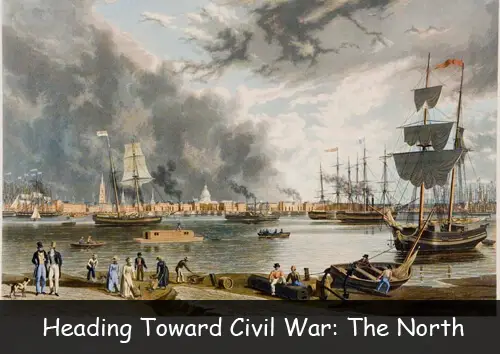
Even before the Revolutionary War, the North and South had cultural and geographical differences. As the years went on, these differences became larger. From the 1820s to the 1850s, bustling cities sprang up in the North. Workers came to these cities to work in factories making cloth, furniture, watches, tools, and other items.

Heading-Toward-Civil-War-The-North

Many people in the North opposed slavery. By the end of the 1700s, slavery was illegal in most Northern states. Over 250,000 free black people lived in the North. Some of them had been born free or given their freedom. Others had bought their freedom or escaped from the South.

Fun Facts

  • Men became wealthy building factories and railroads. Most of the railroads built during this time were built in the North, which gave the North an advantage over the South. Factories in the North could ship their goods to people living in the West and Midwest.
  • Factory workers – many of them, young women – came from farms to the cities. Initially, many factory owners took good care of their employees, offering them safe, clean housing and education. Company owners became greedy though and wanted to keep their profits. Factory workers often worked long hours in unclean and unsafe conditions.
  • In Ireland, a potato famine caused widespread suffering and death. Thousands of people immigrated to the U.S. from Ireland and Germany. These people were desperate for work and accepted the low wages and poor conditions found in the factories. If someone complained, they were fired.
  • Abolitionists passionately wanted to end slavery. Abolitionist and writer, Harriet Beecher Stowe, wrote Uncle Tom’s Cabin, a novel that depicted life for Southern slaves. The book sold 300,000 copies in just a few months and motivated Northerners to fight more vocally for an end to slavery.

Vocabulary

  1. Oppose: to fight against or disagree
  2. Abolition: movement to end slavery
  3. Immigrate: to permanently leave one’s country to live somewhere else

Questions and Answers

Question: Did white people welcome free blacks to the North?

Answer: Some did, even going so far as to offer safety and shelter to slaves escaping from the South. But blacks were often discriminated against in the North. They created their own neighborhoods, schools, businesses, and churches where they would be safe.

Learn More

Visit the Civil War Trust to learn more about the differences between the North and the South.