• Tag Archives: Abraham Lincoln

    Lincoln’s Assassination

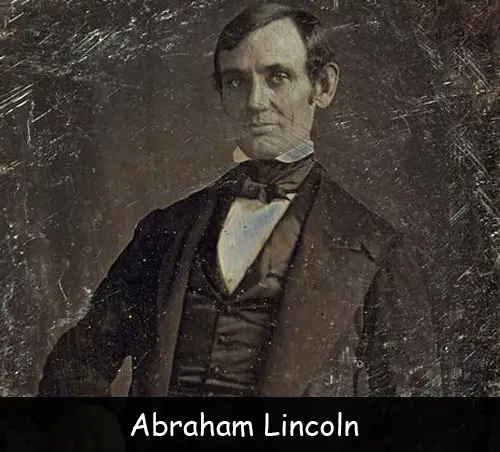
    As the Civil War ended, Lincoln pleaded with Americans to be gentle with each other and to work toward peace. This was not to be so. Five days after General Lee surrendered at Appomattox, President Lincoln attended a play at Ford’s Theater in Washington D.C. At 10:15, John Wilkes Booth, an actor and a loyal Confederate supporter, entered the theater and shot Lincoln. Lincoln’s death not only saddened Americans, but angered and frightened them. Southern sympathizers were distrusted and Congress demanded harsh terms as the South reentered the Union. The years after the Civil War were almost as difficult as the war itself.
    abraham-lincoln

    Fun Facts

    • President Lincoln was the first U.S. President to be assassinated.
    • As Lincoln and his wife watched a play, Booth snuck into the theater and entered the presidential theater box. Lincoln was sitting unguarded in a rocking chair.
    • Booth stood less than 1 foot from Lincoln. He shot Lincoln in the head with a revolver.
    • Booth jumped onto the stage, shouting, “Sic semper tyrannis,” which means “Thus ever to tyrants.” He broke his leg in the process, but escaped from the theater.
    • At first, the audience thought Booth’s outburst was part of the play until they heard Mary Lincoln’s cries.
    • A doctor in the theater rushed to help Lincoln who was paralyzed. Lincoln was carried to a nearby house where he died the next morning. His wife and two sons were with him.
    • Americans were grief stricken at the death of their beloved President. Many people were deeply afraid too.
    • Lincoln’s funeral in Washington D.C. drew large crowds. His body was taken by train 1,500 miles to his home state, Illinois. People gathered near the train tracks to pay their respects as the train passed.
    • A huge manhunt was formed to find Booth and his accomplices. “Wanted” posters appeared everywhere and a reward was set at $100,000 for Booth’s capture.
    • On April 26, Union soldiers tracked Booth to a farm house in Virginia. They set the house on fire, but Booth refused to come out. One of the soldiers shot him and he died there. Four of his partners, including the first woman to be executed in the U.S. were hung for their involvement.
    • John Wilkes Booth was very patriotic, but believed deeply in the Southern practice of slavery. He thought Lincoln and the abolitionists were ruining the country. He believed that God supported his cause.
    • Booth and several accomplices had plotted earlier to kidnap Lincoln. When that plot failed, Booth came up with a plan to assassinate not only Lincoln, but his vice president and the Secretary of State. He hoped that the country would fall into chaos and the South could reclaim victory. His plan not only failed, but backfired.

    Vocabulary

    1. Sympathizer: one who is sympathetic to a certain cause
    2. Paralyze: to render unable to move

    Learn More

    Visit Enchanted Learning to find out more about the assassination of Abraham Lincoln.
    Civil War Leaders

    The Civil War was often called the “Brother’s War” because it pitted states, towns, villages, and even families against each other. For example, Abraham Lincoln’s wife, Mary Todd Lincoln, had three brothers who fought for the Confederacy and were killed.

    Civil-War-Leaders

    Many of the soldiers and officers for both sides had attended West Point or other military schools. They felt torn between their loyalty to the Union and their loyalty to their families or communities.

    Fun Facts

    • Abraham Lincoln, a poor farm boy from Kentucky, grew up to become a lawyer, and later the President of the United States during the Civil War. Although he hated slavery, he believed the Constitution didn’t give him power to do away with slavery.
    • Jefferson Davis had served as a senator, congressman and U.S. secretary of war. He didn’t want the South to secede from the Union, but accepted the position of President of the Confederacy when asked.
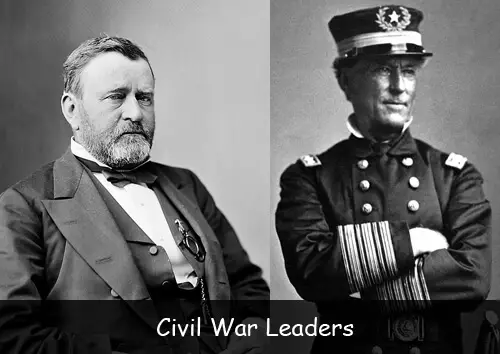
    • Ulysses S. Grant became Lincoln’s right-hand man and commander of the Union armies. He was slow and methodical in his strategy. Critics called him “Butcher Grant,” believing he deliberately forced troops into deadly situations in his effort to bring an end to the Civil War.
    • Robert E. Lee was an officer in the U.S. army who hated slavery and opposed secession. President Lincoln asked him to lead the Union troops but he declined and became the commander of the Confederate army instead. He said that he could not be disloyal to his birthplace, home, and children. Lee was a sly and clever military strategist.
    • William Sherman was born in Ohio and oversaw a Louisiana military school. Yet, when the Civil War began, he enlisted in the Union army. He suffered from depression during the early days of the war, but later became one of Grant’s best leaders.
    • Stonewall Jackson grew up in Virginia and became a courageous, honorable leader for the Confederacy. During the first battle, an officer commented on Jackson, standing firm and strong like a “stone wall,” which is where he got his nickname.

    Vocabulary

    1. Secede: to withdraw or leave
    2. Oppose: to be against
    3. Methodical: thoughtful, analytical

    Questions and Answers

    Question: What happened to Civil War leaders after the war?

    Answer: Abraham Lincoln was assassinated just five days after the Civil War ended; Ulysses S. Grant went on to became U.S. President.

    General Robert E. Lee was pardoned by Lincoln for his role in the Civil War, but his life wasn’t easy. His estate in Arlington, Virginia became the site of a cemetery for Union soldiers. He took a low-paying, obscure job as president of Washington College. He felt deeply wounded by the part he had played in the divisive and bloody war. In 1865, he signed an oath, asking to become an American citizen again. He did this partly for himself and partly as an example to other Confederate soldiers. He wanted to restore peace to his country. Unfortunately, the oath was misplaced and he died without regaining his citizenship. The oath was discovered 100 years later in the National Archives. In 1975, President Ford declared General Lee a citizen once again.

    Stonewall Jackson died in 1863 from pneumonia, after being accidentally shot by his own troops. William Sherman became the general of the U.S. Army. He later retired and led a quiet life.

    Visit Civil War Trust to watch a video about the Civil War leaders.

    A Nation at War: The Civil War

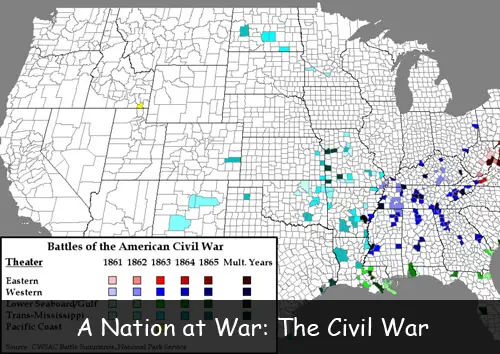
    Trouble between the North and the South over the issue of slavery had been brewing for over 50 years, but finally exploded in 1860 when Abraham Lincoln was elected President. Seven Southern states left the Union, forming a new country.

    A-Nation-at-War-The-Civil-War

    Fort Sumter, a fort controlled by the Union, sat on an island in the Charleston, South Carolina harbor. When soldiers here asked the federal government to send more men and supplies, Confederate militia decided that the fort was a threat. Confederate militia opened fire on the fort. The next day, the Federal soldiers surrendered and left the fort. The Confederates took the fort. No men were killed in the skirmish, but the Civil War had begun!

    Fun Facts

    • In 1860, the Republican party chose Abraham Lincoln as their presidential candidate. Abraham Lincoln was against allowing slavery to expand into new territories, but also wanted to keep the Union intact. His campaign focused on building a railroad across the country, as well as a homestead law that would encourage settlers to buy and farm land. The Democratic party was in conflict. Northern Democrats wanted Stephen Douglas, who thought states should be allowed to choose whether to allow slavery, as their candidate. Southern Democrats wanted pro-slavery candidate John C. Breckinridge. Abraham Lincoln narrowly won the election.
    • Southern states had warned that they would leave the Union (secede) if an anti-slavery President was elected. Most Northerners thought they were bluffing. But in December, 1860, shortly after Lincoln was elected President, lawmakers in South Carolina unanimously voted to secede. Alabama, Florida, Georgia, Louisiana, Mississippi, and Texas soon left too. These states formed the Confederate States of America. They elected Jefferson Davis as president and even wrote a new constitution and created a new flag.
    • Not all Southern states seceded. Delaware voted unanimously to stay in the Union. Kentucky, Maryland, Missouri were fiercely divided. In Virginia, six western counties broke off from the state to form West Virginia, a Union state, while Virginia became a Confederate border state.

    Vocabulary

    1. Militia: a military group; troops
    2. Skirmish: small fight
    3. Secede: leave

    Learn More

    Visit Scholastic to learn more about the Civil War.