All posts by americanadmin

The Mexican American War

Fueled by land hunger and a quest for adventure, Americans wanted to move further west across North America. Many people, including President James K. Polk, believed in the idea of “Manifest Destiny,” that God had given North America to them and it was the country’s destiny to spread across the continent to the Pacific Ocean.

The Mexican government did not agree with Americans’ ideas about Manifest Destiny, especially when it came to Texas, New Mexico, and California. The U.S. government attempted to buy these lands but Mexico refused. Conflicts over border lines increased and in April, 1846, Mexican soldiers attacked American soldiers, killing twelve men. President Polk asked Congress to declare war.
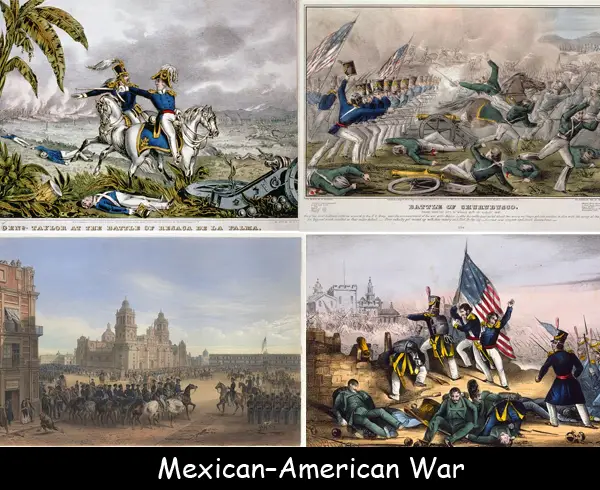
Mexican–American-War

Fun Facts

  • The Mexican American War was the first American war fought on foreign soil.
  • The Mexican army was ill-prepared to fight against the Americans. The U.S. won most of the battles.
  • Less than two years later, on February 28, 1848, the two countries signed a peace treaty. The U.S. paid Mexico $15 million, plus damages, for Texas, California, and all its territory north of the Rio Grande River. Mexico lost one-third of its territory in this deal.

Vocabulary

  1. Destiny: fate; a belief that somethings happen that are beyond our control
  2. Declare: to formally announce

Treaty: an agreement, typically between two governments

Questions and Answers

Question: Did the Battle of the Alamo occur during the Mexican American War?

Answer: The famous Battle of the Alamo occurred ten years earlier during Texas’s rebellion to gain independence from Mexico. Two hundred men took control of the Alamo, a fort, which had previously been a mission. The men fought for 13 days against a Mexican army that included thousands of soldiers before finally surrendering. The commanding Mexican general commanded that no prisoners be taken and almost everyone in the fort was killed, including the famous frontiersman, Davy Crockett. Later that year, Texas did gain independence from Mexico and was annexed by the United States.

Learn More

Visit PBS to learn more about the Mexican American War.
The Indian Plight

Almost from the time the first colonists arrived in North America, their relationships with the native people were troubled. The Indians believed that the Earth gave them everything they needed and couldn’t be bought or sold. Because of this philosophy, most tribes didn’t develop permanent settlements or believe they owned the land.

Europeans, on the other hand, embraced the concept of land ownership and quickly staked their claims. Their weapons and horses offered a significant advantage over the Indians’ defenses. The Europeans brought diseases, such as smallpox, which devastated Indian tribes. Indians fought back when the Europeans took their lands, but every tribe was eventually defeated. Some tribes were completely destroyed!

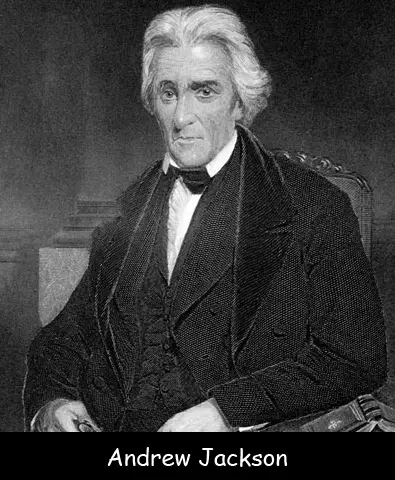
Andrew-Jackson

Fun Facts

  • After the Lewis and Clark Expedition, Americans were filled with the hope of new lands and prosperity. Many of them wanted to go west.
  • In 1830, President Andrew Jackson, along with Congress, passed the Indian Removal Act. This law gave the government power to seize Indian lands and force the Indians to move west of the Mississippi River.
  • The Cherokee, Creek, Choctaw, Chickasaw, and Seminole Indians, known as the Five Civilized Tribes, lived in the southeast United States. These Indians had tried to adapt to European ways. They lived in settlements, attended church, sent their children to school, and wore traditional “white men’s” clothing. In spite of this, they were forced to leave their homes. The Cherokee Indians of Georgia walked thousands of miles to Oklahoma. Twenty-five percent of them died along the way. The journey was called “The Trail of Tears.”
  • The Seminole Indian tribe in Florida resisted the U.S. government for several years. From 1817 to 1858, the Seminoles engaged in three wars with the U.S. military. During this time, over 3,000 Seminole Indians were moved west of the Mississippi. But about 300 Seminoles escaped into the swamps where they hid until the late 1800s. They finally emerged in the early 1900s and began openly working and trading in Florida.
  • In 1970, the government gave the Seminole Indians $12,347,500 for the lands that had been taken from them.

Vocabulary

  1. Philosophy: a particular way of thinking
  2. Concept: an idea
  3. Advantage: favorable or superior circumstances

Questions and Answers

Question: Where do the remaining Indian tribes live now?

Answer: Most Native Americans today live on reservations, which are lands set apart by the federal government for their use. Unfortunately, most of this land is of poor quality, in remote areas, or subject to fierce weather conditions.

Learn More

Visit The Seminole Tribe of Florida to learn more about the brave, proud Seminoles.


The Oregon Trail

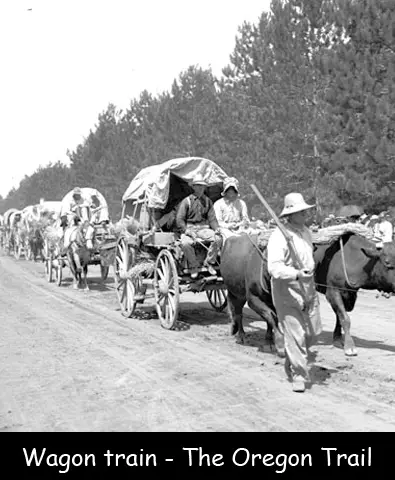
Imagine traveling with your family for months in a covered wagon the size of your bathroom. All the food, clothing, and tools your family owns must fit in that wagon; there is little room for toys. You eat dried meat, biscuits, and beans for most meals – and you’re happy to have that since many families go hungry.

What would make a family choose such a miserable adventure? Between 1841 and 1845, more than 5,000 people traveled the Oregon Trail, a rough, rutted road from Missouri to Oregon. Trappers first traveled the Oregon Trail. Later farmers took their families west in search of rich farm land.

wagon-train-The-Oregon-Trail

Fun Facts

  • The Oregon Trail stretched more than 2,000 miles from Missouri almost to the Pacific Ocean and the Oregon coast. The U.S. government promised settlers a square-mile of land for almost nothing.
  • Rumors abounded about the wonders of the west. People called Oregon the “land of milk and honey.” They said the Oregon soil was bottomless and a man could become rich by farming. Life was hard for farmers living in the Midwest. Cholera and smallpox diseases killed thousands of people. Crops failed. Many people were eager to believe the stories about Oregon.
  • Life on the Oregon trail wasn’t any easier. One in 10 settlers died along the trail, usually from disease or accident.
  • The settlers traveled in “wagon trains” for safety. They typically traveled about 15 miles a day. Children walked alongside the wagon most of the time. At night, the settlers would move the wagons into a circle for safety. They cooked dinner, sang songs, washed their clothing, and offered school lessons to the children.
  • The Oregon Trail was little more than two ruts on the prairie, but following it guaranteed some safety. Another trail split off from the Oregon Trail to California. One group of emigrants, the Donner Party, decided to try a new trail over the Sierra Mountains to California. An early blizzard trapped them in the mountains for five months. Only half of the 89 travelers survived.

Vocabulary

  1. Cholera: a serious disease spread by unclean conditions. People afflicted with cholera could feel fine in the morning and die before sundown.
  2. Wagon train: a group of wagons that traveled in a long, straight line (like a train).
  3. Rut: a deep, rough hole

Frequently Asked Questions

Question: Did families travel on the Oregon Trail?

Answer: While few women and children were part of the Gold Rush, families traveled together to Oregon to farm. Children were often born on the trail; parents sometimes died, leaving children to be cared for by other family members or members of the wagon train.

Learn More

Visit the Oregon California Trails Association to read firsthand accounts of the Oregon Trail adventure.

The Gold Rush

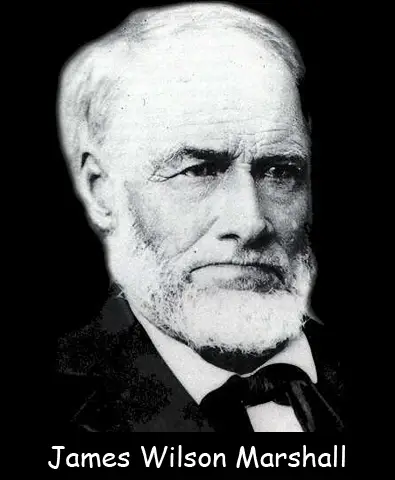
In 1848, James Wilson Marshall, a carpenter from New Jersey, found flakes of gold in a river near Sacramento, California. He was building a saw mill for John Sutter. Although Sutter and Marshall tried to keep the find a secret, word quickly got out when Sam Brannon, a local shopkeeper, marched through town carrying a vial filled with gold flakes from Sutter’s Mill.

Within a year, thousands of men poured into the area. Initially, they arrived from other places in the west, including Oregon and Hawaii. Over time, word spread to the eastern United States. Men left their homes and families to seek their fortunes.

James-Wilson-Marshall

Fun Facts

  • Between 1848 and 1849, the population of California grew by over 100,000.
  • Gold mining towns sprang up to take care of the miners. The towns had stores, saloons, and hotels. Few women and children lived here. The towns were often rough and lawless.
  • Over 750 pounds of gold were taken out of the ground during the California Gold Rush – more than $2 billion worth.
  • By the mid-1850s, the Gold Rush was over, but people still came to California. In 1850, California became the 31st
  • California wasn’t the only place where people went looking for gold. Gold was discovered in Colorado in 1859, almost 10 years after the Colorado Gold Rush. Thousands of miners flocked to Colorado, creating the cities of Denver and Boulder, as well as smaller mining towns in the mountains. Some of these towns, like Idaho Springs and Central City, are still around. Others are ghost towns.
  • In 1896, three men discovered gold in a creek in Dawson, Canada, a remote area near Alaska. Few people knew about the discovery until a steamer ship arrived in Seattle carrying more than a ton of gold. Then, the Klondike Gold Rush started! More than 100,000 men began the journey to the Yukon, but only 30,000 made it. The journey was very difficult. Many died from starvation, illness, or injury along the way. Those that did make it found that most of the gold mines had been claimed.

Vocabulary

  1. Saw mill: a factory capable of turning raw lumber into boards for building
  2. Vial: a small tube or container, usually made of glass
  3. Lawless: uncivilized, violent, without order

Questions and Answers

Question: Did a lot of people become rich looking for gold?

Answer: No. Most of the men who traveled to find gold ended up working for the men who owned the mines. Mining was hard, dangerous work and while these workers received fair wages, they certainly didn’t become wealthy. Both men and women became wealthy by being savvy business owners. Instead of looking for gold, they set up hotels, dance halls, and other businesses needed by the miners.

Learn More

Visit Scholastic for a printable mini-book about the California Gold Rush.


The Reform of Religion

The early 1800s were a time of optimism and hope. People believed that they could create a better society, based on Christian morals and culture. During this time, America saw a “revival” of religious interest and fervor. Protestant preachers held camp meetings where they preached to large groups of people. Disagreements sometimes arose between preachers about which doctrines were correct. Many new religions formed during this time.

Mormons-The-Reform-of-Religion

Fun Facts

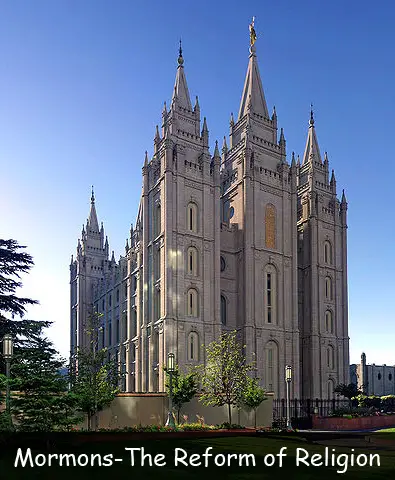
  • The most successful and long-standing of these new churches was The Church of Jesus Christ of Latter Day Saints, started by Joseph Smith in rural New York. Members of this religion are sometimes called Mormons.
  • Although the U.S. Constitution promises religious freedom to all people, the Mormons were persecuted almost from the beginning.
  • Joseph Smith, was beaten by mobs more than once. An angry mob covered him with hot tar and feathers, a painful and humiliating ordeal.
  • Mobs eventually shot and killed Joseph Smith and his brother, Hyrum. Lilburn W. Boggs, governor of Missouri, issued an extermination order against the Mormons in 1838. This extermination order called for Mormons to be killed or driven from Missouri.
  • The Mormons eventually made their way to the Salt Lake Valley in Utah, where they settled in peace. Between 1846 and 1868, over 70,000 Mormons crossed the plains to Utah, a distance of over 1,000 miles. Most of them traveled by covered wagon or pulled a handcart and walked across the plains, a journey that took between 75 and 95 days on average.

Vocabulary

  1. Doctrine: a stated set of beliefs
  2. Mob: an angry group of people
  3. Exterminate: to kill, destroy

Questions and Answers

Question: How did this religious reformation, sometimes called the Second Great Awakening, affect religion in America?

Answer: Before the Revolutionary War, most people were Quakers, Anglicans, or Congregationalists (descended from the Puritans). During the religious reformation, preachers gave lively, passionate speeches. As many as 20,000 people would gather at “camps” to listen. The Baptist and Methodist religions became very popular.

Visit LDS.org to read a story about a young pioneer girl.


Women’s Rights

During the Constitutional Convention, Abigail Adams reminded her husband, John Adams, to “remember the ladies.” Unfortunately, her advice wasn’t heeded. Although the Declaration of Independence declared that all men are equal, free to pursue life, liberty, and happiness, women in America were given few rights. Women could not own property, vote, run a business, or bring a lawsuit to court. If they worked, their earnings were given to their husbands.

In the 1820s, many people opposed slavery. These people were often called “abolitionists” because they wanted to abolish slavery. Some people felt that freeing black slaves was only a start; they wanted to ensure freedom and opportunities for all people, including women.

Lucretia-Mott

Fun Facts

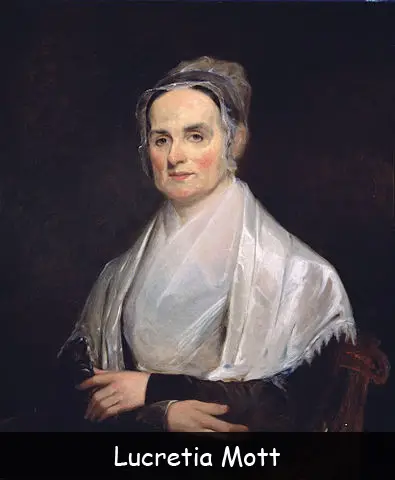
  • Lucretia Mott, a well-educated Bostonian, was one of the first women to speak out boldly about the rights of women and slaves. Along with Elizabeth Cady Stanton and Susan B. Anthony, she went on speaking tours and wrote pamphlets demanding that women be treated fairly.
  • These women’s most public battle was often for suffrage, or the right to vote. Many of them also fought for reforms around the issues of alcohol use, prisons, capital punishment, and workers’ rights.
  • Other women quietly and independently worked to create change. Emma Hart Willard, for example, started a high school exclusively for girls. Elizabeth Blackwell became the first female doctor in America, in spite of intense pressure and criticism.
  • Change came slowly for women. The 19th amendment, which guaranteed the right to vote for women, didn’t pass until 1920, almost 100 years after the first organized movements for women rights.

Vocabulary

  1. Abolish: to do away with; end
  2. Heed: listen, follow
  3. Suffrage: the right to vote in elections

Questions and Answers

Question: Did men support the women’s movement?

Answer: Early activists for women’s rights were often ridiculed, mocked, or criticized. Both men and women feared the changes that the women’s movement might bring.

Learn More

Visit Scholastic to learn more about the women’s rights movement.


Early American Literature and Art

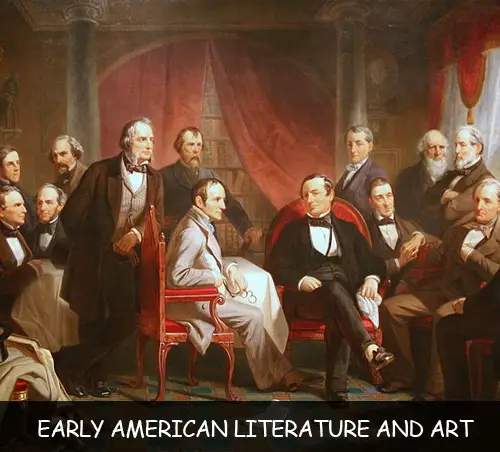
Art and literature had flourished in Europe for centuries. Although many early American settlers were well-read and educated, most writings were personal journals or political essays. Folk art, including signs, flags, and quilts were common. America began to develop its own literary and artistic voice in the early-to-mid 1800s.

Early-American-Literature-and-Art

Fun Facts

  • Idealism flourished in the early 1800s. Several groups, such as the Transcendalists in Massachusetts, formed. Out of these groups came great poets and writers, such as Robert Browning Jr., Emily Dickinson, Henry David Thoreau, and Louisa May Alcott.
  • People wanted a language and writing style that was distinctly American, different from Great Britain. Noah Webster published Webster’s American Dictionary of the English Language in 1828. Previously, words’ pronunciations and spellings differed from area to area. In other words, people made up words and wrote them however they liked. Webster’s dictionary made American-English more consistent, as well as unique from Great Britain.
  • In a time before photographs, people loved to have their portraits painted by folk artists.
  • Young girls spent hours stitching samplers, which featured scriptures, quotes, or even the alphabet.
  • Furniture was often painted with elaborate designs. The wealthy had murals painted on the walls of their homes. The murals depicted landscapes or even historical events.
  • Irving Washington was one of the first American fiction writers to gain fame and earn a living through writing. He wrote The Legend of Sleepy Hollow and Rip Van Winkle.

Vocabulary

  1. Idealism: a philosophy of striving for a more perfect environment and world
  2. Transcendentalism: a spiritual philosophy of seeing God in everything and believing in the divine potential of humans
  3. Pronunciation: how words are said

Learn More

Visit the Metropolitan Museum to learn more about American folk art.

The Industrial Revolution

Imagine a world in which almost all your food, clothing, toys, tools, and furniture were grown or made by your own family or a nearby craftsman. Most of your day would be spent working. Because handmade goods were costly and took so much time to make, you’d have only a few clothes and toys.

The-Industrial-Revolution

This was the reality of life for all but the wealthiest for hundreds of years before the Industrial Revolution. From the late 1700s to the mid-1800s, new inventions made it possible for clothing, furniture, and other items to be made quickly and cheaply in factories. Steam engines, along with railways, canals, and better roads, simplified shipping these products. Life was easier in many ways, but these conveniences came with a price.

Fun Facts

  • In England, inventors developed machines to spin and weave thread. These inventions soon came to America, changing life forever. People moved from farms to big cities to work in factories. Women and children were usually hired because they were paid less than male workers. The factory workers worked long hours in dangerous and unhealthy conditions. Still, they thought the factories might give them a better way of life.
  • Previously, families spent most of their time together. Children were generally schooled at home or in simple one-room school houses. The Industrial Revolution sent families and children out of their homes for long hours every day.
  • Farmers discovered better ways to grow crops and raise animals. They learned how to take care of the soil by growing clover during the winter or fertilizing with manure. They discovered better ways to manage insects or irrigate the soil. They also had better tools for plowing and cultivating fields. These advancements allowed farmers to grow and raise more food, at lower prices. The food was better quality too.
  • Eli Whitney invented the cotton gin in 1792. Previously cotton wasn’t a profitable crop because removing the seeds from the cotton took so long. The cotton gin sped up the work by 50 times. Farmers in the south began planting more and more cotton. They sent it to mills in the North.
  • Miners found more efficient ways of working.
  • The telegraph was invented, making it possible to communicate quickly with someone far away.

Vocabulary

  1. Canal: man-made waterway
  2. Cultivate: to work the soil for planting and raising seedlings

Questions and Answers

Question: Who benefitted most from the Industrial Revolution?

Answer: For the middle and upper classes, the Industrial Revolution meant access to products that made life more comfortable. The middle and upper classes also benefitted financially from their business profits.

Poor factory workers, especially children, suffered during the Industrial Revolution. These children suffered from injuries and disease caused by poor factory conditions. Working long hours, they rarely learned to read and write, making their chances for improving their lives slim.

Slaves also suffered because of the Industrial Revolution. The invention of the cotton gin made cotton growing much more profitable for plantation owners, but they needed more slaves to do the work. Slave trading and owning increased.

Learn More

Head to Scholastic to learn more about the Industrial Revolution.

The War of 1812

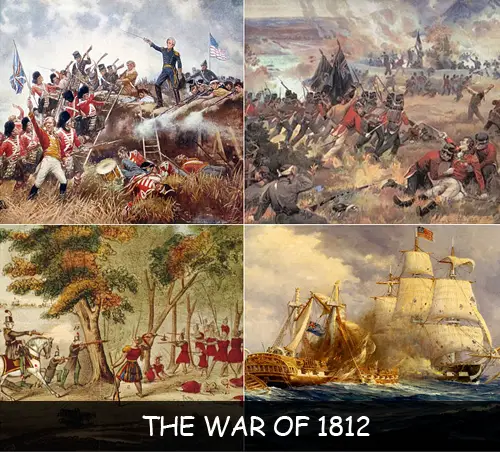
The Napoleonic Wars of the early 1800s pitted Great Britain against France. America tried unsuccessfully to remain neutral. Both the warring countries harassed U.S. ships, but Great Britain, in particular, stopped American ships, interfering with trade. British fleets even seized American sailors, forcing them to serve the Royal Navy.

The-War-of-1812

Americans were angry. They had struggled hard for their freedom. However, people living in the Northeast wanted peace. Many of these people made their living by trading on the sea. The most vocal advocates for war lived in the South and West.

Fun Facts

  • President James Madison asked Congress to declare war against Britain on June 1, 1812. The U.S. had a navy of only 16 ships and an army of 7,000 men. The country was ill-equipped to go to war.
  • Madison felt pressure from “war hawks” in the West and South. These groups hoped to take Canada from Great Britain through war. At the time, Britain actively encouraged Indians to wage attacks on frontiersmen. These groups were hopeful that a war would end Britain’s alliance with the Indians once and for all.
  • Despite a lack of resources, the U.S. won five of the six major battles of the War of 1812. However, the country didn’t achieve its goal of gaining Canada.
  • The British invaded Washington D.C., burning it to the ground. Dolly Madison, President James Madison’s wife, took valuable paintings and historical papers from the White House before it was burned.
  • Francis Scott Key wrote the “Star Spangled Banner” as he watched the battle of Fort McHenry.

Vocabulary

  1. Harass: bother or intimidate
  2. Interfere: restrict, restrain, or block
  3. Alliance: a partnership or mutual agreement, often between two countries that offers mutual benefits

Questions and Answers

Question: Did the British or Americans win the War of 1812?

Answer: Neither. The United States was running out of money and the British were tired of fighting. On Christmas Eve, 1814 in Belgium, negotiators from both countries signed a peace treaty. This was before telephones or email and word that the war had ended came slowly. General Andrew Jackson hadn’t heard that the war was over and led his troops to fight against a British invasion at New Orleans on January 8, 1815. His army achieved a great victory, which made Americans feel proud.

Learn More

Visit PBS to learn more about the War of 1812.

Sacagawea

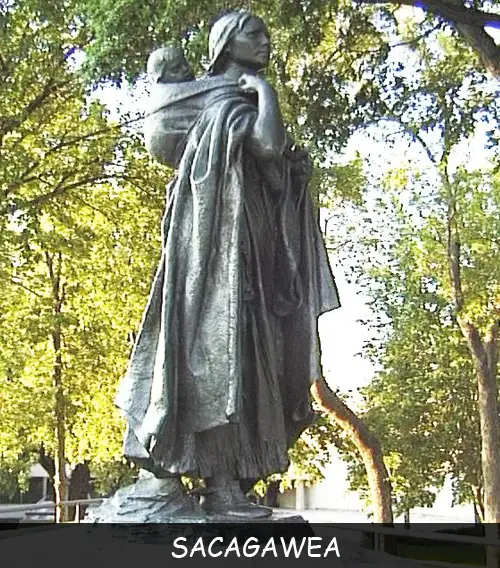
The Lewis and Clark Expedition took more than two years. The group experienced hunger, illness, injury, mosquito swarms, extreme heat, and threat of Indian attack along the way. Sacagawea, the only woman on the trip, went through all these challenges with her small son. She is a true American hero.

Sacagawea

Fun Facts

  • Sacagawea was born in 1788 near the Salmon River in what is now Idaho. She belonged to the Lemhi Shoshone tribe.
  • She was kidnapped in 1800 by the Hidatsa tribe, enemies of the Shoshone Indians, during a buffalo hunt. She was only 12-years-old. She was taken to the Hidatsa-Mandan Indian settlement in what is now North Dakota.
  • In 1804, French trader Toussaint Charbonneau bought or was given Sacagawea as payment for a gambling debt. She became his wife and they soon had a son.
  • When Lewis and Clark met Sacagawea at the Mandan trading village, they knew she would be a valuable asset to their expedition. She spoke both Hidatsa and Shoshone and could help them negotiate for horses. She was also familiar with the land and was an expert food gatherer. She knew which plants, roots, and berries were edible and which were poisonous.
  • Sacagawea and Charbonneau joined the expedition only two months after their son was born.
  • A storm arose one day while the group was traveling by boat, nearly capsizing the craft carrying Sacagawea and her son. Quick-thinking Sacagawea gathered important documents, tools, and medicines, while taking care of her son.
  • While negotiating with the Shoshone Indians for horses, Sacagawea was reunited with her brother.
  • As a woman and mother, Sacagawea helped preserve peace between the expedition and any Indians they met. Her presence was calming to both groups.
  • After their long and difficult journey, Sacagawea and Charbonneau returned to the Mandan village. Charbonneau was given $500 and 320 acres of land. Sacagawea was given nothing, even though Clark called her his pilot and relied on her expertise and intelligence.
  • In 1812, Sacagawea had a daughter, Lizette. Sacagawea died soon after, probably of typhoid fever. Clark became the legal guardian of both her children, raising them to adulthood.

Vocabulary

  1. Asset: something or someone that adds value or makes a positive contribution
  2. Negotiate: to reach a mutually-agreeable arrangement, usually a business deal
  3. Edible: safe to eat

Learn More

Visit PBS to learn more about Sacagawea.