All posts by americanadmin

The Lewis and Clark Expedition

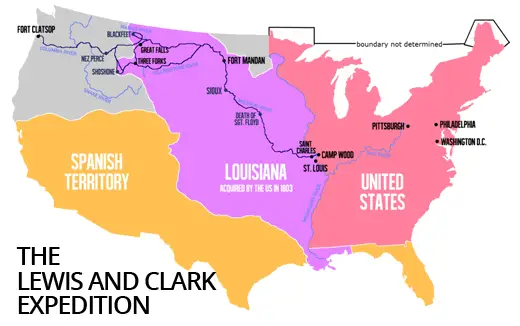
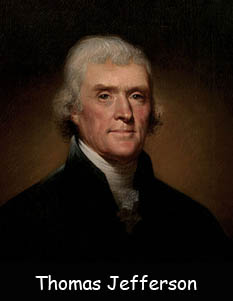
Thomas Jefferson was interested in learning more about the country west of the Mississippi River. In 1803, he persuaded Congress to pay for an expedition to explore this land. In May 1804, Meriwether Lewis and William Clark, both army officers, set out on their expedition. Their journey took more than two years, but paved the way for western settlement.
The Lewis and Clark Expedition

Fun Facts

  • Lewis and Clark departed from St. Louis, rowing up the Missouri River. They spent a winter in a Mandan Indian trading village. They rode horses over the Rocky Mountains through Wyoming, Idaho, and Oregon to the Pacific Ocean – a roundtrip journey of over 8,000 miles.
  • Jefferson asked Lewis and Clark to map the region. He hoped that they would find a river running from the Missouri to the Pacific Ocean, which people could travel on. He also asked them to study and collect natural resources, including rocks, plants, and animals. He wanted them to befriend the native tribes and learn about their languages and customs.
  • Lewis and Clark took six months to prepare for their journey, gathering supplies and recruiting the 31 men who would accompany them. It was hard to know exactly what to take since no one had ever explored the area before.
  • At the time, Europeans had only explored as far as the Missouri River. A few had also ventured along the Columbia River into what is now central Oregon. Thomas Jefferson thought Lewis and Clark might find wooly mammoths and active volcanoes. Instead, they found 300 plant and animal species unknown to science at the time; 50 Indian tribes; and the massive, rugged Rocky Mountains.
  • After arriving at the Pacific Ocean, Lewis and Clark built Fort Clatsop and spent the winter in present-day Oregon. They split up on their return to the East so that they could explore more land. Lewis and his men were attacked by Blackfoot Indians trying to steal from them. Two Indians were killed. Lewis was later shot in the leg by one of his own men.
  • The group were given a hero’s welcome when they returned to Washington D.C. Lewis was given 1,600 acres of land, a generous salary, and the role of governor of the Louisiana Territory.

Vocabulary

  1. Recruit: seek out, enlist
  2. Venture: explore

Questions and Answers

Question: Did any women join the expedition?

Answer: Sacagawea, a Shoshone Indian was the only woman to go on the expedition. She played a vital role in finding food, navigating rough terrain, and negotiating with the native tribes.

Learn More

Visit Scholastic to play an interactive game and pretend you’re on the Lewis and Clark Expedition.

Read More About The Lewis and Clark Expedition
Thomas Jefferson and New Lands

Thomas Jefferson believed that a strong, free nation could only be maintained by strong, free people. For centuries in Europe, most people had belonged to a class system. Peasants worked on farms or in factories for a few people who owned most of the land and wealth. Peasants had little hope of changing their situation and were dependent on the wealthy for their survival.

Jefferson believed that by expanding the country, more people could own farms and lands, allowing even the poorest to improve their circumstances through hard work. He was very anxious to expand the United States to include more area.

Fun Facts about Thomas Jefferson

Fun Facts

  • Kentucky became a state in 1792; Tennessee, in 1796. Ohio became a state in 1803.
  • French emperor, Napoleon, wanted to build an empire in North America starting with a naval base on the island of Hispaniola in the Caribbean Sea. Toussaint Louverture led an army of free blacks and slaves against Napoleon. This revolution discouraged Napoleon from his original plans.
  • In 1803, Thomas Jefferson and the Senate approved a plan to buy the Louisiana Territory for $15 million from France. The purchase doubled the United States’ land area, adding about 800,000 square miles of land. More importantly, it guaranteed control of the Mississippi River to the U.S., which Thomas Jefferson believed was necessary for the country’s security. This became known as the Louisiana Purchase.
  • As the country expanded, farmers needed a way to get their crops to the east to sell. The fastest way to ship their goods was to float them down the Mississippi River on barges to New Orleans. From there, they could be shipped to the east or even across the Atlantic Ocean to Europe.

Vocabulary

  1. Peasant: a poor farmer or laborer of a low social class
  2. Expand: to enlarge
  3. Security: safety

Question and Answer

Question: How many people lived in the Louisiana Territory when it was purchased by the U.S.?

Answer: About 200,000 people were living in the Louisiana Territory at the time of the purchase. Most of them were American Indians, Spanish, and French.

Learn More

Visit Discover Kids to learn more about the Louisiana Purchase.

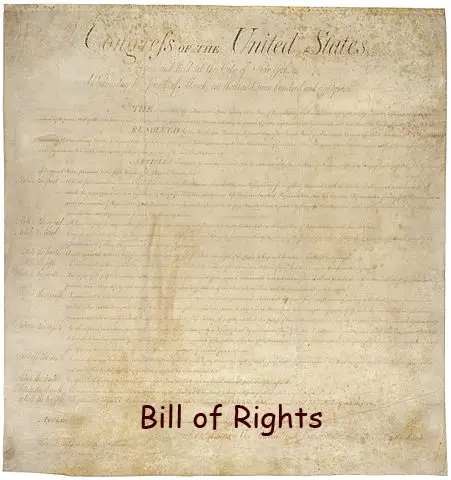
The Bill of Rights

The Constitution lays out the organization of our government with three governmental branches. The Constitution doesn’t say much about the rights of the people, though. This concerned the Founding Fathers. In 1789, James Madison offered several amendments to the Constitution which protected individual liberty. Congress approved the additions, which became the Bill of Rights. The Bill of Rights guarantees important freedoms that we often take for granted.

Fact about amendments to the constitution - Image of Bills of Right
Fact about amendments to the constitution – Image of Bills of Right

Fun Facts

  • The first amendment guarantees freedom of religion. People have the right to worship how and where they wish. England had an official religion. Those who wanted to worship differently were often persecuted. 
  • The first amendment also gives us the right to free speech. The media is allowed free speech too. Members of the media can report the news honestly even if it reflects negatively on political leaders. The first amendment allows people to gather peaceably and complain to the government when they’re unhappy.
  • The second amendment gives citizens the right to bear arms (keep guns). It would have been very difficult to win the Revolutionary War if the rebels hadn’t owned guns. The colonists and early settlers also kept guns to hunt for food and for protection.
  • The third amendment says that no soldiers can live in a person’s home without that person’s permission. Before and during the Revolutionary War, people were often required to house soldiers whether they wanted to or not. 
  • The fourth amendment says that a person’s home and property can’t be searched without reasonable cause and without a warrant. 
  • The fifth amendment guarantees the right to a fair trial. Before someone can be convicted of a serious crime, that person must have a trial before a grand jury. Additionally, a person can’t be tried twice for the same crime or be made to stand as a witness against himself. 
  • The sixth amendment says that in all criminal prosecutions, people are guaranteed a fair and speedy trial and access to a lawyer. The Founding Fathers knew that without these safeguards, people could be unfairly tried, convicted, and punished.
  • The seventh and eighth amendments also discuss the rights given to people convicted of crimes. 
  • The ninth amendment says that other rights not listed in the Constitution were still guaranteed to the people.
  • The tenth amendment states that any power not given to the federal government belongs to the states, or in other words, the people.

Vocabulary

  1.  Guarantee: a formal promise or pledge
  2.  Persecute: to harm, harass, torment, or mistreat someone, usually because of their race or religious beliefs.

Questions and Answers

Question: Are the freedoms promised in the Bill of Rights ever threatened?

Answer: Yes, frequently. In 1797, for example, the U.S. was involved in a short-lived conflict with France. The Federalists created the Alien and Sedition Acts, which said that people who were believed dangerous could be deported or punished. The Sedition Act made it a crime to say anything bad about the government. This is one of the reasons it’s important to pay attention to lawmakers and vote carefully.

Learn More

Visit Scholastic for more information about the Bill of Rights.

The Early Federal Government and Political Parties

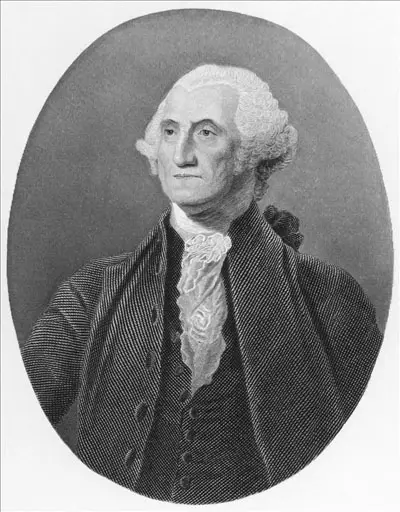
George Washington was the leader of the Continental Army, guiding the country to freedom, but his role didn’t end after the Revolutionary War. George Washington was so beloved that he was unanimously voted the first President of the United States. He served for two terms (eight years). He had given almost his entire adult life to his country’s service and was relieved to finally retire from public life. As final advice, he warned of the dangers of party politics (Democrats and Republicans), and urged the country to be self-reliant, steering clear of any permanent alliances with other countries. This was good advice, but from the beginning, few followed it.

The Early Federal Government and Political Parties - Image of George Washington
The Early Federal Government and Political Parties – Image of George Washington

Fun Facts

  • The Constitution was written by men who had seen the unhappiness powerful and corrupt leaders can bring to their people. The Constitution was designed to protect liberty. 
  • From the beginning, though, many people, such as Alexander Hamilton, saw the Constitution has a guide to be loosely followed. Hamilton and his peers wanted a more powerful federal government. 
  • Thomas Jefferson believed in strictly following the Constitution, giving the government only the powers described in that document. 
  • By 1800, political parties had formed, despite Washington’s warning. The Federalists, which included John Adams, James Madison, and Alexander Hamilton, wanted a strong central government. Republicans, such as Thomas Jefferson favored limited governmental power. Today, Democrats generally favor a strong government, while Republicans still want a limited federal government. 

Vocabulary

  1.  Beloved: someone or something that is loved, treasured, admired, or cherished.
  2.  Unanimous: in complete agreement
  3.  Alliance: a relationship or union, usually between countries or organizations, which benefits both parties.

Questions and Answers

Question: Was Washington D.C. always the nation’s capital?

Answer: The Continental Congress met in Philadelphia but after the Revolutionary War, leaders needed to choose a capital. Alexander Hamilton and others wanted the capital to be in the north. Thomas Jefferson wanted it to be located near the south. A compromise was agreed to and George Washington chose the exact site for Washington DC. Maryland and Virginia each gave some of their land to form the city, which would be a special place, different from all other states.

Learn More

Visit Scholastic to learn more about political parties.

Spies!

Winning the Revolutionary War was a longshot for the Continental Army. They needed all the help they could get. The French helped. George Washington believed that God supported their cause. But help also came from spies. These brave men and women risked their lives to gather information for George Washington about the British army’s plans. Of course, the British had their own spies.

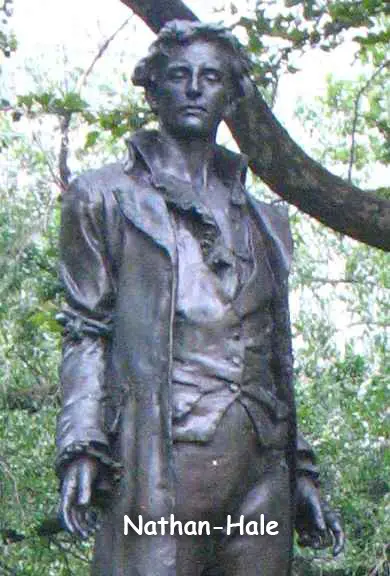
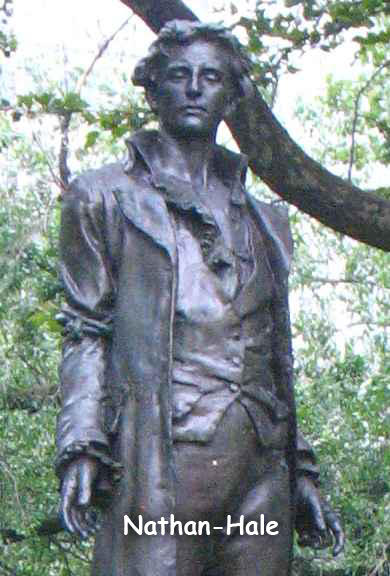
Facts about American Spies - Image of Nathan Hale
Facts about American Spies – Image of Nathan Hale

Fun Facts

  • Both the British and the Americans sent messages written in code. A codebook was necessary to decipher these messages.
  • Invisible ink, usually made from ferrous sulfate and water, could be used to write secret messages in between the lines of a letter. Sometimes, spies wrote the messages on the bottom of a receipt or in a pamphlet. The ink could be made visible by applying a chemical agent or holding the letter over the fire. 
  • The British often hid messages in common objects, such as a quill, a button, or small silver balls. British spy, Daniel Taylor, was caught with one of these balls. He swallowed it but American soldiers forced him to vomit it. He was eventually hanged.
  • Carriers delivered secret messages between military leaders. Some of these carriers became double agents, pretending to work for one side when they actually worked for the other. 
  • Nathan Hale was one of the first American spies. Unfortunately, he wasn’t particularly good at the job and was quickly caught by the British. Before he was hanged, he said, “I only regret that I have but one life to give for my country.”
  • James Armistead was a slave who, with his owner’s permission, served as a spy for the French general, Marquis de Lafayette. Pretending to be an escaped slave, he entered the British camp. He was so convincing that General Cornwallis asked him to be a British spy. Armistead risked his life pretending to work for the British army, while all the time he was helping the Continental Army. After the war, he went back to being a slave until 1787, when Lafayette wrote a letter to the Virginia legislature asking for Armistead’s freedom.
  • Ben Tallmadge organized the Culper spy ring, which placed spies in New York – right in enemy territory. The spies were able to deliver important information to Washington. In five years, not a single spy was caught by the British.

Learn More

Visit the History Channel to learn about other spies. 

After the Revolutionary War: Becoming a Nation

Americans had longed for independence from Britain. After eight long years of war, they had finally achieved it. But what happened after the peace treaty was signed in 1783? Tough times weren’t over for the American people. They still had to figure out what democracy would look like. Many people disagreed about how much power states should have versus how much power a national government should have. Could they ever become united?

Facts about a nation - Image of After Revolutionary War
Facts about a Nation – Image of After Revolutionary War

Fun Facts

  • The British government took two years to ratify the Treaty of Paris, a formal peace treaty. In it, Great Britain recognized the United States of America’s independence. 
  • Originally, the nation’s boundaries stretched from the Atlantic Ocean to the Mississippi River and from the Great Lakes to Florida. 
  • The end of the Revolutionary War didn’t mean an immediate end to conflict. Native Americans, who had fought with the British, continued to fight against the colonists until 1795. Loyalists were poorly treated and most of them fled to Canada.
  • Soldiers felt resentful to colonists who hadn’t made the sacrifices they’d made for freedom. 
  • Initially, the Continental Congress had very little power. The thirteen states had more individual power than the national government. States could make their own money and levy taxes. Imagine how confusing it would be to have thirteen different types of currency. 
  • The states created governments with three branches: a legislative branch to make laws; a judiciary branch to interpret the laws; and an executive branch to manage government and uphold the laws. This was known as “separation of powers,” and is still the basis for our state and national governments. Separation of powers was designed to ensure that no one branch of government would gain too much power. The colonists had learned, for example, that a king with absolute power could become a tyrant. 
  • Initially, the nation had only a single branch of government, Congress, which was supposed to settle conflicts between states over trade issues, as well as determine how new land would be divided. 

Vocabulary

  1. Democracy:  a form of government in which leaders are elected by the people, or by representatives elected by the people.
  2. Ratify:  Give formal approval and sign a treaty or political document.
  3. Tyrant:  a ruler who uses power unfairly or cruelly. 

Questions and Answers:  

Question:  Did the national government become more powerful?

Answer:  Although the people were cautious about giving a national government too much power, they realized a stronger government was necessary. One incident that taught them this lesson was Shays’s Rebellion. During the war, soldiers had been promised payment for serving in the army. But after the war, the U.S. government had no wealth from which to pay them. People were poor and farmers generally traded goods and food, rather than money. They couldn’t pay their taxes. In 1787, Daniel Shays, along with about 1,000 other farmers protested. They took weapons from a government armory and shut down the courtrooms. Political leaders realized the government needed more strength.

Learn More

Visit PBS to learn more about the days following the Revolutionary War. 

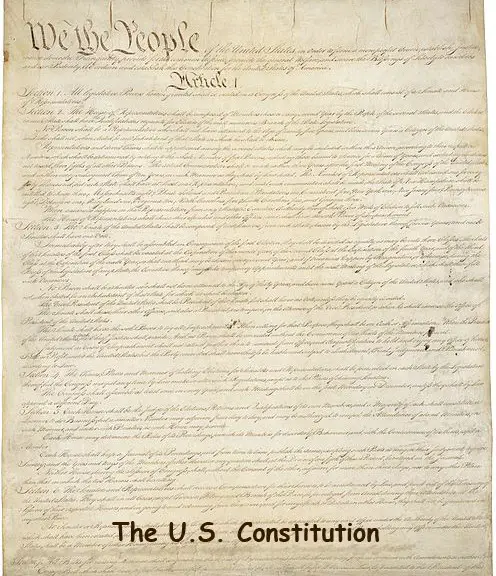
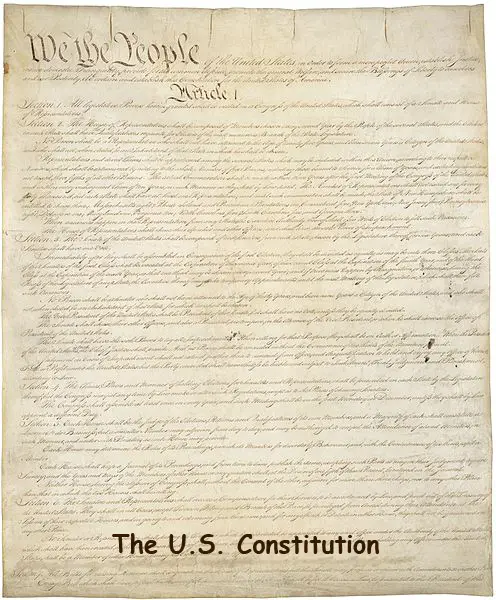
The U.S. Constitution

In 1781, the Continental Congress ratified the Articles of Confederation, which gave very limited power to the national government. After the Revolutionary War, it became clear that this document was too weak. Instead of revising it, George Washington and delegates from all 13 states met to write a completely new document, the U.S. Constitution. The Constitution laid out the framework for the government we have today.

Image of The U.S. Constitution

Fun Facts

  • The Framers of the Constitution understood the importance of their efforts. They met in Philadelphia from May to September of 1787. Even though the summer was hot, the men kept the doors and windows shut so the press and public couldn’t hear the deliberations. They didn’t want people pressuring or influencing the delegates.
  • The Constitution laid out three federal branches of government: the legislative branch, or Congress, which is made up of the Senate (two senators coming from each state) and the House of Representatives (determined by the states’ population); the judicial branch, which includes the Supreme Court and federal courts; and the executive branch, which includes the President and Cabinet. 
  • This system was designed to prevent any one branch of the government from becoming too powerful. 
  • The Constitution also laid out the powers held by the federal government and state governments. The federal government was given the power to maintain a military; create a postal service; make money; declare war; and govern foreign and interstate trade. The states were given power to create schools; conduct local elections and create local governments; and regulate marriages and businesses. The federal and state governments shared the power to establish courts and banks; borrow money; build roads, levy taxes; create laws for health and safety; and maintain law and order. 
  • Not everyone approved of the Constitution. Rhode Island refused to send delegates to the convention because the state worried that the Constitution would give too much power to the national government. In other states, the Constitution was hotly debated. 
  • Slavery was a difficult issue. Northern states wanted the Constitution to ban the practice. Southern states believed the question of slavery should be decided by each state. A compromise left any mention out of the Constitution. 

Vocabulary

  1. Framework:  a foundation or underlying structure
  2. Deliberation:  a thoughtful discussion
  3. Levy:  to impose, put in place, charge a tax
  4. Debate:  to argue, discuss

Questions and Answers

Question:  Does the Constitution guarantee individual rights?

Answer:  Yes. James Madison drafted a Bill of Rights that guaranteed important rights to people. These ten amendments guaranteed the freedom of speech, freedom of religion, freedom of the press, and the right to bear arms (keep guns).

Learn More

To learn more about the U.S. Constitution, head to Scholastic.

Revolutionary War Facts and Figures

The American Revolutionary War lasted eight years. The British were definitely favored to win. They had one of the most powerful militaries and naval forces in the world. They had invaded and colonized many parts of the world, including parts of Africa and Asia. They had never experienced defeat.

Yet, through luck, perseverance, tactical skill and support from the French government, the Americans succeeded in gaining independence. Below are some facts and figures about the Revolutionary War.

Fun & Figures about American Revolutionary War- Image of Revolutionary War
  • 2,165,076 British colonists lived in North America during the war.
  • 20 percent of these colonists remained loyal to Great Britain.
  • The British had 133,000 troops. Of these, 56,000 were regular military soldiers. 30,000 German (Hessian) troops joined the fight. 13,000 Native Americans fought for the Redcoats, along with 19,000 loyal colonists. 24,000 British troops died. 
  • 96,000 troops served in the American army. Only 35,000 of these were career army soldiers. 45,000 were militiamen – men who enlisted to serve their country. 5,000 sailors served along with 12,000 French troops. 25,000 American soldiers died; only 4,435 died in battle. About 10,000 troops died of disease. 18,000 troops were taken as prisoners of war and 10,000 of these soldiers died of disease, mistreatment, and hunger. American troops were three times more likely to die on a British prisoner ship than in battle. 
  • Up to 25,000 freed blacks and slaves fought on both sides. 

Questions and Answers

Question:  What happened to the troops after the war was over?

Answer:  Most soldiers on both sides returned to their regular lives. About 20 percent of the German soldiers who had fought for the British stayed in America. 70,000 Loyalists went to Canada or returned to England after the war.

Question:  Was George Washington a successful military leader?

Answer:  Washington was a brilliant military strategist, but more importantly, he led his troops with integrity. He was usually first to the battle line and worked with his troops to dig trenches or do whatever needed to be done. He led the Continental Army in five of the biggest battles, but only one of those battles was a clear, decisive victory. What if he had become discouraged and quit? Fortunately, he kept trying.

Learn More

Visit Scholastic to learn more about George Washington. 

The Abraham Lincoln Memorial

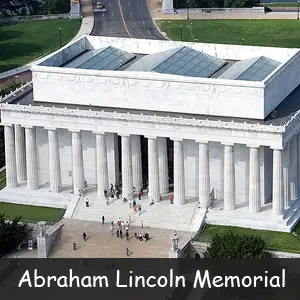
Abraham Lincoln is one of our most beloved Presidents, known for leading the country through the Civil War and reuniting the North and South. The country and the world were shocked and saddened when he was assassinated five days after the war ended.

After Lincoln’s death, leaders wanted to build a memorial to honor him, but the war had left the country with little money. Finally, in February of 1914, work began on the memorial. It was completed on May 30, 1922. 50,000 people attended the memorial service, including a few Civil War veterans.

Famous American Monuments- Image of Abraham Lincoln Memorial

Fun Facts

  • The memorial is almost 80 feet tall and 188 feet long. The building has thirty six columns to represent the states that were part of the Union during the Civil War.
  • Inside the memorial is divided into three parts. The main chamber holds a 19-foot tall statue of Abraham Lincoln. Daniel Chester French sculpted the statue out of white Georgia marble.
  • Lincoln’s Gettysburg Address is engraved on the north wall. A mural of an angel granting freedom to a slave is also displayed.
  • The building’s south side contains photos and paintings of Abraham Lincoln.
  • Look on the back of a five-dollar bill. You’ll see a picture of the Lincoln Memorial.
  • On August 28, 1963, Martin Luther King, Jr., led a March on Washington. The march ended at the Lincoln Memorial, where he gave his famous “I Have a Dream” speech.

Vocabulary

  1.  Reunite: join again
  2.  Assassinate: to kill an important leader or celebrity in a surprise attack.
  3.  Mural: a large painting which often spans an entire wall or more

Questions and Answers

Question:  Why does the Lincoln Memorial have so many columns?

Answer:  The design for the Lincoln Memorial was based on the ancient Greek temple, the Parthenon. Democracy was first established in Greece. The designers of the Lincoln Memorial felt that a tribute to Greece would be appropriate for an American memorial celebrating freedom for all men.

Learn More

Visit Enchanted Learning for games and activities about the Lincoln Memorial.

The White House

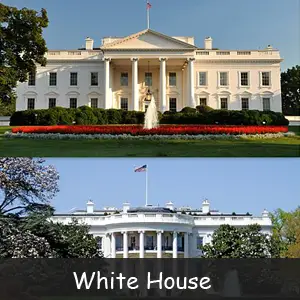
When you think of Washington D.C., what do you think of? Chances are, the White House, official home to the President, is near the top of the list. George Washington is the only U.S. President who never lived in the White House, although he helped choose the land and the home design.

Today, the White House is a stately, dignified place, the location of frequent state dinners, official business, and of course, the President’s residence. But for many years, it was anything but luxurious.

Famous American Monuments- Image of White House

Fun Facts

  • In 1791, French architect Major Pierre Charles L’Enfant was asked to design the new home. He suggested a great palace, similar to those found in Europe. Washington disagreed. The people had just won their freedom from queens and kings. They certainly didn’t want their new leader living in such a place. 
  • Thomas Jefferson suggested they hold a contest, asking for designs for the home. Architect James Hoban won $500 for his design, which was based on Washington’s preferences for a simple, yet dignified home.
  • The work began in 1792. The stones used for the house soaked up rainwater. The builders were afraid that they would crack in freezing weather. They solved the problem by painting them with white wash.
  • Second President of the United States, John Adams, moved into the White House with his family in 1800 but was disappointed. The rooms were cold and poorly furnished. Servants had to walk over a mile and a half to fetch water from a spring. The swampy grounds attracted mosquitoes.
  • During the War of 1812, British soldiers invaded Washington D.C. James Madison was president at the time. Before fleeing Washington D.C. with her husband, Dolly Madison retrieved the Declaration of Independence and a portrait of George Washington from the White House. Good thing too, because the British soldiers set the presidential home on fire. While it didn’t burn to the ground, it was extensively damaged and these precious historical artifacts might have been lost.
  • The White House was first enlarged in 1902. Later, Franklin D. Roosevelt added a modern kitchen and an indoor swimming pool.
  • In 1948, a major expansion and renovation doubled the size of the White House. The building was fireproofed and updated. Jacqueline Kennedy refurnished the White House again in the 1960s.

Vocabulary

  1.  Dignified: having a noble, serious manner, worthy of respect
  2.  Preference: Inclination, liking, or taste

Questions and Answers

Question:  Can I visit the White House?

Answer: Today, the White House includes rooms for the President and his family, offices, guest rooms, a library, and a china room. These rooms are not open to the public. If you visit the White House, you can see the East Room, the oval Blue Room, the Green Room, the Red Room, and the State Dining Room, which is used for formal dinners.