All posts by americanadmin

The Long Days of World War II

World War II officially began in September, 1939 when Britain and France declared war on Germany after it invaded Poland. For the next two years, the people of Europe endured hardship and destruction as the Na-zi regime bulldozed its way through one country after another. The United States joined the war in December, 1941, after Japanese bombers destroyed ships and planes, killing more than 2,000 people. The war lasted another three long years. Almost every region of the earth, from the Pacific Islands to Africa to South America was involved.
The Long Days of World War II

Fun Facts

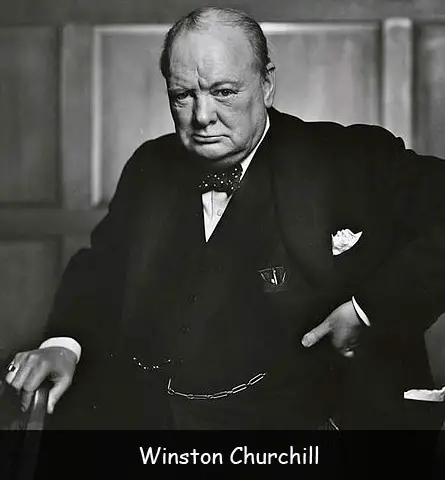
  • British prime minister, Winston Churchill, and President Roosevelt’s plan was to first, build up weapons, planes, and military force necessary to enter Europe and defeat Hitler. Then they would turn their attention to defeating the Japanese.
  • President Roosevelt asked the American people – each man, woman, and child – to make sacrifices to win the war. Americans knew that they were fighting for the freedom of people in Europe and throughout the world.
  • Americans rose to the challenge. 16 million men joined the military. Business owners transformed automobile, toy, and even tissue factories to make weapons, bombs, tanks, landing crafts, and airplanes. Over 800,000 women went to work. Many of them worked in factories. Some joined the Red Cross as nurses; others flew planes or worked as truck drivers and radio operators. Everywhere, Americans were determined to do their part.
  • During this time, Americans were asked to save and donate materials that could be used for the war. Kitchen oil, for example, was used to make bombs. People collected newspapers, tin cans, and rubber. Food was scarce. Americans skimped on things like butter, sugar, and meat and grew food in gardens.
  • In other countries, people showed tremendous bravery and goodness. In many countries in Europe, people hid resistance fighters or Jewish families in their homes at great danger to themselves. If they were caught by the Na-zis, they would be killed or sent to a concentration camp.
  • Russian soldiers fought valiantly to defend their country from the Germans, eventually forcing Germany west and reclaiming their lands.
  • In 1942, the Allied forces were ready to install their plan to defeat Hitler. In February, fighter plans began bombing German cities. Troops landed in Italy and Mussolini’s own government overthrew him.
  • German forces had taken over most of North Africa. In 1942, British and American troops led by Marshal Bernard Montgomery and Dwight D. Eisenhower arrived. In May, 1943, the Axis force in North Africa surrendered.

Vocabulary

  1. Sacrifice: to give up something, usually for something greater
  2. Skimp: to do without or cut back
  3. Reclaim: get back

Questions and Answers

Question: Did all Americans feel part of the team effort needed to win the war?

Answer: Unfortunately, no. Many African-Americans left the South during the war to get jobs in the north. They had more opportunities than ever before. Still, they were often discriminated against. African-Americans had to use different bathrooms than whites, for example, and couldn’t eat in public restaurants. Japanese Americans were thought to be potential spies. Thousands of Japanese families were forced to leave their homes and live in internment camps for the duration of the war. They were often mistreated and persecuted by others because they were Japanese.

Learn More

Visit PBS to learn more about what it would be like to be a child in a Japanese internment camp.
World War II: America Gets Involved

American leaders had tried to stay out of the trouble in Europe, but by 1940, they began to prepare for war. Mussolini had remained neutral as Hitler conquered most of Europe, until the Na-zis invaded France. Then Mussolini joined forces with Germany and France was defeated. Great Britain remained the only country in Europe that could fight against the Germans.

World War II: America Gets Involved

Fun Facts

  • While some Americans shared Germany’s anti-Semitic views, many people were increasingly outraged over events in Europe and Asia. In 1937, Japan bombed the city of Shanghai in China. Newspapers carried photos showing the devastation there.
  • In 1940, Hitler promised to invade and conquer London. The first step was to destroy British airfields so British fighter planes couldn’t take off. The Royal Air Force fought courageously.
  • On September 7, 1940, German planes bombed London. This event was known as the Blitz. All through that winter and spring, German planes bombed British cities at night. A total of 127 raids causes terrible damage and killed more than 60,000 civilians. In the end, though, Hitler gave up his plans to invade Great Britain although German submarines continued to prey on British ships in the North Atlantic. President Roosevelt issued orders for U.S. navy ships to fire on any German submarines they spotted.
  • In May 1940, Congress approved funds to build up the U.S. military; Congress later agreed to lend British troops weapons and supplies.
  • In September 1940, Germany, Italy, and Japan had agreed to work together if America declared war on any of them. Then on December 7, 1941, 400 Japanese planes bombed a U.S. naval base at Pearl Harbor, in Hawaii. The bombers destroyed 177 U.S. planes and 19 ships. 2,403 men were killed.
  • President Roosevelt asked Congress to declare war. Americans were angry, but also afraid. German U-boats sunk 100 Allied cargo ships every month and could be sighted off the coasts of the eastern United States. Americans on the west coast feared attack from Japanese fighter planes. Suddenly the war seemed very close.

Vocabulary

  1. Anti-Semitic: a bias or hatred for anyone of Jewish descent
  2. U-boat: German submarine
  3. Neutral: to take no side

Questions and Answers

Question:How did the British survive Germany’s air attacks?

Answer: They created warning systems so they knew when an air raid was coming. In some cases, the warning system was simply one person keeping watch. This person would then whistle or yell. In some cases, children had this job. Black curtains were hung over windows so the Germans couldn’t see city lights at night. During an air raid, people went to underground cement bunkers for protection. Many families sent their children to live in the countryside with strangers, where the Germans were less likely to strike. The Lion, the Witch and the Wardrobe by C.S. Lewis, is a fantasy story about one family’s adventure during this time.

Learn More

Visit the BBC to learn more about the 800,000 children who were evacuated from London and other cities.

World War II: The Beginnings

World War I plunged Europe into crisis. Many buildings and homes had been destroyed. Jobs were scarce and both governments and individuals were without money. Many people were looking for a strong leader to solve their problems. This turned out to be a mistake as corrupt and violent men were allowed to gain power.

World War II: The Beginnings

Fun Facts

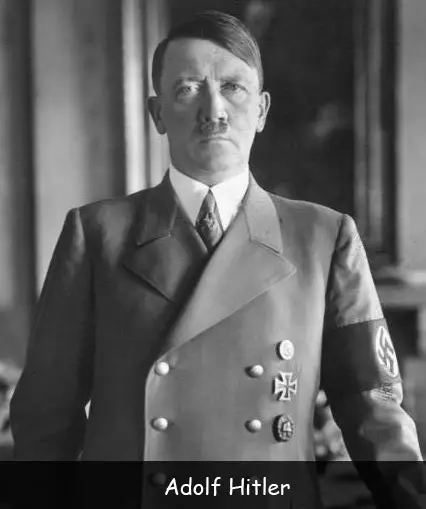
  • Adolf Hitler was elected as chancellor of Germany in 1933. He blamed the Jewish people for the country’s hardships. He quickly took dictatorial power.
  • Hitler believed that purebred, or Aryan, Germans were superior to other races, particularly Jews. In 1938, the government organized Kristallnacht, which means, “the night of broken glass.” On this night, mobs set synagogues on fire and smashed windows in the homes and businesses of Jewish people. Hundreds of people were killed; approximately 20,000 Jews were sent to concentration camps.
  • The Na-zi government organized ghettoes, crowded places in the cities that were closed off. Jews were forced to live in the ghettoes where they were watched and intimidated by Na-zi soldiers. All Jews age six and older were required to wear a yellow star with the word, “Jude,’ on it, which means Jew in German.
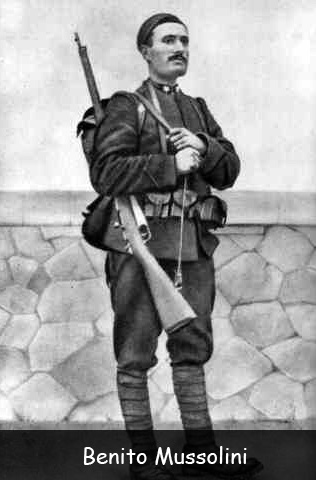
  • At the same time, Benito Mussolini marched his private army into Rome where he overthrew the government and became a fascist dictator. In Japan, General Hideki Tojo was rising to power.
  • Leaders in these three countries wanted to dominate and conquer the world. Together, the countries of Germany, Italy, and Japan became known as the Axis Alliance.
  • The United States had not joined the League of Nations after World War I and had a policy of neutrality. American leaders did not want to get involved in another European war. Although they expressed protest over the actions of leaders in the three countries, they did not make a stronger statement. President Roosevelt warned Congress and the American people that it would be impossible to remain neutral.
  • Hitler invaded and took over Austria in March, 1938. That fall, Germany took over the Sudeten region of Czechoslovakia, promising British and French leaders that that would be his last conquest. He broke his promise only six months later, taking over the rest of the country.
  • In September, 1939, German tanks, soldiers, and fighter planes moved into Poland. France and Great Britain declared war on Germany two days later.
  • Soon, Germany had invaded and conquered Denmark, Norway, the Netherlands, Belgium, and Luxembourg. The Na-zis seemed unstoppable.

Vocabulary

  1. Dictator: a leader who governs the country with absolute power, often using violence and intimidation
  2. Synagogue: a Jewish place of worship
  3. Concentration camp: an organized camp where Jews and others were sent to work; the prisoners were harshly treated and many were killed.

Questions and Answers

Question:Could the allies have stopped the war if they had gotten involved more quickly?

Answer: Great Britain, France, and America were slow to use force to stop Hitler and his Na-zi forces. The destruction of World War I was fresh in their minds and they wanted peace. Still, many people believe that the war could have been prevented if Allied leaders had showed greater strength sooner.

Learn More

Visit the Imperial War Museums to learn about the rescue at Dunkirk. German troops rolled through France in May of 1940, trapping French, British, and Belgium soldiers at Dunkirk. Hundreds of British people crossed the English Channel to rescue over 340,000 troops. The British bravely came in fishing boats, tugboats, and yachts while German submarines and fighter planes lurked nearby.

The Dust Bowl

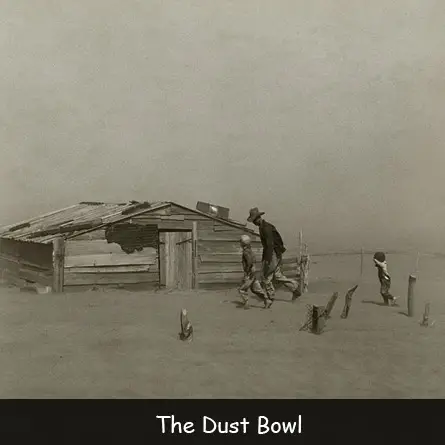
From the mid-1800s, homesteaders and farmers in the Mid-West had plowed and worked the flat, treeless prairie land. Most of them had no understanding of the need to rest or restore the soil by adding compost, planting trees, or rotating crops. Slowly the soil lost the organic material that made it rich and fertile. Then, from 1933 to 1936, a huge drought came, turning the lifeless soil to dust.

The Dust Bowl

Fun Facts

  • After World War I, wheat prices rose and people flooded to the plains area to begin farming. Native grasses were stripped as the fields were plowed for crops. Investors urged farmers to plant more and more crops, with no regard to good farming practices designed to protect the soil.
  • When the Great Depression hit, wheat prices fell, yet farmers kept planting crops as they tried to make a living.
  • In 1934, almost no rainfall fell in the region and temperatures regularly rose above 100 degrees. The dusty soil baked in the heat. Dust storms became a common occurrence. These “black blizzards” lifted the topsoil into the air, turning the day to night. Animals and even people were smothered in the storms. Homes were filled with a constant layer of dust.
  • On April 14, 1935, people woke to blue skies. After several weeks of dust storms, they hoped that the weather would finally improve. But late in the afternoon, a cold front blew winds from Canada, raising dust from North Dakota all the way to Texas in the worst dust storm yet. On this day, known as “Black Sunday,” over 300 million tons of top soil blew all the way to the Atlantic Ocean and the Gulf of Mexico.
  • For many, Black Sunday was the final straw. People from North Dakota to New Mexico were affected, although Oklahoma, Kansas, New Mexico, Texas, and Colorado were the hardest hit.
  • Over one million people left their homes. Many of them headed west to work on farms in California. These migrant workers lived in tents or shacks, moving from place to place as farmers needed labor.
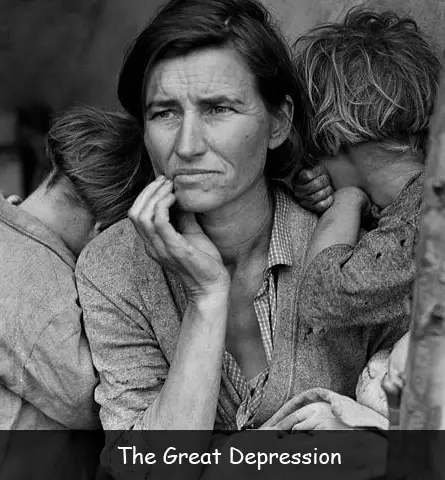
  • Dorothea Lange was a photographer living in San Francisco. After watching hungry people stand in breadlines waiting for food, she began photographing those who had come from the Dust Bowl, as the area was called. Her photos were published in newspapers around the country and created an awareness of the suffering these people endured.
  • Writer, John Steinbeck’s book, The Grapes of Wrath, also helped Americans understand the tragedy of the Dust Bowl. Folk singer, Woodie Guthrie, who lived through Black Sunday, wrote songs about the ordeal.

Vocabulary

  1. Compost: a rich soil builder made from decomposed plant material and animal waste
  2. Migrant worker: one who moves from place to place for work, typically farm work
  3. Drought: a period with no rain

Questions and Answers

Question: Could a dust bowl happen again?

Answer: Most of the country’s farms are now owned by large corporations, rather than small farmers. These corporations should use good farming practices, but if they overuse the soil, a dust bowl could occur again.

Learn More

Visit Scholastic to watch a video about the Dust Bowl.

Franklin D. Roosevelt’s New Deal

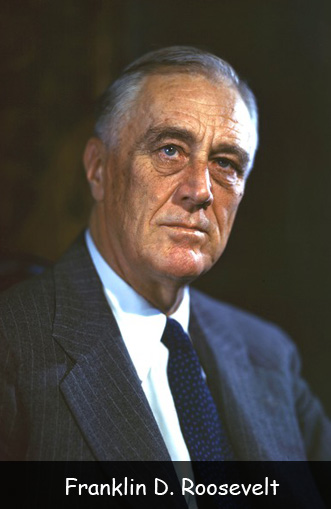
As the Great Depression deepened, Americans looked for a new leader. Franklin D Roosevelt won a landslide victory over President Hoover in the 1932 election. Roosevelt’s critics thought he was “too feeble and wishy-washy” to make a difference, but he proved them wrong. During his inaugural address, he said, “Let me assert my firm belief that the only thing we have to fear is fear itself – nameless, unreasoning, unjustified terror.” He quickly made changes that reenergized the country and brought hope.

Franklin D. Roosevelt’s New Deal

Fun Facts

  • Franklin D. Roosevelt was born into a wealthy family from New York. He lived a privileged life and was taught at home by tutors. He married his distant cousin, Eleanor Roosevelt, who was the niece of President Theodore Roosevelt.
  • Roosevelt graduated from Columbia Law School and began a career in politics. He served in the New York Senate and as assistant secretary of the navy. In 1921, he became ill with polio and was paralyzed from the waist down. His wife, Eleanor, showed a quiet strength, supporting him in his recovery and helping him regain his political career. With her help, he was elected governor of New York.
  • When Roosevelt was elected President, he gathered a group of economic, agricultural, legal, and financial experts to discuss solutions for the country’s problems. When he took office, he immediately made sweeping changes based on his “Three Rs:” Relief Programs, aimed at helping the needy; Reform Programs, designed to change the situations that had helped cause the Great Depression; and Recovery Programs, which helped restore the economy and send people back to work.
  • The Public Works Administration, for example, funded the building of schools, gardens, parks, and city halls, giving many people new jobs. The Agricultural Adjustment Administration encouraged farmers to plant fewer crops and raise fewer animals, which caused food prices to go up and increased farmers’ profits.
  • The government spent billions of dollars on New Deal programs, which did help ease suffering, but did not completely bring an end to the Great Depression. During Roosevelt’s second term in office, he announced a second New Deal, which created even more government programs, such as social security, unemployment insurance, and welfare. Many of his programs still exist today.

Vocabulary

  1. Inaugural address: the speech a new President gives as he or she takes office
  2. Privileged: to be given special or unusual opportunities
  3. Polio: a debilitating disease that was common during the early 20th century
  4. Social security: a government program in which senior citizens are sent a monthly check based on the income they earned during their working years; the disabled can also benefit from social security.

Questions and Answers

Question:Did Roosevelt’s second New Deal end the Great Depression?

Answer: Just as President Obama’s stimulus package helped ease, but not completely reverse, economic struggles in the 2008-2010 recession, Roosevelt’s programs gave Americans jobs and a renewed sense of hope, but didn’t entirely solve the problems of the Great Depression. By the late 1930s, the economy had weakened even more, in spite of Roosevelt’s programs, and many voters were concerned that government had grown too big and created too many programs.

Learn More

Visit Treasury Kids to learn more about how the government spends money.

The Great Depression Begins

The fast lifestyles and excessive spending of the 1920s couldn’t last forever. Too many people had bought stocks on margin (taken loans to buy stocks). Most Americans already owned cars and household goods, yet factories kept pumping out more products that no one was buying. Prices for food dropped and farmers weren’t getting paid. Already in debt, many farmers couldn’t pay their bills and lost their farms. Then on October 29, 1929, the stock market crashed. Investors lost nearly $8 billion in one day. The country was already in economic trouble. The stock market crash pushed America over the edge.

The Great Depression Begins

Fun Facts

  • People had made huge fortunes in the stock market, but after the crash, they lost faith in it. Stock brokers demanded that people pay their margin loans; banks demanded that stock brokers pay back their loans. But because the stocks had no value, people couldn’t pay back their loans.
  • People took their money out of banks too, causing banks to fail.
  • Factories started closing and laying people off. Without jobs, these people had no way to support their families.
  • Through most of the 1920s, the unemployment rate was around 5 percent, but it jumped to almost 25 percent in 1932. People lost their homes and men traveled on foot or by train to other towns in search of work.
  • Charities and local governments tried to help, but they quickly ran out of money too.
  • President Hoover worried about creating government programs to solve the economic problems. He believed in a small federal government that supports strong state and local governments. He was afraid that people would become permanently dependent on government programs to take care of them.
  • Hoover asked state governments to create projects that would provide jobs, such as building the Hoover Dam. These programs weren’t enough to pull the country out of the Great Depression.
  • People were angry at President Hoover. They wanted him to do more. Veterans of World War I set up cardboard and tin shacks at the capitol in Washington D.C. They wanted Congress to pay bonuses, which weren’t scheduled to be paid until 1945. Congress refused to release the payments and sent troops to dismantle the shacks. Americans were furious.
  • Homeless people lived together in city parks. They named their communities, “Hoovervilles” and slept under newspapers they called, “Hoover blankets.”

Vocabulary

  1. Margin: to buy stock with borrowed money
  2. Veteran: someone who has served in the military
  3. Shack: small, primitive building or home

Questions and Answers

Question: Should President Hoover have done more to help the country?

Answer: People still disagree about that. President Franklin D. Roosevelt started many social programs when he took office after Hoover. These programs did relieve suffering and did help pull the country out of the Depression. These social programs were meant to be short-term, but continue today. They probably have made people more dependent on the government, in some cases, just as Hoover feared. They’ve also created national debt.

Question: Could a depression happen again?

Answer:It’s possible. The Great Recession of 2008-2010 was a time of serious economic stress for America. There have been other periods of financial struggle and it’s likely that there will be again. But, people can be prepared for these times by avoiding debt, living simply, and setting aside emergency savings.

Learn More

Visit Scholastic to read firsthand accounts of what life was like during the Great Depression.

Learn more about managing money well.

Lifestyles and Legends of the Roaring Twenties

World War I changed the way many people felt about life. The younger generation, in particular, wanted to throw off old conservative values in favor of a “modern” life. Most Americans had more money and more leisure time than ever and they enjoyed being entertained. The arts, including literature, movies, and music, flourished. People enjoyed watching sports; several baseball and boxing legends gained fame during this era.

Lifestyles and Legends of the Roaring Twenties

Fun Facts

  • Most Americans still went to church, worked hard, and took care of their families. Some young people sought a “fast” lifestyle. They enjoyed parties, dances, and driving fast cars. Young women, known as flappers, scandalized the older generation by cutting their hair, wearing short skirts, smoking cigarettes, drinking, and dancing all night.
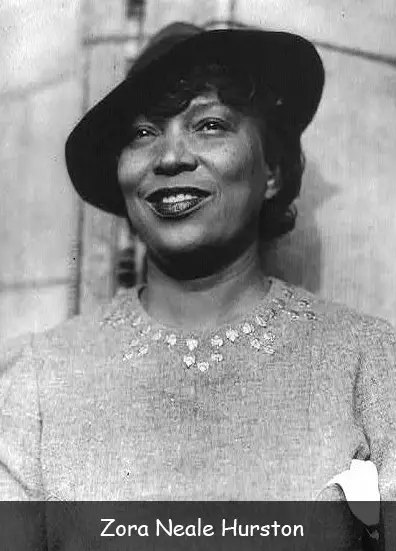
  • A group of African-American writers, poets, artists, musicians, and composers in New York began producing work that explored life for African-Americans. Their creative output was known as the Harlem Renaissance. Writer, Zora Neale Hurston, and poet/playwright, Langston Hughes, were part of this cultural movement.
  • Access to radio shows allowed people to listen to music, news shows, and variety hours at home. Musicians, such as George Gershwin, Duke Ellington, Louis Armstrong, and Bessie Smith became famous.
  • Film technology improved and film production companies began making movies in Hollywood, California. The first movies were black and white and featured no sound. These silent films delighted audiences who poured into large movie palaces to view them. Mary Pickford, “America’s Sweetheart,” and her husband, Douglas Fairbanks, were among the most famous movie stars, along with Charlie Chaplin. These three collaborated to form United Artists.
  • Spectator sports became a popular pastime too. George Herman “Babe” Ruth is perhaps the best-known baseball player of all time. He set a home-run record that wasn’t broken until 1961.
  • I hope this email finds you well. I’m the editor for “Spark” magazine and I’m currently working on the summer issue, which has a theme of early literacy and writing. I’m searching for teachers and ECs who are especially passionate about this topic that might like to contribute to the magazine. Can you think of anyone in your area that might fit the bill? Thanks.

Vocabulary

  1. Conservative: serious, careful, thoughtful
  2. Flourish: to prosper or thrive
  3. Spectator sport: a sport that others (spectators) watch, such as tennis, football, or boxing

Questions and Answers

Question: How did the Roaring Twenties change America?

Answer: For the first time, a younger generation was openly rebellious against the older generation.Long-standing traditions were thrown aside and forgotten. During the Twenties, Americans became interested in entertainment and buying goods.Many went into debt to buy things they couldn’t really afford.

Learn More

Visit Scholastic to learn more about the Roaring Twenties.

America Enters World War I

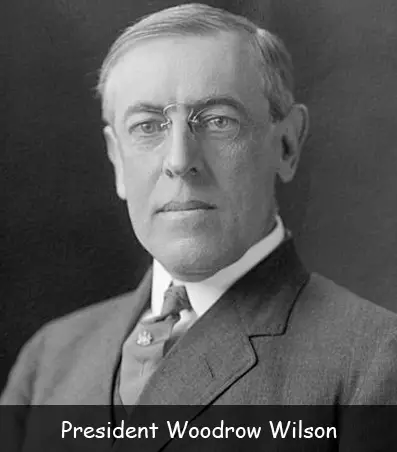
President Wilson had urged neutrality and was determined to keep America out of World War I, until 1917, when Germany U-boats (submarines) began attacking U.S. cargo ships. The last straw came when Germany demanded that Mexico invade the U.S.

America Enters World War I

Fun Facts

  • The American war effort took time and preparation, starting with the draft. All men, ages 21 to 31, were required to sign up for military service. These men were given assignments and sent to training. Later, all men ages 18 to 45 had to sign up for the draft. Three million men were ordered to join the army; another two million volunteered.
  • As white men were shipped to Europe to fight, they left many jobs behind. These jobs were filled by women and African-Americans, and ranged from factory jobs to jobs as mail carriers, trolley operators, or ambulance drivers. Many women had been homemakers and had never had a job outside their homes.
  • While American troops went to battle, the people left at home tried to support them. Herbert Hoover, head of the Food Administration, asked Americans to grow vegetable gardens (Victory Gardens) and use food carefully so that more food could be sent to the troops. Americans were also asked to cut down on their use of fuel for cars and lights.
  • American troops arrived in France in 1917. The Germans had marched through Belgium and were invading France. Their goal was to reach Paris, where they expected the Allies to surrender. European troops had been living in trenches – mud-filled and rat-infested tunnels dug in the ground. They were sick, traumatized, and war-weary. American troops arrived just in time, providing a new sense of energy and purpose, as well as military strength.
  • The U.S. Navy played an important role, as well. German U-boats had been a powerful force, terrorizing both civilian and military ships. American and British fleets worked together to create a convoy system. Ships began traveling in a group, surrounded by antisubmarine destroyers. Once this convoy system was in place, not a single ship was lost to the U-boats.
  • Until the arrival of 100,000 U.S. troops in France, the Germans had the advantage and expected to win the war. But Allied troops won two major battles and cut the German’s main supply line. In November, 1918, German officers signed a treaty, ending the war.

Questions and Answers

Question: What was fighting like for the soldiers?

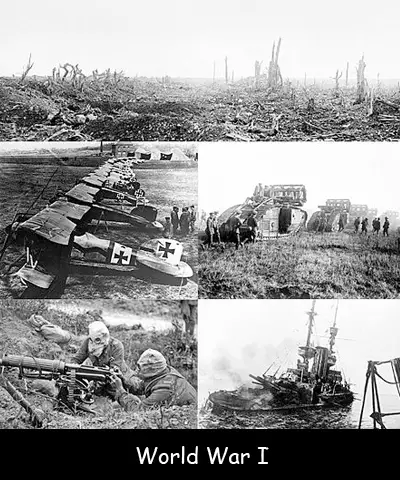
Answer: Modern weapons, such as machine guns, tanks, torpedoes, and mustard gas, made war a much deadlier, bloodier experience. The New York Times wrote, “War is now so dreadful, it cannot happen.” Troops lived in filthy trenches, completely exposed to the elements. They ate rations – food packed in tin cans – and used nearby holes and trenches as toilets. The dead often lay nearby for weeks before they could be buried.

Learn More

Visit Scholastic to meet a veteran from World War I.

World War I: The Beginnings

European countries had, for many years, been divided by a system of alliances. Germany, Italy, and Austria-Hungary had created the Triple Alliance in 1882. Russia, Great Britain, Belgium, and France formed alliances between 1894 and 1907. The countries in these alliances pledged to offer support and aid if one of their partners was attacked by another country. These alliances were designed to ensure peace and protection, but they may have increased tension in Europe.

World War I: The Beginnings

Fun Facts

  • On June 28, 1914, a Serbian nationalist assassinated Archduke Franz Ferninand, heir to the Austro-Hungarian throne, and his wife. The nationalist was angry about Austria-Hungary’s control of Bosnia-Herzegovina.
  • In retaliation, Austria-Hungary declared war on Russia. Germany and Italy sent troops to support Austria-Hungary. France and Great Britain went to war in defense of Russia. Soon, almost all of Europe was at war.
  • Norway, Sweden, Denmark, Switzerland, Spain, and Albania did not belong to either of the alliances and did not go to war. These countries remained neutral.
  • In August, 1914, President Woodrow Wilson released a letter stating that America would remain neutral. He asked Americans to be calm, but the American people were not neutral. Most Americans wanted the allies (France, Russia, and England) to win. Many Americans did not like the Germans because of press accounts of their extremely cruel behavior during the war.
  • In May, 1915, a German U-boat used torpedoes to sink the British ship, Lusitania. In the past, military people tried to keep civilians from harm. The Lusitania was carrying weapons, which is why the Germans sunk it, but it was also carrying civilian passengers. 1,198 people died, including 128 American citizens. Americans were outraged. President Wilson sent a series of messages to Germany in protest and the country began making preparations for war.

Vocabulary

  1. Alliance: an agreement of support
  2. Retaliation: the act of striking back
  3. Neutral: impartial, not taking sides

Questions and Answers

Question: What would have happened if Russia and Austria-Hungary hadn’t had support from other countries?

Answer: It’s hard to say, but it seems likely that, without the military support from other countries, they would have settled their dispute peacefully; if they engaged in war, it probably would have been much shorter.

Learn More

To read more about World War I, visit National Geographic Kids.

Growing American Influence

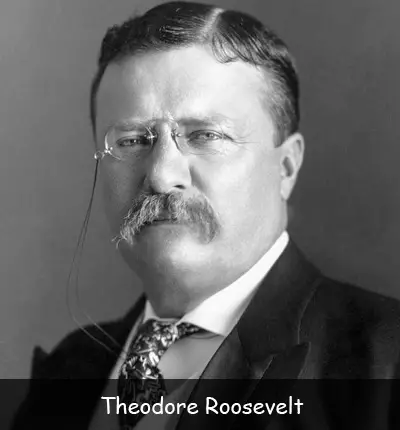
The spanish American war was a changing point for America because it highlighted the nation’s growing military might to the world. When Vice President, Theodore Roosevelt took office after President William McKinley was assassinated, he quickly moved to capitalize on America’s new-found influence.

Growing American Influence

Fun Facts

  • War broke out between the Japanese and Russia in 1904. American leaders were concerned that the Japanese might move into the Philippines, an American colony. President Roosevelt met with Russian and Japanese leaders in Portsmouth, New Hampshire to work out a treaty of peace, ending the fighting between the two countries. Roosevelt was awarded the Nobel Prize for his efforts and the U.S., for the first time, took on the role of mediator between warring countries.
  • President Roosevelt often quoted an old African proverb, “Walk softly and carry a big stick,” which means, “Work for peace, but be prepared for war.” In December, 1907, he sent a group of 16 battleships on a world-wide cruise. “The Great White Fleet,” as it was called, gave the world a clear picture of the U.S.’s military might – or big stick.
  • European powers were interested in expanding trade with China, which as the world’s most populous country, was a rich source of business. The European leaders wanted to restrict China’s trade so that certain areas of China would trade with certain parts of Europe. Secretary of State, John Hay, saw that the U.S. would be left out of these business arrangements. He sent letters to European leaders asking them to allow free trade for all countries with China. The European leaders consented, another sign that they recognized America’s strength.
  • After the Spanish-American War, the U.S. gained the Philippines and Hawaii, giving it more power and influence in the Pacific and Asia. The navy wanted a way to send ships easily from the Atlantic to Pacific Oceans. President Roosevelt authorized the building of the Panama Canal, a 40-mile long canal that ran through the Isthmus of Panama. The U.S. government paid Panama $10 million plus an annual fee of $250,000.

Vocabulary

  1. Capitalize: take advantage of
  2. Assassinate: murder of a prominent leader
  3. Restrict: limit

Questions and Answers

Question: How long did it take to build the Panama Canal?

Answer: The French originally started work on the Panama Canal, but that venture failed. Americans took over the project in 1904 and completed it in 1914. Over 25,000 workers died during the building of the canal, most from tropical diseases or accidents.

Learn More

Visit Time Magazine Kids to see the Panama Canal today.