All posts by americanadmin

The Fisher Building

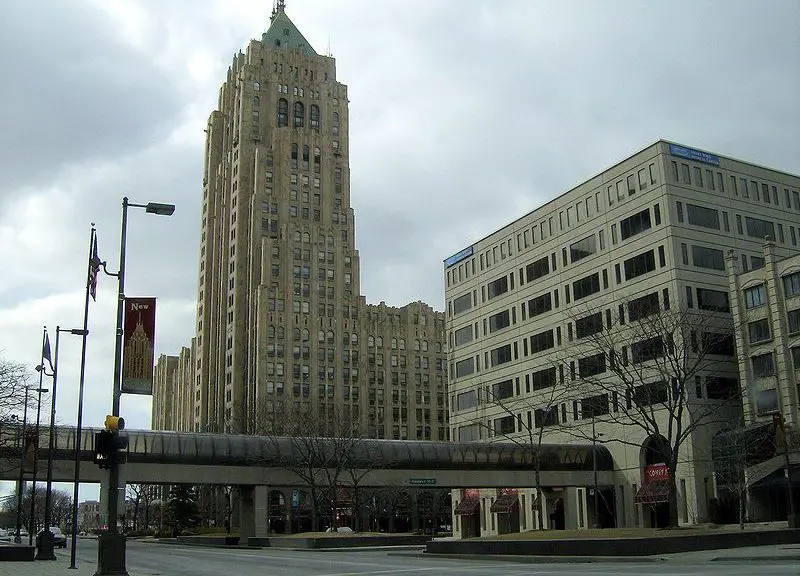
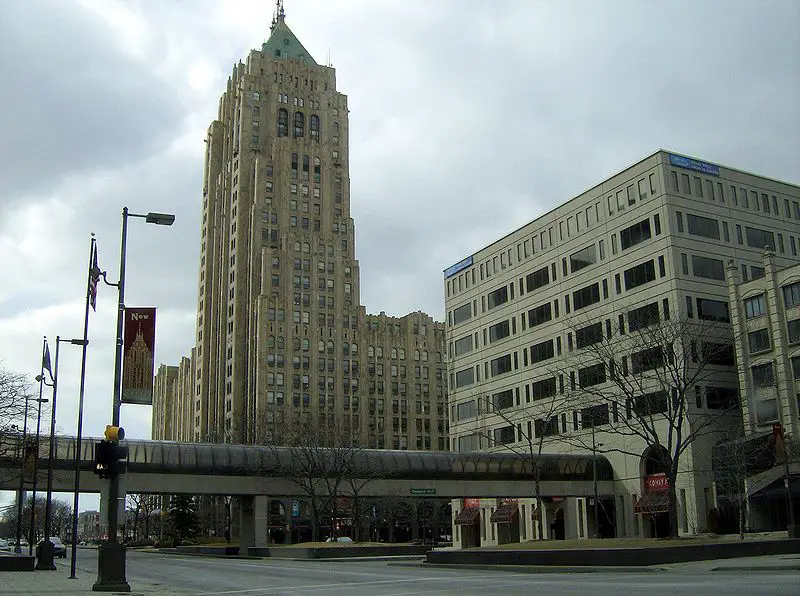
The Fisher Building, designed by Albert Kahn, was completed in 1928. It’s often called “Detroit’s largest work of art” because of its art deco style, lavish interiors, and marble finishes.
Fisher Building

Fun Facts

  • The Fisher Building sits in the New Center area of Detroit and rises 30 stories.
  • Joseph National Finch, one of the architects at Albert Kahn’s office envisioned a complex with three buildings. Tight finances during the Great Depression reduced his plan to one building.
  • The outside of the Fisher Building has rounded windows and doors, typical of art deco style. The interior features elaborate ceiling murals.
  • The Fisher Family owned Fisher Body, one of the first auto factories in Detroit. The family sold their auto business to GM Motors and used some of the proceeds to finance the Fisher Building.
  • The building originally had gold leaf tiles on the roof. During World War II, the tiles were covered with asphalt to reduce the building’s prominence as a protection from enemy bomber pilots. After the war, the asphalt could not be removed without damaging the roof, which was then covered with green tiles. The tiles are lit up for St. Patrick’s Day and other holidays.
  • Today the Fisher Building houses the oldest live theater in Detroit, which regularly shows pre-Broadway performances.
  • The Detroit Public School District headquarters are housed here too.


Vocabulary

  1. Lavish: luxurious, extravagant
  2. Mural: painting on a wall surface


Questions and Answers

Question: How old is the theater?

Answer: The original plans included a theater, which could seat 3,500 patrons, and became a movie theater after the Great Depression. The theater was renovated in 1961. It now holds 2,089 larger seats and includes a spacious lobby.


Learn More

Watch workers restore the murals in the lobby.
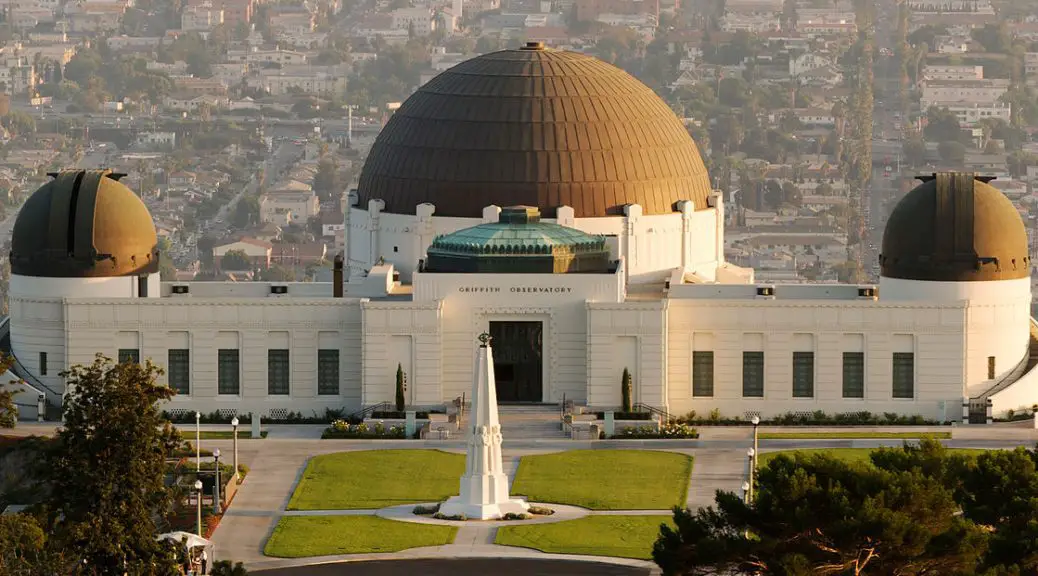
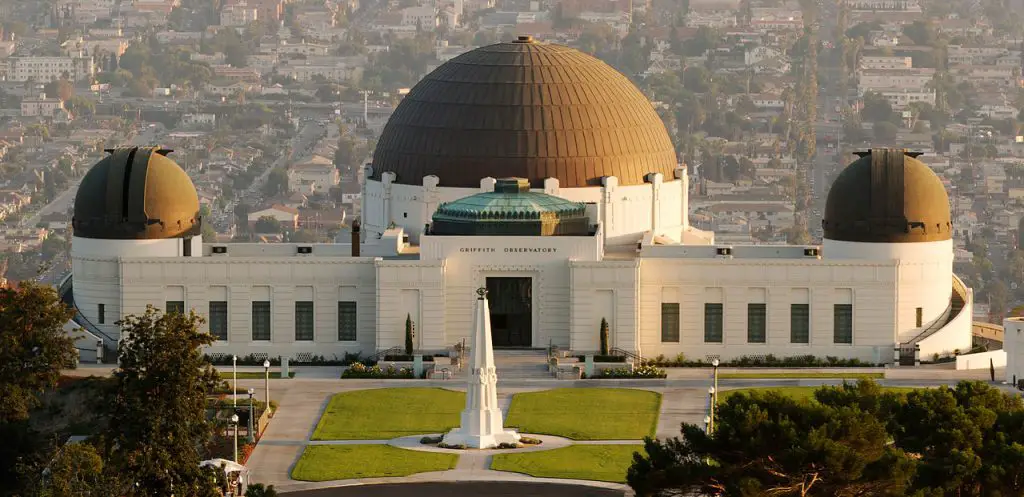
Griffith Observatory

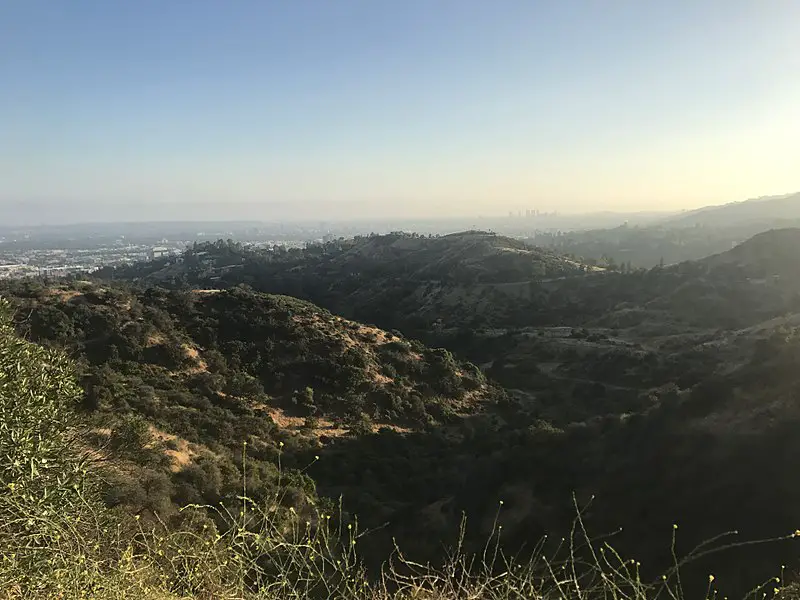
The Griffith Observatory sits in the hills above Los Angeles with a view of the ocean, Hollywood, and downtown L.A. When it opened in 1896, it was only the third planetarium in the country.

Griffith Observatory

Fun Facts

  • The observatory is in Griffith Park, a 3,015 acre public park. It was commissioned by Griffith J. Griffith, who in 1896 donated the land to the city and allotted funds to be used for an observatory, planetarium, and exhibit hall.

    Griffith Park

  • At that time, planetariums and observatories were open primarily to scientists and they were usually built in remote places. Griffith wanted science and space study to be available to everyone.
  • The architect, John C. Austin, designed the observatory in a Greek Revival/Art Deco style. Admission to the observatory is free.
  • More than 7 million people have visited the observatory since 1935 to look through its 12-inch Zeiss refractor.
  • In 2006, the building was renovated and expanded to include a restaurant and more exhibit rooms, which hold science and space artifacts.


Vocabulary

  1. Allot: set aside for a specific purpose
  2. Exhibit: a display


Questions and Answers

Question: What is the observatory known for?

Answer: The observatory, which sits high on a hill, is very recognizable and has been featured in many movies, including Transformers.


Learn More

Learn about the observatory and the park.

Salt Lake City Temple

During the early days of the Church of Jesus Christ of Latter Day Saints, converts experienced intense religious persecution from many people.

They fled west after the governor of Missouri issued an extermination order, their leader Joseph Smith was killed, and their temple in Nauvoo, Illinois was burnt by mobs.

These early “saints” as they were called settled in the Salt Lake Valley in Utah and began building a temple soon after.

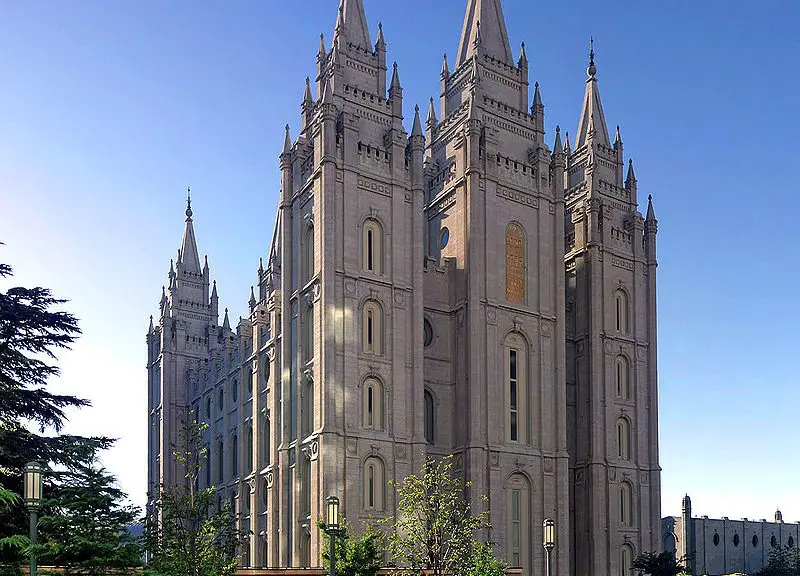
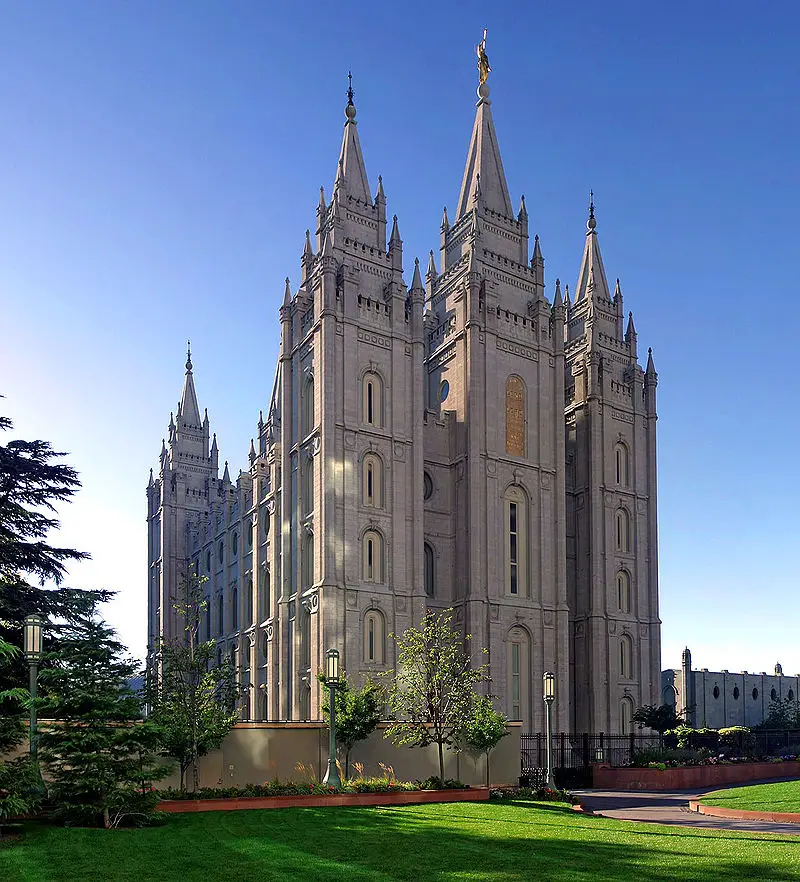
Salt Lake Temple

Fun Facts

  • The pioneers left Winter Quarters in Missouri in the spring of 1847 and arrived in Salt Lake on July 24, 1847.
  • The pioneers were very tired after their journey. They had come through hot, dry weather in wagons and on foot. Many of them were sick with mountain fever. They began plowing the land to plant crops and building cabins.
  • Four days after they arrived in the valley, their leader Brigham Young chose a site to build a temple. A temple has special religious significance to members of the Church of Jesus Christ of Latter Day Saints.
  • The Salt Lake Temple took 40 years to build. Men took time off from farming to haul granite from a nearby canyon for the walls of the temple, which are 9 feet thick.
  • The temple is beautifully ornate with towering buttresses and carvings of stars, the sun, and the moon.
  • On the temple grounds sits the old tabernacle, which was used as a primary meeting place for many years. Concerts and events are still held here. The grounds are large and very well-tended with sculptures, a pool, and beautiful flower gardens. People love to visit at Christmas time when the grounds are lit up with lights.
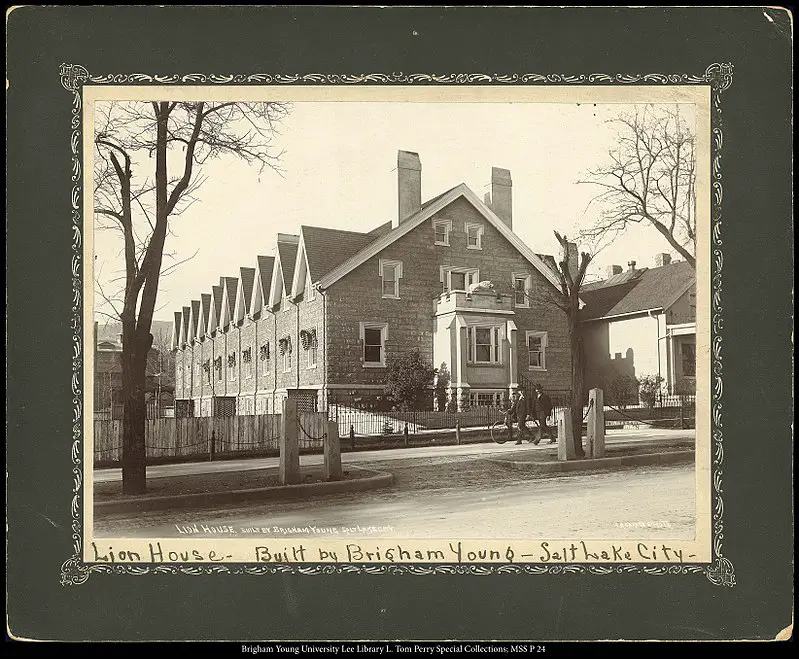
  • Around the corner from the temple is the Lion House restaurant and the Lion House Museum, where Brigham Young once lived with his family.

    Lion House

Vocabulary

  1. Saint: someone who professes to follow Jesus Christ
  2. Persecution: mistreatment, bodily harm, or even death
  3. Extermination order: troops in Missouri were ordered to remove or kill Mormons from the state
  4. Ornate: detailed


Questions and Answers

Question: Can anyone visit the Salt Lake Temple?

Answer: Only members of the Church of Jesus Christ of Latter Day Saints can go inside the temple, but anyone can walk on the grounds. Docents are there to answer questions. In 2020, the temple was closed for a major renovation. It is expected to reopen in 2024.


Learn More

Look at pictures of the Salt Lake Temple and other temples.

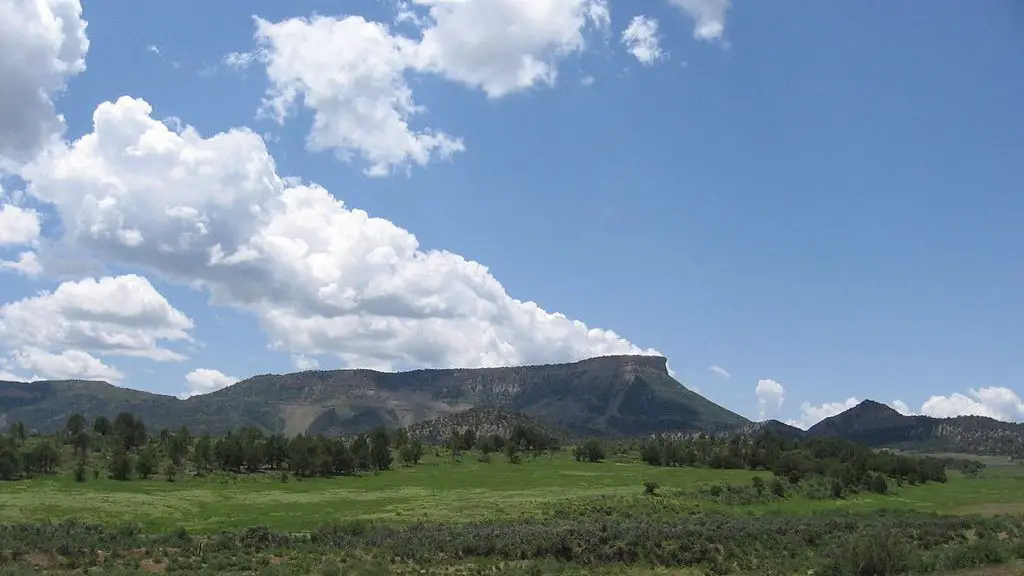
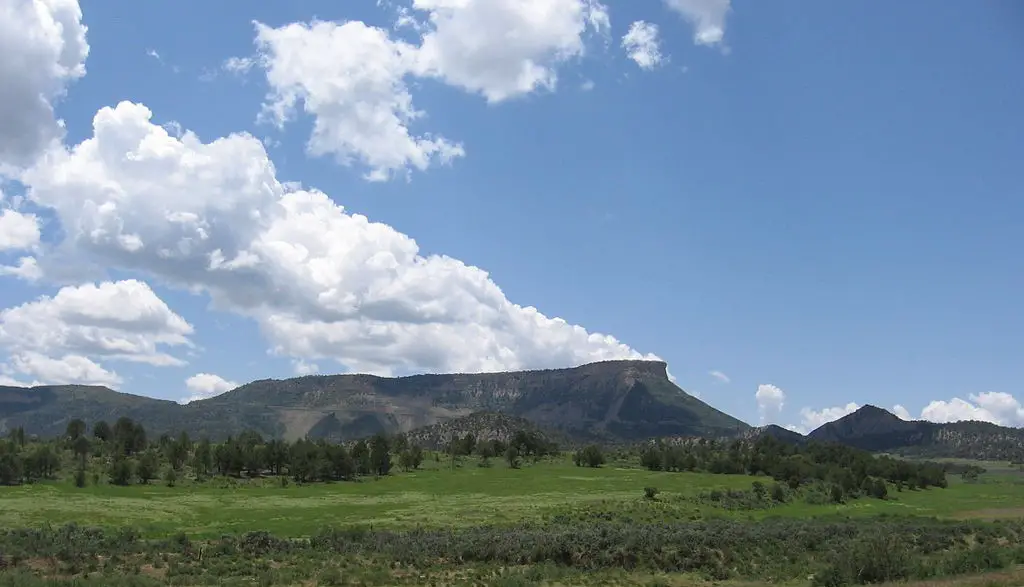
Mesa Verde National Park

In the Four Corners region of southern Colorado lies Mesa Verde National Park, home to the cliff dwellings of an ancient people. Imagine a huge complex of rooms carved out of sandstone and glued together with adobe mortar.

Mesa Verde National Park

Fun Facts

  • Mesa Verde National Park was established in 1906 by President Theodore Roosevelt and Congress. The park covers 52,485 acres with more than 600 cliff dwellings. It’s the largest archaeological preserve in the United States.
  • Around 7500 BC, nomadic Paleo-Indians visited the area seasonally. By 1000 BC, the Basketmaker Culture had become established here. These people lived by hunting, gathering, and growing corn, squash, and beans. They made beautiful woven baskets, mats, sandals and other materials.
  • By 650 AD, the Pueblo Indians had moved here and began building the cliff dwellings we see today. Their society became more complex. They traded with other groups, made large pueblo structures, and developed food stores. Their population grew too.
  • In the 13th century, a 69 year drought brought famine, social problems, and war. The pueblos fought among themselves and also outside groups. Archaeologists have found evidence of massacres and cannibalism. Climate change that brought first drought and then cold temperatures was a major factor. Another problem was the pueblo people’s reliance on corn for food. When corn crops failed, they went hungry. Thousands of people left for a warmer climate, more water, and bison on the Rio Grande River.
  • The Pueblo people used astronomy for location, planning crops, and for religious ceremonies. A temple at Mesa Verde was built to capture the first rays of sunlight during winter solstice.
  • These people built reservoirs and other devices to store and move water to crops. They domesticated wild turkeys and made pottery.
  • Spanish missionaries were the first Europeans to explore the area in 1776. The Ute Indians often lived in the valley, but they believed the cliff dwellings are sacred ancestral homes and never lived in them.


Vocabulary

  1. Mortar: a glue-like material used for securing building materials
  2. Famine: severe lack of food
  3. Sacred: religiously significant


Questions and Answers

Question: Can people visit the cliff dwellings today?

Answer: People can visit the park and some of the cliff dwellings; not all the cliff dwellings can be entered or seen up close.


Learn More

Visit the official website for Mesa Verde.

Gettysburg Battlefield

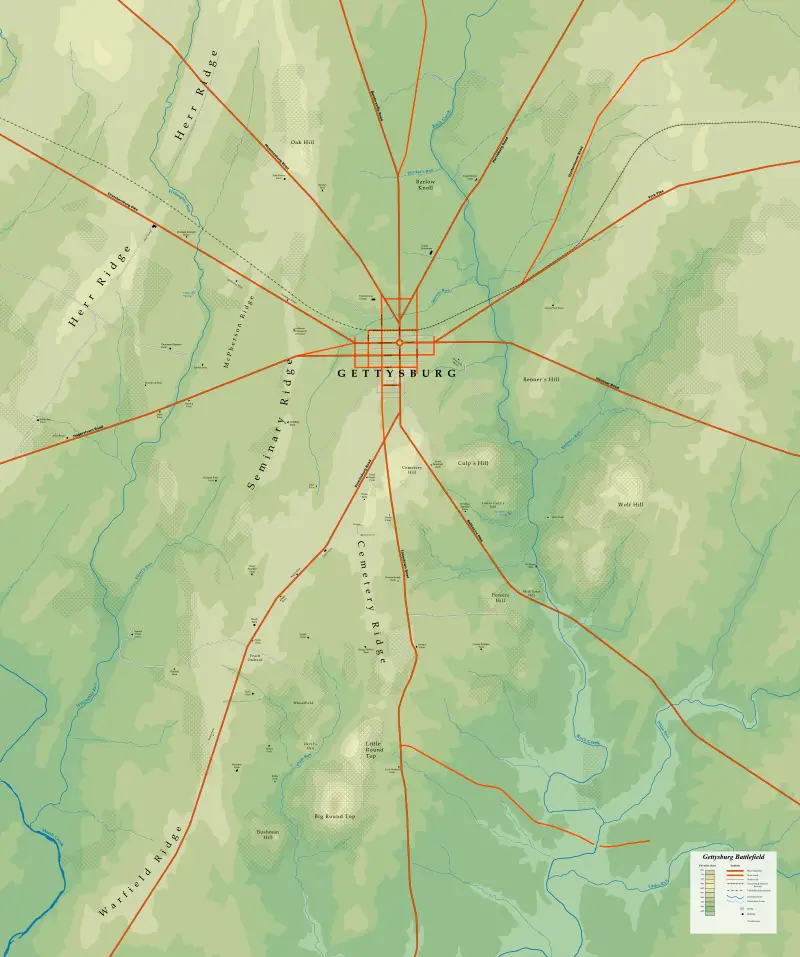
From July 1 through July 3, 1863, Union and Confederate soldiers fought a fierce battle in the borough of Gettysburg, Pennsylvania, near the Maryland state line.

When the battle ended, 8,900 soldiers lay dead on the field. 22,000 wounded soldiers were treated in homes, schools, and a hospital nearby. Today the area memorializes this sad time in American history.

Gettysburg Battlefield

Fun Facts

  • Confederate general Robert E. Lee had repeatedly defeated Union troops and was rapidly moving north.
  • The Union and Confederate troops met and tangled for three days at Gettysburg. The ensuing battle was the bloodiest of the Civil War. It was also a turning point for the Union army, which defeated the Confederates and stopped Lee’s march northward.
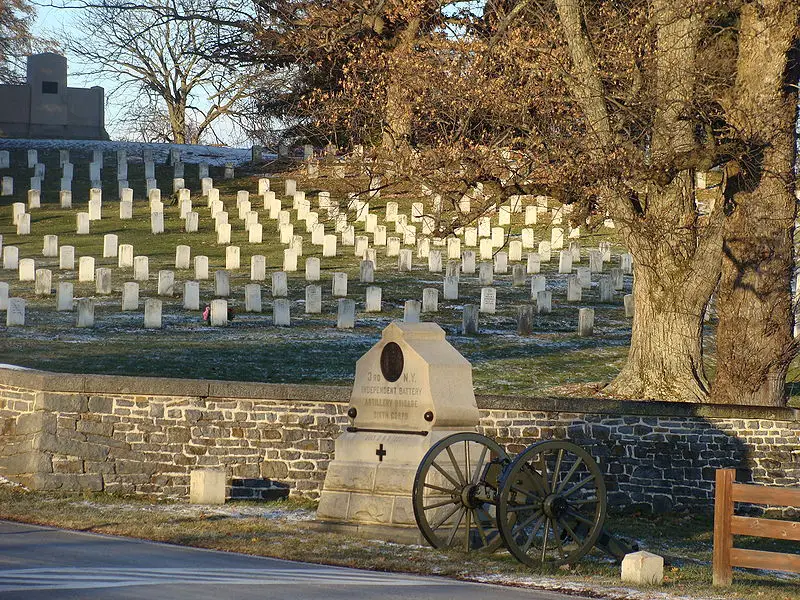
  • After the war, Union leaders began burying the dead, many where they had fallen. They soon began discussing the need for a national cemetery, raising funds, and developing plans for it.
  • Four months later, on November 19, 1863, President Abraham Lincoln gave a dedicatory speech at the cemetery. This speech became known as the “Gettysburg Address” and is one of the most well-known and influential speeches in American history.

    Gettysburg Address

  • Lincoln’s speech was very brief – only 271 words – but he talked about how America was founded on the idea that all men are created equal and must be free. He urged Americans to remember the men who died at Gettysburg and to resolve to support the ideals of liberty and equality. He said that our nation would rise or fall based on our ability to do this.
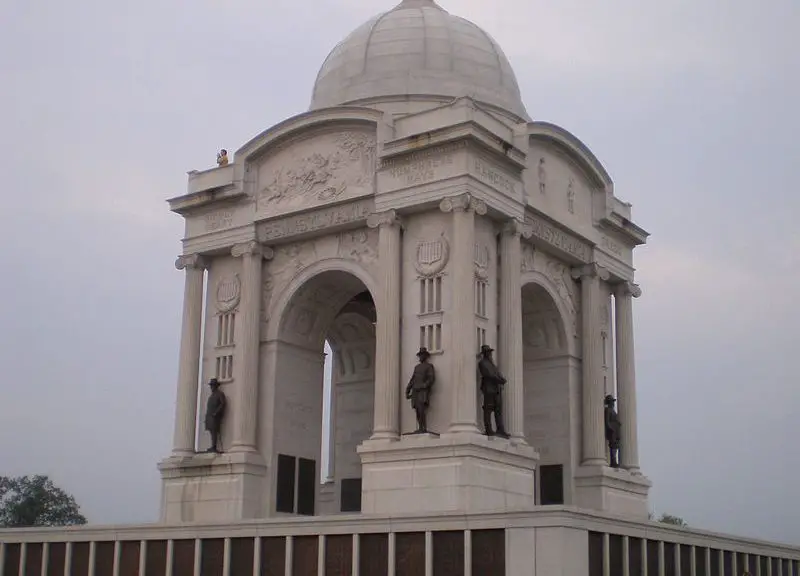
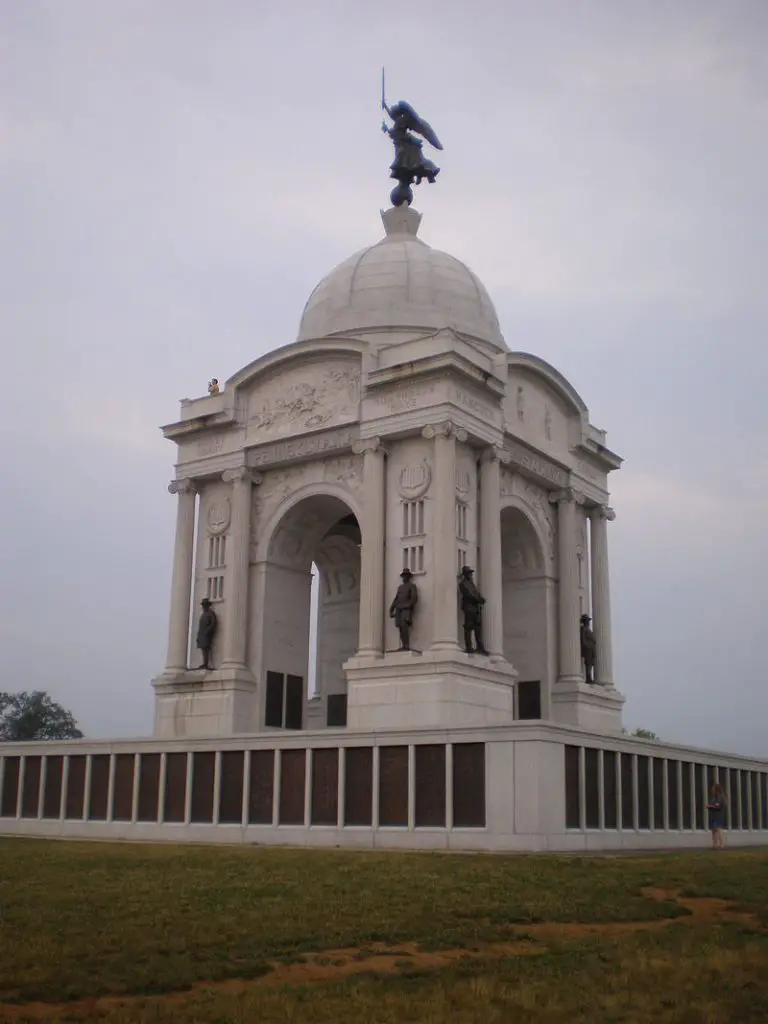
  • Today visitors to the Gettysburg Battlefield can view key landmarks, memorials, and the Soldier’s National Cemetery.

    Gettysburg Battlefield Memorials

Vocabulary

  1. Liberty: freedom and justice
  2. Landmark: a place that marks an important moment or event


Questions and Answers

Question: Were the Confederate soldiers buried in the National Cemetery?

Answer: They were originally buried on the battlefield, but their bodies were later sent to cemeteries in Georgia, North Carolina, and South Carolina.


Learn More

Watch a video about Abraham Lincoln’s Gettysburg Address.

Historic Jamestowne

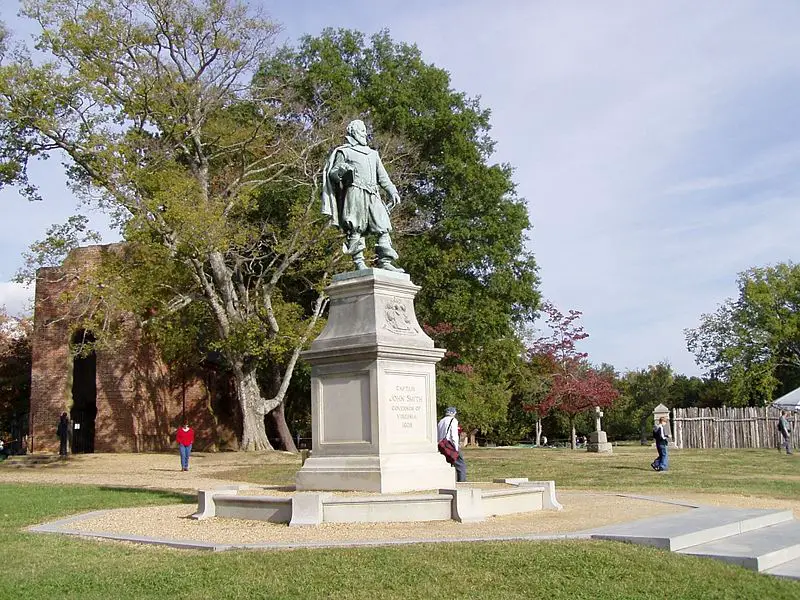
Established in 1607 by the Virginia Company under a charter given by King James I, Jamestown was the first English settlement in North America. Unfortunately, it was doomed to fail, but it can be remembered as America’s birthplace.

Historic Jamestowne

Learn More

  • England was a relatively poor country in the late 1500s and Queen Elizabeth and King James were not willing to risk state money for exploration.
  • Instead, wealthy investors pooled their money together to charter ships for exploration.
  • 104 settlers arrived in Jamestown, which was situated on Jamestown Island, 60 miles from the mouth of the Chesapeake Bay in Virginia. They quickly began building a fort, but were attacked within days by the Powhatan Indians.
  • The company succeeded in building a fort and planting crops, mostly tobacco, but they struggled with disease, starvation, and Indian attacks.
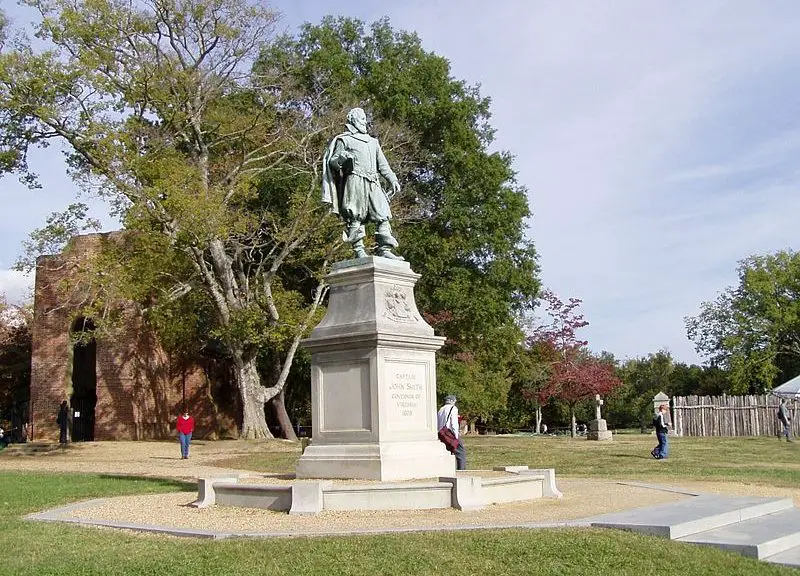
  • John Smith was good at trading glass beads, copper, and iron tools with the Indians in exchange for food. He was injured in a gunpowder explosion and sailed back to England in 1609.
  • After his departure, the settlers endured a very hard winter from 1609 to 1610, which they called “the starving time.” Out of the 300 men living in the fort only 60 survived.
  • In 1614 Pocahontas, daughter of Indian chief Powhatan married tobacco grower John Rolfe. The colony was peaceful until Powhatan’s death when his brother became chief and ordered his men to attack the colony in 1622, killing one-third of the men.
  • In 1619, the first representative assembly met to organize an equal government. Just a few weeks later, the first slaves arrived from Africa.
  • The town of Jamestown spread further east and the fort was abandoned. In 1676, the town was burned almost to the ground by Nathaniel Bacon and his men in a rebellion against the governor of Virginia.
  • In 1699, the capital moved to Williamsburg and the town of Jamestown disappeared, becoming farm land.
  • Today, archaeologists continue to uncover remnants and artifacts from the early settlement of Jamestown. Visitors can view these artifacts and learn about the culture of the settlers and Powhatan Indians.


Vocabulary

  1. Departure: someone’s leaving
  2. Artifact: tools, clothing, and belongings left behind by a group or individual


Questions and Answers

Question: Why did the settlers go to Jamestown?

Answer: Unlike the Puritans, who were seeking religious freedom, the settlers came to Virginia looking for gold and a passageway to the Pacific Ocean.


Learn More

Visit Historic Jamestowne’s website.

Crazy Horse Memorial

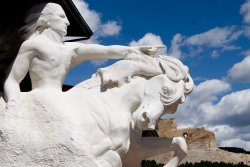
The Crazy Horse Memorial, in the Black Hills region of South Dakota, memorializes Oglala Lakota warrior Crazy Chief. The project is funded by private donation, not the government, and has taken almost 100 years.

Crazy Horse Memorial

Fun Facts

  • In 1931, Luther Standing Bear wrote a letter to Gutzon Borglum, the sculptor of the presidents at Mount Rushmore, asking him to include a portrait of Crazy Horse. He said he wanted white men to know that red men had heroes too. Borglum never answered the letter.
  • Lakota Elder Henry Standing Bear and his brother Luther kept trying. They contacted Korczak Ziolkowski, a Polish sculptor who had worked under Borglum. He agreed to help them with the sculpture of Crazy Horse.
  • His design called for a huge sculpture. Crazy Horse’s head is 87 feet tall, while the men’s heads depicted at Mount Rushmore are only 60 feet tall.
  • Although the U.S. government offered more than $10 million on two occasions to fund the project, Ziolkowski turned the money down. He was afraid the government would take control of the project.
  • The project has been funded by private donations from wealthy individuals, as well as sales from the gift shop and visitors’ center.
  • Henry Standing Bear traded 900 acres of fertile land to the U.S. government through the Department of the Interior for the barren mountain where the sculpture is carved.
  • When Ziolkowski died in 1982, his widow Ruth kept the project going, along with seven of her 10 children. Today Monique Ziolkowski, the couple’s daughter and a sculptor, continues the project with two of her siblings and other family members.
  • Some members of the Oglala Lakota tribe are unhappy with the sculpture. They say that Crazy Horse refused to have his photo taken and would not have liked it. They also believe that carving into the mountain top defaces their sacred ancestral land.


Vocabulary

Questions and Answers

Question: What does the sculpture look like?

Answer: The sculpture depicts Crazy Horse on horseback pointing into the distance.


Learn More

Visit the Crazy Horse Memorial website.

Martin Luther King Jr. National Site


Martin Luther King Jr  National Site

Fun Facts

  • The African American fraternity Alpha Phi Alpha first began discussing the idea for a memorial in the 1980s. Martin Luther King Jr. joined the fraternity in 1952 when he was studying theology at Boston University.
  • In 1996, the House and Senate approved the idea and in 1998, President Bill Clinton authorized the project. More than 900 designs were submitted by architects, designers, and even students.
  • In 2006, Chinese sculptor Lei Yixin was commissioned to work on the project.
  • The century-old family architecture firm McKissack & McKissack was chosen to oversee the project. Five generations of McKissacks had worked in construction, going back to Moses McKissack, who came from West Africa as a slave in 1790 and learned the trade from his master William McKissack. Moses taught his sons the trade and their children Calvin and Moses III started the company in 1905.
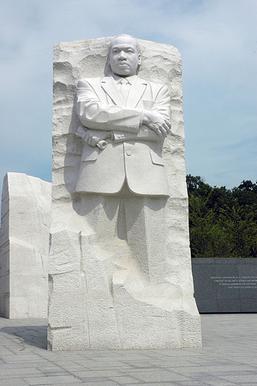
  • The memorial is based on a line from King’s I Have a Dream speech, “Out of the mountain of despair, a stone of hope. The stone of hope is a 30 foot tall sculpture of King carved from pink granite. The sculpture accurately depicts the man and shows him dressed in a suit, arms folded, looking to the horizon.
  • The Martin Luther King Jr. Memorial is the first memorial for an African American on the National Mall, and the fourth memorial of someone who was not a U.S. president.

    Martin Luther King Jr Memorial

Vocabulary

  1. Fraternity: a group of men organized (usually beginning in college) to achieve social or other goals
  2. Theology: the study of religion


Questions and Answers

Question: What else is included at the memorial?

Answer: There is a stone depicting the mountain of struggle and an inscription wall with fourteen quotes from Martin Luther King Jr., including:

  • “We shall overcome because the arc of the moral universe is long, but it bends towards justice.” (March 31, 1968, National Cathedral, Washington, D.C.)
  • “Darkness cannot drive out darkness, only light can do that. Hate cannot drive out hate, only love can do that.” (1963, Strength to Love)
  • “I believe that unarmed truth and unconditional love will have the final word in reality. This is why right, temporarily defeated, is stronger than evil triumphant.” (December 10, 1964, Oslo, Norway)
  • “Make a career of humanity. Commit yourself to the noble struggle for equal rights. You will make a greater person of yourself, a greater nation of your country, and a finer world to live in.”

Alcatraz – San Francisco

Alcatraz has been closed since 1963, but it’s still well-known as America’s strongest (and scariest) prison.

Fun Facts

  • Alcatraz Fort was built on Alcatraz Island, 1.25 miles off the coast of San Francisco in the 1850s. It was used as a military fort until 1910 when it was refurbished and became a U.S. Army military prison.
  • In 1933, the Department of Justice acquired it and in 1934, it became a federal prison.
  • America in the 1920s and 1930s was suffering the effects of the Great Depression and Prohibition. Crime was at an all-time high, especially in cities like New York and Chicago. Federal leaders hoped an escape-proof prison would discourage gangsters and other criminals.
  • The cold water and strong currents of the Pacific Ocean around Alcatraz Island made escaping very difficult. Alcatraz was known as the strongest prison in America.
  • The prison had a three story cell house with four cell blocks. It included a library, barbershop, dining room, and visitation room.
  • Each cell had a bed, desk, washbasin, toilet, and blanket.
  • Prisoners could do work, such as sewing, woodworking, or laundry, and play sports like baseball and basketball if they behaved well. Those that were violent were sent to The Hole, dark cells at the back of the prison where the prisoners were often brutally beaten by prison guards.
  • The first prisoners arrived in August, 1934, accompanied by 60 FBI agents. They included bank robbers, murderers, and gangsters.
  • Some of the most famous inmates include mobsters Al Capone and Mickey Cohen.
  • Mark Twain visited the island and said it was very eerie and cold, even in the summer.
  • 36 men tried to escape from Alcatraz. Most of them were either shot or drowned. One group escaped and possibly survived, crossing the water on a boat made from raincoats.


Vocabulary

  1. Eerie: creepy
  2. Refurbished: cleaned and fixed up


Questions and Answers

Question: Why did Alcatraz close?

Answer: Alcatraz had a terrible reputation and many people thought it should be closed because the prisoners were treated inhumanely. Additionally, it was a very expensive prison because of its location and the building’s age.

Today it’s owned and managed by the National Parks Service. More than 1.5 million people visit the museum here annually.


Learn More

Visit the Alcatraz Island website.

Bunker Hill Monument

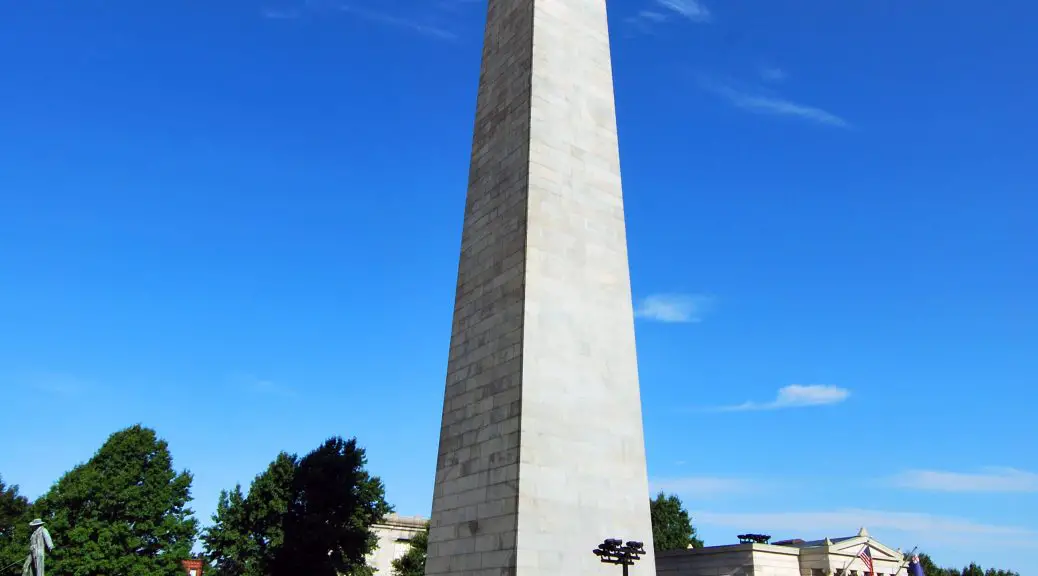
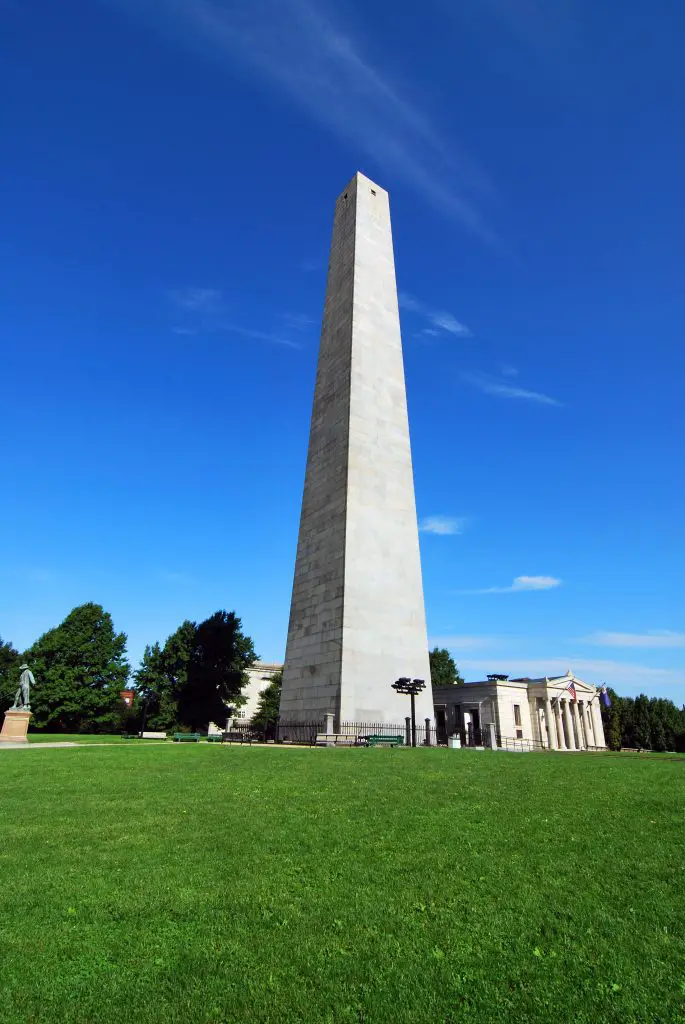
On June 16, 1775, the colonial militia in Boston received word that British soldiers, who were stationed in Boston, planned to place troops in the surrounding countryside of the Charlestown peninsula, which would give them even greater control over Boston Harbor. The militia stole to the peninsula at night, built a small redoubt, and were ready for battle when the British soldiers awoke the next morning. Bunker Hill Monument commemorates the Battle of Bunker Hill, one of the first battles of the Revolutionary War.

Bunker Hill Monument

Fun Facts

  • During the battle, the Continental Army was able to fend off two attacks from the British army successfully, but fled during the third attack because the soldiers ran out of gunpowder.
  • Prior to this battle, the British army had little fear of the colonial army, who was made up mostly of farmers, not trained soldiers. But this battle humbled the British army, which experienced heavy losses. In the skirmish were 2,400 British soldiers and 1,500 colonists. The British lost 1,150 soldiers, including several officers; 450 colonists died.
  • After this battle, the British were more cautious about engaging in battle with the Continental Army.
  • In 1823, prominent Boston citizen William Ticknor met with other citizens to discuss plans for a monument. Daniel Webster (of the dictionary) was there and plans were approved to begin.
  • A contest offering $100 for the best design produced 50 possibilities. Construction began in 1825, but took several years because the team often ran out of money and had to halt construction.
  • Sarah Josepha Hale and readers of her magazine offered the last funds needed to complete the monument.
  • The Bunker Hill Monument actually sits on Breed’s Hill, which is where most of the battle took place. To raise funds for the monument, the committee sold off most of the area which was Bunker Hill to become homes.
  • The monument is a 221-foot granite obelisk with 294 steps. The granite used for it was delivered via the Granite Railway, which was built for the purpose.
  • An exhibit lodge at the foot of the obelisk honors Dr. Joseph Warren, a colonial hero who died in the battle. A museum is nearby.

Vocabulary

  1. Peninsula
  2. Redoubt: a small, usually temporary, military fort or barricade
  3. Skirmish: fight

Questions and Answers

Question: Who was Joseph Warren?

Answer: At age 22, Joseph Warren was the youngest doctor in Boston. He quickly became a prominent member of the community and an outspoken critic of the British government. He gave speeches and wrote inflammatory documents demanding freedom. If he hadn’t died during this early battle, he might have been one of the Founding Fathers.

Learn More

Visit the website for the Bunker Hill Monument, which is on the Freedom Trail.