All posts by americanadmin

National Museum of African American History and Culture

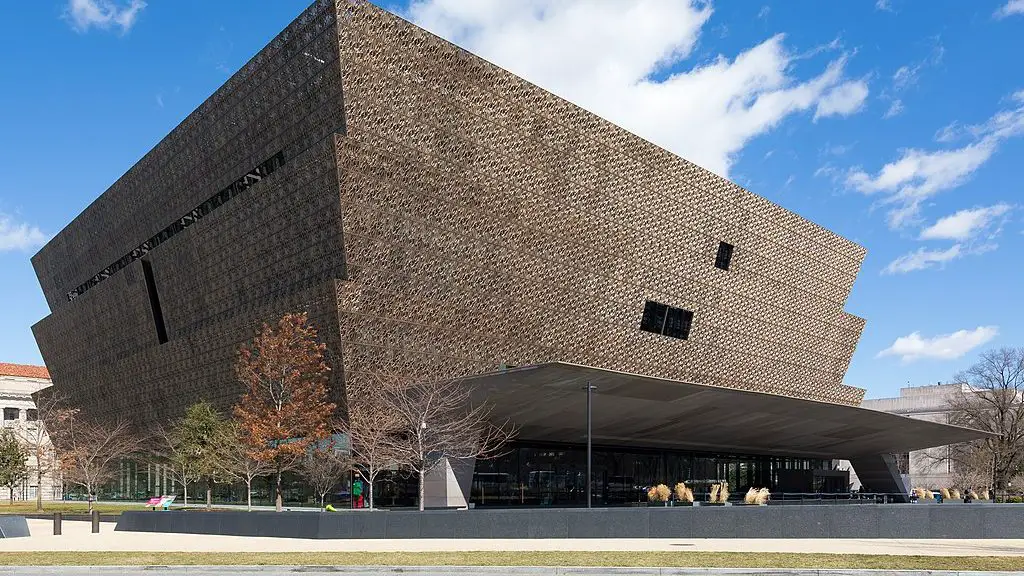
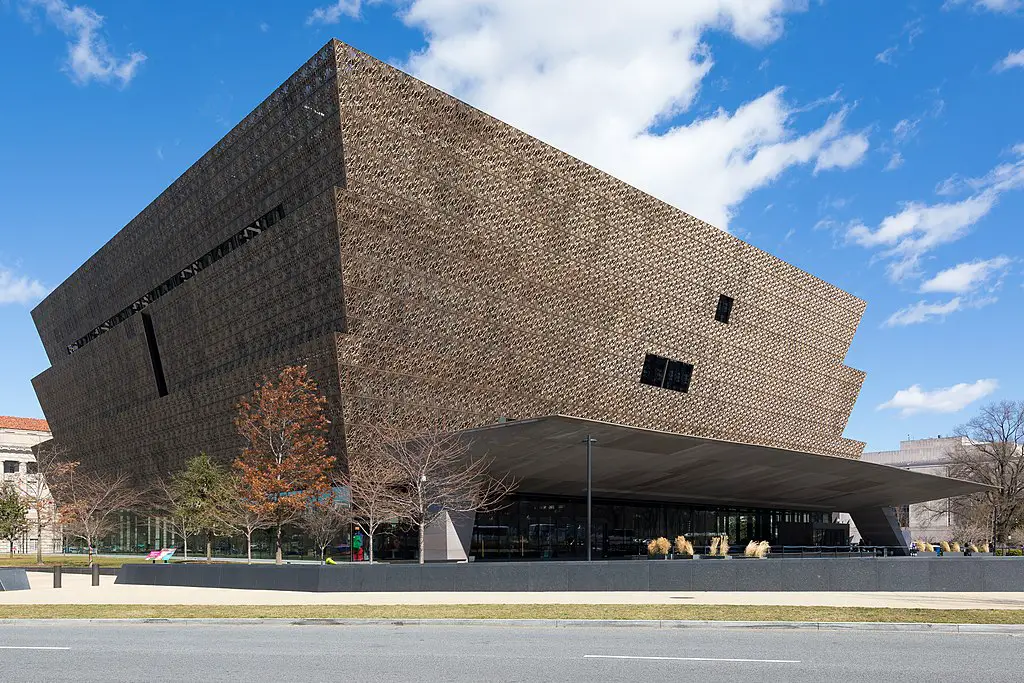
Near the Washington Monument in Washington D.C. sits the National Museum of African American History and Culture, part of the Smithsonian Institution, and the largest museum for African American culture in the country.
National Museum Of African American History And Culture

Fun Facts

  • Leaders began discussing the idea for a national museum on African American culture in 1915, but for years, plans and financing stalled. In the late 1980s, serious conversations resumed but it wasn’t until 2003 that an Act of Congress approved the plans.
  • Construction for the 400,000 square foot museum began in 2012 and the museum opened in 2016 with President Barack Obama leading the dedication.
  • The design plan was for a 10 story building, five stories above ground and five underneath. The site for the museum was on the south bank of Tiber Creek, which had been filled in the late 1800s. As construction crews dug into the ground, water began streaming into the hole. The architects were very worried, but came up with a solution. They built a large pool around the museum to hold the water.
  • The museum’s exterior design includes inverted bronze half pyramids that reflect Africa’s influence as well as the complex ironwork created by freed slaves in New Orleans and Charleston in the 1800s.
  • The museum includes a restaurant and several large exhibit rooms. Among the 40,000 objects owned by the museum are items from a sunken slave ship, a scarf given to Harriet Tubman by Queen Victoria, manacles used to enclose slaves’ hands and feet, Nat Turner’s bible, and a segregated drinking fountain.
  • One of the most poignant items in the museum is called “Ashley’s Sack,” a hand-embroidered feed sack given to a 9-year-old slave girl by her mother when she was sold away.
  • Some exhibits are sad and somewhat disturbing, portraying the “dark corners” of African American history and slavery.
  • Other exhibits show the contributions, “spirituality, optimism, and joy” of African Americans. For example, garments designed by Ann Lowe, an African American clothing designer whose clients included the Roosevelts, Rockefellers, and Jacqueline Kennedy are included.
  • A portion of Mae Reeve’s Philadelphia hat shop are displayed, along with Chuck Berry’s red Cadillac convertible and Muhammed Ali’s boxing gloves.


Vocabulary

  1. Exterior: outside
  2. Inverted: turned upside down
  3. Slave ship: ship upon which slaves were brought to Europe and the Americas, often after being kidnapped and/or sold


Questions and Answers

Question: How many people visit the museum?

Answer: The museum opened in 2016 and attendance has gradually increased. About 2 million people visit annually now.


Learn More

Visit the museum’s website to see exhibits.
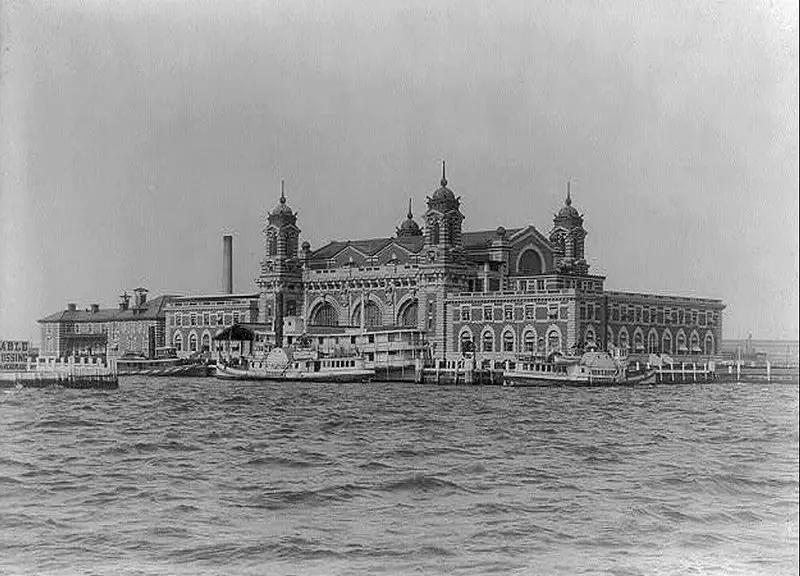
Ellis Island

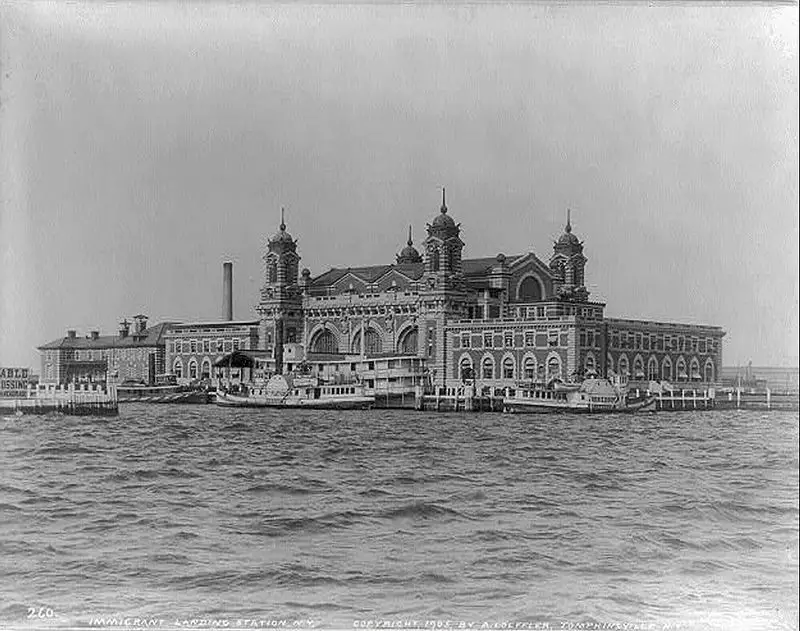
Ellis Island sits in New York Harbor and was one of the busiest immigration processing centers from 1892 to 1954. During this time, more than 12 million immigrants came through Ellis Island in search of a better life. Not all of them were allowed to enter the country though.

Ellis Island

Fun Facts

  • Before Ellis Island was Ellis Island, it was a small brackish island called Kioshke or Gull Island by the Mohegan people who fished and caught oysters here. In the 1760s, the island was occasionally used to execute captured pirates. In 1774, New York merchant Samuel Ellis purchased it and it was used for picnics and oyster bakes.
  • In the late 1800s, immigration to the United States surged. Many immigrants came to Castle Clinton in New York, but the federal government was concerned that the place was mismanaged and abused immigrants. In 1892, a new processing station was built at Ellis Island.
  • Ellis Island included the main building where immigrants were inspected, a kitchen, laundry, bakery, carpentry shop, baggage area, dormitory, powerhouse, hospital, and recreation hall.
  • First and second class passengers didn’t go to Ellis Island, but arrived in Manhattan and went directly to their destinations. Steerage passengers had to go through Ellis Island and arrived by ferry since most ocean liners couldn’t dock there because the water was so low.
  • Immigrants assembled in long lines where they were inspected by three doctors. If they were found to have diseases like smallpox, measles, scarlet fever, or whooping cough, they might be placed in isolation or taken to the hospital.
  • Those found with physical, mental, or emotional disabilities were often deported or sent back to wherever they came from. Additionally, they could be sent back for being too short, too tall, homosexual, too feminine, impoverished, or a variety of other reasons. Using chalk, doctors marked immigrants with symbols that meant specific disabilities or concerns.
  • A philosophy of eugenics became popular in the late 1800s and early 1900s in Europe and the United States. This philosophy was about creating a superior master race for a country by restricting immigration, marriage, and childbirth of those deemed defective. This philosophy could be seen in how people at Ellis Island were sometimes treated.
  • The island was sometimes called “Heartbreak Island” because immigrants, who had often come to escape religious persecution, poverty, famine, warfare, or political strife, were not allowed to enter America. On the other hand, the process took only a few hours (today’s immigration process can take months), cost nothing, and required no passports or visas.
  • During the Spanish influenza outbreak of 1918, more than 3,000 people died in the Ellis Island hospital.


Vocabulary

  1. Steerage: a category of passengers with little money, typically stayed in cramped quarters in the bottom of ships
  2. Ferry: small boat
  3. Dormitory: sleeping rooms


Questions and Answers

Question: How big is Ellis Island?

Answer: Originally, Ellis Island was just over 4 acres. In the 1800s, workers expanded it through a method called land reclamation.

They used timbers from ships, the first New York subway system, and railways, along with bags of cement, concrete, and granite, to create a framework that they filled with soil to create artificial land.

Today Ellis Island is more than 27 acres. The original island was low-lying and covered with water at high tide—not much use to businessmen. It was also home to birds, fish, oysters, and other wildlife.


Learn More

Watch a video and see images of Ellis Island.

Pearl Harbor National Monument

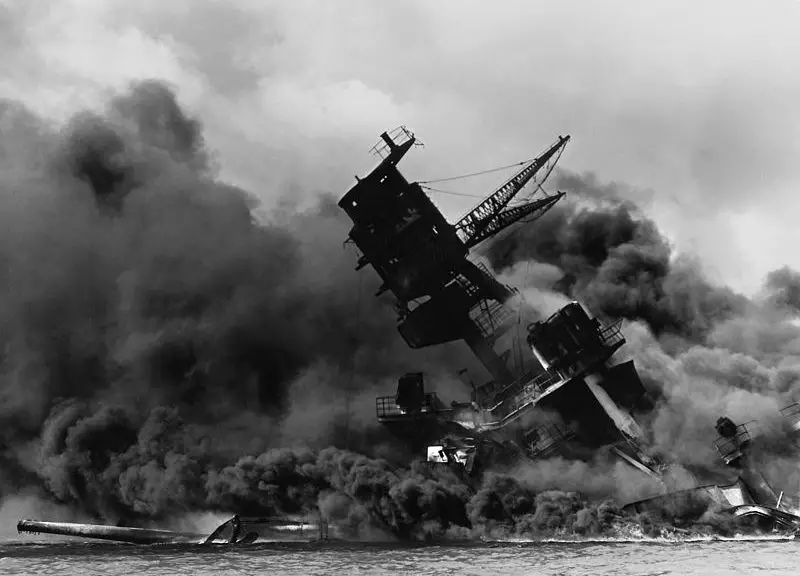
On December 7, 1941 the Imperial Japanese Navy Air Service launched a surprise military attack by air on a U.S. naval base in Honolulu, Hawaii. The damage was terrible and the U.S. declared war on Japan the next day, launching the country into World War II.

Pearl Harbor National Monument

Fun Facts

  • The United States had hoped to remain neutral during World War II, believing it was a conflict for Europe to sort out. Japan and the United States were experiencing conflict over oil supplies and U.S. and European involvement in Asian countries.
  • Then on December 7, 1941, the Japanese navy attacked Pearl Harbor with 353 Japanese aircraft which were launched from six carriers.
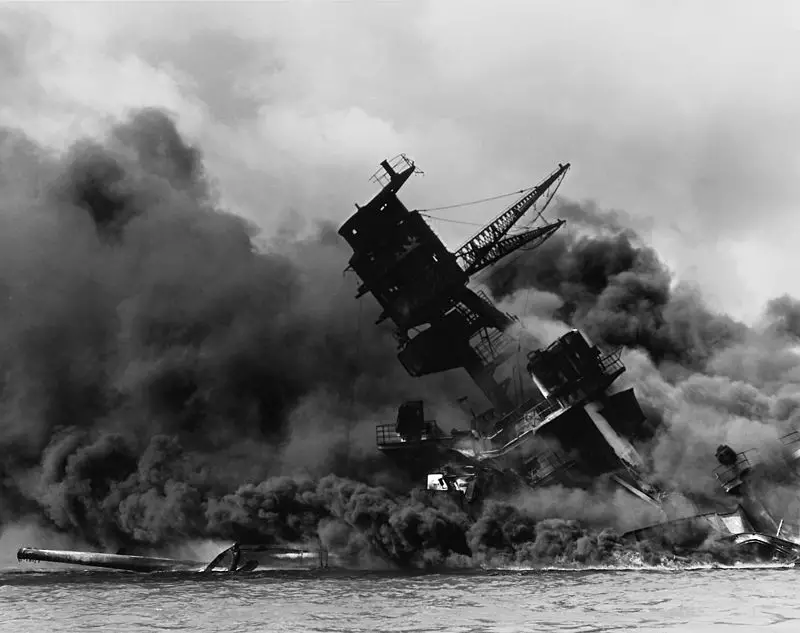
  • Eight U.S. navy battleships were damaged, four of them sunk. 188 aircrafts were destroyed, 2,403 Americans were killed, and 1,178 were wounded. The Japanese lost 64 men and 29 aircraft.
  • The U.S. navy was completely unprepared for the attacks. Guns weren’t even loaded or manned. The two countries had been engaged in peace talks and there had been no hint of an attack. Because of that, President Franklin D. Roosevelt harshly condemned Japan, calling December 7 “a date which will live in infamy.”

    A Date Which Will Live In Infamy

  • The next day, the United States officially declared war on Japan. On December 11, Germany and Italy declared war on the U.S., along with Japan. America was no longer neutral and would send troops to Europe, Africa, and Asia.
  • Today, a museum and monument are open at Pearl Harbor to memorialize the people who died there.


Vocabulary

  1. Neutral: without taking a side
  2. Troops: soldiers


Questions and Answers

Question: What happened to the ships that sunk?

Answer: Three of them were raised and used again. The Arizona was hit by a 1,760 pound bomb that lifted the ship out of the air and caused a massive explosion. 1,177 men were killed instantly and the ship was completely destroyed.


Learn More

Visit the website for the National Monument.

Sacajawea Monuments and Memorials

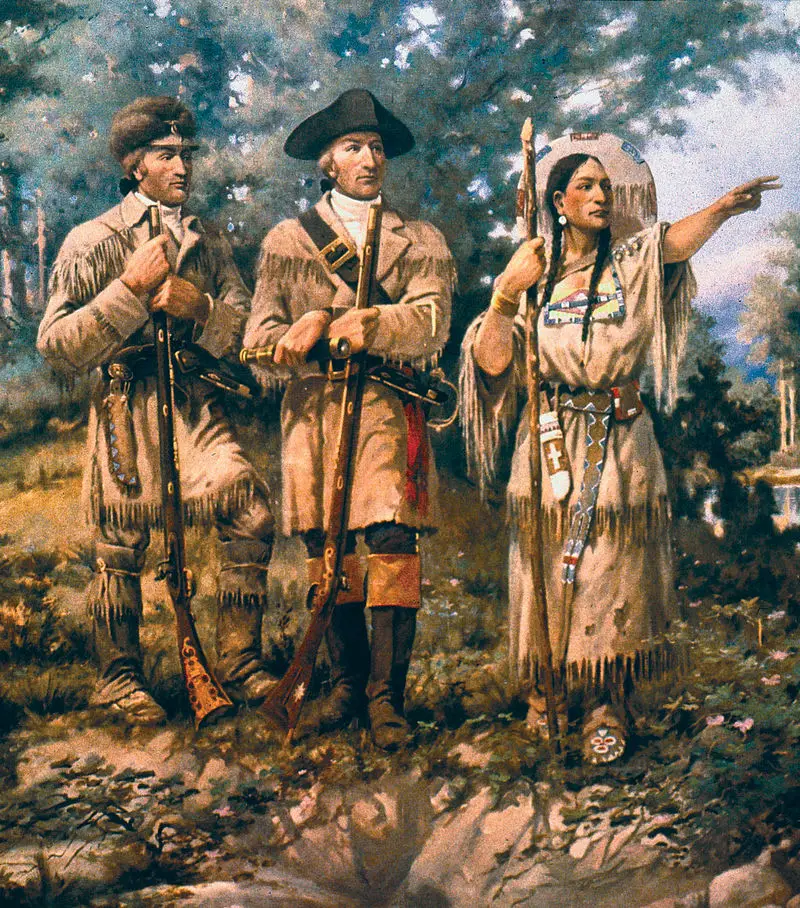
Sacajawea was a Shoshone Indian woman who was abducted from her family when she was 12 by the Mandan people and later sold to a fur trapper, Toussaint Charbonneau, who took her as his wife.

Sacajawea Was A Shoshone Indian Woman

She and Charbonneau accompanied Merriweather Lewis and William Clark on their Corps of Discovery adventure across America.

She became one of the most valued members of the group. She was able to talk with native people they met along the way, resolving conflict and ensuring peace. She knew about medicinal herbs and edible plants, and her quick thinking aided the company many times.

Sacajawea

William Clark said about her, “She deserves a greater reward for her service than we have power to give.”

For many years, Sacajawea was almost forgotten. A book published in 1902 restored her proper place in American history. Now, numerous memorials across the country honor her.


Fun Facts

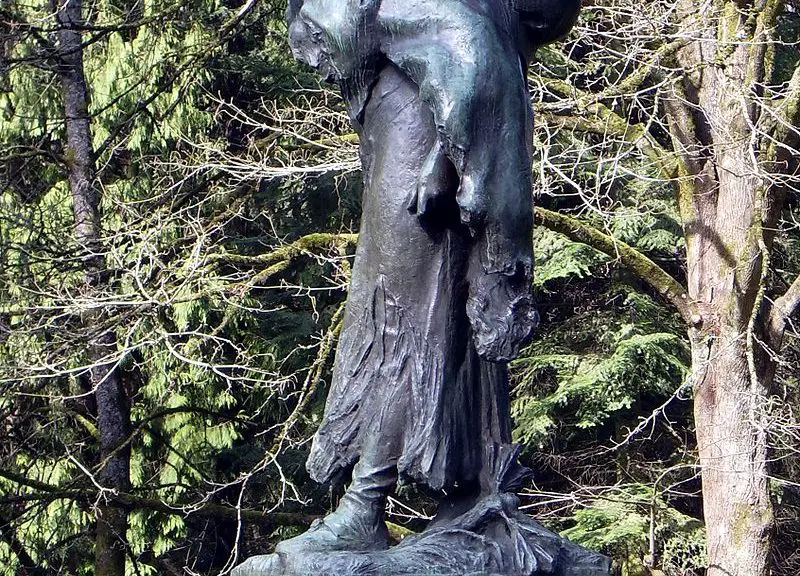
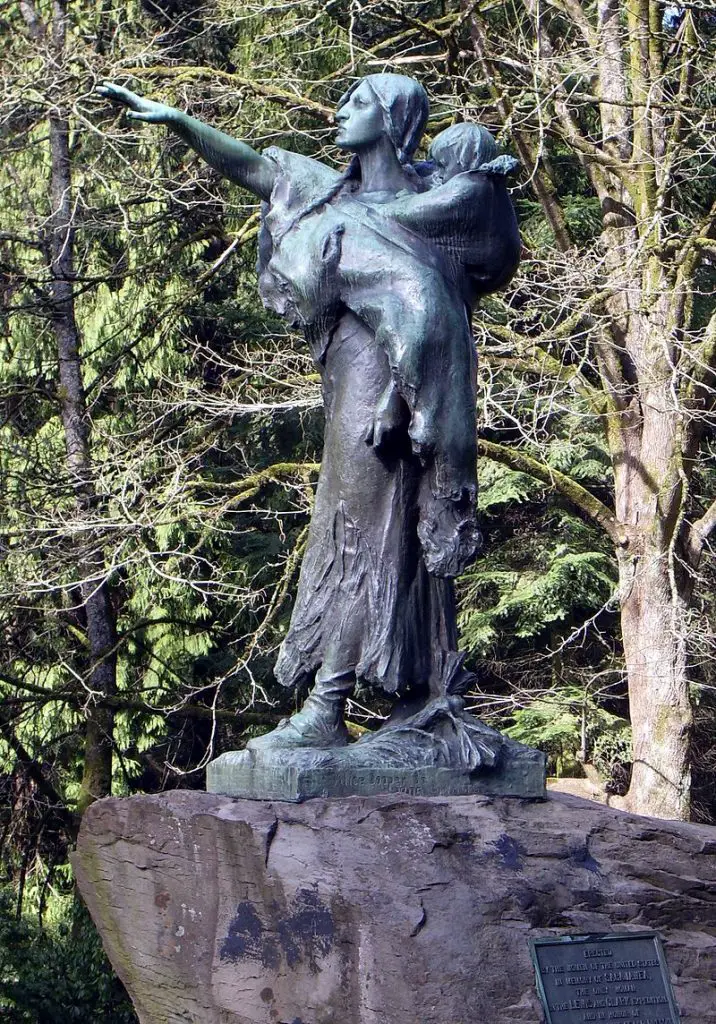
  • Constructed in 1905, a bronze statue of Sacajawea is found in Washington Park, Portland, Oregon. Alice Cooper designed the sculpture; funds were raised by the National American Women’s Suffrage Association.
  • At Sacajawea Park in Three Forks, Montana is a sculpture of Sacajawea entitled “Coming Home.” Sacajawea was abducted in that area. Although she met her people during her travels with Lewis and Clark, she didn’t go home in real life. A plaque at the park reads, “An Indian woman whose heroic courage, steadfast devotion and splendid loyalty in acting as Guide across the Rocky Mountains made it possible for the Lewis and Clark Expedition (1804-1806) to occupy so important a place in the history of this Republic.”
  • A sculpture made in 2000 by Eugene Daub is found in Case Park in downtown Kansas City, Missouri. The piece depicts Sacajawea with her baby Jean Baptiste on her back, as well as Lewis, Clark, and York, a slave who was also an important member of the group.
  • The Sacajawea Memorial at Lemhi Pass and the Sacajawea Interpretive, Educational, and Events Center in the Lemhi River Valley on the Idaho/Montana border are dedicated to teaching the public about Sacajawea’s life. Sacajawea was born in this valley in 1788. The center features a sculpture of her, as well as an outdoor classroom, community garden, visitor’s center, and research library. Visitors can hike the Lewis and Clark National Historic Trail.

    The Sacajawea Memorial

  • The Lewis and Clark expedition spent the winter of 1805 to 1806 in a fort near what is now Astoria, Oregon before they headed east. Today the Lewis and Clark National Historic Park memorializes their time here. A sculpture titled “Sacajawea and Baby” sits outside the visitor’s center.


Vocabulary

  1. Abduct: to kidnap
  2. Depict: to show or illustrate
  3. Medicinal: used for medicine


Questions and Answers

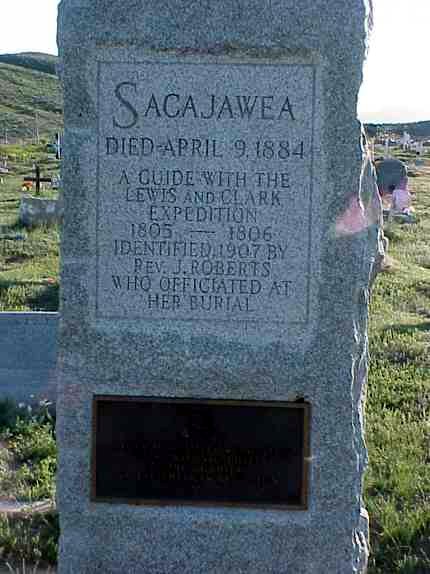
Question: When did Sacajawea die and where is she buried?

Answer: People disagree on when and where Sacajawea died. Historians believe she left Charbonneau and went to Wyoming in the 1860s.

A gravestone at the Wind River Indian Reservation says she died April 9, 1884 and is buried there. A memorial in Mobridge, South Dakota insists she died on December 20, 1812, which is probably more likely.


Learn More

Watch a video about Sacajawea.

Effigy Mounds National Monument

For over 5,000 years, groups of ancient people in what is now the Midwest and Southeast built mounds of earth. Most of these mounds were flat-topped pyramids or mounds and were likely used for burials, religious ceremonies, or even homes.

Some of the mounds were shaped like mammals, reptiles, or birds and these are known as effigy mounds. Effigy Mounds National Monument protects these sacred places.


Fun Facts

  • Archeologists Charles R. Keyes and Ellison Orr declared the area a national monument in 1949. The monument has 2,256 acres of land, 206 mounds, and 31 effigies.
  • Visitors can attend educational programs to learn more about the mound builder cultures, hike on more than 14 miles of hiking trails, visit the mounds, or enjoy the nearby wildlife areas.
  • Most of the mounds can be found in Wisconsin, Iowa, and Illinois. The Great Serpent Mound, which is shaped like a snake, is in Ohio.
  • The Great Bear Mound in the park is 42 meters long and 1 meter tall.
  • The site sits on the border between prairies, wetlands, and the woodland forests of the east, an ideal location for ancient people because of the many types of resources available.
  • The mound builders lived and built mounds between 3500 B.C. and the 16thcentury A.D.
  • In Collinsville, Illinois lies the Monks Mound at Cahokia, which is more than 110 feet tall. In this area was once a vibrant community of between 20,000 and 30,000 people.
  • Several explanations for the mounds have been offered over the years. In the 1800s, people thought they were the burial grounds for a giant race of people. Others believed that they were made by members of the lost tribes of Israel.
  • Archaeologists today believe that the mound builders were ancestors to several modern native people, including several Sioux nations.


Vocabulary

  1. Effigy: a model made to represent a human or animal
  2. Vibrant: bright, lively


Questions and Answers

Question: Is it legal to take artifacts from the area?

Answer: No. The area is sacred to native people and it is illegal to take bones or artifacts. In fact, one government worker spent time in prison for taking bones.


Learn More

Discover the Mound Builders.

Japanese Internment

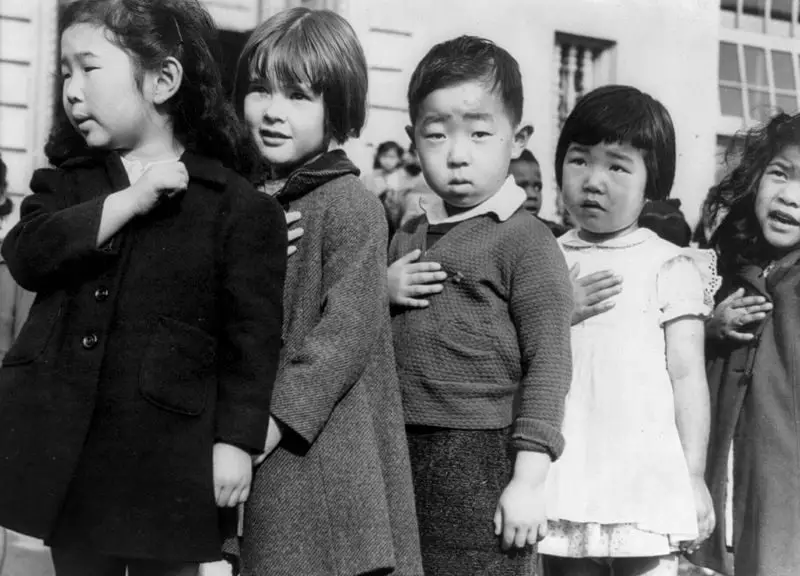
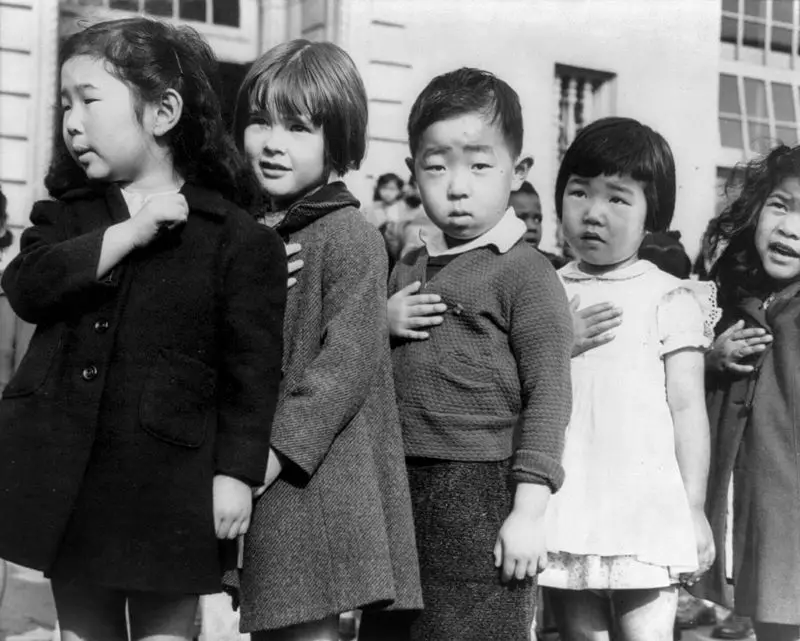
On February 19, 1942, little more than two months after the Japanese attacks on Pearl Harbor and the United States’ entrance into World War II, President Franklin D. Roosevelt issued Executive Order # 9066, which called for Japanese American citizens living in the western states and Hawaii to be moved to internment camps, many for the duration of the war.

The Japanese American Memorial to Patriotism during World War II is a reminder of this unjust situation and a memorial to the Japanese Americans who fought in World War II.

Japanese Internment

Fun Facts

  • More than 120,000 Japanese American men, women, and children were taken from their homes, schools, businesses, and friends to 10 camps in remote areas of Arizona, Arkansas, California, Colorado, Idaho, Utah, and Wyoming.
  • In most cases, their property was seized or sold and there was nothing for them to return to after the war. They had to start over.
  • S. relations with Japan during the 1930s and 1940s were contentious and suspicious. Government officials believed Japanese Americans might be spies for the Japanese government, even though many of the families taken to internment centers had lived in the U.S. for generations.
  • At the same time, Japanese American men signed up for the draft and joined to fight in the war.
  • In November, 2000 the memorial was dedicated in Washington D.C. to honor Japanese Americans’ sacrifices and contributions during the war and to publicly note the unjust treatment many of them received.
  • The memorial features a sculpture called the “Golden Cranes,” and depicts two Japanese cranes entangled in barbed wire. The piece symbolizes the souls and bodies of those Japanese men, women, and children who were confined during this time.
  • Additionally, a wall lists the names of the 10 major internment camps and another wall includes the names of 800 Japanese American soldiers who died fighting in the war.


Vocabulary

  1. Internment: to be confined
  2. Contentious: aggressive, quarrelsome


Questions and Answers

Question: Where did the Japanese Americans live before they were taken to the camps?

Answer: Throughout the western states and Hawaii. Many of them lived in communities in California, Seattle, and Portland. Some were farmers living in Idaho and Utah. Most of them had businesses and homes that they lost.

Question: What happened to the camps after the war?

Answer: Some of them were torn down, some were used as military areas, and some were used to house Mexican American farm workers, who in most cases, were not treated very well in the communities either.


Learn More

Watch a video about the Japanese American internment.

The Empire State Building

Named for the “Empire state,” New York’s nickname, the Empire State Building was the tallest building in the world for almost 40 years. It was designed in the Art Deco style, a style popular during the 1920s.


Fun Facts

  • The site of the Empire State Building was a farm for many years.
  • In the late 1800s, the Waldorf-Astoria hotel was built on the site, but torn down in 1929 to make way for the Empire State Building.
  • Architects revised the plans for the building 15 times to ensure that it would be the tallest building in the world.
  • More than 3,500 construction workers took 13 months to build the massive Empire State Building. Five workers died during construction. The building opened in 1931.
  • The developers had high financial hopes for the building, but offices sat empty because of the Great Depression and World War II. The developers didn’t make a profit until the 1950s.
  • The Empire State Building has 102 stories and is 1,454 feet tall. It has two outdoor original observation decks and an indoor one that was added in 2019.
  • In 1945, a pilot flying in thick flog accidentally flew into the building, killing 14 people. Four million people visit this famous building every year. It’s an American icon and has appeared in numerous movies, such as Elf, Sleepless in Seattle, and the original King Kong, filmed in 1933.


Vocabulary

  1. Architect: someone who designs buildings
  2. Icon: a well-known symbol


Questions and Answers

Question: What is the Empire State Building used for today?

Answer: The Empire State Building is still a prominent office space in Manhattan, as well as a famous tourist destination. It is lit up for various holidays, such as Christmas and the 4th of July.


Learn More

See the   Empire State Building lit up to honor police officers.

The White House

Since 1800, the White House has served as both a home and an office to U.S. presidents and their families.


Fun Facts

  • John Adams was the first U.S. president to live in the White House.
  • George Washington lived in two homes in New York, followed by a home in Philadelphia, which was originally to be the U.S. capitol.
  • Construction for the White House began in 1792 and was designed after the Leinster House in Dublin, Ireland. It has a neoclassical design and cost $232,371 to build. In today’s money, it would have cost $3,500,613. Most of the work was done by free or enslaved African Americans and Scottish immigrants.
  • In 1814, during the War of 1812, the British set Washington D.C. and the White House on fire. The entire interior of the White House was destroyed and much of the outside had to be redone too.
  • The White House is made from sandstone, which was painted white.
  • In 1901, President Theodore Roosevelt added the West Wing.
  • In 1909, President Taft added the Oval Office.
  • Over the years, the White House has been renovated and enlarged multiple times. Every U.S. president has made some changes to it.
  • Today the White House has six stories, including a 2-story basement and a guest house. There is room at the White House for the president’s family, offices for the president and his staff, as well as offices for housekeeping and security staff.
  • The National Park Service owns the White House.


Vocabulary

  1. Interior: inside
  2. Sandstone: a relatively soft stone made of hardened sand


Questions and Answers

Question: Where did the White House get its name?

Answer: Originally it was called the Presidential Palace and the Presidential Mansion. People began calling it the White House in the 1800s, probably because of its white color.

Theodore Roosevelt’s stationary used the name officially for the first time. The White House’s address is 1600 Pennsylvania Avenue in Washington, D.C.


Learn More

See what the   White House looks like.

Independence Hall

Since the building’s completion in 1753, Independence Hall in Philadelphia, Pennsylvania has been the site of numerous important meetings.


Fun Facts

  • Craftsmen built the State House between 1732 and 1753, working only when the Pennsylvania congress was able to provide funds.
  • The red brick building served as Philadelphia’s state house until Pennsylvania’s capitol was moved to Lancaster. Here lawmakers met to discuss decisions.
  • It was the location for the Second Continental Congress from 1775 to 1783.
  • The Founding Fathers wrote and signed both the Declaration of Independence and the Constitution at Independence Hall.
  • Thomas Stretch built a clock for the building in 1753. It took the colony six years to pay him for his work.
  • The building has a large main section with a clock tower, as well as two wings. All of it has been rebuilt or restored multiple times.
  • Independence Hall sits on a city block with two other historical buildings. The area is known as Independence Square. The Liberty Bell is nearby.
  • After Abraham Lincoln’s assassination, his body was taken from Washington D.C. to Independence Hall where over 300,000 mourners came to pay their respects to the beloved president. Some of them waited over 5 hours to take part.
  • In 1915, the League to Enforce Peace, a group of European and American leaders, met here. They resolved to be united, protecting and supporting each other against aggression.


Vocabulary

  1. Founding Fathers: the group of men who drafted the Declaration of Independence and the U.S. Constitution
  2. Aggression: harmful behavior toward another person or group


Questions and Answers

Question: Why was Philadelphia chosen as the place for the Second Continental Congress?

Answer: Philadelphia’s founder William Penn had a strong religious vision for the city. The city’s name comes from Greek words meaning brotherly love. The city had a strong history of dynamic leaders such as Benjamin Franklin.

It made sense that the Founding Fathers would meet here. It was also a geographically convenient location between New England and the southern colonies.


Learn More

Watch videos and   learn more about Independence Hall.

Montauk Point Lighthouse

Sitting atop the eastern point of Long Island, Montauk Point Lighthouse has guided ships for more than 225 years. It is a National Historic Landmark.


Fun Facts

  • President George Washington ordered the lighthouse’s construction in April, 1792. It was completed in November, 1796.
  • The U.S. Lighthouse Service and the U.S. Coast Guard have been responsible for maintaining and lighting the lighthouse.
  • The lighthouse has guided submarines, ships, and fishing vessels to safety for many years.
  • The lighthouse was abandoned by the Coast Guard in the 1960s. The lighthouse fell into disrepair. People worried that powerful storms and waves would eventually wash the lighthouse away.
  • During the 1970s and 1980s, Georginia Reed organized citizens to build a terrace to protect the lighthouse. The lighthouse is used today to guide ships and is also a museum.


Vocabulary

  1. Disrepair: a state of neglect
  2. Terrace: a structure built on a hillside to prevent erosion


Questions and Answers

Question: How did the Coast Guard take care of the light house?

Answer: a caretaker lived in the lighthouse full-time.


Learn More

Watch a video about the   Montauk Point Lighthouse.