All posts by americanadmin

Flatiron Building

One of the most iconic buildings in New York City, the Flatiron Building was named because of its triangular shape that resembles an old-fashioned cast iron flatiron. The Flatiron Building is a New York City Landmark as well as a National Historic Landmark.


Fun Facts

  • In 1857, Amos Enos bought the land that the Flatiron Building would later sit on. He constructed apartments and commercial buildings on the land. On one of these buildings, he set up a huge canvas screen. The New York Times used the screen for many years to display news messages. Thousands of people gathered in Madison Gardens to watch the screen on election night as they waited for results.
  • After Amos’ death, the property was purchased by his son who later sold it. The original buildings were torn down and developers began work on the Flatiron Building. Its steel frame went up very quickly and it was completed in 1902.
  • Critics hated the building. Some said its triangular shape wasn’t structurally sound and it created a wind tunnel through the street. They believed heavy storms would bring it down. Others said it was ugly. The New York Times declared it a “monstrosity,” and the New York Tribune said it was the “greatest inanimate troublemaker in New York.”
  • Artists and photographers liked it though. They said it resembled a large ocean liner moving through the city.
  • The building’s first tenants included a publisher, insurance company, cigar shop, and a restaurant. The building had 22 stories and was one of the tallest buildings in New York when it was first built.


Vocabulary

  1. Iconic: a recognizable and popular or beloved symbol
  2. Inanimate: not alive
  3. Wind tunnel: a structure that channels the wind, causing a strong force


Questions and Answers

Question: Is the building a wind tunnel as critics said it would be?

Answer: Yes, the intersection at which the building sits does get very windy, but the building’s steel structure was engineered to withstand the wind.


Learn More

Watch a video about the Flatiron Building.
Times Square

Today Times Square is known for its lighted billboards, theatres, shops, and of course, its New Year’s Eve celebration. But originally, the area was farmed by Dutch settlers who appreciated its access to three streams and the Hudson River.


Fun Facts

  • Times Square is one of the most popular destinations in the world. Over 330,000 people visit daily and 50 million people come here every year.
  • Times Square is home to the Broadway Theater District. It has been called Crossroads of the World, and The Center of the Universe.
  • The area sits in Manhattan over several city blocks.
  • John Morin Scott, an American military leader during the Revolutionary War owned the land in the late 1700s, using it for farming and a horse and carriage operation.
  • In the early 19th century, John Jacob Astor purchased the land and made a fortune selling it off in pieces to developers. It became known as Longacre Square.
  • Later, theaters and restaurants came and in 1904, it became Times Square when The New York Times built the Times Building for their office.
  • During the Great Depression, theaters and restaurants closed and were replaced by seedy establishments. The area became known for its crime.
  • A huge crowd gathered there on August 15, 1945 to celebrate V-Day, the end of World War II. During the 1960s and 1970s, the area went downhill further, becoming one of New York City’s most dangerous areas.
  • In the 1990s, city government decided to clean it up. Today Times Square is a bustling tourist attraction.


Vocabulary

  1. Bustling: busy, crowded


Questions and Answers

Question: When did the New Year’s Eve celebration at Times Square begin?

Answer: The first celebration took place in 1907 and has continued every year (except during World War II). More than 1 million people join the party every year.


Learn More

Watch a video about things to do at Times Square.

Paul Revere House

Built in 1680, the Paul Revere House is the oldest remaining home in downtown Boston and a National Historic Landmark. It was almost demolished in 1902.


Fun Facts

  • The home was built in 1680. Previously, Cotton Mather’s (Salem Witch Trial) parish home was on the site, but burned in the Great Fire of 1676.
  • It was made of wood and had three stories.
  • Paul Revere, the famous American patriot who rode all night long to worn the colonists that the “British are coming,” owned the home from 1770 to 1800.
  • When he sold it, it became a tenement house with apartments upstairs and shops on the ground floor. Over the years, the shops included a candy shop, grocery store, cigar factory, and bank.
  • The house was scheduled to be demolished in 1902 when John P. Reynolds, Jr., Paul Revere’s great grandson stepped in. He worked carefully with historic preservation experts to restore the house and opened it as a museum in 1908. Over 90 percent of the house is from the original 1680 construction.


Vocabulary

  1. Tenement: apartments, usually for people with little money
  2. Preservation: the act of saving or preserving


Questions and Answers

Question: Was Paul Revere always well-known for his midnight ride?

Answer: No. Paul Revere was remembered in Boston for his heroic act, but nationally, he’d been largely forgotten until Henry Wadsworth Longfellow wrote and published his poem, “Paul Revere’s Midnight Ride.” Revere’s life was notable for other things besides his ride: Revere had 16 children.

He was a well-respected businessman and silver smith. He believed that every man should learn a trade. He was also involved in community and political life.


Learn More

Visit the  Paul Revere House Museum.

Trinity Church

Trinity Church in Boston houses one of the oldest Episcopalian congregations in the area, dating back to 1733.


Fun Facts

  • Construction for Trinity Church began in 1872, after the original church burned down. It was completed in 1877 and is made of granite.
  • Over 4,000 households belong to the church, which offers five services each Sunday, as well as weekday services during the summer.
  • The church houses several sculptures, beautiful stained glass windows, and more than 21,000 square feet of murals painted by John LaForge. The artist took no payment for his work, asking only that he be paid for the cost of materials. The church has several well-known choirs and offers a Candlelight Carols concert in December. More than 5,000 people stand in line to attend, some of them from as far away as Maine.


Vocabulary

  1. Granite: a very hard rock
  2. Mural: paintings on walls


Questions and Answers

Question: What is Trinity Church known for?

Answer: Besides being a very old church, Trinity Church is known for its community service and programs for children, teens, families, and the poor. It partners with many organizations, such as Habitat for Humanity.


Learn More

Visit  Trinity Church virtually or watch a service online.

San Miguel Mission

The San Miguel Mission in San Miguel, California is one of the oldest missions in California. Its main purpose 200 years ago was to teach Catholicism to the Salinans, native people who had lived in the region for many years.


Fun Facts

  • The San Miguel Mission was named for Archangel Saint Michael
  • It was started by Franciscan Father Fermin Francisco de Lasuen in 1797.
  • The original wooden church, built in 1797, burned in a fire in 1806. The mission quickly began plans for a more permanent building.
  • More than 1,000 Salinans lived and worked at the mission. They helped rebuild the church, starting by making tile and adobe bricks.
  • In 1821, the church was completed. Artist Esteban Munras painted beautiful frescoes on the walls.
  • In 1833, Mexico passed the Mexican Secularization Act, which took lands and buildings from the Catholic Church and made them nonreligious places. In 1846 the Reed family purchased the property and made it their home, a hotel, a saloon, and a store. They were killed by thieves in 1848.
  • The buildings sat empty for several years until President Buchanan returned the property to the Catholic Church in 1859. In 1928, Franciscan Friars occupied it again and began restoring the buildings.
  • An earthquake in 2003 caused severe damage to the church and the surrounding buildings. The mission has slowly renovated and repaired it as money is available. Today, it looks much as it did in 1821. The frescoes on the walls are still there.


Vocabulary

  1. Fresco: a mural, typically painted on wet plaster or stucco.
  2. Renovate: bring back to original condition


Questions and Answers

Question: Why did Mexico take the property from the church?

Answer: After Mexico won independence from Spain, the people were afraid that Spain would use the Catholic Church to continue to influence the country. The Secularization Act was similar in purpose to the U.S.’s policy of church and state separation after the Revolutionary War.


Learn More

See photos of the mission.

Monticello

Thomas Jefferson’s beloved Monticello is one of the most well-known properties in America. On it, Jefferson tested and refined his ideas about science, education, agriculture, and architecture.


Fun Facts

  • Thomas Jefferson was born in 1743 in central Virginia. His family was one of the most influential families in Virginia. His father died when Jefferson was only 14 and he inherited more than 5,000 acres of land and property.
  • But Jefferson wanted to live on a mountain so at the age of 26, he began building his home in the mountains he played in as a boy. His home began as a one-room brick structure. Over 40 years, he slowly built and rebuilt the home he named Monticello.
  • Monticello is a sprawling property with a variety of buildings and gardens. It was a prosperous plantation, growing tobacco and other crops. After Jefferson’s death, his daughter sold the property to pay debts. Monticello fell into disrepair and needed massive improvements.
  • In 1923, the Thomas Jefferson Foundation purchased the property and has cared for it since. The home, now a museum, is a National Historic Landmark.
  • Thomas Jefferson was the fourth president of the United States. He believed deeply in religious freedom, lifelong learning, and the ideals of the Founding Fathers. He was a quiet man, but a brilliant writer. He wrote most of the Declaration of Independence.
  • Thomas Jefferson believed that men would be happiest in an agrarian society. His dream was for every family to have a farm with enough land to support themselves.
  • Thomas Jefferson orchestrated the Louisiana Purchase, commissioned the Lewis and Clark expedition, and started the University of Virginia. He was highly educated, loved nature and fields, and served as the governor of Virginia. He was a lawyer, an architect, and a scientist. His curious mind was constantly seeking knowledge.
  • He had a conflicted relationship with slavery. While he knew it was wrong and spoke often about its evils, his own family kept enslaved African Americans. Monticello was a plantation and Jefferson kept approximately 200 slaves there.


Vocabulary

  1. Agrarian: relating to farming
  2. Expedition: journey


Questions and Answers

Question: Can I visit Monticello today?

Answer: Monticello is a favorite tourist destination and is open for tours and educational programs.


Learn More

Visit Monticello’s website to see images and learn more about the plantation.

Castillo de San Marcos

Castillo de San Marcos is the oldest stone fortress in the United States. Built in 1672, its name changed three times over the centuries.


Fun Facts

  • Castillo de San Marcos was built to protect the city of St. Augustine, Florida, which was part of the Spanish Empire at the time.
  • St. Augustine was founded in 1565 on the site of a previous Native American settlement, Seloy. The settlement built nine wooden forts for protection after Sir Francis Drake and his fleet of 22 ships attacked the city in 1586.
  • In 1668, English privateer Robert Searles burned the fort and the city to the ground. The governor of St. Augustine ordered a stone fortress be built, one which couldn’t be burned.
  • Castillo de San Marcos is made of coquina stone. The fort sits on the coast, outside the city.
  • In 1763, the English gained control of Florida and the fort, promptly renaming it “Fort St. Mark.”
  • In 1783, the Spanish regained control and changed the name back to Castillo de San Marcos.
  • In 1819, the United States received the fort and named it “Fort Marion.”
  • Finally in 1924, the fort was made a National Monument and its original name was restored again. After more than 250 years of military service, the fort was closed.


Vocabulary

  1. Privateer: a privately owned, armed ship/captain hired by a government to capture enemy property, especially during war
  2. Coquina: a rock made of very old shells hardened in limeston


Questions and Answers

Question: Who built the fort?

Answer: The Spanish engineer Ignacio Daza built the fort, but native people, many of whom were slaves, did most of the work.


Learn More

See images of the fort.

Palace of the Governors

When you think of the oldest buildings in America, you might think of New England, but one of the oldest buildings in the country is actually in Santa Fe, New Mexico.

Fun Facts

  • The Palace of the Governors was built in 1610 by Pedro de Peralta, the governor of the Spanish territory, Nuevo Mexico, which took in what is now Arizona, California, Colorado, New Mexico, Nevada, Texas, and Utah.
  • The Palace of the Governors was the government seat for centuries. All the political decisions regarding the area were made here.
  • It changed hands several times. It became Mexico’s property after Mexico gained independence from Spain in 1821. In 1848, the United States acquired it and it became the first territorial capitol.
  • In 1909, architect Jesse L. Nusbaum did a major renovation of the building. He said the building “fitted the color of earth and sky” and he worked hard to restore it accurately. From 1909 to 2009, it housed the Museum of New Mexico. It is now the state’s history museum.
  • The building is a long, low adobe building with shuttered windows and a porch that runs the length of the building.


Vocabulary

  1. Acquire: to gain
  2. Adobe: made of clay bricks


Questions and Answers

Question: Where is the Palace of the Governors?

Answer: The Palace of the Governors sits in downtown Santa Fe on the Plaza, which is a quaint shopping area surrounding a park. In the summer, vendors sit in front of the Palace of the Governors selling jewelry, art, boots, and other leatherworks. Musicians play music and street vendors sell food.

Learn More

See images of the palace.

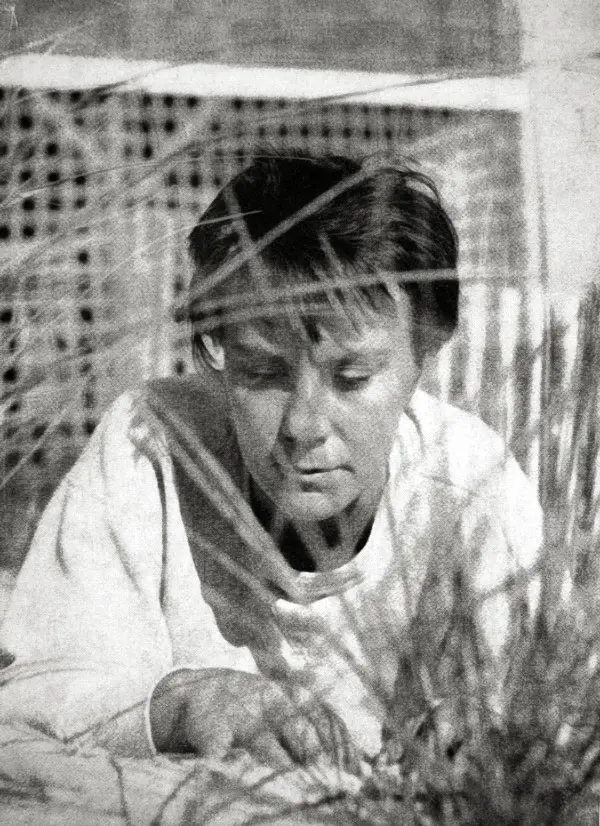
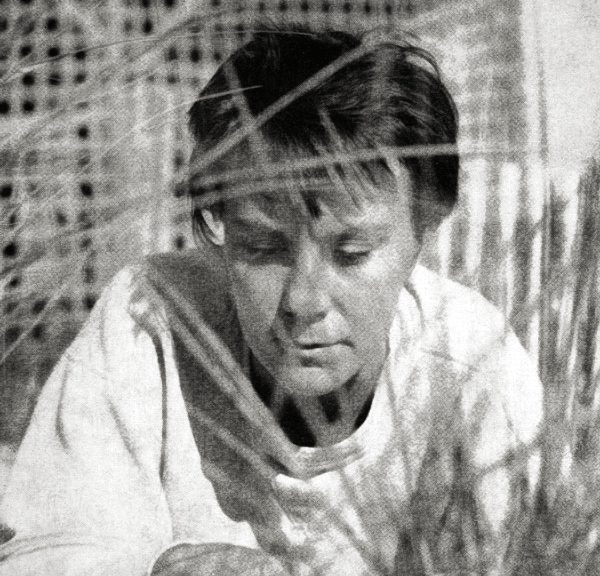
Harper Lee

Harper Lee published only two books, To Kill a Mockingbird and Go Set a Watchman, but she is one of America’s most beloved female authors.

Fun Facts

  • Harper Lee was born in 1926 in Monroeville, Alabama, the youngest of four children.
  • Her mother was a homemaker, her father, a newspaperman, editor, and lawyer.
  • Harper was much younger than her two older sisters were. Her brother Edwin was her playmate.
  • She became interested in English during high school because of an excellent and inspiring English teacher.
  • She studied law at the University of Alabama, but left a few credits shy of graduation, much to her father’s disappointment.
  • She moved to New York, where she worked in a bookstore and as an airline flight reservation agent. She wrote stories in her spare time and found a literary agent, Maurice Crain, in 1956. She and Maurice became lifelong friends.
  • That same year, her friends in New York pulled their money together and gave her a Christmas gift of a year’s salary. They told her to take time off from her job to write her book.
  • In 1957, Harper sent her book Go Set a Watchman to several publishers. Tay Hohoff, an editor at Lippincott, saw the signs of a genius writer in the book, but she knew it needed work before it could be published.
  • She worked with Harper for more than two years refining the story. This process involved many hours-long discussions. At one point, Harper threw the story out her bedroom window into the snow and tearfully called Tay to tell her she was through. The editor told her to dry her tears and go pick up the papers.
  • Published in 1960, the book became an instant bestseller. It won the Pulitzer Prize for Fiction in 1961; in 1999, it was voted Best Novel of the Century in a poll by the Library Journal. More than 30 million copies of the book have been printed.
  • Harper’s book was based, in part, on events from her childhood. Dill, a main character in the story, is based on real-life friend and author, Truman Capote. Harper was a tomboy just like Scout. Her father defended two black men accused of killing a white storekeeper. Both men were hung.
  • Some people didn’t like the book because it discussed hard topics like racism. A few even tried to ban it from libraries, calling the book immoral.
  • Harper became an instant celebrity, a hard thing for someone who preferred privacy and quiet. She received more than 60 letters a day and was constantly asked to make public appearances. She was a shy person who didn’t like speaking in public. She even refused to speak when she was inducted into the Alabama Academy of Honor. She said, “Better to be silent than to be a fool.”
  • President George W. Bush honored her with the Presidential Medal of Freedom in 2007; in 2010, President Barack Obama awarded her the National Medal of Arts.
  • When asked why she never published another book, she cited two reasons: first, she didn’t want to go through the publicity and pressure again. And she had said what she wanted to say and wouldn’t say it again.

Questions and Answers

Question: Was the book ever made into a movie?

Answer: Gregory Peck starred as Atticus in the 1962 movie version of To Kill a Mockingbird. Harper Lee was very happy with the film and became close friends with the actor.


Learn More

Watch a video about Harper Lee.

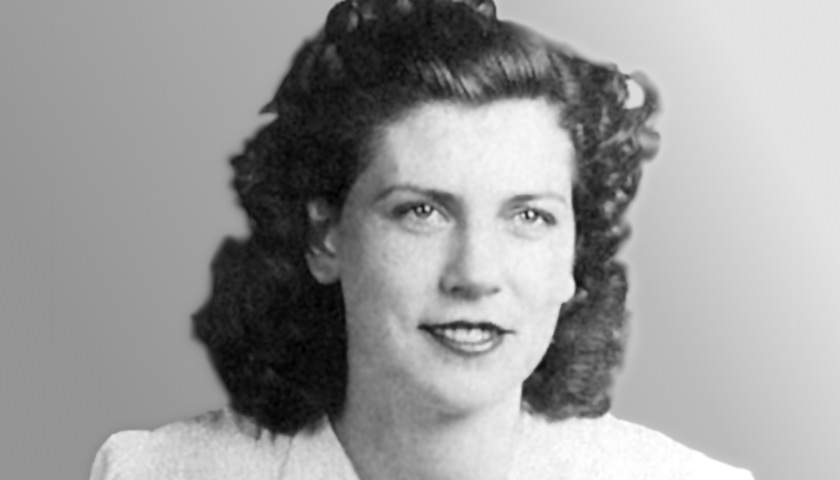
Margaret E. Knight

We take common household items like shoelaces, chewing gum, and Velcro for granted, but someone had to invent them. Margaret Knight invented the flat-bottomed paper bag we use for lunches and groceries.

Fun Facts

  • Margaret was born in 1838 in Maine. Her father died when she was very young and her mother struggled to raise her and her siblings.
  • From the time she was little, Margaret liked to fix and invent things.
  • When she was twelve, she saw an accident in a cloth factory. She invented a device that would automatically stop a machine if something were caught in it. The factories began using the device soon after.
  • Later, Margaret worked in a paper bag factory. At that time, paper bags weren’t flat on the bottom. Margaret thought about how much easier they’d be to use if they were flat and she went to work creating a machine that would make the bags.
  • Charles Annan spied on her and tried to steal her invention, getting a patent for himself. Margaret took him to court. Charles said that women were incapable of being inventors, but Margaret offered proof that the bag machine was really her invention. She won the court case and got a patent.
  • Margaret is most famous for her bag machine, but she went on to make 100 inventions and receive 20 patents.

Vocabulary

  1. Device: a machine or tool
  2. Patent: a type of copyright for inventions that makes it illegal for other inventors to copy


Questions and Answers

Question: Did Margaret go to college?

Answer: Margaret attended school when she was young and learned to read, write, and do basic arithmetic. She left school at the age of twelve to work in a cotton mill.


Learn More

Watch a video about Margaret.