
Email: [email protected]
Email: [email protected]
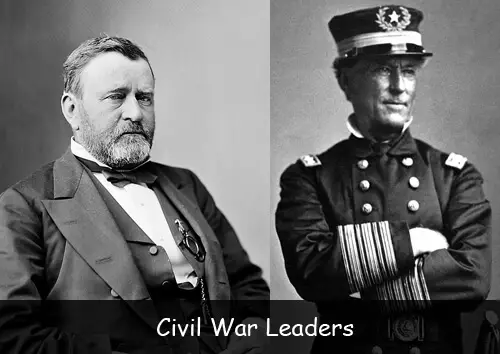
The Civil War was often called the “Brother’s War” because it pitted states, towns, villages, and even families against each other. For example, Abraham Lincoln’s wife, Mary Todd Lincoln, had three brothers who fought for the Confederacy and were killed. Many of the soldiers and officers for both sides had…
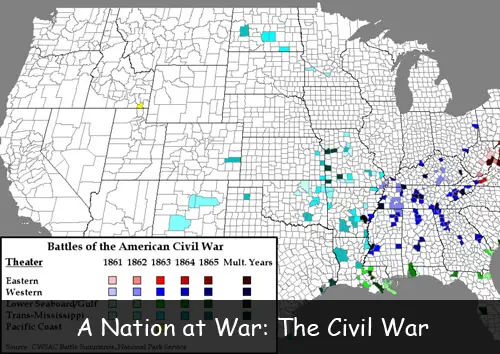
Trouble between the North and the South over the issue of slavery had been brewing for over 50 years, but finally exploded in 1860 when Abraham Lincoln was elected President. Seven Southern states left the Union, forming a new country. Fort Sumter, a fort controlled by the Union, sat on…
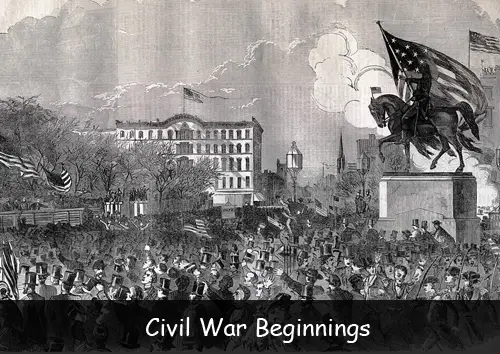
The mid-1800s were a time of intense conflict in the United States. Northerners believed passionately that a free country could not practice slavery. Southerners believed they had a right to decide for themselves what would happen in their states. Many Southerners wanted to secede from the United States. Northerners (and…
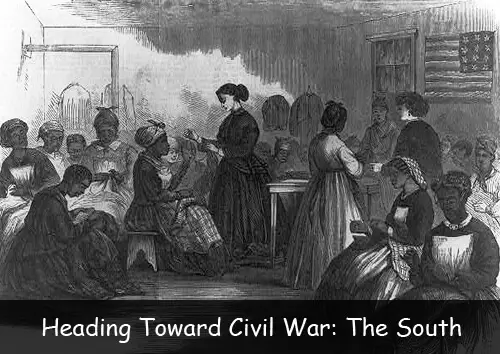
In the years before the Civil War, the Northern states blossomed into thriving industrial areas. Factories produced goods, such as furniture, clothing, and tools, which were shipped to the West, as well as to other countries. The Northern states were becoming wealthy. People came to the cities looking for jobs,…
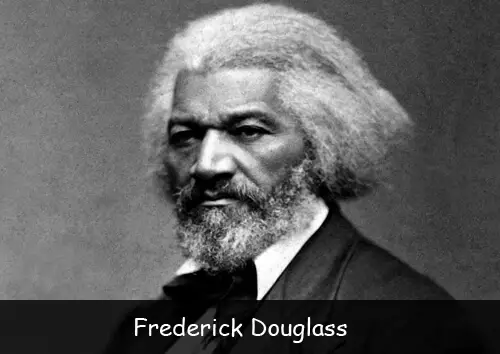
“It is easier to build strong children than to repair broken men.” Frederick Douglass became a famous abolitionist. He fought hard to end slavery. He knew what it felt like to be a slave. Frederick Douglass’s mother was a slave. His father was a white man, possibly the owner of…
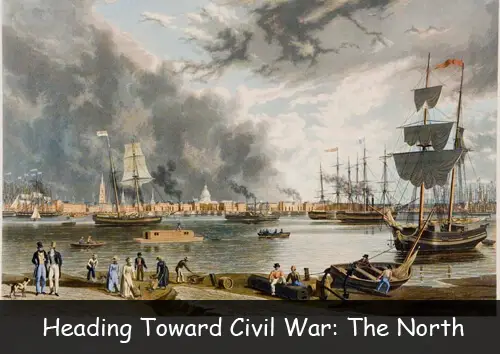
Even before the Revolutionary War, the North and South had cultural and geographical differences. As the years went on, these differences became larger. From the 1820s to the 1850s, bustling cities sprang up in the North. Workers came to these cities to work in factories making cloth, furniture, watches, tools,…
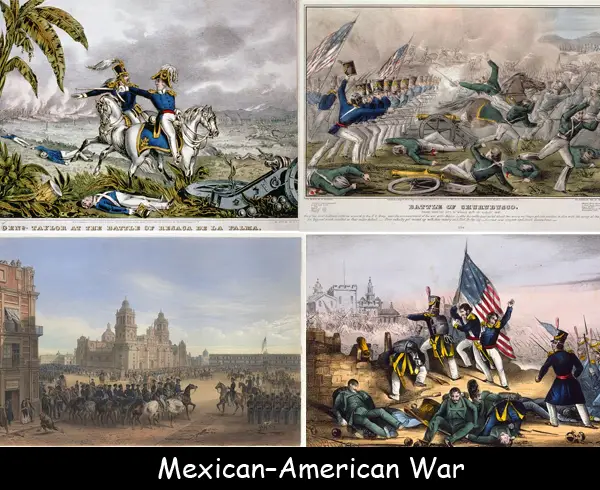
Fueled by land hunger and a quest for adventure, Americans wanted to move further west across North America. Many people, including President James K. Polk, believed in the idea of “Manifest Destiny,” that God had given North America to them and it was the country’s destiny to spread across the…
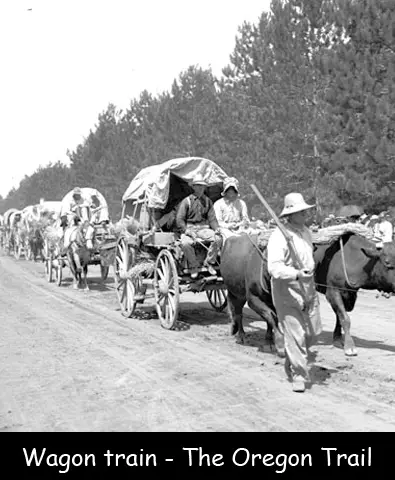
Imagine traveling with your family for months in a covered wagon the size of your bathroom. All the food, clothing, and tools your family owns must fit in that wagon; there is little room for toys. You eat dried meat, biscuits, and beans for most meals – and you’re happy…
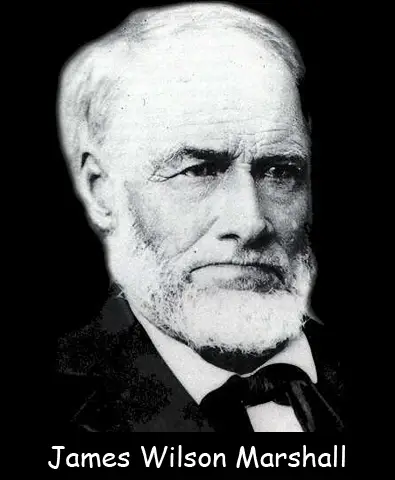
In 1848, James Wilson Marshall, a carpenter from New Jersey, found flakes of gold in a river near Sacramento, California. He was building a saw mill for John Sutter. Although Sutter and Marshall tried to keep the find a secret, word quickly got out when Sam Brannon, a local shopkeeper,…
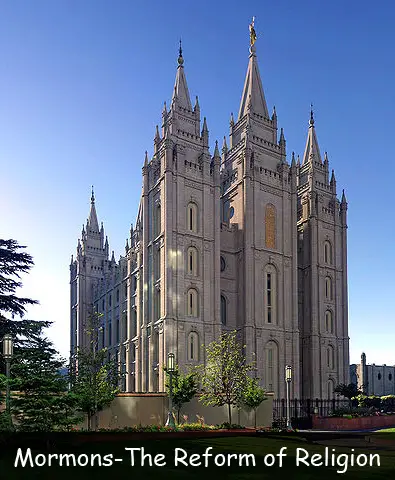
The early 1800s were a time of optimism and hope. People believed that they could create a better society, based on Christian morals and culture. During this time, America saw a “revival” of religious interest and fervor. Protestant preachers held camp meetings where they preached to large groups of people.…
