All posts by americanadmin

9/11: Terrorism on American Soil

Terrorist attacks overseas began in the 1980s and continued to increase through the 1990s. Americans still felt relatively safe because terrorists had never ventured to U.S. soil. That changed on the morning of September 11, 2001, when terrorists hijacked four planes.

Fun Facts

  • The first plane slammed into the north tower of the World Trade Center in New York City at 8:46 a.m. Initially, people thought the plane crash might have been an accident.
  • Sixteen minutes later, a second plane plowed into the south tower. Balls of fire were seen shooting out of the south tower as smoke billowed from the north tower. Chaos and panic followed as people raced to evacuate the buildings. It became clear that the nation was under attack.
  • At 9:43, a third plane hit the Pentagon in Washington, D.C., killing 125 people. The Pentagon is America’s military headquarters.
  • A fourth plane was believed to be headed for the Capitol building in Washington, D.C. By this time, passengers aboard the plane had heard about the other attacks and understood the threat. They fought back against the hijackers and the plane crashed into a field in Pennsylvania, killing all on board.
  • When the planes crashed into the twin towers, the explosion generated intense fire and heat, causing the steel reinforcements to melt and buckle. Both towers collapsed, sending a rain of concrete, metal, and ash into the streets. Most of the people working in the lower levels of the buildings were evacuated, but 3,000 people, including almost 500 rescuers, died in the twin towers.
  • Across the country, people were in shock as they watched the footage on television. People posted photos of missing loved ones near the site of the twin towers as they waited for news.
  • The Secret Service moved President Bush to secret locations where he worked with Vice President Cheney to plan a response. President Bush called the attacks “evil, despicable acts of terror” and vowed to find the perpetrators. A new war against terrorism began.
  • New York City firefighters were seen as heroes for their brave efforts in searching for victims after 9/11. Many of them developed health problems from breathing in the ashes and dust.
  • The terrorists hoped to cripple America’s business and government districts and they did succeed for a while. The stock market closed for four days and experienced the worst crash since the Great Depression.
  • Americans were afraid to fly and the airlines laid off more than 10,000 employees each. The U.S. government gave them loans to keep them afloat.

Vocabulary

  1. Hijacker: someone who takes illegal control of a plane
  2. Buckle: collapse
  3. Despicable: low, hateful

Questions and Answers

Question: Why did the terrorists attack?

Answer: The terrorists had deep religious, cultural, and political conflicts with the U.S. and the western world. They wanted to make a strong statement. Additionally, some terrorists believe that God has called them to start a holy war. They believe that dying for this cause will bring a great reward after they die.

Learn More

To learn more about 9/11 and what happened next, visit Scholastic.
A New Millennium

The year, 2000, marked the beginning of a new millennium or thousand year period. People were excited and apprehensive about what the new century would bring. The 1990s had been prosperous years. Would the next decade bring the same?

Fun Facts

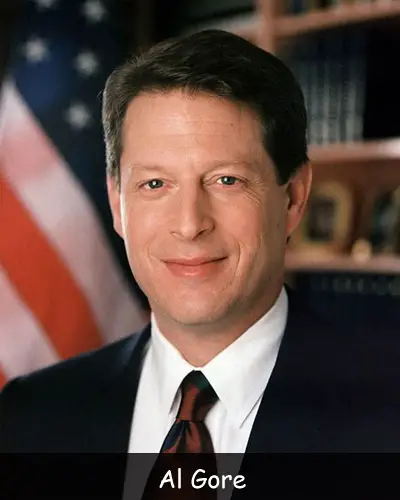
  • President Bill Clinton had served two terms, or eight years, the maximum time a president can serve. In 2000, his vice president, Al Gore, ran for president against George W. Bush, son of President George H.W. Bush.
  • On election day, Al Gore gained a narrow lead in the electoral vote. He had 200,000 more popular votes than Bush – a narrow lead. Gore was declared president early in the evening. Later, Bush was called the president, winning by a slim margin in Florida, which gave him the lead.

  • The race was so close that Al Gore asked the Supreme Court for a recount. The court began recounting the votes but decided four days later that there wasn’t enough time to do a proper recount. On December 13, 2000, Bush became the new president. The race was the closest presidential race in history.
  • Democrats had held control of the White House for eight years, but now Republicans were in charge. Bush chose conservative Republicans to fill his cabinet positions. Many of these people served with Bush’s father.
  • Clinton’s 2001 budget had a surplus of $184 billion. Bush wanted to use that money for a tax cut. Democrats were unhappy because most of the money from this tax cut would benefit wealthy Americans. The surplus wasn’t as large as anticipated. The stock market wasn’t doing well and the economy seemed to be slowing down. The years of prosperity were coming to an end.
  • Facing a national economic recession and an energy crisis in California, Bush withdrew the U.S. from the Kyoto Protocol, an international environmental agreement. He said that he would do nothing that would hurt the economy. Instead, he created his own climate-change plan, asking U.S. industries to voluntarily reduce pollutants. He also wanted to build 1,900 new power plants in the U.S. that would be fueled by coal.

Vocabulary

  1. Popular vote: the vote of the people
  2. Electoral vote: votes cast by members of the Electoral College
  3. Conservative: a political conservative is one who generally believes in small federal government, low taxes, and limited regulation

Questions and Answers

Question: It seems like political parties seem to take turns in office. Why?

Answer: Our political system of parties is far from perfect, but it does seem to keep things in balance. Democrats are known for increasing spending and government programs. They tend to do a good job of protecting the environment and human rights. Republicans are known for decreasing spending and government programs. They focus on preserving individual freedoms and liberties. People seem to naturally prefer a change in leadership every few years.

Learn More

Visit Congress for Kids to learn more about the electoral college.

World Affairs in the 1990s

Since World War II, the United States’ main foreign policy concern had been stopping Communism’s growth. When the Soviet Union collapsed in 1991, that threat was gone. The focus turned to environmental concerns, terrorism, and humanitarian service.

Fun Facts

  • Yugoslavia, formerly a Communist country, began to break into small states in the 1990s. A variety of cultures and ethnic groups lived within these states and they did not get along. When Croatia (one of the regions) announced its independence, Serbians living there declared war. Slobodan Milosevic, the president of Yugoslavia, sent Serb troops into Bosnia and Croatia. These troops attempted to wipe out entire groups of people (genocide), much like Adolf Hitler did during World War II. In 1997, Serbs launched attacks against Albanian Muslims and others in Kosovo. Thousands of Albanians fled on foot and lived in refugee camps. NATO bombed Belgrade and sent 50,000 men to keep peace in the area. Milosevic was forced out of power by September.
  • Widespread famine, drought, and civil war brought misery to the people of Somalia, in Africa. In 1992, President George H.W. Bush sent U.S. troops to join a United Nations relief mission there with the goal of preventing warring groups from stealing food from Somalians. These clans resented the intrusion and on October 3, 1993, 18 U.S soldiers were killed in a battle against them. Many Americans were angry and President Clinton ordered our troops to leave Somalia.
  • Islamic groups in the Middle East, North Africa, and Asia resented America’s support of Israel. They also hated the West’s culture and wealth and disliked its influence on their countries. In January, 1993, six people were killed when a car bomb exploded in the World Trade Center garage. Truck bomb attacks at embassies in Kenya and Tanzania killed 250 people in 1998. Terrorists bombed a navy ship off the coast of Yemen in 2000. Intelligence experts traced the attacks to Osama bin Laden.
  • During the late 1980s and 1990s, Americans became more aware of the damage industrialization was causing the environment. Scientists presented information about global warming. Since the U.S. was a leading industrial nation, it was also a leading polluter. Congress passed stricter laws to keep the air, water, and land clean. People began to resent these strict and expensive laws, especially since developing nations weren’t required to make changes. Disagreements about how to solve environmental problems were common.

Vocabulary

  1. Genocide: the murder of entire groups of people, generally based on their ethnic, religious, or racial background.
  2. Industrial: relating to industry, factories, and production
  3. Humanitarian: caring for human needs

Questions and Answers

Question: Were the people in Yugoslavia able to resolve their problems?

Answer: Eastern Europe has been a complicated place for hundreds of years. Each small state has its own culture, ethnic groups, and traditions. Each group feels an intense loyalty and nationalism for its own people. Additionally, these areas were under Communist rule for many years so developing a more democratic government in which people can work, worship, and live as they choose takes time. Problems do still flare up occasionally.

Americans Harming Americans

The 1990s were a time of rapid change in America. New laws allowed more immigrants to enter the country. Between 1950 and 2000, more than 13 million people came from Asia and Central America and Hispanic-Americans became the fastest growing minority group.

At the same time, family dynamics were changing as more families were headed by single parents or gay/lesbian parents. Gays were gaining a more prominent voice. At the same time, organized religion was losing its influence.

Some Americans felt scared and threatened by these changes. A few tried to use violence to express their frustration or make change. Americans were shocked and saddened by violent acts committed by other Americans.

Fun Facts

  • Militant groups formed. These groups were usually white conservatives. They sometimes gathered weapons and formed armies. Many militants were distrustful of the government.
  • One group was the Branch Davidians in Waco, Texas. This religious group, led by David Koresh, gathered together to prepare for the end of the world. When federal agents tried to search their compound for illegal weapons, cult members shot and killed four agents. The ensuing stand-off lasted for 51 days and ended when FBI agents tried to use tear gas to enter the compound. The Branch Davidians set the building on fire. 75 cult members died in the fire, including 25 children.
  • In April, 1995, Timothy McVeigh used a truck filled with explosives to blow up a federal office building in Oklahoma City. McVeigh, a Gulf War veteran thought the government was abusing its power. He hoped that the attack would motivate other people to join his cause. His desire to start a revolt failed but 168 people, including 19 children, died in the attack. McVeigh was executed in 2001. His partner, Terry Nichols, was sentenced to life in prison.
  • On March 24, 1998, two boys opened fire on students at their middle school in Arkansas. A year later, on April 20, 1999, Dylan Klebold and Eric Harris attached their classmates at Columbine High School in Littleton, Colorado. They killed 13 people before shooting themselves. They carried out their attack on Adolf Hitler’s birthday.
  • Harvard graduate, Ted Kaczynski, believed that technology was destroying the human race. He sent homemade bombs to airlines and universities from 1978 to 1995. His bombs killed three people. Twenty-three were injured. The FBI spent more than $50 million trying to capture the elusive Kaczynski. Authorities finally found him living in a shack in western Montana after a tip from his brother.

Vocabulary

  1. Family dynamic: a family’s organization or makeup
  2. Revolt: an organized rebellion against government
  3. Elusive: mysterious, difficult to catch

Learn More

Visit 60 Minutes to learn more about the Columbine shootings.

The Changing Economy of the 1990s

In 1969, the Department of Defense linked four computers together, creating the first internet. In the 1990s, new software and hardware made the internet available to the public. Americans quickly began using the internet at home and at work. Soon, this technology had dramatically changed the way we do business.

Fun Facts

  • Since the Industrial Age of the 19th century, people had depended on assembly-line factory jobs. During the 1990s, many of these jobs were sent overseas to places like Asia, where costs were lower. Factory workers in America lost their jobs. Additionally, robots and computers could now do many assembly-line jobs, reducing the need for American workers even more.
  • The internet created new jobs, such as web designer or software developer. Traditional jobs changed and grew too. Writers turned to creating internet content. Traditional businesses, such as banks, real estate offices, or investment brokers, could now offer their services to a much wider audience. Entrepreneurs could easily launch stores to sell almost anything online.
  • The internet made it easier to do business worldwide. Businesses could communicate quickly and easily. Many businesses opened offices around the world or bought services and products from far away. Not everyone was happy about this new global economy. Some people worried about how these global businesses would affect the environment and culture of less developed countries. They worried that workers might be exploited or mistreated. Factory workers in America resented losing their jobs to foreign workers.
  • The internet brought new challenges too. Hackers broke into computer systems, stealing valuable business and personal information. Musicians, writers, and other artists found it difficult to protect their work.

Vocabulary:

  1. Assembly-line: in a factory, products are assembled on a conveyer belt with one part being added at a time
  2. Entrepreneur: someone skilled at starting and managing businesses
  3. Exploit: to take an unfair advantage

Questions and Answers:

Question: Has business changed since the 1990s?

Answer: The business practices that began in the 1990s continue today. Even more people do business online quickly and easily.

Learn More

People prepared for a massive computer meltdown at the turn of the 21st century. Read more about the Y2K scare at National Geographic.

The Clinton Era

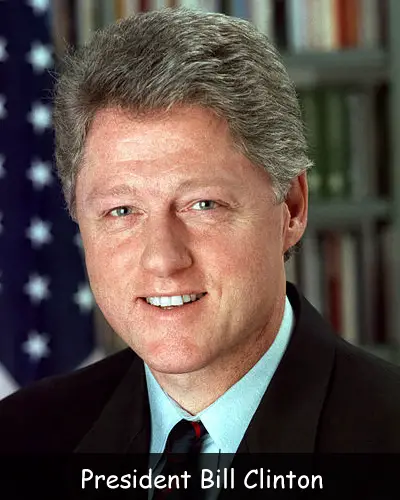
Bill Clinton defeated former President George H.W. Bush in the 1992 election. Although Bush was well-liked during the beginning of his presidency, economic problems reduced his popularity. People were ready for a change and appreciated Clinton’s youth, charm, and energy. His candidacy and presidency were marred by scandal, but he achieved a balanced budget and helped restore economic growth.

Fun Facts

  • President Clinton had spent 12 years as governor of Arkansas, but he was surprised by how difficult working with Congress was. He wanted to reform the health-care system, but Congress would not approve his plan.
  • Congress did approve the North American Free Trade Agreement (NAFTA), which allowed Mexico, the U.S., and Canada to trade with no restrictions.
  • Congress also passed Clinton’s Welfare Reform Act. This act gave control over welfare back to the states. It also said that noncitizens could not have welfare and that adults could only receive welfare for five years.
  • Clinton’s greatest achievement was reducing the budget deficit, which had grown due in part to tax cuts during Ronald Reagan’s term.
  • Clinton was elected to a second term, serving from 1992 to 2000. He was the first Democratic president since Franklin Roosevelt to serve more than one term.
  • Scandals followed Clinton through his entire presidency. Before he was elected, he admitted (after being confronted with evidence) that he had “dodged” the draft during the Vietnam War. He also admitted that he had been unfaithful to his wife. Later, Paula Jones, a former employee, said he had sexually harassed her.
  • In 1998, the public learned that Clinton had had an inappropriate relationship with a White House intern, Monica Lewinsky. Clinton denied under oath that he had had an affair with Lewinsky. Lying in court is a serious offense. Republicans in the House of Representatives voted to impeach him.
  • Clinton was the second president to be impeached. Nixon resigned to avoid it. Andrew Johnson was impeached after the Civil War.
  • In February, 1999, the Senate voted to acquit Clinton. Although he was still the president, Clinton had been deeply humiliated. He resigned from the U.S. Supreme Court bar and his Arkansas law license was suspended.
  • In another scandal, Clinton and his wife, Hillary, were accused of unethical business activity. Kenneth Starr was appointed to investigate Clinton’s involvement in the failed real estate development, Whitewater. Although Starr was unable to make a case against Clinton, two of Clinton’s business partners and the governor of Arkansas were found guilty.

Vocabulary

  1. Deficit: to owe more than you have
  2. Mar: a blemish or mark
  3. Impeach: to formally accuse a public official of improper conduct
  4. Acquit: find not guilty

Questions and Answers

Question: Why did the American people vote for Clinton if they knew about his improper behavior?

Answer: Clinton said, and many Americans believed, that his mistakes weren’t as important as his goals for being president. He said that personal behavior shouldn’t be a consideration for public office. Do you agree or disagree? Do you think someone who is dishonest in their personal life will be honest in a public position?

Learn More

Visit Scholastic to see a timeline of the U.S. presidents.

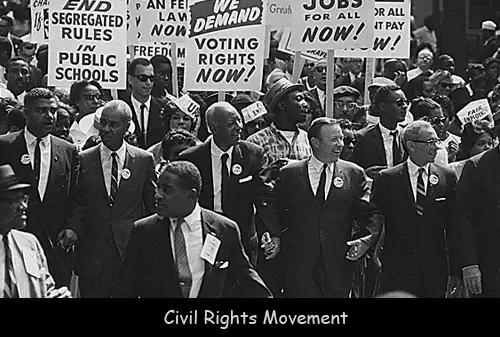
The Civil Rights Movement

John F. Kennedy took office 100 years after the beginning of the Civil War. Slavery had been illegal for many years, but racism and discrimination persisted. In the South, black and white people couldn’t share the same restaurants, buses, or schools. Throughout the country, black people didn’t have the same opportunities as whites.

John F. Kennedy wanted to change that. At the same time, many blacks quietly began protesting for better treatment. Among them was a man named Martin Luther King, Jr. The Civil Rights movement was gaining momentum.

Fun Facts:

  • In 1954, the Supreme Court ruled that schools could not segregate black children and white children. All children deserved the same opportunity for a quality education. In the Deep South, people were angry about this. They wanted to keep the children separate. You can read more about this in the picture book, The Story of Ruby Bridges, by Robert Coles and George Ford.
  • In 1955, Rosa Parks was arrested for refusing to give up her seat on a bus to a white person. Other African-Americans refused to ride the buses, boycotting them, in response to Parks’ arrest. In 1956, the Supreme Court said that segregated buses were unconstitutional.
  • During 1960, black college students refused to leave a lunch counter even though they had been denied service. Other students began doing the same thing. This was called a sit-in. Many restaurants and lunch counters changed their policies as a result.
  • Martin Luther King led a group of protesters to peacefully protest in Birmingham, Alabama. The police there attacked the protesters with dogs and fire hoses. Many of the protesters were taken to jail and King’s hotel and his brother’s house were bombed. President Kennedy sent troops into the city to restore peace. City leaders agreed to give blacks more rights.
  • Throughout the South, protesters marched during the early 1960s. By 1963, about 14,000 demonstrators had been arrested.
  • On June 11, 1963, President Kennedy announced a bill that would make it illegal to discriminate against someone because of his or her race. President Johnson, who took Kennedy’s place, pushed the bill through Congress.

Vocabulary:

  1. Racism: an attitude of hating or disrespecting someone because of his race or skin color
  2. Segregate: to keep separate
  3. Boycott: to formally refuse to use or participate in something

Questions and Answers:

Question: Did discrimination end with the Civil Rights Act of 1964?

Answer: No. Only three weeks after Martin Luther King led a peaceful march to Washington D.C., a bomb exploded in a church in Birmingham, killing for girls. Twenty other people were injured. Racial relationships are still complicated sometimes.

Learn More

Watch a video of Martin Luther King, Jr. giving his famous “I Have a Dream” speech.

John F. Kennedy’s Legacy

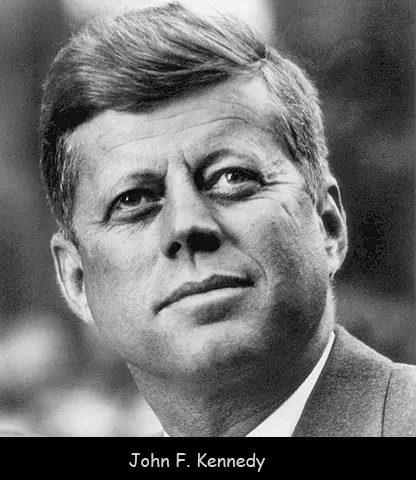
John F. Kennedy won the 1960 presidential election against Republican candidate, Richard M. Nixon. Kennedy was young, energetic, and handsome. He spoke of the 1960s as a “New Frontier,” and encouraged Americans to be pioneers. He said, “Ask not what your country can do for you, but what you can do for your country.” Americans were inspired by his patriotism and his energy. Unfortunately, his time as president was short-lived. He was assassinated on November 22, 1963. Americans were shocked and stunned by his death.

Fun Facts:

  • John F. Kennedy urged Americans to work harder against “the common enemies of man…tyranny, poverty, disease and war itself.”
  • Kennedy helped establish the Peace Corps in 1961. Americans can volunteer to spend two years abroad helping people in impoverished conditions.
  • Kennedy’s wife, Jackie, was hugely popular for her grace, intelligence, and beauty. She renovated the White House, adding both modern conveniences and an appreciation for its history. Along with Kennedy, she helped establish positive diplomatic relations with leaders in other countries.
  • During Kennedy’s presidency, he dealt with a contentious relationship with the Soviet Union. During this time, the Soviet Union built a wall between East and West Germany to prevent East Germans from escaping Communist rule. Kennedy promised to keep the city of West Berlin free.
  • In October, 1962, Kennedy learned that the Soviets had placed missiles in Cuba, near the American coastline. His advisors suggested an air strike and ground invasion of Cuba. Kennedy feared this approach would start a nuclear war. Instead, he ordered an American fleet of 18 ships to remain in the Atlantic Ocean near Cuba. These ships would bar Soviet ships headed to Cuba. For several days, the world wondered whether Soviet leader, Khrushchev, would back down. Finally, Khrushchev turned his ships around and removed the missiles. War was avoided.
  • In November, 1963, Kennedy went to Dallas, Texas to discuss his ideas about civil rights with Democrats there. As he and his wife drove in a motorcade, he was shot in the head by Lee Harvey Oswald. Kennedy died within the hour.

Vocabulary:

  1. Tyranny: when a leader rules with force and cruelty
  2. Diplomatic relations: relations between leaders of countries
  3. Motorcade: a line of cars that transports important leaders, their advisors, and security team

Questions and Answers:

Question: What Happened to Lee Harvey Oswald?

Answer: Lee Harvey Oswald was shot and killed by Jack Ruby, a nightclub owner, as police led him out of a jail in Dallas.

Learn More

Visit the JFK library to see a short picture book about John F. Kennedy.

The 1950s: Peace and Prosperity

The end of World War II brought new financial opportunities to many American families. During the war, men and women had been paid high wages working in factories and other industries. They saved most of the money they earned during the war and were now ready to spend.

Television advertisements introduced Americans to new, exciting products. People had more time for entertainment, and after the hard years of the Great Depression and World War II, they were ready to relax.

Fun Facts

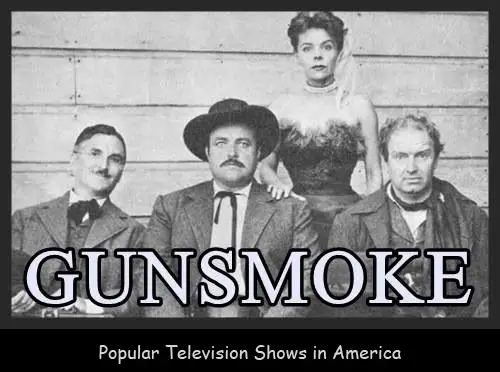
  • Television became a huge influence during the 1950s. Almost every family owned a television set and enjoyed watching programs like Gunsmoke, I Love Lucy, and Leave It to Beaver. Television shows influenced popular culture more than almost anything else.
  • When soldiers came home from the war and started families, they had a hard time finding homes. A housing shortage spurred a huge building trend. Thousands of Americans left the cities and country to move to suburbs, small neighborhoods near the edge of larger cities.
  • For many years, debt was seen as a bad thing. In the 1950s, using credit to make purchases became more acceptable. The GI Bill gave veterans low-interest loans to buy houses or go to college.
  • Fads developed and spread quickly through television commercials. Barbies became popular toys that children still play with today. Hula hoops, bubble gum, and coonskin caps were other fads of the 1950s. Girls began wearing blue jeans and ponytails. Boys wore blue jeans with white t-shirts.
  • Teenagers loved listening and dancing to the new music, “rock and roll.” Singers like Elvis Presley, Debbie Reynolds, and Pat Boone rose to stardom. People loved going to drive-in movie theaters, as well as indoor theaters. The Sound of Music was a favorite movie.

Vocabulary

  1. Fad: something that becomes very popular and then usually fades away
  2. Suburb: neighborhoods that lie in between rural areas and larger cities
  3. Veteran: someone who has served in the military

Questions and Answers

Question: Were the 1950s a peaceful time?

Answer: Most people view the 1950s as a peaceful, idyllic time. More people than ever before could afford a new home and car (the American Dream). Their children played in safe neighborhoods and went to new schools. It was a time of great growth for America. During the 1950s, people were very interested in science too. This interest fueled new innovations, but also trickled down to everyday life. For example, women became very interested in using packaged, scientific food products, such as cake mixes, gelatin, and frozen dinners.

The Early 1990s

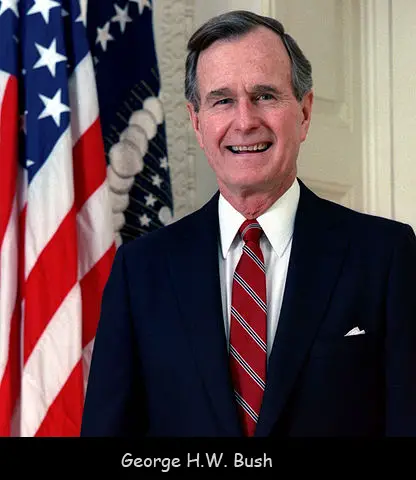
George H.W. Bush was elected president in 1989 after serving for two terms as Ronald Reagan’s vice president. Bush’s presidency was troubled by economic struggles at home and conflict abroad.

Fun Facts

  • Iraqi dictator Saddam Hussein sent 120,000 troops to Kuwait, a tiny, neighboring country. Western leaders feared another oil shortage or rising oil prices if Hussein gained control of Kuwait, a major oil supplier.
  • President Bush and his advisors formed a coalition with 28 nations to block trade with Iraq. They hoped that they could use economic sanctions to push Hussein to leave Kuwait. Hussain wasn’t going anywhere and the U.N. approved military efforts to remove Hussain by force. This effort was the Persian Gulf War.
  • In January, 1991, a U.S. led military force launched air strikes against Hussein. This effort became known as Operation Desert Storm. Most of Hussein’s air force was destroyed.
  • A month later, ground troops arrived and within days, Iraq surrendered. Fewer than 600 American soldiers had died and America celebrated this military victory.
  • Unfortunately, Hussein went back to Iraq still in power. He rebuilt his military and began building chemical and biological weapons.
  • During the late 1980s, Communism had crumbled in several Eastern European countries. In 1991, the Soviet Union collapsed, marking the end of Communism here. The region was divided into 15 independent republics, such as Lithuania. The world celebrated with these republics, many of whom had once been independent countries.

Vocabulary:

  1. Dictator: a leader who rules with absolute power
  2. Air strike: a military assault achieved by fighter planes, missiles, and weapons
  3. Biological weapon: a weapon that causes harm by spreading bacteria or other toxins

Questions and Answers:

Question: What was the outcome of the Persian Gulf War?

Answer:  The short-term outcome was that Kuwait was free and the region’s oil reserves were protected. Long-term, though, the Persian Gulf War probably increased Arab anger at Western involvement. Many American soldiers returned with serious physical and mental health problems caused by exposure to chemical weapons and trauma.

Learn More

Visit Scholastic to learn more about the Persian Gulf War.