All posts by americanadmin

Foreign Affairs in the 1980s

Internationally, the early 1980s were a tough time for the U.S. Arab nations became increasingly opposed to Western interference and terrorists hijacked planes and bombed buildings to make their point. The late 1980s ushered in the end of Communism in several countries and the collapse of the Soviet Union, an event that seemed impossible just a few short years earlier.
Fun Facts

  • Nixon and Carter had both attempted to improve relationships with the Soviet Union, but relationships soured when the Soviets invaded Afghanistan in 1979. Reagan called the Soviet Union the “evil empire.” He urged Congress to develop a defense system capable of destroying incoming missiles and build up the country’s arsenal of nuclear missiles.
  • Arab terrorists, angered at America’s support of Israel in Arab-Israeli conflicts, launched terrorist attacks that continue to be a problem today. For example, 40 people were killed in 1983 when the U.S. Embassy in Beirut was bombed. That same year, terrorists drove a truck loaded with bombs into U.S. Marine headquarters in Beirut, killing 241 Americans.
  • President Reagan wanted to help anti-communist guerillas (Contras) fighting in Nicaragua. Congress ordered a halt to all aid to the Contras. Some of Reagan’s top advisors, known as The Enterprise, hatched a secret scheme to get money for the Contras by selling arms to Iran. Although Reagan’s involvement in this scheme was never fully unraveled, when this plot became known, six members of the secret group were charged with minor crimes. This was known as the Iran-Contra Scandal and it made only a small dent in Reagan’s popularity.
  • Relations with the Soviet Union had been tense since after World War II, but the Cold War came to an end in the late 1980s. A new Russian leader, Mikhail Gorbachev, came to power and appeared willing to work with the U.S. Reagan and Gorbachev agreed to reduce their weapons.

Vocabulary

  1. Hijack: to take control of a plane by force
  2. Scheme: a plan

Questions and Answers

Question: Was the wall in Berlin a real wall?

Answer: Soviet leaders built the wall in 1961 to separate and contain Communist East Germany from West Germany, which was a democracy controlled by France, England, and the U.S. The wall was built over night and prevented anyone on the east side from escaping to the west. People were trapped. Some lost their jobs or couldn’t see their families who were on the west side of the wall. This wall was a literal symbol of the division between freedom and oppression.

 Mikhail Gorbachev increased liberties and freedom in the Soviet Union. His ideas spread to other Eastern European countries. These countries, including Poland, Czechoslovakia, East Germany, and Romania, overthrew their Communist governments and demanded democratic governments. In November, 1989, Germans tore down the Berlin Wall. Throughout Germany – and the Western world – people celebrated their freedom.

Learn More

Visit the BBC to learn more about the Berlin Wall.

1980s Culture

The 1960s were about peace, love, and rebellion against authority. The 1970s were a period of rapid social change as minority groups, women, and others asked for equal treatment. During the 1980s, the culture shifted again. Life became more fast-paced as people built careers and focused on technology.

Fun Facts:

  • The personal computer, microwave, cell phone, wireless phone, VCR, and fax machine appeared, along with ATM machines and overnight package delivery. It’s hard to imagine a time without these inventions, some of which have already been replaced by newer technologies.
  • Businesses grew during the 1980s as entrepreneurs took more risk. Many Americans were driven by success, status, and wealth. Real estate developers, such as Donald Trump, became wealthy investing in real estate. A recession in the late 1980s caused the real estate market to crash.
  • People panicked about AIDS (Acquired Immune Deficiency Syndrome), a new disease that killed more than 450,000 Americans by the year, 2000. Since then, we’ve learned much about how to prevent and treat the disease.
  • The baby boomers – the generation born after World War II – were in the prime of their careers and earning a lot of money. They spent their money on nice cars, large houses, and entertainment. They were sometimes called yuppies.
  • Not everyone enjoyed the prosperity of the 1980s. The gap between those who earned the least amount of money and those who earned the most grew – a problem that continues today. Homelessness rates grew in some cities.
  • Due partly to increased television coverage, people became more aware of suffering around the world. Celebrities performed benefit concerts to raise money for many causes, such as famine victims in Ethiopia.
  • A fitness craze hit the nation with exercise videos, gyms, and classes springing up.

Vocabulary

  1. Baby boomer: someone born during the prosperous period after World War II, from 1945 to 1965
  2. Entrepreneur: someone who starts a business

Questions and Answers

Question: Who developed the new technologies?

Answer: In many cases, individuals and small businesses worked on new technologies. For example, college drop-out Bill Gates invented the personal computer. Government agencies continued to work on larger technologies, including the space program.

The space program was temporarily shut down after the Challenger space shuttle exploded just seconds after lift-off on January 28, 1986. The explosion was caused by a faulty O-ring seal. All seven crew members, including school teacher, Christa McAuliffe, were killed.

Learn More

Visit NASA to learn more about the Challenger disaster.

The Reagan Revolution

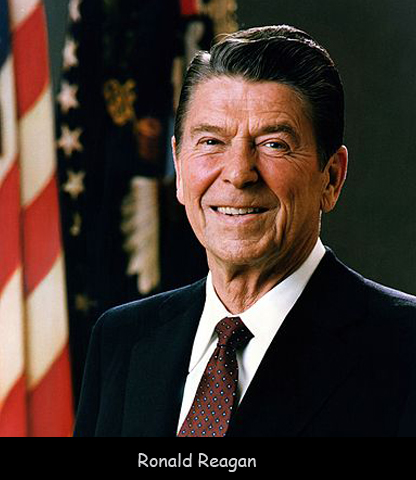
Government spending ballooned during the 1960s and 1970s, starting with the Lyndon Johnson’s social programs. Many Americans felt that these programs weren’t working and they were tired of paying higher taxes for them. They were ready for a change. In the 1980 presidential election, Republican nominee Ronald Reagan promised to reduce taxes and cut spending. He beat Democratic candidate Jimmy Carter by 489 to 49 electoral votes. Once in office, Reagan was a strong leader, making broad-sweeping changes. He was the most popular president since FDR.

Fun Facts:

  • Reagan started his presidency with a $280 billion tax cut, the largest tax cut in history. He turned responsibility for many programs over to the states, reducing the size of the federal government. His programs were called “Reaganomics” and he hoped they would help a sluggish economy grow. Reagan’s tax cuts did work to revitalize the economy, but at a cost. The federal government owed more money in 1989 than it ever had before.
  • Oil prices and interest rates dropped in 1982. Employers started hiring and people felt more prosperous than they had in many years.
  • Ronald Reagan had an energetic, positive style that appealed to many people, including Democrats. He was a Hollywood movie star before becoming a politician and could communicate directly with people. He was strongly patriotic and supported old-fashioned, Christian values. After the social experiments of the 1960s and 1970s, people were relieved to see a return to tradition.
  • On March 30, 1981, John W. Hinckley, Jr., shot at President Reagan outside a Washington D.C. hotel. Reagan, who was shot in the chest, was not seriously wounded, but Press Secretary James Brady and two others were seriously wounded.
  • In the 1980s, cocaine became a popular drug among young urban professionals (yuppies). President Reagan declared a “war on drugs,” sending money and military might to areas in Latin America where the drugs were grown and produced. His efforts were largely unsuccessful. First lady, Nancy Reagan, led the “Just Say No” campaign to educate children about the dangers of drugs.

Vocabulary:

  1. Revitalize: restore to energy and life
  2. Reaganomics: the name for Reagan’s economic policies

Questions and Answers:

Question: Were the 1980s more peaceful than the 1970s?

Answer: During the 1980s, many people became more prosperous. Gas and energy prices went down and companies began hiring again. President Reagan had some successes with abroad too, but there were also several problems, such as the AIDS crisis, the Persian Gulf War, and the Challenger explosion.

Learn More

Visit PBS to read an essay about Ronald Reagan.

America the Great? The New Reality of the 1970s

The Vietnam War and the Watergate scandal left Americans feeling discouraged and battered. No longer was America the country with all the answers. Some problems couldn’t be solved, and the challenges weren’t over. Through the 1970s, the country encountered one struggle after another.

Fun Facts:

  • In the 1960s, America started importing oil from other countries to fuel its growing energy needs.
  • By the 1970s, most of America’s oil came from countries in the Middle East – members of OPEC, the Organization of Petroleum Exporting Countries. In 1973, OPEC countries stopped shipping oil to America. OPEC leaders were angry that America was supporting Israel in a war against Egypt and Syria.
  • In 1979, OPEC raised oil prices by 60 percent in response to a global oil shortage. In America, gas prices; gas stations often ran out of gas. Cars waited in long lines outside of gas stations to get gas. People had to pay more to heat their homes. Americans responded by buying smaller, more fuel-efficient cars, carpooling, and turning down their heaters.
  • Jimmy Carter took office in 1976. He hoped to promote peace and improve human rights conditions around the world.
  • The economy grew slowly. People lost their jobs while at the same time, their expenses grew. The prosperity of the 1950s and 1960s was over.
  • The Soviet Union invaded Afghanistan to prop up a pro-Soviet government. In response, President Carter placed an embargo on shipments of grain to the Soviet Union. The U.S. also boycotted the 1980 Summer Olympics, which were held in Moscow.
  • In 1979, the Shah of Iran was overthrown in a revolution. The Shah, who was dying, came to the U.S. for medical treatment. In retaliation, Iranian revolutionaries took 52 Americans hostage at the U.S. embassy in Iran. They wanted the Shah returned to Iran for trial. The Shah died in America but the revolutionaries continued to hold the hostages. They were finally released on January 31, 1981, the day Ronald Reagan took office as president. They had been held hostage for 444 days.

Vocabulary

  1. Import: to buy from another country
  2. Embargo: an official ban on trade
  3. Boycott: to limit or sever a political or social relationship as a form of protest

Questions and Answers:

Question: Could an energy crisis happen again?

Answer: The energy crisis of the 1970s made Americans more aware of the danger of relying too much on other countries for oil. Since then, scientists have been working hard to develop new technologies and find energy resources, such as wind and solar energy, here in the U.S. These technologies are expensive and take time to develop. We are still a long way off from being energy efficient. At the same time, we have to balance our need for more energy with maintaining a healthy environment.

Learn More

Visit Energy Star Kids to play some conservation games and learn more about energy.

Nixon and the Watergate Scandal

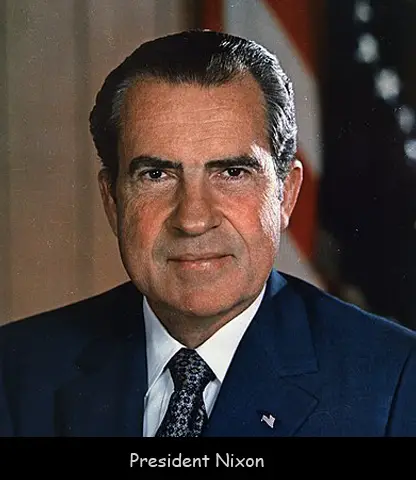
President Nixon had high hopes when he took office. He hoped to win the Vietnam War and be remembered as a peacemaker. He succeeded at some of his goals, but he’s most remembered for the presidential scandal Watergate.


Fun Facts

  • President Nixon removed 25,000 troops from Vietnam in June, 1969 and continued the Paris peace talks Johnson had begun during his presidency.
  • At the same time, Nixon ordered a secret bombing mission in Cambodia to stop Viet Cong leaders from sneaking weapons and troops into South Vietnam. After pulling troops out of Vietnam, Nixon promised South Vietnamese leaders that America would still help them if necessary. This was a promise he couldn’t keep.
  • In 1971, Nixon visited China. Since Communists took over China after World War II in 1948, U.S. leaders had refused to deal with the country. Although strongly against Communism, Nixon wanted to improve relationships through understanding. His visit was a success.
  • Nixon also visited Moscow in the Soviet Union in 1972. The two countries agreed to work together on space exploration.
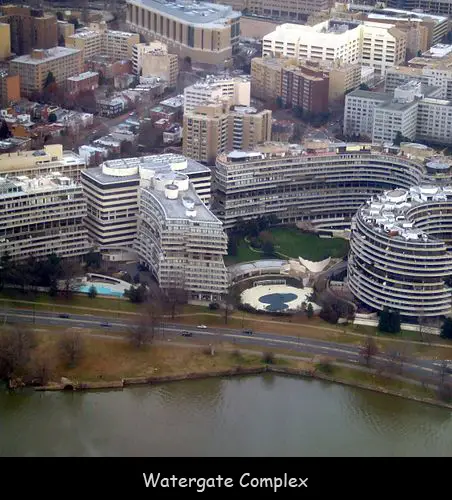
  • Nixon easily won the election in 1972, but his political career began to unravel after that. During the election, five men broke into the Democratic Party headquarters. This was not an ordinary burglary. The men had wiretapping equipment and were there to gather information against the Democratic Party that could be used by Nixon’s campaign.
  • The incident was brushed under the carpet until one of the burglars wrote a letter to the trial judge, John J. Sirica. The letter said that administration officials had planned the break-in.
  • The Senate formed a special committee to investigate the allegations. Nixon tried to cover up the Watergate burglary, refusing to hand over recorded conversations to authorities. The Supreme Court ruled that he must hand over the tapes.
  • In 1974, Nixon released the tapes which showed that he had lied about his involvement in the break-in. The House of Representatives found reason to impeach him and it seemed clear that the Senate would convict him. Nixon resigned on August 8, 1974, rather than face impeachment. He is the only U.S. president ever to resign.

Vocabulary

  1. Watergate: Watergate was the name of the hotel complex in Washington D.C. where the break-in occurred.
  2. Impeach: to charge a public official with misconduct
  3. Convict: to find guilty

Questions and Answers:

Question: What happened after President Nixon resigned?

Answer: In 1973, Vice President Spiro Agnew was charged with accepting bribes while governor of Maryland. He was also charged with tax evasion. President Nixon chose Gerald R. Ford to replace Agnew. When Nixon resigned, Ford became president.

Learn More

Visit Scholastic to read more about the Watergate scandal.

The Vietnam War

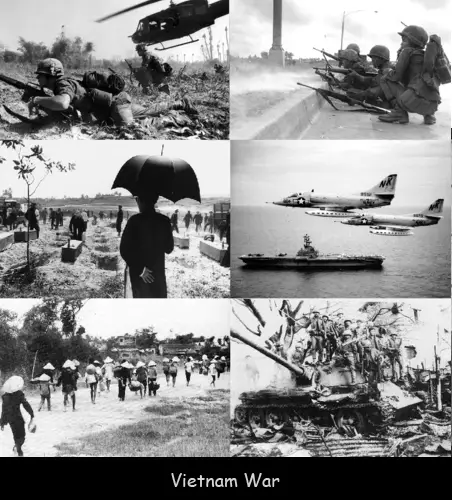
In the late 1800s, the area that is now Vietnam was colonized by France and called French Indochina. It remained under French control for many years, but in 1945, Communist leader Ho Chi Minh defeated the French. The country was divided into two parts: North and South Vietnam.

After World War II, Communism spread through much of Eastern Europe and Asia. American leaders viewed Communism as a threat to freedom and democracy and wanted to contain its growth. They did not want Communist North Vietnam to take over South Vietnam, further enlarging Communist territory. In the 1950s, the U.S. began sending money and providing military training to South Vietnam.

In 1964, President Johnson asked Congress to approve a resolution that would allow him to take more aggressive action against Vietnam. This resolution led to U.S. involvement in the Vietnam War.

Fun Facts:

  • President Johnson’s request for a resolution came after reports that North Vietnamese gunboats had fired on two U.S. destroyers.
  • Fighting in Vietnam was nothing like fighting in Europe during World War II. Dense jungles, mosquitoes, heat, and malaria made progress difficult. Enemy Viet Cong soldiers could hide in villages, attack, and disappear. Fields were full of booby traps and mines and hundreds of miles of tunnels ran under villages, allowing enemy soldiers to escape quickly.
  • Americans were deeply divided over the war. Some thought it was necessary, believing that if the Viet Cong won, Communism would spread to Cambodia and Laos. Others believed the war was too difficult to win and the sacrifices were too great. Thousands of American soldiers died and many innocent civilians were killed in Vietnam by American bombs.
  • In January, 1968, the Viet Cong launched an attack on the U.S. Embassy in Saigon, several American bases, and 36 cities in South Vietnam. Soon after, President Johnson announced an end to American bombing in Vietnam.
  • Before the end of his presidency, President Johnson had started peace talks with the Viet Cong. President Nixon continued these talks in Paris, but at the same time, he launched secret bombing campaigns in Cambodia. His goal was to stop the North Vietnamese from delivering weapons and men through Cambodia to South Vietnam.
  • Nixon had ordered the withdrawal of 25,000 U.S. troops from Vietnam in June of 1969. When Communist troops threatened to take over Cambodia, Nixon ordered troops to invade that country. At home, anti-war sentiments increased. In 1971, more than 200,000 protesters marched in Washington, D.C.
  • By 1972, troops, politicians, and the American public were disheartened. Victory against the Viet Cong seemed impossible. In January, 1973, American leaders and the Viet Cong signed the Paris Peace Accords. All U.S. forces left Vietnam and more than 500 American prisoners of war were released.
  • In March, 1975, the Communists broke their peace truce, attacking cities throughout South Vietnam. Millions of refugees fled and the few remaining American troops and government workers were evacuated by helicopter. America had lost the war and the Communists had complete control of Vietnam.

Vocabulary:

  1. Mine: an explosive device buried in the soil that goes off when disturbed
  2. Truce: an agreement of peace

Questions and Answers:

Question: What happened after the Vietnam War?

Answer: After World War II, troops received a hero’s welcome home. After Vietnam, troops were often blamed or humiliated for not winning the war. Many soldiers had been tortured or endured horrible experiences. They suffered from “post-traumatic stress disorder.” Some used drugs and alcohol to forget. Others had difficulty finding jobs. Some committed suicide.

At the same time, the American people felt confused, betrayed, and angry. They began to distrust their leaders, a problem that continues today. They were horrified to learn of American soldiers killing innocent women and children in Vietnam. One example is the My Lai massacre. Troops opened fire on a Vietnamese village believed to be held by Communists. At least 400 villagers were killed.

Learn More

Visit KidsConnect for lesson plans about the Vietnam War.

The 1970s: A Time of Cultural Turbulence and Change

The civil-rights movement set off a domino effect. Numerous other groups, including Native Americans, Hispanics, and women began protesting for equal treatment. Across the country and on college campuses, people protested in marches and sit-ins.


Fun Facts

  • The modern women’s movement was sparked by the book, The Feminine Mystique, by Betty Friedan, which was published in 1963. For many years, women’s only roles were those of homemaker and mother. Bright, intelligent women were often bored and unsatisfied as their children grew older and needed them less. Friedan’s book said that women should have more choices. They could be good mothers and have satisfying careers that used their skills too.
  • In 1970, the women’s movement celebrated the 50th anniversary of the Nineteenth Amendment, which gave women the right to vote. Women across the country celebrated with marches. At the same time, they demanded greater equality, including equal pay.
  • The National Organization for Women (NOW) picketed the White House in support of pro-choice laws that would make abortion legal. In 1973, the Supreme Court legalized abortion (Roe v. Wade).
  • Mexican-Americans began voting and running for local office. They asked school districts to teach both English and Spanish in schools. Cesar Chavez worked in California to negotiate more rights for migrant workers.
  • Lawyer, Ralph Nader, pushed for better safety standards in cars. Soon others began demanding safer products.
  • In 1970, the Environmental Protection Agency (EPA) was established to regulate pollution and create standards for clean air and water. Rachel Carson’s book, Silent Spring (1962) warned the public about the dangers of pesticides.
  • In 1972, leaders of the American Indian Movement (AIM) took over the Bureau of Indian Affairs in Washington, D.C. Tribes across the country were living in deplorable conditions on reservations. Several groups sued for better treatment. The South Dakota Sioux were awarded $100 million for lands that had been unfairly taken from them. Some tribes were awarded more land or were able to stop industry, such as strip-mining on their lands.
  • Gays were often treated with hostility and violence. It was common for police to arrest them without cause. In 1969, a group of patrons at the Stonewall Inn, a bar in Greenwich Village, trapped police in the bar after police entered the bar to harass them. Over 2,000 people protested against the police that night, sparking gay rights protests around the country.

Vocabulary:

  1. Domino effect: when one action sets off a chain of reactions
  2. Patron: a customer
  3. Pesticide: chemicals used to kill insects or other animals deemed harmful

Questions and Answers

Question: Did other groups lobby for equal treatment?

Answer: Yes. People with disabilities asked for equal treatment. New laws required businesses to make reasonable accommodations, such as accessible parking spaces and ramps, for people with disabilities. Schools must provide an “appropriate” education for children with special needs.

Learn More

Learn more about how to help children with disabilities.

A Man on the Moon and Other Achievements

During World War II, rapid scientific and technological advances helped win the war. These advances, such as nuclear power, had the potential to both benefit and harm society. In general though many people were excited about the possibilities these new ideas seemed to create.

Fun Facts

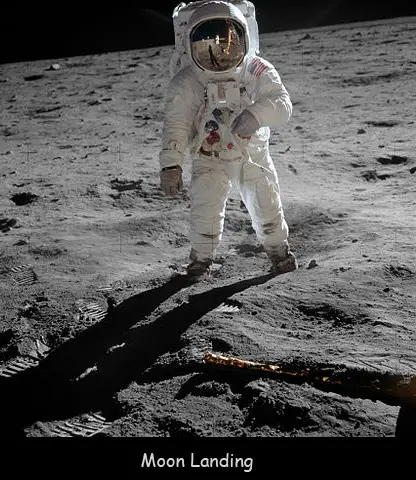
  • In 1961, a Russian cosmonaut orbited around the earth. The U.S. scrambled to catch up with the Soviet Union’s space program, sending John Glenn, Jr. into space in 1962. On July 20, 1969, Apollo astronauts Neil A. Armstrong and Edwin “Buzz” Aldrin, Jr. made history when they walked on the moon. Over 600 million people around the world watched the lunar landing on television.
  • Nuclear power was used to create the atomic bomb and could also be used to make other devastating nuclear weapons. This same power could provide inexpensive electricity. The first nuclear electric plant opened in Shippenport, Pennsylvania.
  • Computers took over the jobs many people previously did. For example, in factories, computers could run the machines that assembled cars. These technologies allowed products to be made more quickly and cheaply, but they forced thousands of people to find new jobs.
  • New technologies changed the way food is produced. New packaged convenience foods, such as frozen meals or cake mixes, became popular. More than half the foods available in 1970 did not even exist in 1950, according to the Children’s Encyclopedia of American History by David C. King. Farming even changed. Instead of small, family-owned farms, most farms were and are owned by large corporations. These farms rely on large, specialized equipment, fertilizers, insecticides, and hybrid seeds to produce reliable and consistent crops.

Vocabulary

  1. Lunar: related to the moon
  2. Convenience food: a food that is already prepared and can be reheated quickly
  3. Specialized: something that has a specific, limited purpose

Questions and Answers

Question: Were Americans afraid of the new technologies?

Answer: Most people felt excited and enthused by technological advances, similar to the excitement and energy people felt during the Industrial Revolution. Similar to the shock and disappointment people felt after the sinking of the Titanic, though, we have since learned that technology has its limitations.

Learn More

Visit NASA to see photos of the first moon landing.

Racial Tensions

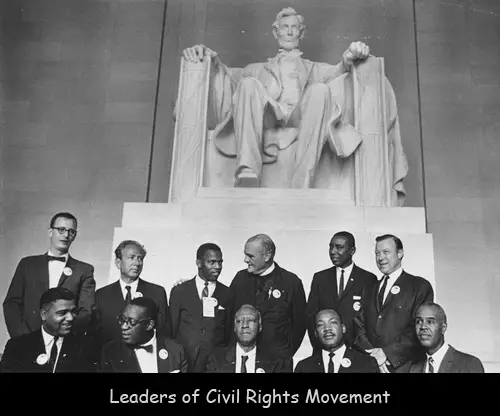
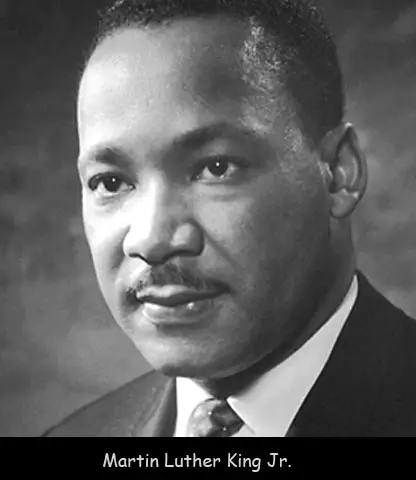
The civil rights movement of the early 1960s focused on peaceful protest. Leaders like Martin Luther King, Jr. organized marches and speeches to create change. In the mid-1960s, the civil rights movement became more violent on both sides.

Fun Facts

  • African-Americans living in the South experienced greater violence against them. White civil rights workers were also the targets of racial violence. In 1964, three young civil rights workers were murdered by a Ku Klux Klan group. The Ku Klux Klan organization’s goal was to maintain racial segregation, often through violence and intimidation.
  • In 1965, Martin Luther King, Jr. led a march to Montgomery, Alabama to encourage black citizens to vote. Along the way, police attacked the marchers. Footage of their cruel behavior was shown on television. This footage angered African-Americans, but also led more whites to support the civil rights cause.
  • After the Voting Rights Act of 1965 was passed guaranteeing African-Americans the right to vote, African-Americans in the Watts neighborhood in Los Angeles began looting and rioting. They were angry over rumors of police brutality against a black man. Buildings were set on fire and looters broke into shops.
  • Riots broke out in other cities as mobs started fires, shot people, and looted white-owned stores.
  • During this time, some African-American leaders began talking about separating completely from white society, rather than trying to segregate. Black Muslims were especially interested in the separatist movement. Malcolm X, the leader of the Nation of Islam, was assassinated in 1965.
  • Stokely Carmichael disagreed with King’s ideas about peaceful protest, which he thought were ineffective. His “Black Power” movement encouraged blacks to take control of their own lives and communities.
  • Martin Luther King, Jr. disagreed with the idea of separation. He continued to work for peace until his assassination on April 4, 1968. After his death, riots broke out in 125 cities around the country. The National Guard and federal troops were called in to restore order.

Vocabulary

  1. Racial segregation: the practice of keeping races separate
  2. Brutality: violence
  3. Loot: to break into a store, home, or business with the intent of stealing property and causing destruction

Questions and Answers:

Question: Was the civil rights movement successful?

Answer: Laws now protect minorities against discrimination and guarantee the right to vote, go to school, and to work. Many people have worked hard to change unfair, racist attitudes and build strong relationships. However, we still have problems in the U.S. that occasionally flare into violence.

Learn More

Visit National Geographic Kids to learn more about Martin Luther King, Jr., one of the most prominent leaders of the civil rights movement.

The 1960s: Big Cultural Changes

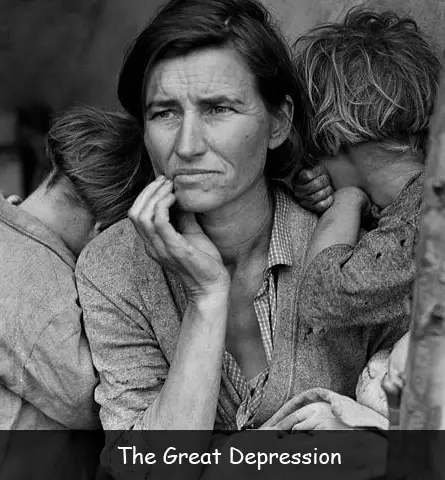
During the 1960s, many families became more prosperous than ever before. They had good jobs and could afford to buy comfortable homes and cars. After the hard times of the Great Depression and World War II, older people appreciated the prosperity they (and their parents) had worked so hard to achieve.

The teenagers and young adults of this time saw things differently. They heard about the poverty and racism some people experienced. They saw their parents’ generation as greedy and materialistic. Many young people rebelled against their parents’ values. This breakdown between parents and children became known as the generation gap.

Fun Facts

  • The younger generation referred to the older generation and especially authority figures as “The Establishment.” They believed The Establishment was responsible for the country’s problems.
  • As the young people rejected their parents’ values, they adopted a counter-culture lifestyle. Many dropped out of school, marched in antiwar demonstrations, or traveled the country attending music festivals.
  • Some moved to counter-culture communities, such as Berkeley, California or Greenwich Village in New York. Drug and alcohol abuse was a common part of the counter-culture lifestyle.
  • Artists like Andy Warhol and folk singers, such as Joan Baez, Bob Dylan, and Peter, Paul, and Mary, became popular. These singers often sang about peace and love.
  • Before the 1960s, people believed that married couples and families created strong, stable societies. During the 1960s, young people chose not to get married. Instead, they lived together or moved freely from one partner to another.

Vocabulary

  1. Prosperity: To enjoy comfort and abundance
  2. Reject: to dismiss or turn away from
  3. Counter-culture lifestyle: a lifestyle that goes against the prevailing cultural norms

Questions and Answers

Question: Did the 1960s change America?
Answer: The 1960s drastically altered American family life. This generation rejected traditional family relationships, religion, work ethic, and education ideas. Many of the ideas and values that are part of today’s culture began in the 1960s.

Learn More

Learn more about 1960s culture at PBS.